


Key Takeaways
The best litter is one your cat will use and that you can maintain consistently. Compare the material, your cat’s comfort, and the realities of your home before switching.
- Clumping clay, non-clumping clay, silica crystals, and plant-based litters differ in how they absorb moisture and need to be cleaned.
- Texture, scent, dust, and your cat’s age or mobility can all affect whether a litter feels comfortable to use.
- The purchase price is only part of the cost; consider replacement frequency, storage, weight, and disposal instructions.
- Introduce a new litter gradually and keep the box in a familiar, quiet place.
- If litter-box habits change suddenly, look beyond the litter itself and consider whether your cat needs veterinary attention.
The main types of cat litter
Cat litter is usually made from clay, silica, or plant-based materials, and the differences show up in how each type handles moisture and waste. No single option is right for every cat or household. A useful starting point is to think about what your cat already accepts and what kind of cleaning routine you can keep up with.
Clumping clay for easy waste removal
Clumping clay absorbs liquid and forms scoopable clumps, so you can remove urine and solid waste without replacing the entire contents of the box each time. Many people find that routine straightforward, though the litter’s weight, dust, and tracking can vary by product. If your cat likes the texture and you don’t mind regular scooping, this may be a practical place to start.
Non-clumping clay for straightforward maintenance
Non-clumping clay absorbs moisture but does not form solid clumps for removal. Waste remains in the litter, so the box generally needs full changes rather than just scooping out urine clumps. This may suit a household that prefers a simple approach, provided you’re comfortable monitoring the box and replacing the litter as directed.
Silica crystals for moisture absorption
Silica crystal litter is designed to absorb moisture, but its feel underfoot is different from fine clay. Some cats readily accept the larger, firmer pieces; others may be wary of the texture. Consider trying a small amount first, especially if your cat has always used a softer litter.
Plant-based litters made from wood, paper, corn, or wheat
Plant-based litters can be made from materials such as wood, paper, corn, or wheat. Their textures and absorption vary, so the label and your cat’s response matter more than the broad category alone. A comparison of cat litter options can help you consider trade-offs such as dust, tracking, and upkeep without assuming every product made from the same material behaves identically.
How litter types compare in everyday use
The day-to-day experience depends on more than the material listed on the bag. How often you scoop, how much litter gets carried out of the box, and whether odors linger can all influence what feels manageable. When weighing up different litter types, focus on the routine you can sustain as well as the features your cat seems to prefer.
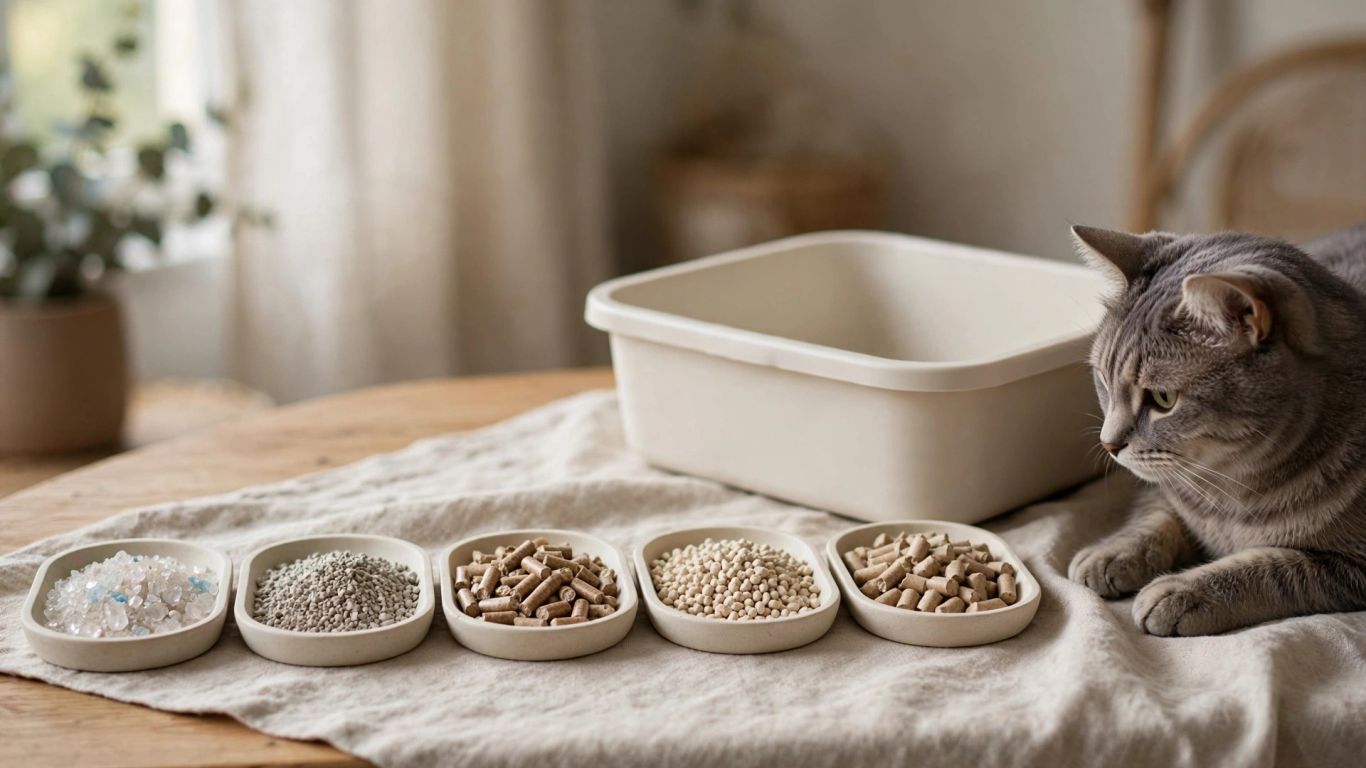
Clumping and moisture control
Clumping products make urine easier to remove in portions, while non-clumping products absorb moisture without forming scoopable clumps. Silica and plant-based options also vary in their absorption and cleaning instructions. The table below offers a broad comparison; individual products can differ, so check their labels before settling into a routine.
| Type | Moisture handling | Typical waste routine |
|---|---|---|
| Clumping clay | Forms clumps around liquid | Scoop clumps and solid waste regularly |
| Non-clumping clay | Absorbs liquid without clumping | Remove solid waste and replace litter as directed |
| Silica crystals | Absorbs moisture | Follow product instructions for stirring, scooping, and replacement |
| Plant-based | Varies by material and product | Follow the package guidance and observe how it performs |
The comparison is a starting point, not a guarantee of how a particular bag will perform. If you’re comparing two types, pay attention to how clean the box stays and whether your cat continues using it comfortably.
Odor management and ventilation
Litter material can affect odor, but prompt waste removal and a clean box matter too. A well-ventilated location can help keep smells from building up, provided it remains quiet and accessible for your cat. Strongly scented products may not be pleasant for every cat, so don’t rely on added fragrance to solve a cleaning or placement problem.
Dust and tracking around the home
Dust and tracking depend on the litter’s texture, the box design, and how your cat steps in and out. A mat outside the box may catch some loose pieces, while a low-dust product may help if visible dust is frustrating. If you’re considering an automatic litter box, check which litter types its instructions allow before buying or switching; not every litter is suitable for every mechanism.
Cleaning routines and waste handling
Choose a cleaning schedule that fits the kind of litter you use and follow the product’s instructions for scooping and replacement. Regular attention can make it easier to spot changes in your cat’s output or comfort. Disposal rules differ by product and location, so don’t assume that a litter is safe to flush or compost just because it is plant-based.
Choose a litter that suits your cat
Your cat’s willingness to use the box is the first test of a litter choice. A product that seems convenient to a person may feel uncomfortable to a cat, especially when texture, scent, or access changes. For a broader look at choosing the right cat litter, consider your cat’s habits alongside your own cleaning preferences.
Consider texture and scent preferences
Cats can be particular about what they step on, and a sudden change in texture or scent may put them off. If your cat consistently uses one type, take that preference seriously instead of switching just because another option seems appealing. Unscented or lightly scented products may be worth considering when fragrance seems to bother your cat.
Account for kittens, older cats, and mobility needs
A kitten, an older cat, or a cat with limited mobility may need an easy-to-enter box and a surface that feels comfortable underfoot. The litter itself is only one part of the setup: the box’s size, sides, depth, and location all matter. A guide to litter box setup can help you think through those practical details together.
Check for sensitivities and health-related concerns
If your cat sneezes around the box, avoids a new litter, or seems uncomfortable, consider whether dust, scent, texture, or another change could be contributing. Don’t assume litter is the cause of every symptom, and check with a veterinarian when signs persist or concern you. When assessing cat behavior changes, note what changed and when, rather than trying several new products at once.
Provide enough litter boxes in multi-cat homes
In a multi-cat home, access to litter boxes can matter as much as the litter inside them. Make sure each cat can reach a box without being blocked or cornered, and place boxes in separate, calm areas when possible. If tension is part of the picture, multi-cat household stress may offer useful ideas for arranging resources and creating safer spaces.
Compare upfront price with how often litter needs replacing
A lower bag price does not always mean lower ongoing cost if the litter needs replacing frequently. Compare how much you use over time, and include waste bags or other routine supplies in your household estimate. It can help to track a few weeks of use before deciding that one option is truly more economical.
Check local disposal rules and product instructions
Follow the package guidance for disposal and check local rules before putting litter in household waste, compost, or plumbing. Materials that sound similar may have different instructions, and a label’s claims do not replace local requirements. If you’re unsure, use the disposal method recommended by the product maker and your local waste service.
Consider storage space and bag weight
Litter bags can take up substantial room and may be awkward to carry, especially in larger sizes. Think about where you’ll store a supply and whether you can lift and pour it comfortably. In a busy household, litter upkeep can compete with other errands; unrelated plans such as Holman Moving, washer and dryer repair, or investigating Utah attic wildlife may be on someone’s list too, but they don’t change the litter’s own storage or disposal needs.
Evaluate sustainability claims and material sourcing
Plant-based ingredients may appeal to people looking for alternatives to clay, but sustainability depends on sourcing, manufacturing, packaging, and disposal. Read claims carefully and avoid assuming that “natural” means automatically biodegradable or suitable for every disposal route. Choose based on clear product information and your cat’s comfort, not a broad label alone.
Switch to a new litter type gradually
A gradual transition gives your cat time to adjust and gives you a chance to notice whether the new litter is accepted. Keep the process simple: change one thing at a time, and let your cat’s behavior guide the pace. Even when the new option seems like a better fit on paper, patience is more useful than forcing a quick switch.
Introduce the new litter alongside the familiar option
If you can, offer the new litter in a second box while leaving the familiar box unchanged. That lets your cat explore without losing access to an option they already trust. It also makes it easier to tell whether the new litter is being used voluntarily.
Adjust the mix over several days
If your cat is comfortable with the new option, begin mixing a small amount into the familiar litter and increase it gradually over several days. Slow down or return to the previous mix if your cat starts hesitating or avoiding the box. The right pace depends on the individual cat, so there is no need to follow a rigid timetable.
Keep the litter box in a familiar, quiet location
During a transition, keep the box in its usual quiet, accessible place. Moving the box at the same time as changing the litter makes it harder to know which change your cat is responding to. If a stressful event is already affecting your cat, PAWSONA pheromone diffuser kits are described as calming products for stress-related situations; they are separate from litter and do not replace a gradual introduction.
Watch for changes in litter-box habits
Notice whether your cat uses the box as usual, hesitates at the entrance, or starts eliminating elsewhere. A brief note of the date and any changes at home can help you see patterns. If your cat is newly adopted, preparing for cat adoption can also help you plan a calmer, more predictable adjustment to the home.
Troubleshoot common litter problems
A litter-box problem can be frustrating, but it is useful information rather than a sign that your cat is being difficult. Check the litter, box, location, household changes, and your cat’s health instead of assuming one cause. A guide to litter-box accidents can help you consider setup, stress, and veterinary checks when a cat urinates outside the box.
Address litter-box avoidance
If your cat stops using the box, first check for a recent change in litter, location, cleaning routine, or access. Make sure the box is easy to reach and offers enough room to turn around. If avoidance persists or begins suddenly, contact a veterinarian to rule out a health problem before treating it as a preference issue.
Reduce dust and tracking
A mat can catch some litter carried out on paws, and a brief daily sweep may keep scattered pieces from spreading. If dust is a concern, consider a different product or texture, but introduce any replacement gradually. Keep the box clean as directed; debris around it can also make the area less inviting.
Improve odor control with cleaning and box placement
Scoop and replace litter according to the product instructions, and wash the box regularly with a cat-safe cleaning approach. A location with some ventilation may help, but avoid moving the box into a noisy or hard-to-reach spot just to hide odors. If a change in the home seems to be increasing stress, PAWSONA calming sprays are one of the brand’s calming product formats for stress-related situations, not a substitute for cleaning or investigating the source of the problem.
Reassess the litter if your cat’s habits change
A new pattern may call for a fresh look at the litter’s texture, dust, scent, or depth, but it may also have another cause. Take note of when the change started and whether anything else in the home changed around the same time. For stress-related circumstances, PAWSONA calming collars are another documented calming product format; discuss ongoing or sudden litter-box changes with a veterinarian rather than relying on a product alone.
Conclusion
The right cat litter balances your cat’s comfort with a routine your household can maintain. Compare materials, make changes gradually, and pay attention to what your cat’s behavior tells you; when habits shift unexpectedly, consider health and stress as well as the litter itself.
Frequently Asked Questions
Which type of cat litter is easiest to scoop?
Clumping clay forms scoopable clumps around liquid, which can make routine waste removal straightforward. Product performance varies, so follow the package instructions and see how your cat responds.
Is silica crystal litter suitable for every cat?
No single litter suits every cat. Some cats accept the firmer feel of crystals, while others prefer a finer texture, so observe your cat’s comfort and box habits.
Do plant-based litters control odor?
Odor control varies by material and product. Regular cleaning, appropriate replacement, and a well-placed box all contribute, so check the label and assess the litter in your home.
How often should I replace cat litter?
The timing depends on the litter type, the number of cats using the box, and the product instructions. Remove waste regularly and replace the litter as directed.
How can I introduce a new litter without upsetting my cat?
Offer the new option alongside the familiar one or mix in a small amount at first. Increase it gradually only if your cat continues using the box comfortably.
What should I do if my cat avoids the litter box?
Check for recent changes to the litter, box, location, or access, and make sure the box is clean and easy to reach. If avoidance is sudden or continues, ask a veterinarian to check for health concerns.
Does a more expensive litter always last longer?
Not necessarily. Compare how much you use and how often it needs replacing, while considering the product instructions and your cat’s acceptance of it.