


Key Takeaways
An automatic litter box can reduce daily scooping, but it still needs to suit your cat and your home. Compare the cleaning mechanism, safety features, litter requirements, and upkeep before deciding.
- Check the manufacturer’s size, weight, and age guidance before choosing a model.
- Understand how the cleaning cycle works and what keeps your cat clear of moving parts.
- Confirm that the model accepts your preferred litter and can fit in an accessible location.
- Budget for replacement parts, litter, waste bags, and regular cleaning.
- Introduce the new box gradually, and contact a veterinarian if your cat develops toileting problems.
Understand how automatic litter boxes work
An automatic litter box removes waste after your cat leaves, using a mechanism that separates clumps or waste from the clean litter. The details vary, but most models rely on sensors and a timed cleaning cycle. Knowing what happens inside the unit makes it easier to judge whether its routine will feel safe and predictable to your cat.
What happens during a cleaning cycle
After your cat exits, the unit waits for a set period before moving its cleaning mechanism. Depending on the design, that mechanism may sift, rake, or rotate the litter so waste is separated from the clean area. The cycle then returns the box to its resting position, with waste routed to a collection compartment.
Which sensors detect your cat
Sensors may detect a cat’s presence or weight and pause a cycle when the box is occupied. Their number and design vary, so check the manual for what the model actually detects and what happens if a sensor is obstructed. A clear safety sequence matters more than a long feature list: the cat should be able to enter, use the box, and leave without the cleaning mechanism starting unexpectedly.
When comparing models, look for practical safeguards rather than assuming all sensors do the same job. A brief checklist can help:
- Confirm whether the unit detects entry, weight, or both.
- Find out how long the cleaning delay lasts.
- Check what the unit does if a sensor is blocked or power is interrupted.
- Make sure the cat can leave freely while the cycle is paused.
Read the instructions carefully, then observe your cat during the first few cycles. If the unit behaves differently than expected, pause automatic operation and troubleshoot before relying on it.
How waste is collected and contained
Separated waste usually drops into a drawer, bin, tray, or liner, which you empty or replace as directed. The container’s capacity affects how often you need to tend it, but household size, the number of cats, and the cat’s habits all matter. A covered compartment may help contain odors; it does not remove the need to empty and clean it regularly.
Compare the main types of automatic litter boxes
Automatic litter boxes differ mainly in how they separate waste and what supplies they require. Each mechanism has trade-offs in size, cleaning, and the litter it can accept. Comparing the basic designs first can narrow your choices before you assess app features or appearance.
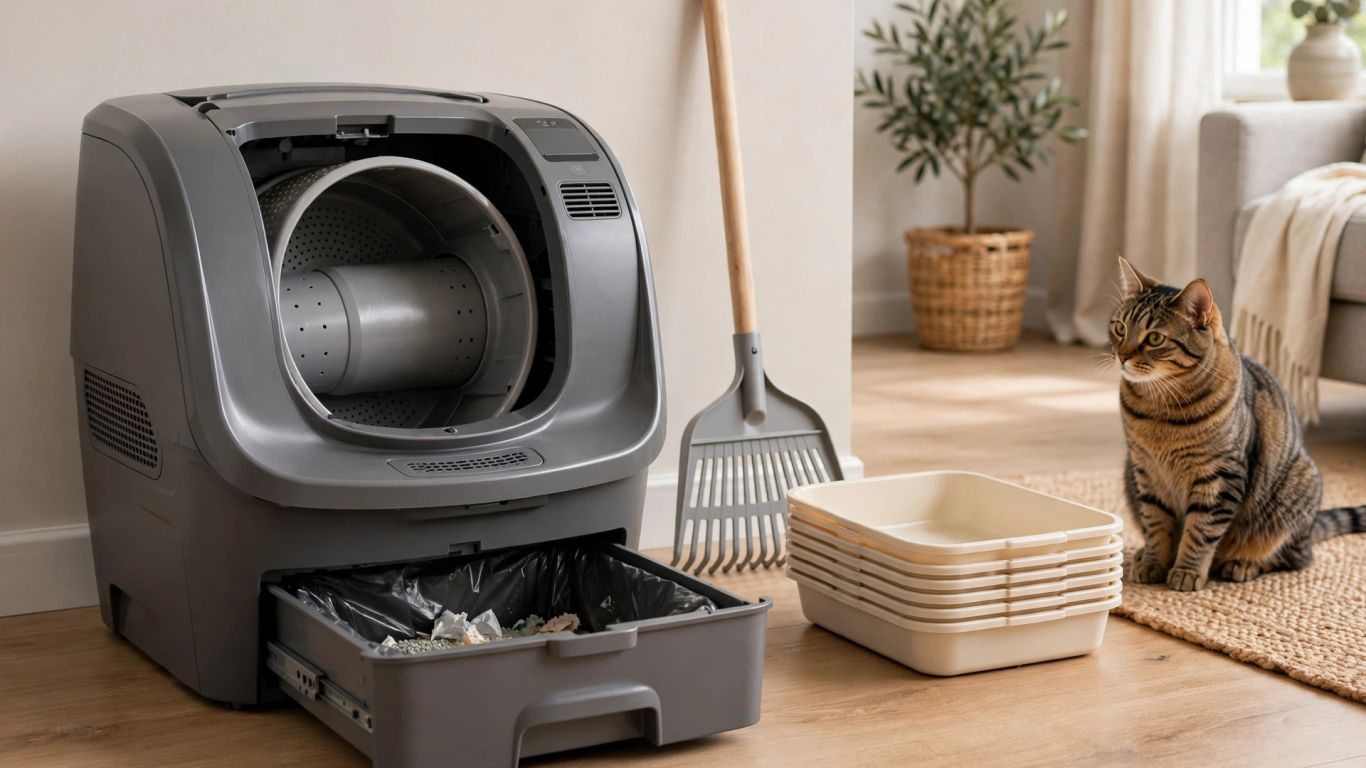
Rotating drum models and their trade-offs
A rotating drum turns or shifts litter so clumps can be separated and moved into a waste compartment. The enclosed design can keep the litter area contained, but the unit may need more surrounding space for its shape and movement. Check the entry dimensions and cleaning instructions, and make sure your cat can get in and out comfortably.
Rake-style models and their trade-offs
Rake-style units move a comb or rake through the litter after a delay, pushing waste into a receptacle. The mechanism is relatively easy to understand, though the rake and its tracks can need regular attention. Loose or poorly formed clumps may not be collected as neatly, so confirm which litter types the manufacturer recommends.
Models that use trays or disposable liners
Some models collect waste in a tray or a liner that you remove and replace. That can make disposal straightforward, though you will need to keep the right supplies on hand and follow the cleaning instructions. The table below gives a simple way to compare the upkeep involved; individual designs vary, so check product guidance before buying.
| Design | Waste collection | What to check |
|---|---|---|
| Rotating drum | Waste moves to a compartment | Unit dimensions and cleaning access |
| Rake-style | A rake moves clumps to a receptacle | Rake maintenance and litter guidance |
| Tray or liner | Waste collects in a removable tray or liner | Replacement supply availability and cost |
Use these categories as a starting point, not a guarantee about performance. For a broader overview of automatic litter box reviews, compare how reviewers assess safety, reliability, odor control, and value, then confirm details with the manufacturer.
Check safety and fit for your cat
A unit that is technically suitable for a home may still be a poor fit for the cat who has to use it. Entry height, interior space, and the unit’s operating routine can affect comfort, especially for cats with changing mobility. Take your cat’s individual needs seriously, and introduce a new box at a pace that allows them to investigate without pressure.
Match the unit to your cat’s size and weight
Check the model’s stated weight range and interior measurements rather than relying on its exterior footprint. Your cat should be able to enter, turn around, dig, and leave without being cramped. If you have more than one cat, consider the needs of each one; a size that works for one may not work for another.
Consider kittens, senior cats, and cats with mobility needs
Kittens may not meet a unit’s minimum weight or age guidance, while a high entrance or confined space may be uncomfortable for an older cat. Cats with mobility needs may do better with a lower step-in height and an easy route to the box. For a slower transition, keep the familiar box available while your cat explores the new one; practical litter box setup guidance can help you think through access, location, and gradual changes.
Stress can also come from other changes at home, so avoid treating reluctance as stubbornness. PAWSONA offers pheromone diffuser kits among its cat behavior products; they are intended as stress-support options, not a substitute for choosing a physically accessible box or seeking veterinary advice when needed.
Look for reliable sensors and safe cycle delays
A cycle delay gives a cat time to leave before the unit begins to move, and sensors should stop operation if the cat returns. Read the manual to understand the safeguards and any age, weight, or supervision recommendations. Do not assume a model is suitable for an unattended kitten simply because it has automatic sensors.
If a cat is wary of the machine, keep it switched off at first and let them approach at their own pace. A sudden change in toileting, especially repeated accidents or signs of discomfort, calls for a veterinary check rather than simply adjusting the device. PAWSONA Calming Foam Dry Shampoo is a separate no-rinse grooming product that helps remove dirt, oil, and odors; it is not a litter-box treatment.
Choose the right litter and placement
The right location and litter can make an automatic box easier to accept and maintain. A quiet, reachable spot is usually more useful than a hidden corner that is hard to access or clean. Measure the area, check the model’s requirements, and think through how the cat will approach it throughout the day.
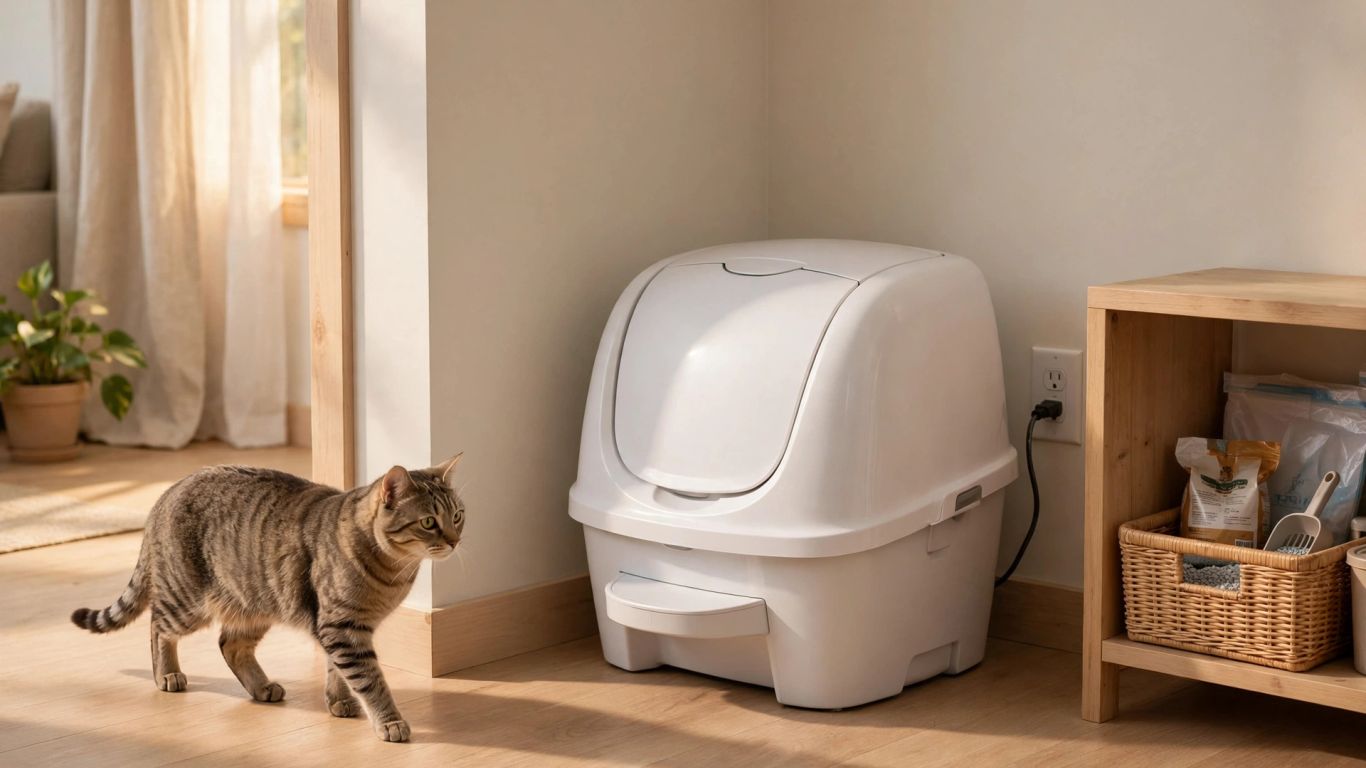
Confirm which litter types the model supports
Some mechanisms need clumping litter, while others may be designed for a specific tray or disposable supply. Check the manual before switching, since an incompatible litter can interfere with the cleaning cycle or leave waste behind. If you do change litter, transition gradually and watch how your cat responds; a practical cat litter selection guide can help you weigh household needs and your cat’s preferences.
Find a quiet, accessible location
Place the unit where your cat can reach it without being cornered by a door, appliance, or another pet. Avoid putting it beside loud equipment or in a busy passage if your cat prefers privacy. Choosing the location around your cat’s daily routine is as important as the machine itself; a custom home design guide likewise considers how spaces support everyday habits.
PAWSONA Cat Repellent Spray is designed to deter cats from unwanted areas, so do not apply it around a litter box or anywhere you want your cat to approach. Follow the product directions and spot-test surfaces as instructed. Keep the box itself inviting and unobstructed rather than trying to steer a cat toward it with a deterrent.
Plan for power outlets, Wi-Fi, and nearby space
Check whether the model needs a nearby outlet or a Wi-Fi connection for the features you want, and leave enough room to open its waste compartment. A stable surface and a clear route to the entrance make routine use easier. A holiday rental’s location and amenities can shape a family’s daily routine too; Kihei family vacation planning offers a separate example of thinking through access and practical amenities before a stay.
Estimate costs and ongoing upkeep
The purchase price is only one part of the cost of an automatic litter box. Replacement liners, filters, waste bags, and parts can add up, and a unit that needs frequent attention may not save as much time as expected. Compare ongoing requirements alongside the initial price, then decide whether the routine fits your budget.
Compare purchase prices and replacement parts
Look beyond the advertised price to the parts that may need replacement over time, such as filters, liners, or components specified in the manual. Check whether those supplies are easy to find and whether the warranty covers the parts you are concerned about. Comparing durability, maintenance, and cost is useful for household purchases more broadly, including quartz and quartzite, though the materials and care needs are different.
Budget for litter, liners, and waste bags
Estimate how much litter your household uses and add any model-specific liners or bags to the monthly cost. A tray system may have a recurring supply expense, while another design may use standard bags; verify this rather than assuming. Keep a small reserve of required supplies so a delayed delivery does not interrupt the cleaning routine.
Account for cleaning and maintenance time
Automatic does not mean maintenance-free. Waste containers still need emptying, and the unit may need periodic washing or inspection according to its manual. Make sure the mechanism can be reached for cleaning without awkward disassembly, and follow the manufacturer’s directions rather than using products that could damage its surfaces.
Technical guidance can be highly process-specific: for example, tissue decellularization involves defined methods and quality testing. That is a very different field, but the general lesson for owners is simple: follow the instructions written for the particular process and equipment, not a one-size-fits-all cleaning routine.
Evaluate features before you buy
Once the basic design, fit, and running costs are clear, consider which extra features would make daily care easier. App controls, alerts, noise levels, and odor management can be helpful, but only if they address a real need in your household. Read the warranty and return terms before purchase, and keep the manual available after setup.
Decide whether app controls and alerts are useful
An app may offer status updates or controls, but the available features vary by model. Decide whether you will use notifications and remote access, and check whether the box can still operate normally if your Wi-Fi is unavailable. If you are comparing a wider range of connected pet-care devices, a smart pet care overview can provide context on the kinds of functions that may appear across products.
Check noise levels and odor-control options
A cleaning motor or moving rake can make noise that surprises a cautious cat. If possible, listen to the unit in person or look for clear information about its cycle sounds, and consider where that sound will carry in your home. For odor control, check how the waste compartment closes and whether the manufacturer specifies a filter or other approved accessory; routine emptying still matters.
Review warranties, returns, and customer support
Before buying, find out how long the warranty lasts, which parts it covers, and what the return process requires. Keep the receipt and note any setup steps that affect eligibility. A supplier guide for dental equipment similarly considers workflow, maintenance, cost, and support; those are useful purchase questions even though the products and safety requirements differ.
Conclusion
The best automatic litter box is one your cat can use comfortably and you can maintain consistently. Compare mechanisms, safety guidance, litter requirements, and total costs, then introduce the unit gradually while keeping an eye on your cat’s response. A little planning makes it easier to choose a model that supports a calmer, cleaner routine without asking the machine to solve every litter-box problem.
Frequently Asked Questions
Are automatic litter boxes suitable for every cat?
No single design suits every cat. Consider your cat’s size, age, mobility, comfort with moving equipment, and the manufacturer’s safety guidance before choosing one.
How do I introduce an automatic litter box?
Set it up near the familiar litter area and let your cat investigate without pressure. Keeping the old box available during the transition can help, and it is sensible to leave the new unit turned off until your cat seems comfortable approaching it.
Can I use any type of litter in an automatic box?
No. Litter compatibility depends on the mechanism and model, so check the manual before buying or changing litter. An unsupported litter may not be handled as intended.
How often does an automatic litter box need cleaning?
You will still need to empty the waste compartment and clean the unit according to its instructions. The schedule depends on the model, the number of cats, and how often the box is used.
Do automatic litter boxes eliminate odors?
They may contain waste in a separate compartment, but they cannot guarantee an odor-free home. Regular emptying, cleaning, and using compatible litter remain important.
What should I do if my cat avoids the new box?
Pause the transition and give your cat access to a familiar litter box while you check the unit’s location, entry, and operating routine. If avoidance continues or your cat shows signs of discomfort, consult a veterinarian.
Are automatic litter boxes noisy?
Noise varies by model and cleaning mechanism. Check for sound information or listen to a unit if possible, then place it where the cycle is less likely to disturb your cat or household.