


Key Takeaways
A calmer multi-cat home starts with noticing what is unsettling each cat, then making everyday spaces easier to share without forcing close contact.
- Look for patterns in behavior and changes in household routines.
- Provide separate, accessible places for eating, resting, and using the litter box.
- Reduce competition by separating resources and making changes gradually.
- Use predictable routines, play, hiding places, and safe vertical space to support comfort.
- Separate cats after serious fights and seek veterinary or behavior support when problems persist.
Understand what is causing tension
Cats can share a home without wanting to share every space or resource. Tension often builds when one cat feels watched, blocked, or unable to leave, and the cause may be easy to miss in a busy household. For practical multi cat household stress solutions malaysia, start by observing where and when interactions change rather than assuming the cats simply dislike one another.
Spot common triggers, from blocked pathways to competition for attention
A narrow hallway, a doorway near a food bowl, or a favorite resting spot can become a point of friction if one cat regularly intercepts another. Cats may also compete for a person’s attention, particularly when routines change or one cat is more assertive. Notice the setting and sequence: what happened just before the staring, chase, or retreat? A guide to food competition in multi-cat homes can help you think through how shared feeding areas may contribute to tension.
Consider how a small home or condo can limit escape routes
In an apartment or condo, a few compact rooms may leave cats with limited ways to pass one another. A cat that is cornered beside a litter box or blocked at a doorway may avoid that area, even if no fight has occurred. Look at the home from each cat’s level and check whether each can move away, reach a resting spot, and approach essential resources without squeezing past another cat.
Notice changes in household routines, visitors, or nearby construction
Visitors, renovation noise, deliveries, and shifts in family schedules can make a familiar home feel less predictable. If a cat starts hiding or acting more guarded around a change, consider whether the timing lines up rather than treating it as a sudden personality shift. For example, visitor-related cat stress may call for a quiet retreat and clear boundaries with guests. Work projects can also compete for household attention; even a tree service marketing plan is one example of a separate demand worth scheduling around regular feeding and play.
Distinguish normal disagreements from persistent conflict
A brief hiss or a single swat can be a request for space, especially if both cats disengage and return to their usual activities. More concerning patterns include repeated chasing, one cat routinely hiding, or one animal being prevented from reaching food or the litter box. The distinction is whether the cats can recover and move freely afterward. Repeated one-sided pressure deserves attention even when there are no visible injuries.
Recognize stress signals in each cat
Cats often show discomfort through small changes rather than an obvious display. Compare each cat with their own usual habits, since one may become quiet while another becomes restless or vocal. A new behavior can have medical as well as environmental causes, so do not assume stress is the explanation for every change.
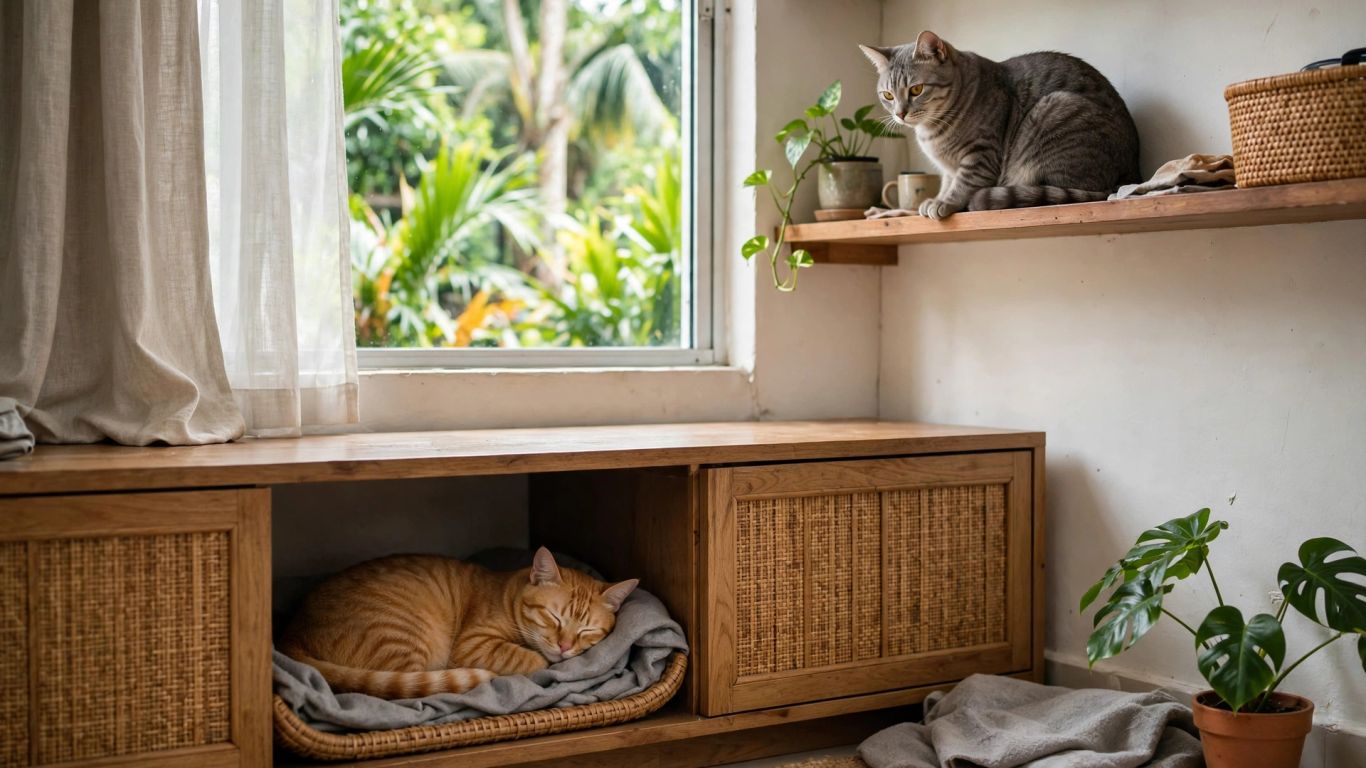
Watch for hiding, overgrooming, or changes in appetite
A cat who spends more time under furniture, grooms the same area repeatedly, or leaves food untouched may be feeling unsettled. Look for a change that persists or occurs alongside other signs, such as withdrawing from family members or becoming unusually irritable. If appetite changes suddenly or the behavior continues, contact a veterinarian to check for possible health concerns.
Look for staring, stalking, chasing, and resource guarding
Not all play is conflict: reciprocal chasing, pauses, and role changes can suggest both cats are comfortable. By contrast, persistent staring, stalking, repeated cornering, or guarding a bowl or doorway can leave one cat with little room to choose. Observe whether the pursued cat can stop the interaction and leave; an inability to do so is a useful warning sign.
Track litter box habits and changes in sleep or sociability
Changes in litter box use, sleep location, or willingness to spend time with people can help reveal that something in the home is not working. Record what changed and when, including whether a particular cat or room is involved. For easier comparison, use a simple table rather than relying on memory alone.
| What to observe | Useful detail to record | Possible clue |
|---|---|---|
| Litter box use | Location and time | Access or location may be a concern |
| Eating | Which cat eats, and when | Meals may feel crowded |
| Resting | Preferred spots and interruptions | A safe resting place may be needed |
| Social behavior | Who approaches or avoids whom | Interactions may be changing |
A pattern matters more than one isolated incident. Share the record with a veterinarian if changes are persistent, sudden, or affecting normal eating and elimination.
Keep a simple behavior log to identify patterns
A brief log can help you connect an interaction to a sound, visitor, feeding time, or blocked route. Keep entries factual and short so the record remains easy to maintain. A practical entry can include the date, location, what happened immediately beforehand, each cat’s response, and how long it took them to settle. Reviewing it every few days may show a trigger you would otherwise overlook.
Provide enough separate resources
Cats tend to cope better when they can access what they need without having to negotiate with another cat. That means considering not only how many bowls or resting places are available, but also where they sit and whether each cat can approach them freely. Separate access is often more useful than putting every resource together in one convenient corner.
Set up multiple litter boxes in quiet, accessible locations
Place litter boxes in locations that are easy to reach and not easily interrupted by household traffic. A box tucked into a narrow passage may leave a cat feeling trapped if another cat can block the way. As a starting point, many caregivers use one box per cat plus one extra when space allows, but layout and access matter as much as the count. Keep the boxes away from loud appliances where possible.
Create separate feeding and drinking stations
Set up food and water in more than one area so a cat can eat or drink without approaching another cat’s preferred spot. If one cat rushes meals or watches the other eat, add distance or a visual barrier between stations. Separate placement gives each animal more choice and makes it easier to see whether both are eating and drinking normally.
Add resting spots, scratching surfaces, and elevated perches
Give each cat several options for resting and scratching, including places at different heights where safe. A perch can provide a different route through a room, but it should be stable and reachable without a risky jump. Familiar bedding and scratching surfaces can also make quiet areas feel more inviting. PAWSONA cat pheromone products are one optional category owners may explore alongside environmental changes; they are not a substitute for checking why a cat feels blocked or unsettled.
Place resources so one cat cannot block access to another
The layout matters: putting two bowls side by side does not give cats much independence if one can guard both. Spread key resources across the home and consider whether there is more than one way to approach them. This simple comparison can help identify where to make adjustments first.
| Resource | More difficult arrangement | More accessible arrangement |
|---|---|---|
| Food | Bowls grouped in one corner | Stations in separate areas |
| Water | One bowl beside a guarded meal spot | Water available away from food stations |
| Litter | Boxes lined up in a dead-end space | Boxes in separate, reachable locations |
| Resting | One favored bed in a busy route | Several quiet options around the home |
Choose changes that address a real access problem, rather than rearranging everything at once. Watch whether each cat uses the new location comfortably before making another adjustment.
Reduce competition around food and litter
Meals and litter access are recurring events, so small layout problems can become a daily source of tension. If one cat crowds another, the goal is to give each cat a reliable way to eat and eliminate without being rushed or watched. Change one part of the setup at a time so you can tell what helps.
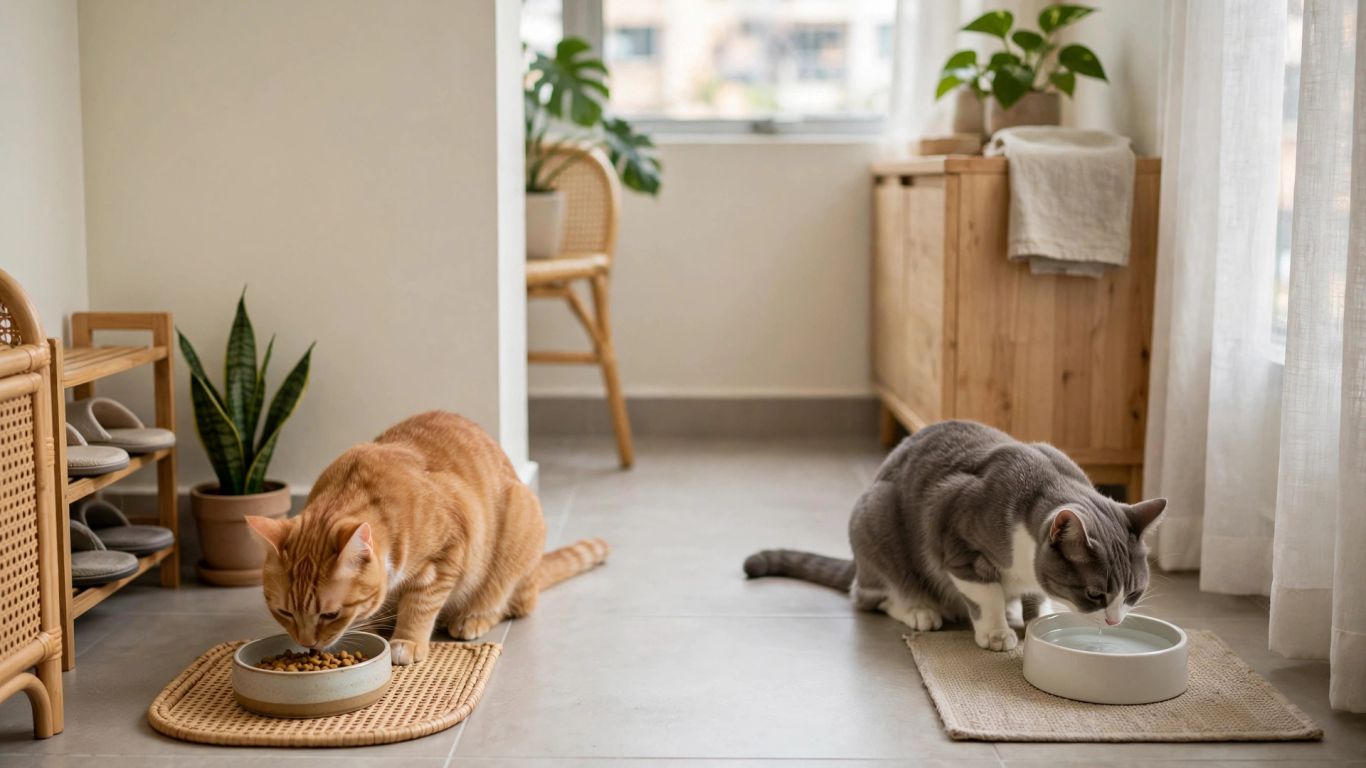
Feed cats apart if meals trigger guarding or rushing
If meals bring staring, pushing, or one cat finishing quickly and approaching the other’s bowl, try feeding them in separate rooms or at a greater distance. Keep the routine calm and consistent, and make sure each cat has enough time to eat without being interrupted. A closed door may be useful for some households, while others can use visual separation and more space.
Choose litter box locations with more than one approach where possible
A litter box beside a wall or in a narrow nook may be easy for one cat to guard. Where the home allows, choose a location with open access and more than one route in and out. If you are short on floor space, look for separate rooms or zones rather than placing every box together. The aim is to reduce the chance that a cat must pass another animal to reach the box.
Keep boxes clean and use familiar litter when making changes
Scoop regularly and avoid changing the box, litter, and location all at once. Cats can be sensitive to changes in scent and texture, and a sudden switch may make a box less appealing. If a new arrangement is needed, retain familiar litter where possible and observe whether each cat continues to use the box. A multi-cat litter box guide offers further ideas for managing space and access.
Make gradual adjustments rather than moving every resource at once
When several resources need attention, take a staged approach. Start with the issue that appears most urgent, such as an interrupted meal or an inaccessible litter box, and allow the cats time to adjust before changing other locations. This keeps the home more predictable and helps you identify which change made a difference. If you move everything at once, it becomes difficult to tell what is helping or adding stress.
Improve the home environment
A supportive home gives cats places to retreat, routes to move around one another, and activities that suit their individual preferences. In Malaysia, family schedules, visitors, and noisy periods can vary from day to day, so a few steady routines can make a difference. The aim is not to make every moment perfectly quiet, but to preserve choice and familiarity where possible.
Create hiding places and clear escape routes
A covered bed, open carrier, or quiet spot behind furniture can give a cat somewhere to settle without being approached. Keep these retreats accessible and avoid using them to force contact. Check that doorways and paths to essential resources remain clear, and do not let a single favored hiding place become easy for another cat to guard.
Use vertical space safely in apartments and condos
Shelves, cat trees, and stable furniture can add usable space without requiring another room. Secure climbing furniture so it cannot tip, and make sure there are safe ways up and down. Vertical routes can help cats pass at different levels, but they should not lead to a high perch with no comfortable way to retreat.
Offer daily play and enrichment tailored to each cat
Short, individual play sessions can offer stimulation without requiring the cats to compete for one toy. Some cats enjoy chasing a wand toy, while others prefer food puzzles or exploring a new cardboard box. Rotate activities and let each cat disengage when they have had enough. If you are considering a calming aid, safe cat behavior products should be evaluated carefully and alongside enrichment, routine changes, and veterinary advice when needed. PAWSONA® Zenkit™ Cat Calming Diffuser is described as supporting calmer behavior during heat cycles, indoor stress, and changes at home; it is one possible part of a broader plan, not a replacement for addressing the source of conflict.
Keep routines predictable despite Malaysia’s busy household schedules
Try to keep feeding, play, and quiet periods broadly consistent, even when work, visitors, or errands make the day busy. A household systems guide may offer ideas for keeping recurring tasks visible, while protecting strategic work is a useful parallel when setting boundaries around limited time. For travel to a veterinary appointment, prepare the carrier and essentials in advance; a JOYROOM JR-ZS406 mount is designed to keep a phone secure and within easy reach while driving, rather than handling it on the road. A practical philosophy focused on judgment and agency, such as Stoic Futurism, can also serve as a reminder to respond deliberately when household routines are disrupted. Even work like a tree service marketing plan can be easier to manage when routine cat-care moments are already built into the day. Predictability does not require a rigid timetable; it means keeping the cats’ essential needs from becoming uncertain.
Reintroduce cats and seek help when needed
A serious fight can unsettle both cats, even if neither is visibly injured. Give them time apart and rebuild calm associations gradually rather than expecting them to resume sharing space immediately. If conflict continues or either cat’s normal behavior changes, involve a veterinarian or qualified feline behavior professional to help rule out health issues and plan next steps.
Separate cats after serious fights and let them settle
After a serious fight, separate the cats without reaching between them or trying to handle an agitated animal. Give each cat access to water, food, litter, and a resting place in a separate area while they calm down. Check for injuries and contact a veterinarian if you are concerned. Guidance on safely separating fighting cats can help you plan a careful reset.
Use scent swapping before brief, supervised visual contact
Once both cats seem settled, swap bedding or gently rub a soft cloth on one cat’s cheek area and place it near the other cat’s resting area. Keep the exchange low-pressure and observe each cat’s response. If they remain relaxed, a brief visual introduction through a secure barrier may be a next step. A step-by-step cat introduction guide can help you pace these stages.
Progress at each cat’s pace and pause if stress increases
Keep early contact brief and end while the cats are still calm. Hissing, fixed staring, retreating, or refusal to take a favorite treat can be a sign to pause and return to an easier stage. Some cats need more time than others, and the pace should be set by the more uncomfortable cat. PAWSONA 100ml pheromone spray is described as potentially helping reduce stress-related behaviors and tension in multi-cat homes; if you consider it, use it as an adjunct to gradual introductions and environmental changes.
Consult a veterinarian or qualified feline behavior professional for persistent problems
Seek professional advice when fights recur, one cat remains hidden, appetite or litter box habits change, or gradual reintroductions are not progressing. A veterinarian can assess whether pain or another medical issue may be contributing to behavior changes. For ongoing conflict, a qualified feline behavior professional can help identify triggers and shape a safe, stepwise plan. If driving to an appointment, secure your cat in an appropriate carrier and keep your attention on the road.
Conclusion
Multi-cat household stress is often easier to address once you can see what each cat is experiencing and where access or routine is breaking down. Separate resources, safe routes, patient introductions, and professional guidance when needed can make home life more manageable without expecting every cat to interact in the same way.
Frequently Asked Questions
How many litter boxes should a multi-cat home have?
A common starting point is one litter box per cat plus one extra, placed in separate, quiet locations where cats can reach them without being cornered. The right layout also depends on the home and each cat’s habits.
Why is one cat chasing another around the house?
Chasing can be play when it is reciprocal and both cats can stop or leave. Repeated one-sided chasing, cornering, or hiding may signal conflict, so observe the pattern and provide separate routes and resources.
Should I separate cats after a fight?
After a serious fight, separate the cats and give them time to settle in different areas with their own essentials. Avoid placing your hands between fighting cats, and contact a veterinarian if either may be injured.
How can I feed cats that rush or guard food?
Feed them farther apart or in separate rooms so each cat can finish without being watched or interrupted. Keep the arrangement predictable and adjust it if either cat remains tense.
Can stress cause a cat to stop using the litter box?
Stress or difficulty accessing a box may affect litter box habits, but medical problems can also cause changes. Contact a veterinarian about new or persistent elimination changes rather than assuming they are behavioral.
How slowly should I reintroduce cats?
There is no fixed timetable. Begin with separation and scent exchange, then try brief visual contact only when both cats seem settled; pause or return to an earlier step if stress increases.
When should I seek professional help for cats that are fighting?
Consult a veterinarian if fighting is repeated, injuries occur, or either cat has changes in appetite, elimination, or behavior. A qualified feline behavior professional can also help with persistent tension and gradual reintroduction planning.