


Key Takeaways
Unwanted behavior is often a clue that a cat’s needs, health, or sense of safety has changed. Look for patterns, make small adjustments, and involve a veterinarian when a change is sudden or persistent.
- Consider health, instinct, and stress before labeling behavior as “bad.”
- Check litter-box comfort and scratching options before trying to stop a behavior.
- Make essentials, quiet retreats, and enrichment easy for your cat to access.
- Reward small steps and introduce changes gradually rather than using punishment.
- Track patterns and ask a veterinarian or qualified behavior professional for help when needed.
Understand what drives your cat’s behaviour
A cat’s behavior makes more sense when you look at what happened before it, what the cat was trying to achieve, and what changed afterward. A new habit may reflect instinct, stress, an adjustment to the home, or a physical problem—not defiance. For owners searching for cat behaviour solutions Malaysia, that first step is observation rather than correction. Notice when the behavior occurs, where it happens, and whether anything in the household has recently shifted.
How instinct, age, and past experiences shape behaviour
Cats are built to climb, hide, scratch, hunt, and keep a degree of control over their surroundings. Kittens may be especially energetic and curious, while older cats can be less comfortable with changes in mobility or routine. A cat’s history matters, too: a rescue cat with limited experience of visitors may need more time and choice than one raised in a busy home. Understanding common cat behaviors can help you read actions in context instead of treating every scratch or retreat as a problem to suppress.
How stress and changes at home affect cats
Stress can show up as hiding, altered grooming, reduced appetite, increased vocalizing, tension between cats, or changes in litter-box habits. Moving, renovations, unfamiliar people, new pets, and competition for essential resources can all unsettle a cat. In a multi-cat home, try to make food, water, resting places, and litter boxes available in separate locations so one cat cannot easily block another. A guide to stress in multi-cat homes offers further ideas for noticing tension and arranging resources; changes can be subtle, so look for patterns rather than relying on one incident.
When a sudden behaviour change may signal a health problem
A sudden behavior shift deserves attention, especially if it comes with changes in eating, drinking, movement, grooming, or litter-box use. Pain and illness can affect how a cat interacts with people and the home, and it is not possible to identify the cause from behavior alone. Keep a short record of what you notice and arrange veterinary advice if the change is abrupt, persistent, or accompanied by other signs of illness. Treat the behavior as useful information, not proof of a particular diagnosis.
Address common cat behaviour challenges
Litter-box avoidance, furniture scratching, biting, and repeated meowing can be exhausting, especially when the reason is unclear. Before trying to interrupt a behavior, consider what need it may meet and whether the environment makes a more suitable option difficult to use. The same behavior can have different causes in different cats, so look for timing, location, and recent changes. Gentle, practical adjustments are often a better starting point than trying to force an immediate stop.
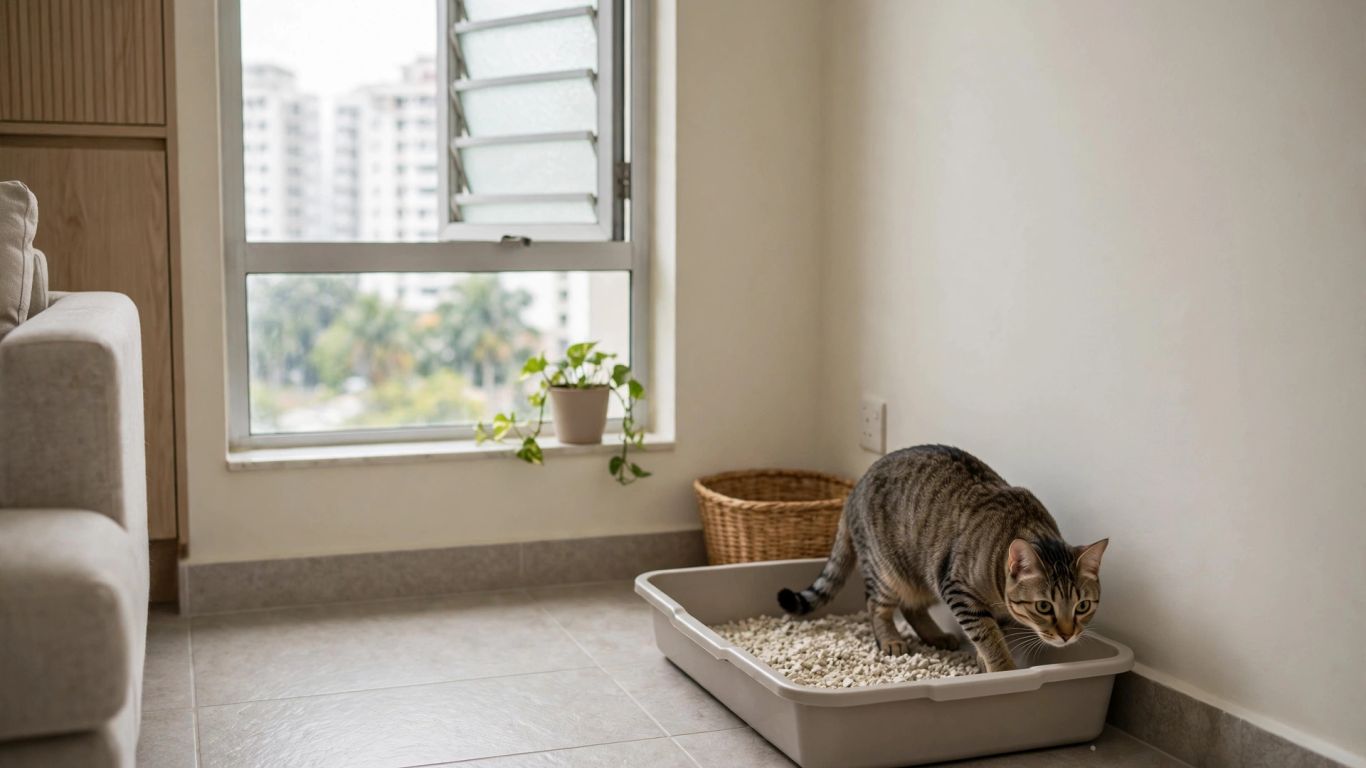
Reduce litter-box avoidance by checking setup and location
If a cat stops using the box, consider both medical causes and the details of the setup: the box’s cleanliness, its location, its size, and whether the litter’s texture seems comfortable. A sudden change in urination or defecation should prompt a veterinary check rather than an assumption that the cat is being difficult. These questions can help you identify practical adjustments without changing everything at once:
| What to check | What to notice | Possible next step |
|---|---|---|
| Location | Noise, foot traffic, or a blocked route | Try a quieter, accessible spot |
| Cleanliness | Whether waste is removed regularly | Set a consistent cleaning routine |
| Litter | A recent change in texture or scent | Consider returning to a familiar option |
| Access | Whether another pet can interrupt or block the cat | Offer a less exposed location |
Make one manageable change, then give your cat time to respond. If the behavior continues, a litter-box avoidance guide can help you consider other possible causes alongside veterinary advice.
Redirect scratching and protect household furniture
Scratching helps cats stretch, maintain their claws, and leave scent marks. Rather than relying on a deterrent alone, place a sturdy scratching surface near the furniture or route your cat already uses, and reward exploration of that surface. Some cats prefer a vertical post; others choose a horizontal board or a different texture. PAWSONA publishes cat behavior guides and practical advice on feline wellbeing, including support for making a home more comfortable. Whatever changes you try, keep the acceptable scratching option easy to reach and avoid startling or frightening your cat near the furniture.
Respond safely to aggression, biting, and excessive meowing
Aggression and biting can be linked to fear, overstimulation, pain, or conflict over space; repeated meowing may have a different cause, such as a request, a disrupted routine, or distress. Pause interactions when you notice tense posture, ears held back, a lashing tail, or attempts to withdraw. Never use your hands as a toy, and do not punish a cat for signaling that it needs distance. For households dealing with conflict, aggression and stress signs can help guide safer observation; sudden aggression or a marked change in vocalizing also warrants veterinary advice.
Create a home that supports calm behaviour
A supportive home does not have to be large or elaborate. Cats benefit when they can find essentials, retreat from noise, and choose where to rest or observe what is happening. Small changes in placement and access can matter, particularly in busy households or homes shared by multiple cats. Think about the home from the cat’s perspective: can they reach what they need without being cornered or disturbed?
Add vertical spaces, hiding spots, and quiet resting areas
A raised perch gives a cat a place to observe, while an enclosed or partly covered retreat can make it easier to rest undisturbed. Provide more than one route away from common resting spots where possible, especially if other animals or children share the home. Do not pull a hiding cat out to encourage interaction; let the cat decide when to reappear. A calm home setup can help you think through safe hiding places, accessible essentials, and familiar routines without needing to redesign the entire space.
Set up litter boxes, feeding stations, and water sources thoughtfully
Cats may avoid resources that are crowded together, difficult to reach, or placed where another animal can block the way. Distribute essentials around the home and observe whether each cat can approach and leave comfortably. Some practical home decisions are distinct from cat care—whether a household is choosing quartz countertops or rearranging a feeding area—but both call for noticing how people use a space. For your cat, the useful test is simpler: can they reach the resource in a calm, predictable way?
Provide daily play and enrichment for indoor cats
Regular play gives indoor cats a chance to stalk, chase, and pounce in a safe setting. Short sessions with a wand toy or a simple search for hidden treats can offer variety; finish play by letting the cat catch the toy rather than teasing them indefinitely. Rotate a few toys instead of leaving every option out all the time, and let your cat opt in or step away. These small routines can make the day more predictable and provide an outlet for natural behavior.
Build a positive behaviour-change plan
Once you have considered health and the home environment, choose one behavior to work on first. Set a modest goal that is easy to recognize, such as approaching a carrier, using a scratching post, or remaining calm at a distance from a trigger. Small, repeatable steps make it easier to see what is helping and reduce the chance of overwhelming your cat. Keep the routine manageable enough that everyone in the household can follow it consistently.

Reward the behaviour you want to see
Notice and reward the behavior you would like to happen again: choosing the scratching post, settling on a bed, or approaching a visitor without retreating. Use something your cat values, such as a small treat, play, or gentle attention, and deliver it promptly so the connection is clear. Keep rewards low-pressure and let the cat move away if they choose. Consistency matters in every routine: people may follow dining etiquette at a meal, but with cats, rewards work best when they follow a specific behavior the cat can repeat.
Use gradual desensitisation for fears and triggers
For a fear or trigger, begin at a level your cat can tolerate without becoming distressed, then increase the challenge in small increments. For example, leave a carrier visible at first, reward calm investigation, and only later practice brief time near or inside it. A useful progression might look like this:
- Start with the trigger at a distance or intensity your cat can manage.
- Pair calm observation with a reward or another positive experience.
- Increase exposure gradually, returning to an easier step if distress appears.
- Keep sessions short and allow the cat to leave or take a break.
Progress may be uneven, and that does not mean the plan has failed. If your cat freezes, tries to escape, or becomes increasingly distressed, make the next session easier rather than pushing through. A guide to cat anxiety and calmer routines offers further ideas for safe spaces, play, and when to seek veterinary input.
Avoid punishment and other approaches that can increase stress
Yelling, spraying water, or physically forcing a cat may frighten them without teaching a useful alternative. It can also make the cat wary of the person or place associated with the punishment. Instead, prevent access to a tempting hazard when you can, offer an appropriate alternative, and reward the choice you want to encourage. Even in settings where a service follows agreed boundaries, such as a dental virtual receptionist, the relevant lesson for cat care is simply to respect clear limits; a cat’s fear or discomfort should never be treated as an invitation to force contact.
Adapt your approach to Malaysian homes
Local conditions and household routines shape what is practical for a cat. Warm, humid weather, apartment layouts, visitors, and renovation noise can all affect comfort or access to quiet space. Rather than applying the same setup everywhere, notice where your cat chooses to rest and how they respond to changes through the day. Adjustments should be guided by the individual cat, with a veterinarian involved when behavior changes are concerning.
Manage heat, humidity, and access to fresh water
Offer fresh water in accessible places and keep resting areas away from direct sun and sources of heat. Check that water bowls remain clean and full, and observe whether your cat is drinking and behaving as usual. Cats may prefer different bowl locations or types, so offering a few sensible options can help you notice their preference. If you see unusual lethargy, poor appetite, or other concerning changes, contact a veterinarian rather than assuming the weather is the only cause.
Make apartment living safer with secure windows and balconies
Windows and balconies can be dangerous if a cat can squeeze through a gap or push past a loose screen. Check that barriers are secure and that openings cannot be reached unsupervised; do not rely on a cat seeming cautious. Provide indoor places to climb or look outside so the home still offers activity without an unsafe route outdoors. Make a quick safety check part of your routine, especially after repairs or changes to window coverings.
Help cats adjust to visitors, renovations, and household changes
When visitors arrive or work begins at home, prepare a quiet retreat with familiar bedding, water, and a way to avoid foot traffic. Keep the cat’s usual routines as steady as you can, and let them approach new people on their own terms. For a gathering, visitor-related stress tips can help you plan a calm space and watch for signs such as hiding or appetite changes. A predictable retreat is also useful during smaller disruptions, like furniture being moved or a new household member arriving.
Get the right help and track progress
Some behavior changes are best handled with professional support, and asking for help early is a sensible choice rather than a failure. A veterinarian can check for health issues, while a qualified cat behavior professional can help assess environmental and learning factors. Bring clear observations rather than a fixed conclusion about what is wrong. A simple log can make a conversation more useful by showing when the behavior began and what has changed since.
Know when to consult a veterinarian
Contact a veterinarian for sudden or persistent changes, signs of pain, altered eating or drinking, repeated litter-box problems, or behavior that could put the cat or others at risk. A veterinary assessment is especially important before assuming that elimination changes, aggression, or hiding are only stress-related. Describe what you have seen, when it happens, and any changes in routine or the home. If the cat seems acutely unwell, seek prompt veterinary care.
Choose a qualified cat behaviour professional in Malaysia
Look for someone who can explain their approach clearly, asks about the cat’s health and environment, and avoids methods based on fear or force. A good professional should be willing to work alongside your veterinarian when health questions are part of the picture. Ask how they assess behavior, what observations they need, and how progress will be reviewed. PAWSONA focuses on cat stress relief and behavior solutions, with educational guidance and scientifically formulated calming products; that does not replace individualized veterinary or behavior advice.
Keep a behaviour log to assess what is working
Record the date, time, location, behavior, what happened just before it, and how people responded. Add notes about food, visitors, noise, household changes, and any adjustment you tried. Review the log every week or two for patterns, and change one factor at a time where practical. This makes it easier to explain progress to a veterinarian or behavior professional and to notice when an approach is not helping.
Conclusion
Understanding the reason behind a behavior gives you a calmer, clearer place to start. Check for health concerns, make the home easier to navigate, and use patient, reward-based changes that fit your cat’s pace. With observation and the right support, many households can find a more comfortable routine for both cat and person.
Frequently Asked Questions
Why has my cat suddenly started peeing outside the litter box?
A sudden change can have a medical cause, a problem with the litter-box setup, or a stress-related trigger. Arrange a veterinary check, especially if the change persists or your cat seems unwell.
How many litter boxes should I have?
A common starting guideline is one box per cat plus one extra, placed so cats can access them without being cornered. Your home’s layout and the cats’ relationships also matter.
How can I stop my cat from scratching furniture?
Offer a stable scratching surface near the spot your cat already scratches, and reward its use. Try different orientations or textures if your cat ignores the first option.
Is hiding always a sign that a cat is stressed?
Not necessarily. Cats may hide to rest or feel secure, but a new or persistent increase in hiding can signal stress or illness, particularly alongside other changes.
Should I punish a cat for biting or aggression?
No. Punishment can increase fear and does not teach a safer alternative. Give the cat space, avoid provoking the behavior, and seek veterinary advice if it is new or severe.
How can I help my cat adjust to visitors?
Set up a quiet retreat with familiar items and let your cat choose whether to come out. Ask visitors not to approach, pick up, or corner the cat.
When should I seek professional help for cat behavior?
Consult a veterinarian for sudden, persistent, or health-related changes. A qualified behavior professional can help when the issue continues or you need a tailored plan.