


Key Takeaways
A calmer home starts with noticing what your cat needs and making comfort easier to find. Small, steady changes can make a real difference.
- Offer quiet hiding places and safe elevated spots.
- Keep food, water, litter, and resting areas easy to reach.
- Make the home comfortable through Malaysia’s heat, storms, and noise.
- Keep daily routines familiar and introduce changes gradually.
- Seek veterinary advice if concerning changes persist or worsen.
Understand what helps cats feel safe
Cats often feel safest when they can choose where to rest and how close to get to people. A calm home environment for cats malaysia owners create is less about making every room silent and more about giving cats a sense of control. Notice what your cat already chooses, then build on those preferences rather than forcing a new routine.
Provide hiding places and elevated resting spots
A covered bed, a cardboard box, or a quiet space beneath a table can give a cat somewhere to retreat when the household feels busy. Many cats also appreciate a stable perch where they can watch what is happening without being approached. The safe hiding places in a home need not be elaborate; familiarity and access matter more than appearance.
A cat who disappears more often than usual may be responding to a change in the home, not misbehaving. A useful overview of common cat stress signs can help you notice patterns, while leaving your cat free to come out on their own terms. PAWSONA offers calming products as part of its cat stress and behaviour solutions, but a retreat and a look at the underlying trigger are sensible starting points.
Let your cat choose when to interact
Some cats seek attention readily; others prefer to approach only when they feel ready. Sit nearby, speak gently, and let your cat decide whether to sniff, stay, or walk away. Reaching into a hiding place or lifting a cat who has retreated can make that refuge feel less safe.
Keep greetings low-key, especially after a long absence or when the home is lively. A cat’s choice to leave is useful information, not a rejection that needs correcting. Respecting that boundary often makes future contact feel more comfortable.
Watch for changes in eating, grooming, and behavior
Stress can show up as a change in ordinary habits: eating less, grooming more or less, hiding, vocalizing, or avoiding the litter box. One change does not prove stress, and sudden or persistent behavior changes can have medical causes. Write down what changed and when, including any new visitors, noises, or household disruptions.
A short record can make it easier to describe the pattern to a veterinarian. Look for more than a single difficult day: a shift that continues, worsens, or comes with other symptoms deserves attention. Try not to label a change as simply a “bad habit” before considering what might be behind it.
Make sure every cat can reach essential resources safely
In a home with more than one cat, access matters as much as the number of bowls or beds. A cat may avoid a resource if another cat can block the route or wait nearby. Separate locations and clear paths give each animal a chance to eat, drink, rest, and use the litter box without having to pass a housemate.
A simple layout check can reveal where small adjustments may help. This table is a starting point, not a rigid floor-plan rule; watch how each cat actually moves through the rooms.
| Resource | Possible placement | What to watch for |
|---|---|---|
| Food | Separate, calm feeding spots | One cat guarding or rushing another |
| Water | More than one accessible location | A bowl placed beside a busy route |
| Litter | Quiet areas with clear approaches | A cat waiting or being cornered |
| Resting spots | Several rooms and heights | One cat occupying every preferred perch |
If a cat hesitates or waits for another to move, try adding distance or another route before changing the resource itself. For more on easing tension in shared homes, PAWSONA offers calming sprays among its cat stress relief products; environmental changes and observation still matter when addressing the source of conflict.
Set up a comfortable indoor space
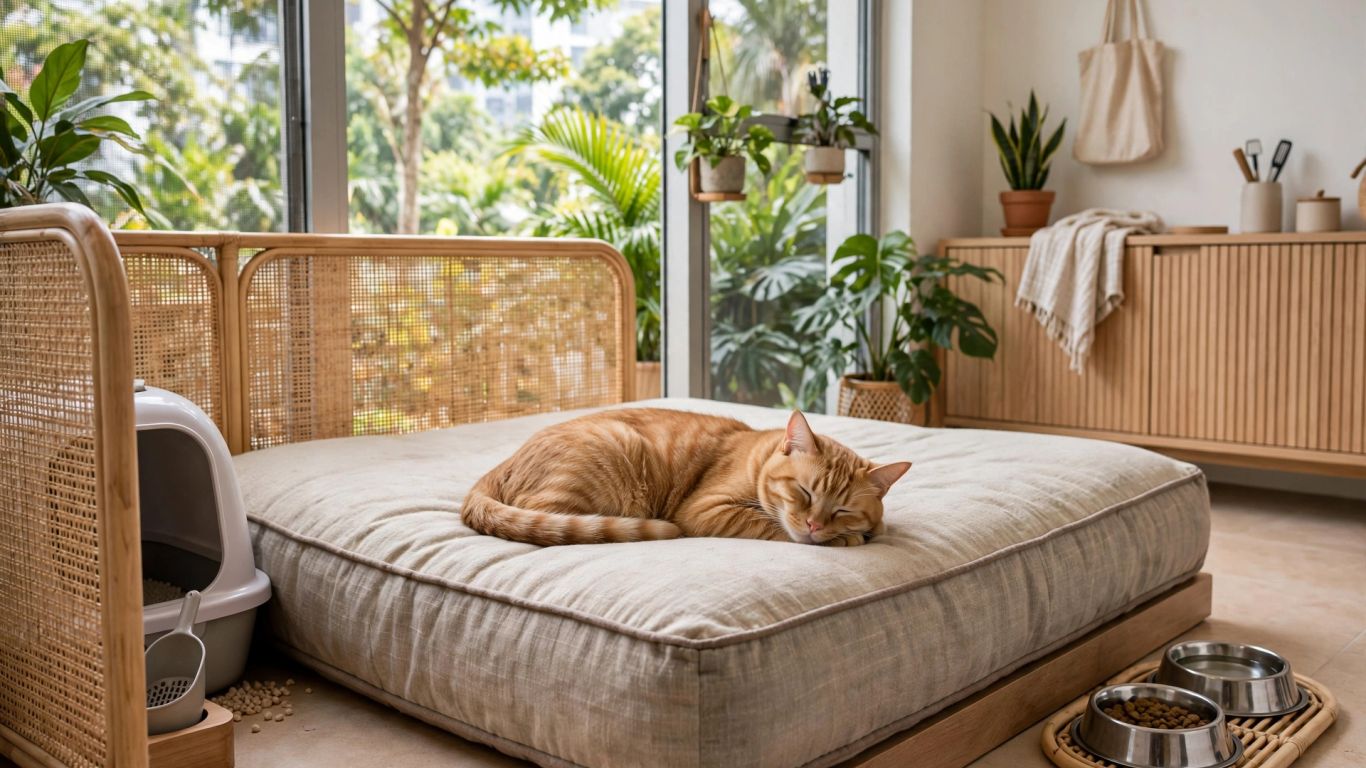
A comfortable indoor space gives cats places to meet basic needs without making them cross a noisy or crowded part of the home. Think about how rooms connect, not just what each room contains. A few practical adjustments can make everyday movement feel more predictable.
Create separate areas for sleeping, eating, and toileting
Cats benefit when their resting place is away from food and litter, and when each area remains easy to reach. A bed beside a busy doorway may be less appealing than a quiet corner, even if the bed itself is soft. Try to place essentials where household traffic will not constantly interrupt them.
Consider the materials around feeding and litter areas, too. If you clean a stone counter or floor nearby, use appropriate care guidance such as this stone surface cleaning guide, rather than assuming every cleaner suits every material. Keep cleaning products and strong scents away from the cat’s immediate space.
Choose litter boxes that suit your cat and your home
A litter box should be easy for your cat to enter, use, and leave without feeling trapped. Keep it in a quiet, accessible spot and scoop it regularly; a box beside a noisy appliance or in a narrow passage may be avoided. If your cat’s habits change, consider both the box setup and possible health concerns.
Different litter materials can feel and behave differently in daily use. A cat litter comparison may help you weigh dust, odor, disposal, and your cat’s preferences. Make changes gradually when possible, so you can tell whether the new option is actually working for your cat.
Add scratching surfaces and opportunities to play
Scratching is a normal behavior, and a suitable post or mat gives your cat an appropriate place to use it. Try more than one surface or orientation, then observe what attracts your cat. Short play with a toy that can be chased or pounced on can add useful activity without turning the whole day into a performance.
Keep play manageable and let your cat catch the toy sometimes. If furniture scratching increases suddenly, check whether the existing scratching surface is stable, accessible, and appealing before treating the behavior as defiance. Small adjustments often provide a clearer answer than adding several new items at once.
Secure windows, balconies, and other potential escape routes
Before opening a window or balcony door, check that screens, latches, and barriers are secure and appropriate for the space. A startled cat can move quickly, so do not rely on supervision alone around an unsecured opening. Give the cat an indoor perch near a window if they enjoy watching outside, while keeping the route safe.
Outdoor wellness plans such as backyard retreat planning are designed around people’s outdoor spaces; they are not a substitute for securing a cat’s access. Keep balcony furniture from creating an easy climb over a barrier, and make sure visitors know which doors need to stay closed.
Adapt your home to Malaysia’s climate and surroundings
Malaysia’s warm, humid weather and sudden heavy rain can shape where a cat chooses to rest. A comfortable space should let the cat move between different conditions rather than forcing them to stay in one spot. Pay attention to the places your cat chooses during the hottest and noisiest parts of the day.
Keep resting areas cool and well ventilated
Choose resting places with airflow and shade, especially during warm afternoons. Cats may shift between a cool floor and a soft bed depending on the weather, so allow access to both if possible. Check that a preferred corner does not become hot from direct sun for hours.
Good ventilation helps a room feel less stuffy, but the cat should also have a way to move away from a draft. Observe where your cat settles rather than deciding that one arrangement will suit them all day. Familiar resting spots can remain available while you make a room more comfortable.
Offer fresh water in several easy-to-reach spots
More than one water location can make drinking convenient, especially in a larger home or one with multiple cats. Keep bowls clean and away from litter, and choose positions that are not crowded by household traffic. Refresh the water regularly and notice whether your cat consistently prefers one location.
A cat may drink less if a bowl is difficult to reach or sits beside a resource another cat guards. Moving a bowl to a calmer spot, or adding another, is an easy change to test. Avoid placing every essential resource in one busy corner.
Reduce exposure to storms, traffic, and neighborhood noise
Thunder, heavy rain, traffic, and nearby construction can make a home feel unpredictable. During a storm or noisy spell, keep access open to a familiar retreat and try to carry on calmly. If a roof leak or other weather-related home issue needs attention, roof installation guidance is a separate home-maintenance resource, not advice about feline care.
PAWSONA offers pheromone diffuser kits as one option within its cat stress relief products. A diffuser does not remove the source of noise, so pair any product choice with a quieter resting place and a way for the cat to avoid the disturbance. If your cat repeatedly struggles during storms, discuss the pattern with a veterinarian.
Check that fans and air-conditioning do not make preferred spots uncomfortable
A fan or air-conditioning can make a room more comfortable, but its direction and strength matter. A cat who keeps moving away from a vent may be telling you that the airflow is too direct. Let the cat choose between a cooler area and a more sheltered spot.
Check the temperature where the cat actually sleeps, not just where people sit. Move a bed slightly or change the fan’s direction if a preferred resting place feels uncomfortable. The aim is to offer options, not to keep every part of the home at one temperature.
Build predictable routines
Familiar patterns can help cats feel more at ease, particularly when the outside world is noisy or the household is busy. A routine need not follow an exact clock; it simply needs to be steady enough that the cat can anticipate ordinary events. Keep changes small when life allows.
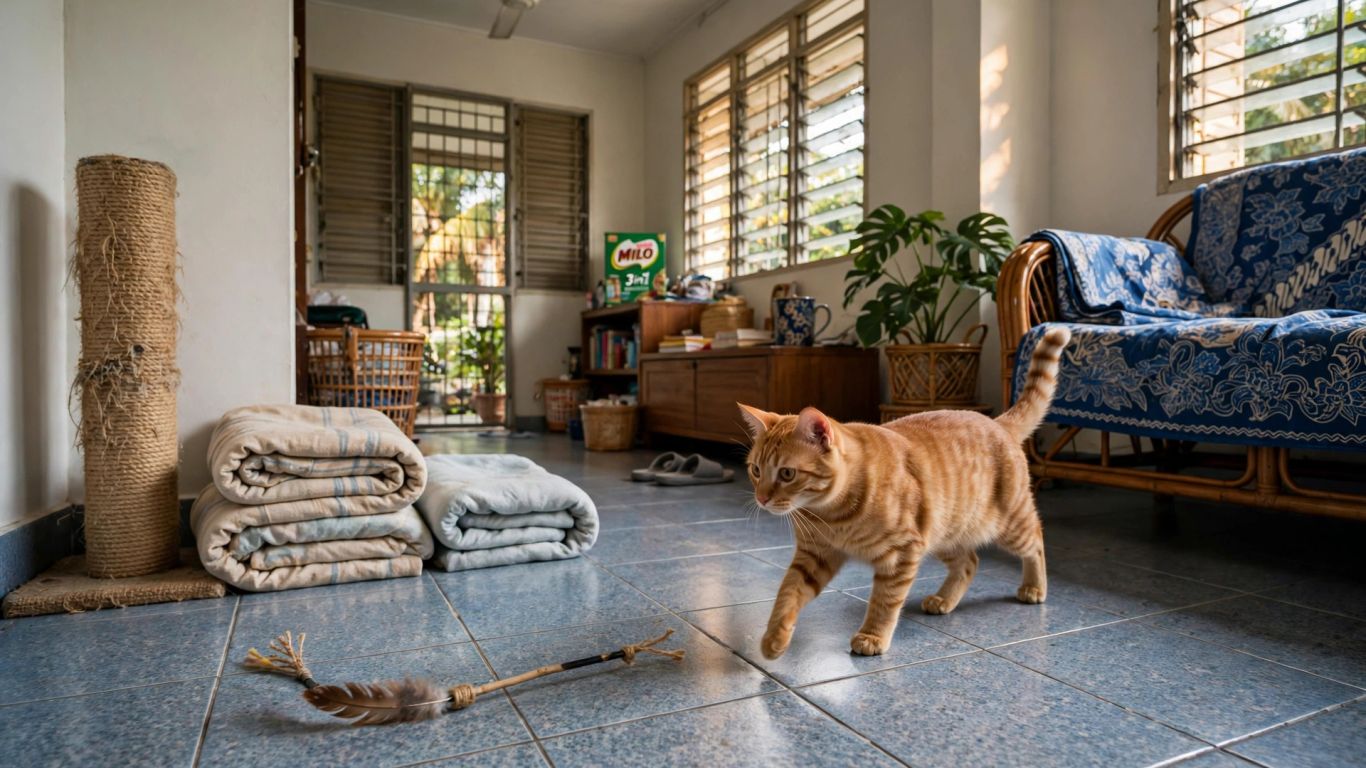
Keep feeding and play times reasonably consistent
Regular meal and play windows help make the day easier to predict. If work or family schedules shift, keep the order of events familiar where possible, such as play followed by a meal. Avoid making a sudden change to food or feeding arrangements without considering your cat’s response.
Watch whether the routine suits the cat in front of you. Some cats are ready to eat early; others take time to settle after activity. Consistency is a helpful guide, not a demand that every day look identical.
Use short play sessions to support activity and relaxation
Brief play sessions can fit into ordinary life and give indoor cats a chance to chase, stalk, and pounce. Use a toy that keeps hands at a comfortable distance, and stop if your cat loses interest or seems overwhelmed. A few short sessions may be easier to sustain than one long, intense bout.
A simple sequence can keep play relaxed and repeatable:
- Offer a toy that your cat can follow or chase.
- Pause now and then so your cat can watch and reset.
- Let the cat catch the toy before ending the session.
- Put the toy away if your cat becomes tense or tired.
Afterward, give your cat a quiet place to rest. These sessions are invitations, not tests of athletic ability; let the cat set the pace and adjust the toy or timing if they disengage.
Introduce visitors gradually and provide a quiet retreat
Visitors can bring unfamiliar voices, scents, and movement into a cat’s space. Before guests arrive, make sure the cat can reach a quiet room or hiding place without being followed. Ask visitors not to crowd, call, or reach for a cat who has chosen to stay away.
A gathering does not need to include the cat to go well. PAWSONA’s educational guidance on cat stress includes support for owners dealing with everyday stressors; for a visitor-filled home, protecting a retreat and keeping familiar routines are practical first steps. Let the cat reappear when the household feels settled.
Avoid sudden changes to furniture, scents, or household rules
Cats use familiar arrangements and smells to understand their surroundings. Moving several pieces of furniture at once or introducing a strong new scent can make a known room feel unfamiliar. Make one change, then give your cat time to investigate before adding another.
Human-focused products deserve thought around cats, too. A lavender diffuser guide discusses a human evening routine, not whether a scent is suitable for cats; do not assume that a product intended for people is appropriate for a pet. Keep household rules consistent as well, so a place that was safe yesterday does not suddenly become off-limits without a reason.
Help cats share a home peacefully
Cats living together may enjoy one another’s company, tolerate one another, or prefer a little distance. Peace does not require constant closeness. Set up the home so each cat can meet essential needs without having to compete or pass another cat in a narrow space.
Provide separate food, water, litter, and resting resources
When resources are clustered together, one cat can unintentionally control access to all of them. Spread bowls, boxes, and resting spots across the home where possible, and notice whether each cat uses them without waiting or being watched. For a small home, even modest separation between locations can help.
Keep track of who uses what, especially after a new cat arrives or routines change. If one cat begins eating less or avoiding a litter box, consider whether access has become uncomfortable as well as checking for medical causes. Add options before assuming the cats will work it out on their own.
Arrange escape routes and high places to prevent cornering
A cat should be able to leave a room or move to a higher resting place without being trapped by another cat. Add more than one route through busy areas when practical, and avoid putting essentials at the end of a dead-end passage. A high shelf or perch can provide distance, provided it is stable and easy to reach.
Observe interactions around doorways, stairs, and narrow halls. A cat that pauses, turns back, or waits for another to move may be signaling that the route does not feel safe. Rearranging a resource or opening another path can reduce pressure without requiring the cats to socialize.
Introduce cats gradually through scent and supervised contact
A new cat needs time to become familiar with the home and its smells before face-to-face meetings. Start with separate spaces, then allow each cat to explore the other’s scent at a pace that keeps both relaxed. Short, supervised visual contact can follow when they are ready, with room to retreat.
If either cat hisses, hides, or tries to escape, slow the process down rather than pushing through. Keep early meetings brief and end them before tension escalates. A gradual introduction can take time, and that is not a sign that it has failed.
Respond to tension with more space rather than punishment
Chasing, blocking, or growling can indicate that a cat needs more distance or a safer route. Avoid yelling or punishing; it can add fear without solving the reason the tension began. Separate cats calmly if needed, then review where the encounter happened and what resources were nearby.
In multi-cat homes, PAWSONA offers calming collars among its cat stress and behaviour products. Products are not a replacement for separate resources, careful introductions, or veterinary advice when behavior changes persist. Use observations of each cat’s comfort to guide the next adjustment.
Make changes with care
Even a helpful change can unsettle a cat if it arrives suddenly or removes a familiar safe place. Whether the household is adding furniture, welcoming a new person, or preparing for a move, keep a familiar retreat available whenever possible. Slow steps make it easier to see what is helping.
Introduce new furniture and enrichment one item at a time
A new bed, scratching post, or toy may need time before a cat decides to use it. Place one item in a suitable spot and let the cat investigate without being coaxed into it. If the cat avoids it, try a different location before concluding that the item itself is unwanted.
Keep familiar objects in place while you test something new. This makes it easier to tell whether the change is appealing and gives the cat a dependable option. For a larger clear-out, a house-cleanout planning guide covers safety and sorting; keep the cat in a secure, quiet area while work is underway.
Prepare a quiet room for moves, renovations, or new arrivals
A quiet room with familiar bedding, water, food, and a litter box can give a cat a protected base during a move or renovation. Keep doors and windows secure, and let household members know that the room is not a shortcut or storage area. Once the disruption passes, allow the cat to explore the rest of the home gradually.
Moving house in Malaysia can involve unfamiliar sounds, transport, and a new layout. A cat moving guide can help you plan a secure journey and settling-in space. If a clean-out or repair project is part of the move, arrange the cat’s retreat before work begins rather than after the home is already busy.
Use a carrier and familiar bedding for vet visits
Make the carrier part of the home before an appointment by leaving it accessible with familiar bedding inside. Allow your cat to investigate in their own time, and use a calm, steady approach when it is time to travel. A familiar-smelling blanket can make the carrier feel less strange.
Do not wait until the day of a visit to introduce a carrier if you can avoid it. A brief, positive encounter at home is a gentler start than an unexpected chase. If your cat remains distressed during transport, ask your veterinary team for advice on preparing for future visits.
Contact a veterinarian if signs of stress persist or worsen
Hiding, appetite changes, overgrooming, aggression, or litter-box changes can have several causes. If a concerning behavior continues, worsens, or appears suddenly, contact a veterinarian rather than assuming it is only stress. Share when the change began and any relevant shifts in the household.
A professional can help rule out medical causes and discuss appropriate next steps. Keep the home supportive in the meantime: preserve access to food, water, litter, and a quiet resting place, and avoid punishing the behavior. The goal is to understand what the cat needs, not simply to make a visible symptom disappear.
Conclusion
A calmer home is built through everyday choices: safe places to retreat, accessible resources, comfortable rooms, and routines a cat can learn to trust. Observe what your cat is telling you, make changes gradually, and seek veterinary guidance when a change in behavior persists or raises concern.
Frequently Asked Questions
How can I tell whether my cat feels safe at home?
Look for ordinary, relaxed habits such as resting in familiar places, eating, grooming, and moving around without repeatedly retreating. A sudden change in those habits may be worth investigating, especially if it continues.
What is a good quiet place for a cat to hide?
Choose an accessible spot away from busy foot traffic, such as a covered bed, box, or quiet room. Let the cat enter and leave freely, and do not reach in to pull them out.
Should food and litter be kept in the same area?
It is generally helpful to keep food and litter separate, with both in calm, accessible places. In a multi-cat home, spreading resources out can also reduce the chance that one cat blocks another.
How can I help my cat during a thunderstorm?
Keep a familiar retreat available, close windows if appropriate, and let your cat choose where to settle. Stay calm and avoid forcing interaction; ask a veterinarian for guidance if storm-related distress is severe or recurring.
How often should I play with an indoor cat?
There is no single schedule that suits every cat. Short sessions at reasonably predictable times can be a useful starting point, then you can adjust based on your cat’s energy and interest.
How should I introduce a new cat to my home?
Begin with a separate, secure space and allow the cats to become familiar with one another’s scent before supervised visual contact. Move at a pace that keeps both cats able to retreat.
When should I contact a veterinarian about a behavior change?
Contact a veterinarian if a change is sudden, persists, worsens, or comes with other signs such as reduced appetite or litter-box changes. Medical issues can look like stress, so it is best not to assume the cause.