


Key Takeaways
Visitors can unsettle a cat even when everyone means well. A quiet retreat, familiar routines, and letting the cat choose when to interact can make a visit easier.
- Watch for changes in posture, hiding, appetite, or litter box habits.
- Set up a private room with essentials before guests arrive.
- Ask visitors to give your cat space and avoid forcing contact.
- Keep your cat’s routine steady and let them rejoin the household at their own pace.
- Contact a veterinarian about persistent or sudden changes in eating or toileting.
How to recognize stress when visitors are around
A cat may respond to company with small changes rather than an obvious display of fear. Look at the whole picture: posture, usual habits, and whether your cat can settle once the home becomes quieter. One behavior alone cannot tell you exactly what is wrong, but a change that appears around visitors is worth noticing. A cat anxiety guide for Malaysia offers more context on signs and triggers to watch for at home.
Changes in body language, such as flattened ears or a tucked tail
Cats often communicate unease through their bodies before they hiss or run away. Flattened ears, a lowered posture, a tucked tail, or a tense, still stance can suggest that a cat wants more distance. Some cats may also crouch, keep their pupils wide, or repeatedly scan the room. Give these signals room to speak: approaching to reassure a worried cat can feel like more pressure.
Hiding, hissing, or avoiding food and the litter box
Hiding is a common way to create distance from unfamiliar people, and a hiss is a clear request not to come closer. A cat may also eat less or delay using the litter box while guests are nearby, especially if the usual route feels exposed or blocked. These behaviors deserve attention, but they do not prove that visitors are the only cause. A change from normal matters more than any single sign, so note when it began and whether it continues after the visit.
Distinguishing brief unease from signs that need attention
A cat who spends a gathering tucked away but returns to eating, resting, and using the litter box normally afterward may simply need time and space. A repeated pattern, a change that lasts after the home is quiet, or a sudden shift in health-related habits calls for closer attention. This quick comparison can help organize what you observe; it is not a diagnosis.
| What you notice | What to observe next | Helpful response |
|---|---|---|
| Hiding during the visit | Whether your cat settles afterward | Keep the hiding place available |
| Ears back or tail tucked | Whether the cat can move away freely | Ask guests to give space |
| Less interest in food | Whether appetite returns when it is quiet | Offer food in a calm area |
| A litter box change | Whether it repeats or persists | Contact a veterinarian if concerned |
After the gathering, look for a return to your cat’s familiar pattern rather than expecting an immediate greeting. If the change persists or seems severe, a veterinarian can help check for medical causes as well as stress.
Why visitors can make cats feel unsafe
A home that feels predictable to people can become crowded and noisy from a cat’s point of view. Visitors bring new sounds, scents, movement, and changes in how rooms are used. That can be unsettling even when the guests are familiar to the household. In Malaysia, where family visits and festive gatherings may bring several people together, planning a calmer space ahead of time can help.
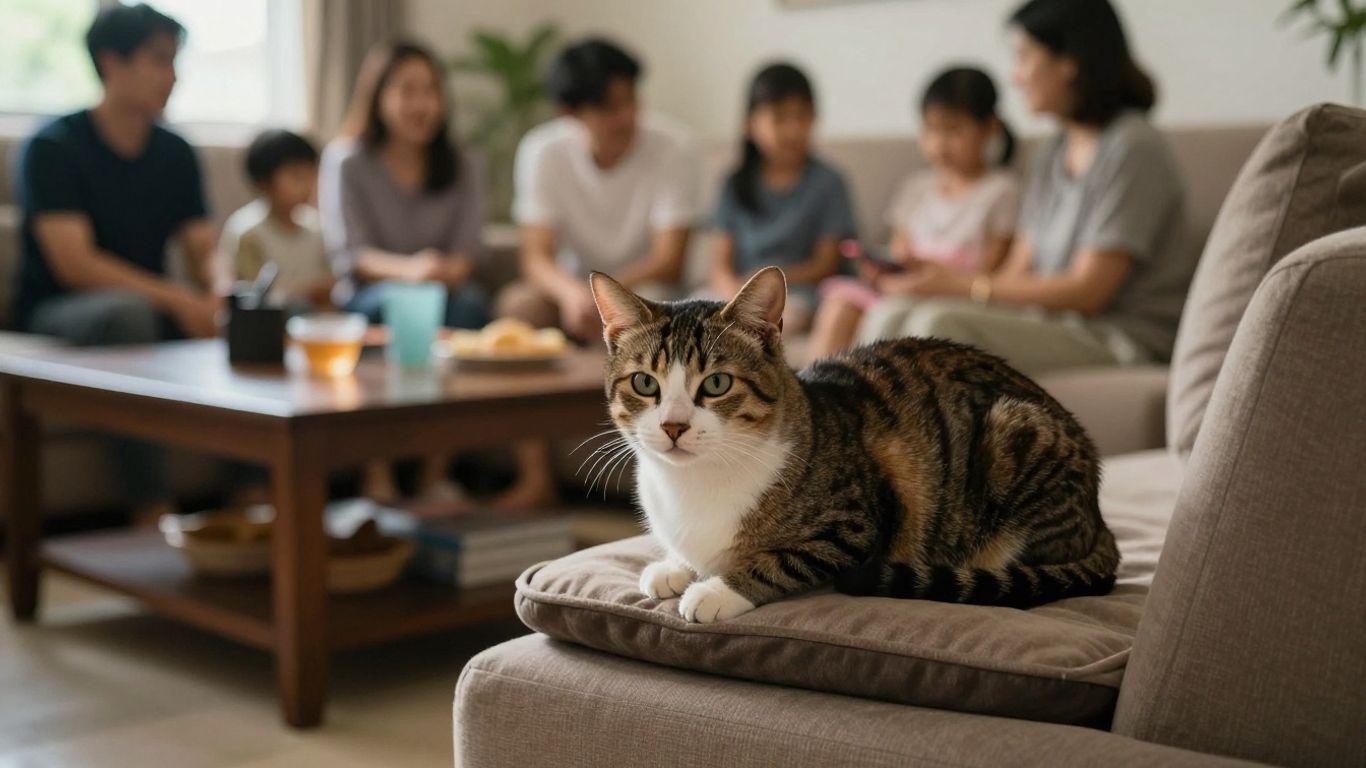
Unfamiliar voices, smells, and sudden movement
A cat may notice a visitor’s scent on clothing or bags before anyone sits down. Several voices, laughter, footsteps, and quick movements can add up, particularly if people approach, reach out, or block a familiar path. Some cats stay in the room but keep their distance; others leave as soon as the activity begins. Neither response needs to be corrected—the useful step is to make it easy for the cat to retreat.
Crowded homes and festive gatherings in Malaysia
A busy home can leave fewer quiet places to rest, especially when guests move between rooms or children are excited to see the cat. During a celebration, consider keeping one room off-limits to visitors so your cat has a quieter option. Hosts who are also coordinating guest stays may find rental guest management relevant to their hosting arrangements; for your cat, the key is still a predictable retreat. If you are planning around a wider calendar of cultural events, Lisbon cultural events are one example of the kind of event listings people consult when organizing visits and outings.
Changes to routine, territory, and access to quiet spaces
A cat relies on familiar routes to food, water, resting spots, and the litter box. If guests fill a hallway or a usual resting place, the cat may have to choose between approaching people and reaching something it needs. Try to keep essential areas accessible and avoid moving familiar belongings just to make room for visitors. A cat stress relief guide also discusses the value of routine and environmental changes when supporting an anxious cat.
How to prepare your cat before guests arrive
A little preparation can make the visit less demanding without requiring your cat to socialize. Choose a quiet room in advance and make sure the cat can reach it without passing through a crowd. Let guests know that hiding or declining contact is normal, not a problem to solve. The aim is to give your cat choice and a clear retreat while keeping the household’s essential routines familiar.
Set up a quiet room with water, food, and a litter box
Choose a room away from the main gathering area, with a door that can stay closed if needed. Put fresh water there, and make food and a litter box accessible without crowding them together. Check that the room is comfortable and that your cat can enter it before the guests arrive. If you use PAWSONA Pheromone Spray for Cats, its product information describes it as support for helping cats feel calm and secure in stressful situations; it should sit alongside a suitable room and other practical changes, not replace them.
Add familiar bedding, hiding places, and elevated spots
A familiar blanket or bed can make the room feel less changed, while a covered hideaway gives your cat a place to rest out of view. If there is a safe perch the cat already uses, leave it available rather than introducing a new setup on a busy day. Keep the retreat undisturbed, and make sure the cat can leave or hide without being followed. These small choices can help the space feel usable rather than like a place where the cat has been shut away.
Tell guests about your cat’s boundaries before they visit
A short message before the gathering can prevent well-meant attention from becoming too much. Ask guests not to reach into hiding places, call the cat repeatedly, or open the quiet room without checking first. It can also help to tell children what to do instead: watch from a distance and let the cat decide whether to come closer. For a simple plan, agree on a few expectations:
- Let the cat stay in its chosen hiding place.
- Keep the safe room’s door closed if that is the plan.
- Avoid offering food unless the owner has said it is suitable.
- Give the cat a clear path away from people.
These shared boundaries are easier to follow when everyone knows them in advance. If a gathering includes overnight visitors, make sure they understand which rooms and routes should remain quiet for the cat.
How guests can interact with your cat respectfully
Some cats will investigate a new person; others prefer to observe from a distance or stay hidden for the whole visit. Both responses are acceptable. The guest’s role is not to win the cat over, but to make contact optional and keep the cat’s escape routes open. A calm, unhurried room gives the cat a better chance to decide what feels safe.
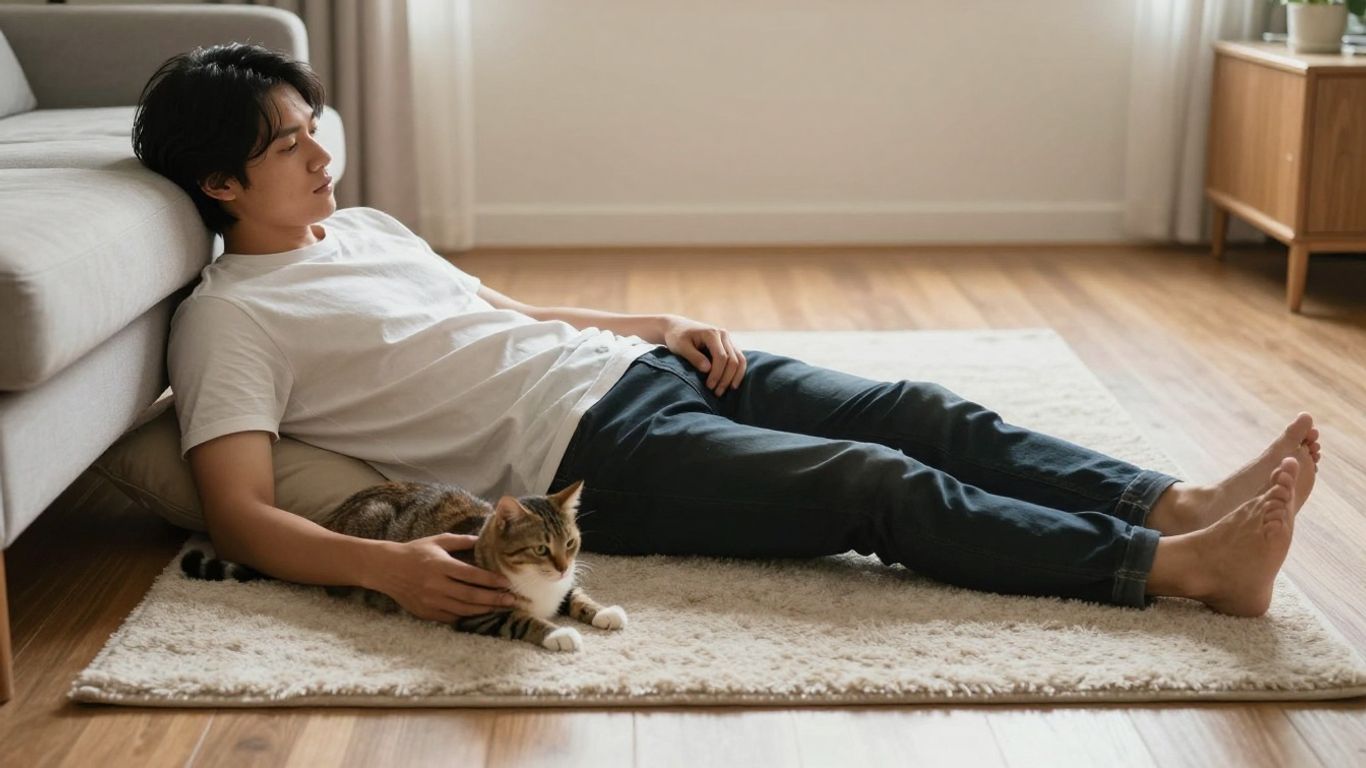
Let your cat choose whether to approach
Guests can sit down, speak softly, and allow the cat to come closer if it wants to. Avoid leaning over the cat or staring directly at it; a little space can make an approach feel less pressured. If the cat sniffs a hand or settles nearby, keep movements gentle and pause if it turns away. No greeting is required for the visit to go well.
Avoid chasing, picking up, or cornering the cat
Following a cat under a chair or reaching into a hiding spot can remove the escape option it is relying on. Picking up a cat without its cooperation can also intensify fear, even if the guest intends to be affectionate. Ask visitors to leave the cat alone when it retreats and never block the route back to its quiet room. Hosts who are reading about digital travel arrangements may encounter tokenized rental bookings, but regardless of how a stay is organized, the cat’s space and choice come first.
Keep children and other pets calm and supervised
Children may need a clear, simple reminder to watch without chasing, grabbing, or shouting. If another pet is visiting, do not assume the animals should meet during a busy gathering; keeping them apart may be the calmer option. An adult should supervise interactions and step in early if a cat looks tense or tries to leave. On the human side, hosts who handle visitor information online can review their privacy policy; for the cat, a quiet room and respectful boundaries remain the immediate concern.
What to do during and after a visit
A plan only helps if it stays workable once the house fills up. Keep an eye on noise around the retreat, check that water and the litter box remain accessible, and avoid asking the cat to appear for guests. After people leave, some cats return to shared rooms quickly, while others need more time. Let the cat’s behavior set the pace rather than treating a visit as a social test.
Check that the safe room stays quiet and comfortable
Make sure guests do not use the room as a shortcut or leave the door open by mistake. Check occasionally from outside that the cat has water and an undisturbed place to rest, but do not keep entering to coax it out. PAWSONA Zenkit Cat Calming Diffuser is described as providing continuous stress support for cats; if considering it, keep expectations grounded and maintain the quiet room and routine as the practical foundation. A product is not a substitute for addressing what is making the space feel busy.
Let your cat return to shared spaces at its own pace
When the home quiets down, open the cat’s route to the rest of the home if it is safe to do so. Avoid carrying the cat into the gathering area or placing it near guests to prove that it is comfortable. A cautious sniff from the doorway may be all the cat wants to offer. For a broader look at calming options, a guide to cat calming sprays discusses them as one possible part of a wider plan rather than a guaranteed fix.
Restore familiar routines once guests have left
Offer meals, play, and quiet time around the usual schedule as much as possible. Keep an eye on whether your cat returns to its ordinary eating, toileting, and resting habits over the next day. It may take a little while to settle after a particularly busy visit, so give the cat room instead of prompting extra interaction. If the household has also been rearranged, restore familiar paths and resting places where you can.
When to seek help for visitor-related stress
Stress-like behavior can overlap with signs of pain or illness, so it is wise not to assume that guests explain everything. A visit may reveal a change that was already developing, or it may coincide with another health issue. If your cat’s behavior is sudden, severe, or continuing after the home is quiet, ask a veterinarian for advice. Bring specific observations rather than trying to diagnose the cause yourself.
Notice stress that persists after the home is quiet
Note whether your cat remains withdrawn, seems unable to settle, or continues avoiding usual parts of the home after visitors have left. The timing and duration can help you describe what is happening. A short-lived retreat during a noisy visit is different from a pattern that continues for days or returns every time guests come over. Keep a simple record of the situation and any changes you see.
Contact a veterinarian about changes in eating or toileting
Reduced appetite or a change in litter box habits deserves attention, particularly if it is new, repeated, or accompanied by other changes. Contact a veterinarian rather than assuming it is simply a reaction to visitors. Sudden or persistent behavior changes can have medical causes, and an examination can help clarify what support is appropriate. When you speak with the clinic, mention when the change began and whether it has happened before.
Ask about behavior support for recurring or severe reactions
If visits repeatedly lead to intense fear, hiding that does not ease, or other difficult behavior, ask your veterinarian about next steps. They can help consider possible health factors and whether further behavior support would be useful. Do not punish a cat for hissing or retreating; those actions are information about how the situation feels. For more background on evaluating pet behavior resources, cat behavior products is one guide, but professional advice should guide care for an individual cat. When reading online health material, even a general resource on AI hallucination reduction is a reminder that claims deserve scrutiny; it is not a substitute for veterinary guidance.
Conclusion
A cat does not need to greet every guest to feel secure at home. Give them a quiet retreat, preserve familiar routines, and ask visitors to respect the cat’s signals; if changes in eating, toileting, or behavior persist, check in with a veterinarian. The most helpful response is usually patient, practical, and guided by the individual cat.
Frequently Asked Questions
Why does my cat hide when visitors come over?
New voices, movement, and unfamiliar smells can make a cat want distance. Hiding is one way to feel safer, so provide a quiet place and avoid pulling the cat out.
Should I make my cat meet my guests?
No. Let your cat decide whether to approach. A cat that watches from a distance or stays in another room is communicating a preference that guests should respect.
Is hissing at a visitor a sign of aggression?
A hiss is often a warning that the cat wants more space. Ask the visitor to stop approaching and give the cat a clear route to retreat.
Should I keep my cat in a separate room during a gathering?
A quiet room can be a helpful option if it has water, food, a litter box, and a comfortable hiding place. Make sure the cat can settle there without visitors entering or disturbing it.
What if my cat does not eat while guests are here?
Some cats may avoid food during a busy visit, but keep track of whether normal eating resumes afterward. Contact a veterinarian if the change is persistent, sudden, or concerning.
How can I help children behave calmly around my cat?
Explain that the cat chooses whether to interact. Ask children to stay calm, avoid chasing or picking up the cat, and let an adult supervise any contact.
When should I contact a veterinarian about visitor-related stress?
Seek advice if changes in eating, toileting, or behavior are sudden, severe, recurring, or continue after the home is quiet. A veterinarian can help check for medical causes and discuss appropriate support.