


Key Takeaways
Cat behavior makes more sense when you read signals in context rather than treating one action as a complete explanation. Small changes in routine, health, and surroundings can all matter.
- Look at a cat’s whole posture and the situation around it, not just one signal.
- Meows, purrs, and warning sounds can have different meanings depending on context.
- Scratching, kneading, rubbing, play, and sleep are normal behaviors with useful functions.
- Stress, conflict, litter-box conditions, and changes at home can contribute to unwanted behavior.
- Respond calmly, reward what you want to encourage, and seek veterinary help for sudden or persistent changes.
How cats communicate with body language
Cats communicate through a mix of movement, posture, facial expression, and sound. A single signal can be ambiguous, so it helps to notice what happened just before it and what the cat does next. This broad overview of cat behavior can complement the close, everyday observation that helps you understand your own cat.
Reading tail position and movement
A tail held upright often accompanies a relaxed approach, while a tail tucked close to the body may go with uncertainty or fear. Quick, forceful flicking can signal agitation, though it is not a diagnosis on its own. Watch the rest of the cat too: a moving tail alongside a loose body means something different from the same movement paired with a crouch and flattened ears.
Understanding ear and eye signals
Ears turned forward can suggest attention, while ears angled sideways or flattened may signal discomfort or alarm. A cat’s gaze also needs context: relaxed eyes and a soft blink differ from a fixed stare. Give a cat room if several signs point to unease, rather than leaning closer to test what the signal means.
Interpreting posture, fur, and facial tension
A relaxed cat may stand or sit without obvious tension, while a crouched body, arched back, or puffed fur can indicate fear or heightened arousal. Facial tension matters as well: whiskers held tightly back and a stiff mouth may accompany discomfort. These signs are most useful as a pattern, not as a checklist that assigns one certain emotion to every pose.
Noticing when signals change during an interaction
Behavior can shift within a few seconds. A cat that approached for attention may begin to tense, turn away, or move its tail more sharply when it has had enough. Tracking changes helps you end an interaction before it escalates. The following combinations can be useful prompts to pause and reassess:
| What you notice | Possible context | A considerate response |
|---|---|---|
| Loose posture and upright tail | Comfortable approach | Let the cat choose whether to come closer |
| Ears turned sideways with a tense body | Possible unease | Pause contact and give space |
| Crouching with flattened ears | Fear or defensiveness | Avoid reaching toward or cornering the cat |
| Tail flicking with a fixed stare | Rising arousal | Reduce stimulation and allow an exit |
These are clues, not guarantees. If the cat relaxes when given space, keep the interaction gentle; if tension continues or the behavior is new, look for other causes as well.
What cat sounds can tell you
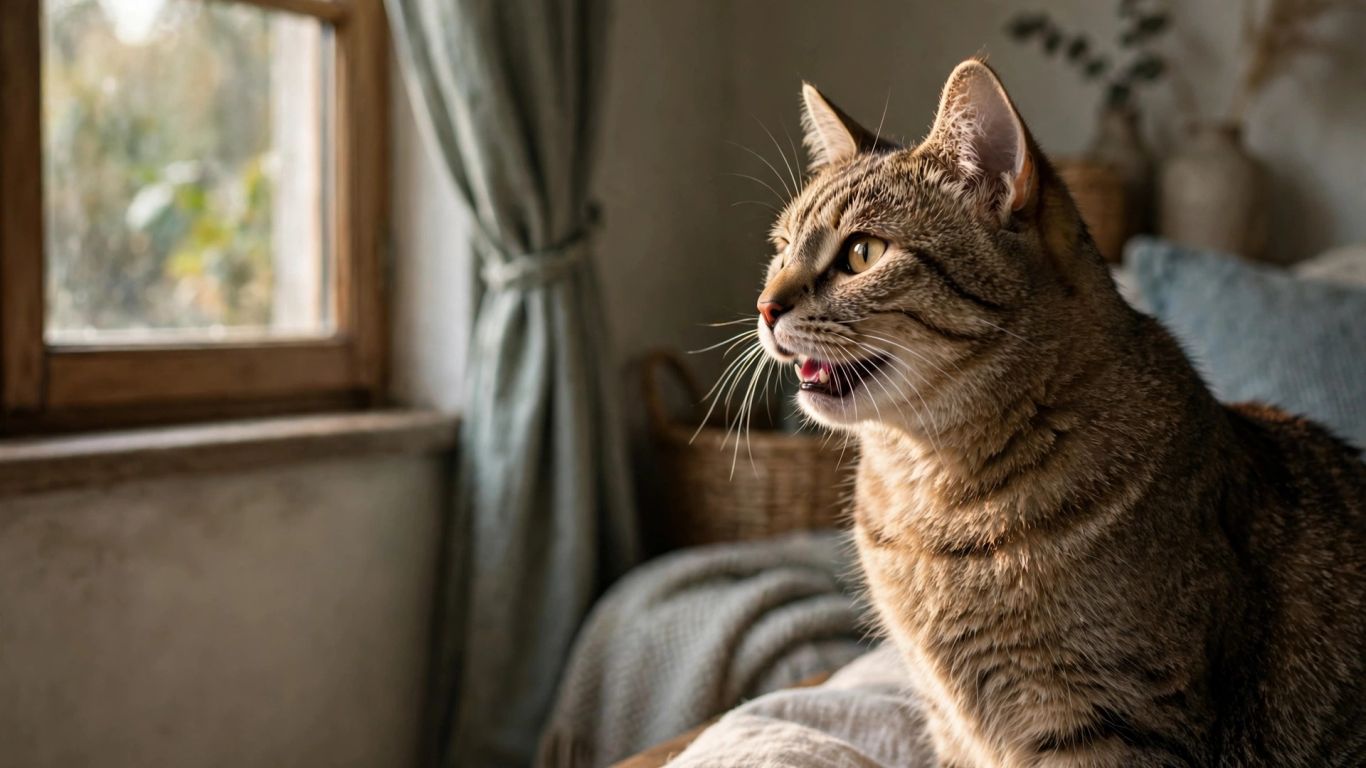
Vocal sounds are one part of a cat’s communication, and their meaning depends on the cat and the situation. Some cats are naturally more talkative than others, so a familiar pattern is often more informative than a general rule. A guide to kitten meows also describes how context and body language can help make sense of vocalizing.
Why cats meow at people
Cats may meow to greet someone, ask for attention, or signal that they want something. The circumstances can help you distinguish among possibilities: a call near an empty bowl differs from one heard when a cat is hiding or avoiding contact. If you are searching for explanations, separating the specific question from the general one is useful; search intent analysis is about online content, not cat care, but the distinction between a broad topic and a particular need applies to the questions people bring to a vet, too.
What purring may—and may not—mean
Purring often occurs when a cat is settled, but it does not prove that everything is fine. Cats may also purr in situations involving stress or discomfort. Pay attention to appetite, movement, posture, and whether the cat seeks or avoids contact; if something else seems off, do not rely on purring alone to dismiss it.
Interpreting hissing, growling, and yowling
Hissing and growling are warnings that a cat needs distance, while a yowl may indicate distress or agitation. Avoid scolding or reaching toward a cat making these sounds; give it a clear way to retreat and check for an immediate trigger. Human remedies do not transfer automatically to pets: tea for a sore throat concerns people, not a treatment to offer a cat whose vocal habits have changed.
Recognizing changes in vocal habits
A sudden increase or decrease in vocalizing can be worth noticing, especially when it comes with other changes in behavior. Consider whether the cat’s routine, household, or comfort may have shifted, and note when the sounds happen. Persistent or unexplained changes are a good reason to ask a veterinarian for guidance rather than assuming the cat is simply being demanding.
Why cats scratch, knead, and rub
Scratching, kneading, and rubbing are ordinary parts of feline behavior, even when they happen in inconvenient places. These actions can relate to movement, comfort, or scent communication, and they are not evidence that a cat is acting out of spite. Understanding their purpose makes it easier to guide them toward safer, more acceptable outlets.
Scratching to maintain claws and mark territory
Scratching gives cats a way to maintain their claws and leave visual and scent marks. A cat may choose a prominent surface, a particular texture, or a familiar route through the home. Providing a sturdy scratching surface near places the cat already visits can make the acceptable option easier to find.
Kneading as a comfort behavior
Many cats press their paws rhythmically against a blanket, cushion, or person. Kneading is commonly associated with comfort, though cats may do it for different reasons and in different settings. If claws make the behavior uncomfortable, place a thick blanket between the cat and your lap rather than pushing the cat away abruptly.
Rubbing and head-bunting to leave scent
When a cat rubs its face or head against a person or object, it may be leaving scent as part of familiar social behavior. The gesture can accompany greeting, but it does not always mean the cat wants prolonged handling. Let the cat set the pace, and stop if its body stiffens or it moves away.
Redirecting scratching without punishment
Punishment can make a cat wary without showing it where scratching is welcome. A more useful approach is to make the preferred surface appealing and reduce access to the tempting one where possible. Try a few practical adjustments:
- Place a stable scratching post near a spot the cat already scratches.
- Offer more than one texture or orientation to see what the cat prefers.
- Reward the cat when it uses the chosen scratching surface.
- Keep nails maintained with gentle, appropriate care or professional help.
Give the new setup time and notice which surfaces your cat actually chooses. If furniture remains a target, adjust the location or style of the scratching option instead of assuming the cat is ignoring you on purpose.
How play, hunting, and sleep shape behavior
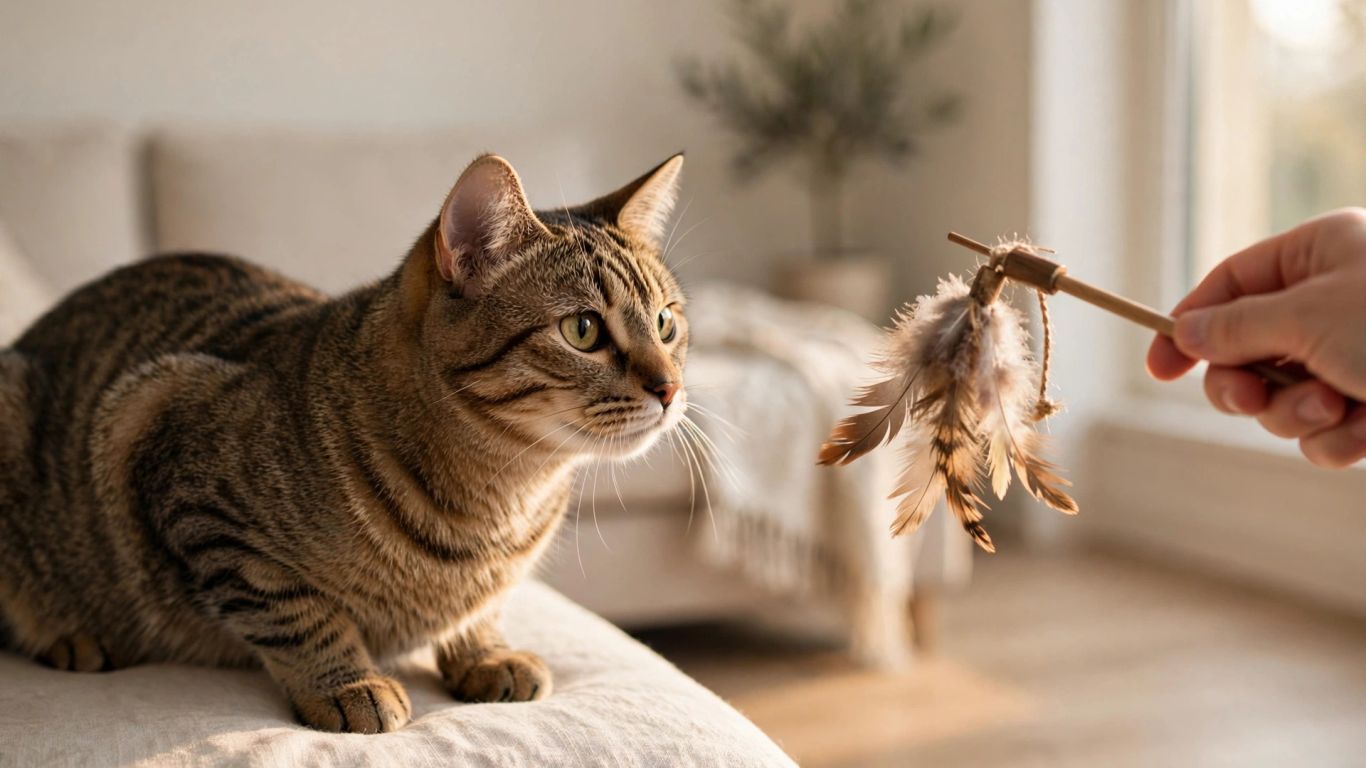
Play draws on behaviors cats use to watch, chase, and catch moving things. Indoor cats still need ways to explore and stay active, though each cat’s preferred pace and style varies. A predictable mix of play, rest, and choice can make daily life more engaging.
Recognizing the stages of play and predatory behavior
A play sequence may include watching, stalking, chasing, and pouncing. Some cats enjoy a quick chase, while others prefer batting or grabbing a toy. An individual cat’s pattern gives you a better guide than expecting every cat to play the same way; a guide to explaining board-game rules is about a different activity, but the value of introducing steps clearly can be a useful reminder when showing a cat a new toy.
Choosing toys that encourage safe play
Toys that move in ways a cat can follow and catch can encourage active play. Keep hands and feet out of the role of prey, since biting skin during a game can become an established habit. Check toys for loose pieces and put away items that could tangle around a cat or be swallowed.
Understanding common sleep patterns
Cats often nap at different times through the day, and brief periods of activity may alternate with rest. A cat’s usual pattern depends on its age, health, and daily environment. A noticeable change in sleep, particularly alongside changes in appetite or interaction, is worth discussing with a veterinarian.
Providing outlets for indoor cats
A small set of varied activities can make indoor days more interesting without requiring constant entertainment. Rotate options and watch what the cat chooses, rather than leaving every toy out all the time. For example, you might offer:
- A window perch or other safe place to observe the room.
- A puzzle feeder or another supervised foraging activity.
- Short play sessions with a toy that can be chased and caught.
- A quiet retreat where the cat can rest without interruption.
A cat’s interest may change from day to day, so variety matters more than insisting on a single activity. Keep play manageable and end with a chance to catch the toy, then let the cat settle.
What can cause unwanted behavior
A behavior that feels difficult to live with may be connected to stress, discomfort, routine, or the setup of the home. The same outward action can have more than one possible cause, so it helps to look for patterns rather than reach for a quick label. A change in behavior is information to investigate, not proof that a cat is being difficult on purpose.
Stressors such as noise, change, or conflict
Visitors, loud sounds, a move, or tension with another animal can unsettle a cat. Some cats respond by hiding or vocalizing; others may become defensive or avoid familiar spaces. PAWSONA pheromone diffuser kits are among the brand’s calming products, designed to help create a calmer environment during stressful situations; they are not a substitute for identifying what is upsetting the cat.
Litter box problems and possible triggers
A cat may avoid a litter box because of its location, cleanliness, access, or a change in the household. Medical concerns can also contribute to inappropriate elimination, so a new pattern should not automatically be treated as a training problem. Keep track of when it happens and discuss the change with a veterinarian, especially if it is sudden or accompanied by signs of discomfort.
Biting and scratching during handling or play
A cat may bite or scratch when frightened, overstimulated, or trying to end contact. During play, toys are safer targets than fingers; during handling, stop if the cat begins to tense or pull away. If conflict is between household cats, separate them safely and seek guidance before attempting to force a reunion.
How environment and routine affect behavior
Cats can be sensitive to where resources sit, which routes are available, and whether they have somewhere quiet to retreat. A change as small as moving furniture can alter a familiar path, while a new animal may affect access to food, resting spots, or litter boxes. PAWSONA calming sprays are part of the brand’s calming products intended to help create a calmer environment, but a stable routine and attention to the source of stress remain important.
How to respond to behavior changes
Start with curiosity rather than blame when a behavior changes. Note what happens before and after it, make the environment safer, and avoid forcing contact. A calm response can preserve trust while you work out whether the cause is situational, medical, or both.
Using rewards to encourage desired actions
Reward a behavior you want to see with something the cat values, such as a small treat, attention, or play. Give the reward soon after the desired action so the connection is clearer. Keep expectations realistic: reinforce a useful alternative, such as using a scratching post, rather than expecting a cat to stop a normal behavior altogether.
Avoiding punishment and other counterproductive responses
Yelling, startling, or chasing a cat can increase fear and may make it harder to identify the trigger. Instead, interrupt unsafe situations calmly, create space, and change the setup so a preferred behavior is easier. A show-cause hearing guide describes a formal human legal process, not an approach to animal care; with cats, blame and intimidation are poor substitutes for understanding what happened.
When to consult a veterinarian
A sudden or persistent behavior change deserves attention, particularly if it occurs alongside changes in eating, drinking, litter-box use, movement, or social contact. A veterinarian can help assess whether pain or another health concern may be involved. PAWSONA nutritional supplements are among the brand’s products intended to support cat stress relief, but they should not replace veterinary assessment when a cat’s behavior or health changes.
When a qualified behavior professional may help
A qualified behavior professional may help when a problem continues despite thoughtful changes at home, or when household members need a safe plan for handling conflict. Share a clear account of the behavior, its timing, and what you have already tried. For especially tense interactions, prioritize distance and safety while you arrange appropriate guidance.
Conclusion
Cat behavior is easier to understand when you look at the whole picture: the cat’s body, the sounds it makes, the setting, and what has changed recently. Responding with patience, practical adjustments, and veterinary guidance when needed can help you support your cat without treating normal behavior as misbehavior.
Frequently Asked Questions
Why does my cat’s tail flick when I pet it?
Tail flicking can accompany rising arousal or irritation, but it is only one clue. Notice the cat’s ears, posture, and whether it moves away, and pause contact if its body seems tense.
Does purring always mean a cat is happy?
No. Purring often occurs when cats are comfortable, but it can also happen in other circumstances. Consider the cat’s overall behavior and seek veterinary advice if you notice other concerning changes.
Why does my cat meow more than usual?
A change in meowing may relate to routine, attention, stress, or a health concern. If it is sudden, persistent, or paired with other changes, contact a veterinarian.
Why does my cat scratch furniture?
Scratching is a normal behavior that can help maintain claws and leave marks. Offer a stable scratching surface near the place your cat chooses and reward its use.
Is kneading a sign that my cat is comfortable?
Kneading is often associated with comfort, but its meaning depends on the cat and situation. Let your cat choose whether to continue interacting, and protect your lap with a blanket if needed.
What should I do if my cat suddenly avoids the litter box?
Check for changes in the box or its surroundings, but do not assume the cause is behavioral. A veterinarian can assess possible medical contributors, especially when the change is new.
When should I seek help for a behavior change?
Ask a veterinarian about sudden, persistent, or unexplained changes, particularly if other signs of illness or discomfort appear. A qualified behavior professional may also help with ongoing behavior challenges after health concerns have been considered.