


Key Takeaways
Peaceful cohabitation usually comes from slowing things down, reducing pressure, and understanding what is driving the conflict.
- Separate fighting cats without putting your hands between them.
- Check for injuries and arrange veterinary care when needed.
- Reintroduce cats gradually through scent, food, barriers, and supervision.
- Give each cat enough access to food, water, litter, hiding places, and high spaces.
- Treat sudden or repeated aggression as a reason to investigate stress, pain, or illness.
Assess the situation and separate cats safely
When cats fight, the first priority is safety rather than figuring out who started it. A noisy confrontation can look dramatic, but chasing, staring, and blocking may have been building tension for days. Stay as calm as you can, separate the cats, and give them time to settle before attempting any reunion. If you are learning how to stop cats from fighting, remember that rushing into the middle of an incident often makes the danger worse for everyone.
Recognize the difference between play and real aggression
Play between cats can include wrestling, chasing, pouncing, and gentle biting, with both cats taking turns and returning to normal afterward. Real aggression is more one-sided and tense: ears may be flattened, pupils enlarged, fur raised, and tails lashing or puffed. Growling, prolonged staring, hissing, shrieking, cornering, and attempts to escape are signs that the interaction is no longer harmless play. Even play can become too rough if one cat repeatedly tries to leave and the other will not stop.
Watch what happens before and after the contact. Cats that pause, switch roles, and relax with loose bodies are usually playing; cats that freeze, hide, avoid rooms, or remain vigilant are showing that the relationship needs attention. A guide to cat aggression can help you notice the quieter warning signs before a chase becomes a fight.
Avoid using your hands during a cat fight
Never grab, lift, or hold an agitated cat, even if you know that cat well. A frightened or aroused cat may bite or scratch without recognizing you, and injuries from cat bites can become serious. Instead, create distance with a door, a large piece of cardboard, a cushion, or a blanket placed between the cats when it is safe to do so. You can also make a brief, non-contact interruption from a distance, then guide each cat into a separate room.
Once they are apart, do not immediately scold, stroke, or corner either animal. Give both cats a quiet place to decompress, with water and a litter box available. The aim is to end the physical contact without adding another frightening event.
Create separate safe spaces immediately
Each cat needs a room or defined area where the other cannot enter. Include familiar bedding, water, a litter box, food when appropriate, and somewhere to hide. Close the door and keep the environment quiet; a cat that is still staring at or hearing the other cat through a thin barrier may need more distance. A safe space is not a punishment. It is a temporary refuge that lets the nervous system settle.
Keep routines as normal as possible while the cats are separated. Visit each cat calmly and individually, and avoid forcing either one to come out of hiding. If a cat is hiding, refusing food, or acting unusually withdrawn, take that information seriously rather than treating it as stubbornness.
Check both cats for injuries after an incident
After a fight, inspect both cats when they are calm enough to handle safely. Look for punctures, swelling, limping, bleeding, sensitivity, squinting, or changes in appetite and movement. Bite wounds can be tiny on the surface while trapping bacteria underneath, so contact a veterinarian promptly if you find a wound or if either cat seems painful or unwell.
Do not assume the cat that appears to have lost the fight is the only one hurt. Check the ears, face, legs, paws, neck, and tail, and keep the cats apart until injuries have been assessed. If handling is unsafe, ask your veterinary clinic for advice about transporting the cat without another confrontation.
Identify why your cats are fighting
Aggression is communication, not a moral failing. Cats may be protecting territory, avoiding a frightening situation, competing for access, or redirecting arousal toward the nearest animal. The most useful question is not which cat is “bad,” but what changed around the time the conflict began. Keeping a simple record of locations, times, triggers, and body language can reveal a pattern.
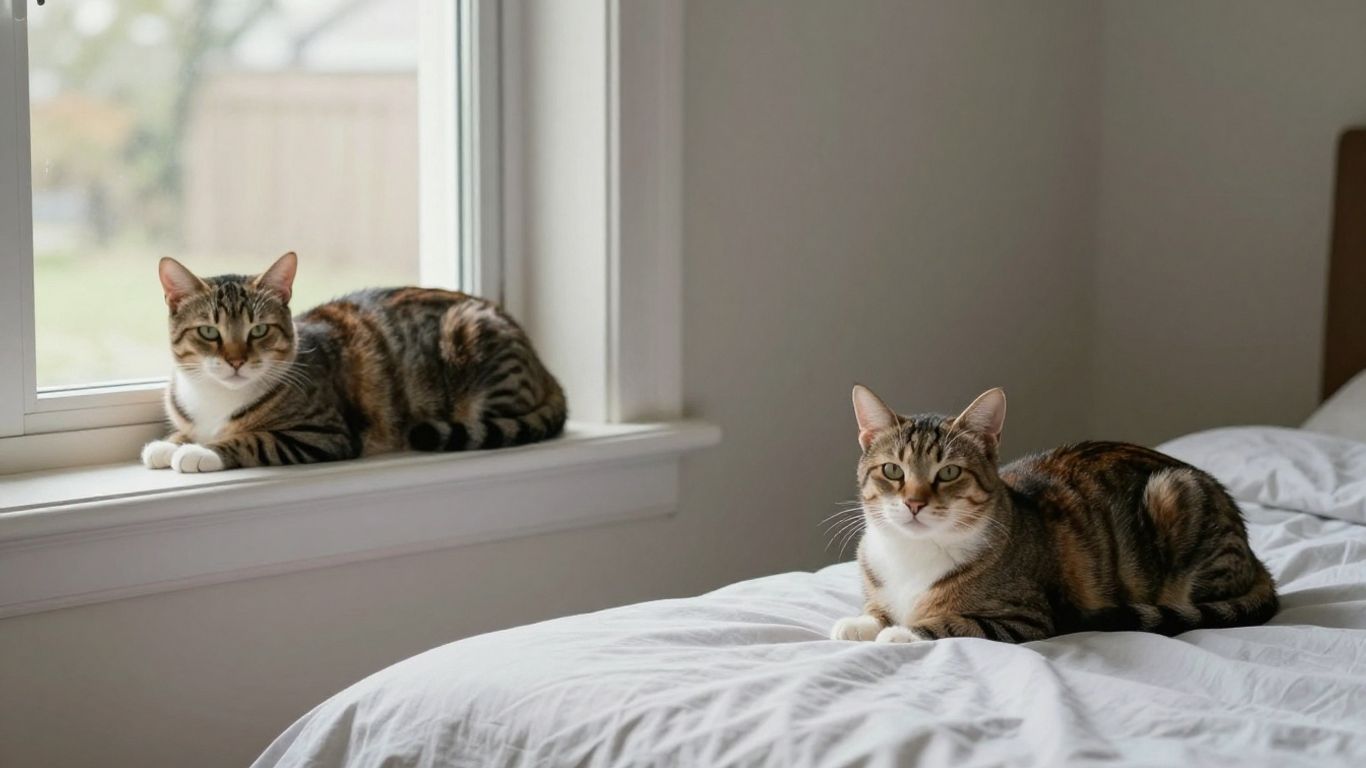
The reasons cats fight at home often overlap, so do not settle on the first explanation without observing the full situation. A resource problem may be intensified by fear, while a medical issue may make an ordinarily tolerant cat much less patient.
Common territorial and resource-related triggers
Cats can become tense when another cat enters a valued area or makes access to a valued resource feel uncertain. Food bowls, litter boxes, sleeping spots, windows, stairways, and human attention can all become points of conflict. A cat does not need to guard a resource constantly for the other cat to feel blocked; a single stare in a narrow hallway may be enough to make one animal avoid that route.
Notice whether fights happen near one particular bowl, doorway, sofa, or litter area. Also look for indirect competition, such as one cat waiting until the other has left before eating or using the box. These patterns suggest that changing the layout may help as much as changing the cats’ interactions.
How fear, stress, and redirected aggression develop
A cat that sees an unfamiliar outdoor cat through a window, hears a loud crash, or becomes frightened by a visitor may remain highly aroused after the original trigger disappears. If the other household cat approaches at that moment, the aroused cat may lash out at the familiar companion. This is often called redirected aggression, and it can seem sudden because the original cause was easy for people to miss.
Stress also accumulates. Less sleep, disrupted routines, construction noise, crowded rooms, and repeated blocking can lower a cat’s tolerance until a small event produces a large reaction. Supporting the wider environment matters, which is why a practical cat stress relief guide can be useful alongside direct behavior work.
Why cats may suddenly start fighting
A sudden change deserves investigation rather than blame. One cat may be in pain, recovering from an illness, smelling different after a veterinary visit, or reacting to a new limitation in movement. Cats can also become less tolerant as they mature, or a previously manageable relationship can shift after a frightening incident.
Think back over the previous few days. Ask whether either cat stopped eating normally, began hiding, changed litter habits, became more vocal, or started avoiding a room. These details can help distinguish a social problem from a medical or environmental change.
When changes in the home can increase tension
Moving furniture, welcoming a new pet, bringing home a baby, changing work hours, renovating, or moving house can alter the scents, sounds, routes, and routines that cats rely on. Even a pleasant change for people may feel unpredictable to a cat. The same is true of less obvious changes, such as a new cleaning product or a visitor leaving unfamiliar animal odors on clothing.
Make changes gradually whenever possible. Preserve familiar resting places, keep feeding times steady, and provide somewhere quiet during busy periods. If several changes have happened at once, simplify what you can and reintroduce novelty in smaller steps.
Reintroduce cats gradually after a fight
A reunion should be treated like a new introduction, even if the cats lived together peacefully for years. After a serious incident, they may associate each other with fear, pain, or loss of access to a safe area. Separate first, then rebuild the relationship through short experiences that neither cat finds overwhelming. Progress is measured by relaxed behavior, not by how quickly the cats can share a room.
Keep the cats separated during the reset period
Keep the cats apart until both can eat, sleep, use the litter box, and move around without remaining on alert. There is no universal number of hours or days; the correct pace depends on the intensity of the fight and each cat’s recovery. If either cat is still growling at the closed door, hiding continuously, or refusing food, more settling time is needed.
Use the separation to restore predictability. Give each cat individual attention, play, and quiet rest, but avoid creating a contest over your presence. A calm routine is more helpful than constant checking or repeated attempts to test whether they are ready.
Exchange scents before allowing visual contact
Scent is central to how cats understand their surroundings. Once both cats are relaxed, exchange bedding or soft cloths carrying each cat’s scent, beginning with items placed at a comfortable distance. You can also let each cat explore the other’s room separately, provided the resident cat is not distressed by the change.
Watch for responses rather than forcing investigation. Sniffing briefly and walking away is often more promising than intense staring, pawing, or hissing at the item. Scent work should make the other cat familiar without requiring direct contact.
Use feeding to build positive associations
Feed the cats on opposite sides of a closed door, far enough away that both will eat comfortably. Over several meals, move the bowls closer only if there is no increase in tension. Food should remain a positive experience, not a test of endurance; if one cat stops eating or fixates on the door, increase the distance again.
You can pair meals with other calm routines, such as quiet conversation or gentle play. The cats gradually learn that the smell and sounds of the other cat predict something safe and rewarding. This association is built through repetition, not one large meal.
Progress from barriers to supervised interaction
When both cats can remain relaxed near the closed door, introduce a visual barrier such as a tall gate, a screened opening, or a partially covered doorway. Keep the first sessions brief and end while the cats are still calm. Later, allow supervised time in a larger room with several escape routes, never in a narrow area where one cat can be trapped.
A useful progression looks like this:
- Relaxing near a closed door.
- Eating or playing calmly while separated by a visual barrier.
- Brief supervised time in the same room.
- Longer shared periods with easy access to separate spaces.
After each step, return to the previous stage if either cat begins staring, stalking, blocking, growling, or fleeing. Slow progress is still progress, and forcing a close encounter can undo several peaceful sessions.
Reduce competition throughout your home
Cats cannot relax together if one must pass another cat to reach food, water, a litter box, or a favorite resting spot. Look at your home from floor level and consider where a cat could be cornered or watched. Then spread essential resources across rooms rather than placing everything in one busy area. This reduces the number of decisions cats have to make under pressure.
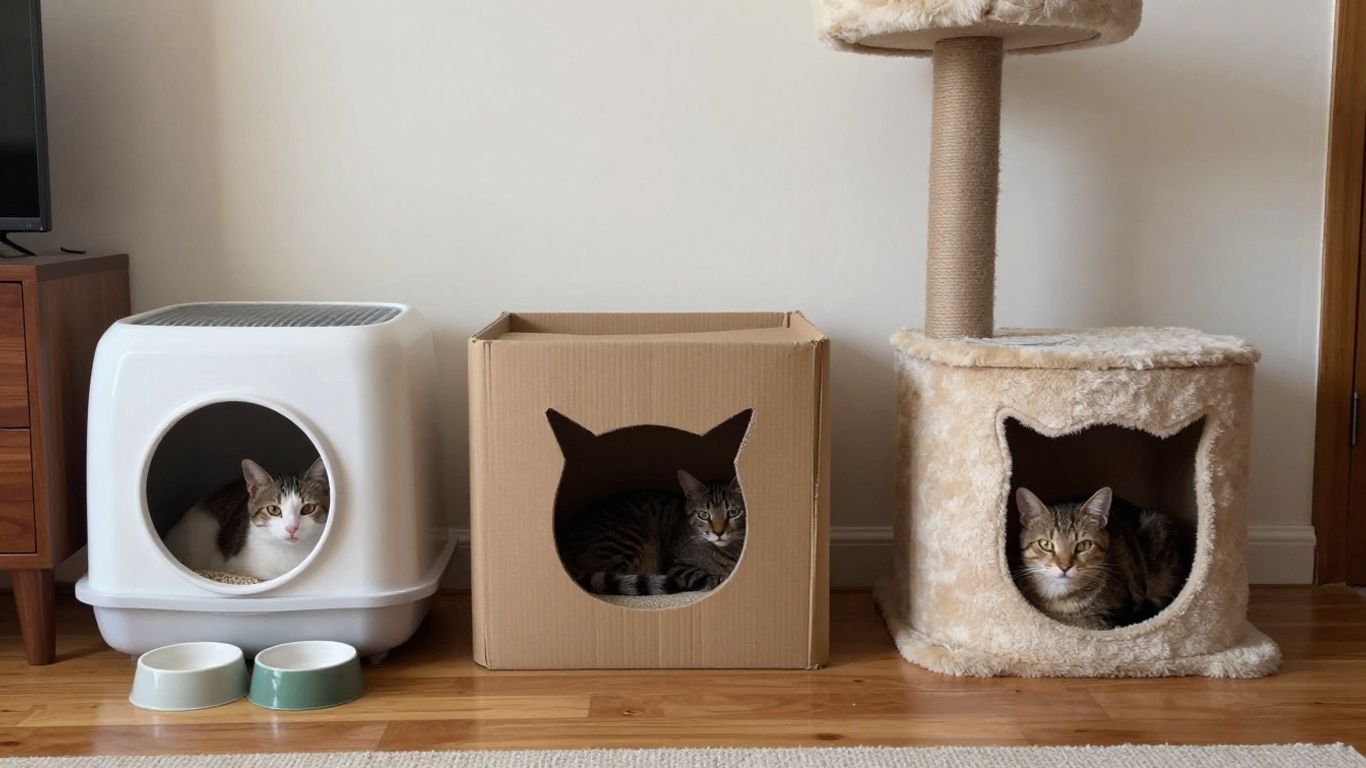
The goal is not to make every resource identical. It is to give each cat meaningful choices and a way to retreat without crossing the other cat’s path. Small layout changes can make daily life feel much safer.
Provide separate food, water, and litter areas
Offer food and water in separate locations where cats cannot easily stare at or ambush each other. Litter boxes should be distributed through the home, placed in quiet areas with more than one way out where possible. If a cat begins avoiding the box, investigate both medical causes and the possibility that another cat is making the route feel unsafe; guidance on litter box problems may help you assess the setup.
Do not place every bowl and box side by side simply because that is convenient for cleaning. A cat may technically have access while still feeling unable to use a resource comfortably. Observe who eats first, who waits, and which areas each cat avoids.
Add enough beds, hiding places, and vertical space
Provide more resting choices than the cats can occupy at once. Covered beds, open cushions, boxes, shelves, and sturdy cat trees give cats different ways to rest and observe. Vertical space is especially helpful when it can be reached without passing directly beside another cat.
Hiding places should have safe exits and should not become dead ends. Spread them across the home so a cat can withdraw from a tense interaction without being pursued. A comfortable retreat can prevent a warning hiss from turning into a chase.
Arrange resources to prevent blocking and ambushes
Map the routes between important areas. A hallway, doorway, or staircase may function as a bottleneck where one cat can control movement with a stare or a single step. Move beds and bowls away from these points, create alternate routes, and avoid placing a litter box where a cat must walk past a rival to leave.
The table below can help turn observation into a practical layout decision.
| What you observe | Possible pressure point | Helpful adjustment |
|---|---|---|
| One cat waits before entering a room | Doorway or narrow route | Add another route or move a resource |
| Chasing starts near a window | Shared lookout or outside trigger | Block the view and add another perch |
| A cat avoids the litter box | Box feels exposed or blocked | Add a quiet box with clear exits |
| One cat leaves food untouched | Bowl is too close to the other cat | Feed in a separate, calmer location |
After making a change, watch the cats for several days rather than judging it after one interaction. The best arrangement is the one that lets both animals move, rest, and eat without constantly negotiating for space.
Make busy areas calmer with predictable routines
Cats often cope better when meals, play, cleaning, and quiet periods happen in a familiar pattern. Keep high-traffic areas less chaotic during feeding or reintroduction sessions, and give each cat one-on-one time so attention does not become another competition. Predictability does not mean every day must be identical; it means the cats have reliable anchors.
Notice when the home is busiest and plan around those times. Closing a door during deliveries, providing a retreat during children’s play, or moving a bed away from a frequently used passage can lower daily tension without major renovation.
Prevent fights caused by outside cats and household triggers
Not every cat fight begins with conflict inside the home. A neighborhood cat at the window, a visitor’s scent, a loud storm, or a sudden noise can raise arousal and change how a cat responds to its housemate. Reducing these triggers is part of the same behavior plan, not a separate concern. Observe windows, doors, and other places where the cats become tense.
Limit views of neighborhood cats through windows
If your cat growls, chatters, freezes, or rushes toward a window when an outdoor cat appears, reduce that visual contact. Close blinds during active periods, use privacy film, or move furniture so the cat cannot remain on watch. Give the indoor cat another elevated place to observe the room without seeing directly outside.
Do not punish the reaction. The cat is responding to a perceived intruder, and punishment can make the entire window area feel more threatening. Preventing repeated rehearsal of the reaction is usually more useful.
Manage conflicts around doors, patios, and cat flaps
Entry points combine strange scents, sudden movement, and limited space, making them easy places for tension to flare. Keep cats away from a door when visitors arrive, and provide a separate room for a cat that becomes agitated by outdoor activity. If a cat flap is involved, consider timed access, supervised outdoor time, or keeping the cats indoors if outdoor encounters cannot be controlled.
A cat that has been attacked outside may return home highly aroused and redirect that fear toward its companion. Give the returning cat a quiet decompression area before allowing contact with other pets. Never carry an agitated cat straight into a shared room.
Reduce noise and other sources of environmental stress
Fireworks, thunderstorms, construction, vacuum cleaners, and unfamiliar appliances can all disturb sensitive cats. During predictable noise, close windows, draw curtains, provide hiding places, and use steady background sound if it helps mask sharp changes. The broader cat anxiety guidance also covers environmental stressors such as traffic noise and storms.
Keep escape spaces available before the noise begins. If a cat is already frightened, reaching into a hiding place or pulling it out may intensify the response. Allow the cat to emerge when it feels safe.
Help cats adjust to visitors, pets, and schedule changes
Introduce visitors gradually and let cats choose whether to approach. Ask guests not to stare, chase, or reach into hiding places, and give the cats a room where they will not be disturbed. New pets, new furniture, and schedule changes deserve the same gradual approach used for cat introductions.
When your routine must change, keep feeding and rest cues as consistent as possible. Add play or quiet attention at predictable times, and make sure one cat cannot monopolize the only calm room. Preparation reduces the shock of change.
Use training and enrichment to encourage calm behavior
Training does not mean making cats obey one another. It means noticing calm choices and arranging the environment so those choices are easy. Rewarding relaxed behavior can change the emotional tone around another cat, while enrichment gives each animal an outlet that does not involve chasing a housemate. Keep sessions short, gentle, and easy to stop.
Reward relaxed behavior around the other cat
When one cat notices the other and remains loose, looks away, sits, or calmly walks off, offer a small treat or quiet praise if the cat enjoys it. Deliver the reward without luring the cat closer than it can comfortably manage. Over time, the presence of the other cat can become a cue for good things rather than a signal to prepare for conflict.
Use distance as part of the training. Calm behavior is the goal, not forced closeness, and a cat that chooses to disengage is often making an excellent choice. End a session before either cat becomes tense.
Interrupt tension before it escalates
Learn each cat’s early signals: a fixed stare, lowered body, tail twitch, ears turning sideways, sudden stillness, or a route being blocked. At that point, calmly increase distance by calling one cat away, placing an object between them, or guiding one toward a separate room with food or a toy. Do not wait for the first swat.
Interruption should be quiet and predictable. If a cat will not turn away, stop the session and separate the cats without pursuing either one. Early action protects the progress made during calmer sessions.
Use play to release energy safely
Interactive play with a wand toy, toy mouse, or other suitable object can provide exercise and an outlet for stalking behavior. Play with cats separately if they become competitive, and allow each one to catch the toy at the end. Food puzzles and solo toys can add stimulation when you are not available.
Match the activity to the individual cat. A senior cat, kitten, or anxious cat may need shorter sessions and more rest. Enrichment should leave the cat satisfied, not frantic, so watch body language and reduce intensity when arousal rises.
Avoid punishment that can increase fear and aggression
Shouting, spraying a cat directly, chasing it, or forcing the cats to remain together may stop a behavior briefly while making the underlying fear worse. Punishment also teaches cats that the other cat predicts frightening human actions. That can make future encounters harder to interpret and manage.
Instead, prevent access to conflict, reward calm alternatives, and change the environment around the trigger. If you are struggling to respond consistently, ask another adult in the household to follow the same plan. Consistency is kinder and more effective than increasingly harsh corrections.
Know when to contact a veterinarian or behaviorist
Some household conflict improves with careful separation and reintroduction, but not all aggression is a training problem. Pain, illness, hormonal factors, neurological changes, and medication effects can alter a cat’s tolerance. Professional help is especially important when injuries occur, the aggression is escalating, or one cat cannot eat, sleep, use the litter box, or move through the home safely.
Signs that pain or illness may be involved
Contact a veterinarian if aggression appears suddenly or comes with limping, sensitivity, appetite changes, vomiting, diarrhea, unusual vocalization, hiding, altered grooming, changes in urination, or difficulty jumping. A cat in pain may react defensively when approached, and another cat may respond to its changed scent or movement. Do not wait for a visible wound before considering medical causes.
Keep the cats separated while you arrange care. A medical evaluation can rule out problems that environmental adjustments alone cannot solve, and it can prevent a behavior change from becoming an established pattern.
When repeated aggression requires professional help
Seek help when fights continue despite careful separation, when one cat is being stalked or trapped, or when the cats cannot share essential parts of the home. A veterinarian can assess health and discuss referrals to a qualified feline behavior professional. Early support is generally easier than trying to repair a relationship after months of fear.
Professional guidance should be specific to your home, the cats’ histories, and the exact sequence of events. Avoid anyone who recommends intimidation, forced contact, or punishment as the central solution.
How to prepare useful information for an appointment
Bring a timeline of the first incident, descriptions or videos of early warning signs when it is safe to record them, medical history, medication details, and notes about eating, drinking, litter habits, sleep, and hiding. Mark where each incident occurred and what happened in the minutes beforehand. Also list the resources available in each area of the home.
The more concrete the information, the easier it is to separate triggers from assumptions. Do not stage a fight to obtain a video. Your cats’ safety comes first, and written observations are still valuable.
What to do if the cats cannot safely live together
Some cats may need permanent separation, a carefully managed rotation through shared areas, or a different living arrangement. This is not a personal failure. A safe home may involve closed doors, duplicate resources, and a schedule that allows each cat comfortable access to people and space.
Discuss difficult decisions with your veterinarian or a behaviorist, including whether a suitable rehoming option exists. The right outcome is the one that protects physical safety and quality of life for both cats, even if it does not look like the close friendship you originally imagined.
Conclusion
Stopping cats from fighting is usually a gradual process of safety, observation, medical awareness, and environmental change. Separate them before arousal grows, identify what makes daily life feel competitive or frightening, and rebuild contact in small steps. With patience and a plan that respects each cat’s limits, many households can become calmer and more predictable.
Frequently Asked Questions
Should I let cats fight it out?
No. Unchecked fights can cause injuries and deepen fear between the cats. Separate them safely, allow them to settle, and restart introductions more gradually.
How long should cats stay separated after a fight?
Keep them apart until both cats are eating, resting, using the litter box, and moving around normally. This may take hours, days, or longer depending on the incident and their stress level.
Can two cats that used to get along start fighting suddenly?
Yes. Pain, illness, redirected aggression, a frightening event, maturity, a changed scent, or a household disruption can alter a previously stable relationship.
Should cats share food bowls and litter boxes?
Shared resources can create pressure, especially when one cat blocks or watches another. Provide separate, distributed resources and make sure each cat can reach them without passing through a bottleneck.
Will getting another cat help a lonely cat?
Not necessarily. Cats have different social preferences, and a new cat can increase stress if the match or introduction is poor. Consider the resident cat’s temperament and make any introduction gradual.
Can pheromone products stop cat fights on their own?
Calming products may support a lower-stress environment for some cats, but they should not replace separation, veterinary assessment, resource changes, or a gradual reintroduction plan.
When should I call a veterinarian?
Call promptly for injuries, sudden aggression, pain signs, appetite or litter-box changes, repeated attacks, or any situation in which one cat cannot safely access food, water, rest, or the litter box.