


Key Takeaways
Kittens often show stress through small changes in behavior, appetite, or daily habits. Look for patterns, make home feel predictable and safe, and ask a veterinarian about sudden or persistent changes.
- Notice changes in eating, sleep, grooming, vocalizing, and litter-box habits.
- Consider whether heat, noise, visitors, moving, or other pets could be unsettling your kitten.
- Offer a quiet retreat, familiar bedding, safe hiding places, and predictable routines.
- Introduce play, people, and new experiences gradually, at your kitten’s pace.
- Seek veterinary advice for concerning or lasting changes, especially appetite loss or litter-box problems.
1. Recognize signs of stress in kittens
Kittens may not show stress in an obvious way. Instead, you might notice a few quiet changes in how they eat, sleep, play, or respond to people. Look at what is different for your kitten, and when it began; that context can help you decide what support they need.
Changes in appetite, sleep, and litter-box habits
A stressed kitten may eat less, seem restless, sleep more than usual, or have trouble settling. Changes around the litter box can also be a clue, whether your kitten avoids it, goes more often, or has accidents. None of these signs proves stress on its own, so consider the whole pattern rather than one isolated moment.
A simple record can help you spot whether a change is brief or becoming a routine. A kitten care guide can also help you keep everyday care and warning signs in view as your kitten grows. When keeping track, jot down what you observe without assuming the cause.
Hiding, excessive grooming, and unusual vocalizing
A kitten who spends much more time tucked away, licks one area repeatedly, or vocalizes more than usual may be feeling unsettled. Some kittens become clingier, while others keep their distance. Give them room to choose contact instead of pulling them out of a hiding place or insisting on play.
These behaviors make more sense when compared with your kitten’s usual temperament. A feline stress signs guide may help you think through possible triggers, while this overview of kitten stress signals covers behaviors that can be easy to overlook. Keep observing, and remember that a new behavior can have a health-related cause too.
When a behavior change may signal illness
Stress and illness can look similar, and the two can occur together. A kitten who suddenly withdraws, seems unusually tired, or changes their habits deserves close attention, especially if several signs appear at once. Avoid treating every change as an emotional problem or trying to diagnose it at home.
Instead, note when the behavior started and whether anything else changed. A calm pause can help you observe clearly; some anxiety-calming techniques offer practical ways for people to steady themselves when worried. If your kitten’s condition seems to be worsening, contact a veterinarian rather than waiting for a home adjustment to work.
2. Identify common sources of stress in Malaysia
A kitten’s surroundings can affect how safe they feel. In Malaysia, a new home, visitors, busy streets, warm weather, and neighborhood noise may all be part of daily life, but individual kittens respond differently. Looking for a recent change can help you make a useful adjustment without assuming every kitten has the same triggers.
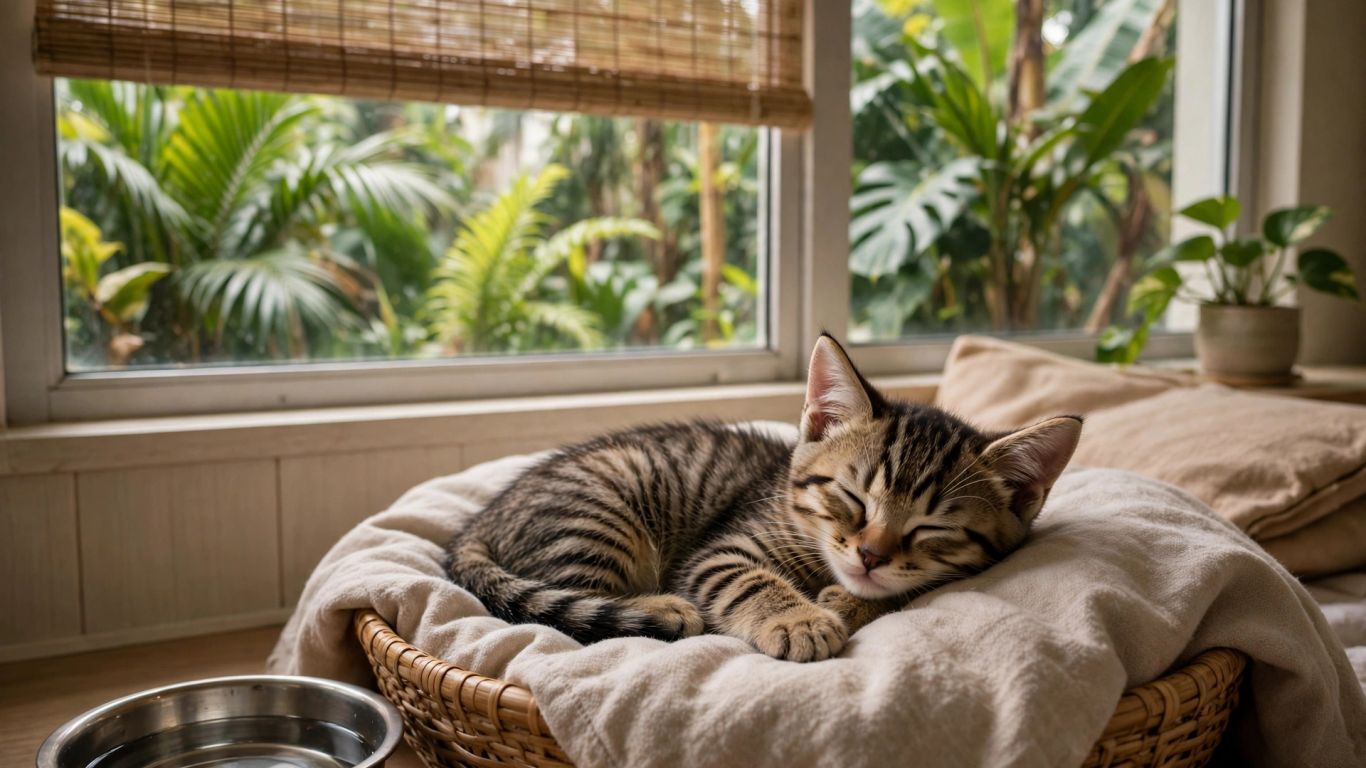
Moving home, visitors, and unfamiliar surroundings
Moving brings unfamiliar smells, sounds, and rooms, while guests can add movement and attention that a kitten does not know how to interpret. A new arrival may need time to explore one safe area before encountering the whole home. Keep their usual food, bedding, and litter setup close at hand when possible.
You can let visitors know not to chase, crowd, or pick up a kitten who is hiding. For a move, moving-house preparation can help you plan a calmer transition; for social visits, visitor boundaries offers ideas for giving a cat space. The pace should be set by the kitten, not the calendar.
Hot weather, loud noises, and busy neighborhoods
Heat and noise can make it harder for a kitten to settle, particularly when there is no quiet, comfortable place to retreat. Notice when the kitten seems least relaxed: during a noisy period, in a warm room, or near a busy window. Small adjustments to the environment may help, but a kitten who appears unwell in hot conditions needs veterinary attention.
It can help to connect a possible trigger with a practical response rather than changing everything at once. The table below offers a few starting points; it is not a diagnosis, and your kitten’s needs may differ.
| Possible trigger | What you might notice | A gentle first adjustment |
|---|---|---|
| Heat or a stuffy room | Restlessness or difficulty settling | Offer a cooler, comfortable resting area |
| Neighborhood noise | Startling, hiding, or interrupted sleep | Make a quieter retreat available |
| Visitors or household activity | Avoidance or increased vigilance | Reduce access to busy areas temporarily |
Try one reasonable change and see whether your kitten uses the space or settles more comfortably. A Malaysia cat health resource also discusses ways to keep cats comfortable in hot weather, while careful setup advice is about a different kind of configuration entirely; for kitten care, prioritize a quiet, safe environment.
Other pets, children, and limited personal space
A kitten may feel overwhelmed if another pet can reach their food, litter tray, or resting place, or if children are eager to interact. Give the kitten places where they can rest without being followed. Supervise interactions and make sure everyone in the household knows that hiding or moving away means the kitten needs a break.
In a home with more than one cat, separate access to essentials can reduce competition. A multi-cat home guide explains practical ways to arrange feeding, litter, and resting areas. Even a small household can feel less crowded when the kitten has a dependable place of their own.
3. Create a calm, kitten-friendly home
A kitten-friendly home does not need to be elaborate. What matters is that essentials are easy to reach and that the kitten can retreat, rest, and explore without being cornered. Start with the space you have, then notice which areas your kitten chooses naturally.
Set up a quiet retreat with food, water, and a litter tray
Choose a calm spot where your kitten can rest with food, water, and a litter tray available without placing everything right beside one another. Keep the setup simple and consistent, especially during the first days in a new home. Make sure the kitten can reach each resource without passing through a busy area or getting blocked by another pet.
A retreat is an invitation, not a place to confine a kitten for convenience. Let them come and go when it is safe to do so, and keep the area familiar as the rest of the household changes around them.
Add hiding spots, climbing areas, and familiar bedding
Hiding places give kittens a way to pause when they feel unsure, and a safe climbing area can offer a different view of a busy room. Familiar bedding carries recognizable smells and may help a new space feel less strange. Check that shelves, furniture, and play structures are stable and suitable for a small kitten.
These options work best when the kitten can choose among them. Avoid reaching into a hiding place to force contact; instead, sit nearby and let curiosity do its work. Familiarity builds gradually, often through small, uneventful moments.
Keep the space cool, comfortable, and safely ventilated
Make sure your kitten has a comfortable place to rest and access to fresh water. Keep ventilation safe: windows and balconies should not create a fall or escape risk, and fans or cords should be out of reach. If a room becomes too warm or noisy, give your kitten a quieter alternative rather than expecting them to tolerate it.
Comfort comes from the whole arrangement, not just the temperature. Check that bedding is dry, the litter area is clean, and the retreat remains accessible when household routines change. A calm space is useful because the kitten can return to it whenever they need a break.
4. Use routines and enrichment to build confidence
Predictable daily patterns help kittens learn what to expect, while play gives them a safe outlet for curiosity and energy. These supports do not need to be rigid or lengthy. A steady rhythm, introduced with patience, can make unfamiliar experiences feel more manageable.
Keep feeding and play times predictable
Try to offer meals and play at roughly similar times each day. A predictable rhythm can help a kitten settle, especially after a move or other disruption. Keep portions and feeding choices appropriate for the kitten’s age, and ask your veterinarian if you are unsure about their nutritional needs.
A routine should support your household, not become another source of pressure. If timing has to shift, make the change calmly and return to the usual pattern when you can. Notice whether your kitten seems more relaxed when the day has a recognizable sequence.
Introduce new people, pets, and experiences gradually
Introductions are easier when the kitten can observe from a distance and retreat whenever they choose. Avoid placing a new pet directly in the kitten’s space or asking a nervous kitten to greet visitors. Short, calm encounters can be followed by quiet time, giving the kitten a chance to recover between experiences.
A few simple steps can keep those introductions more manageable:
- Let the kitten approach rather than carrying them toward a new person or pet.
- Keep early encounters brief and quiet, with a clear route back to a retreat.
- Reward calm curiosity with gentle attention or a familiar activity.
- Pause and give space if the kitten hides, freezes, or tries to leave.
Follow your kitten’s signals and build up only when they seem comfortable. If an introduction repeatedly causes distress, slow down and ask your veterinarian for guidance on a safe plan.
Choose play that encourages natural hunting behaviors
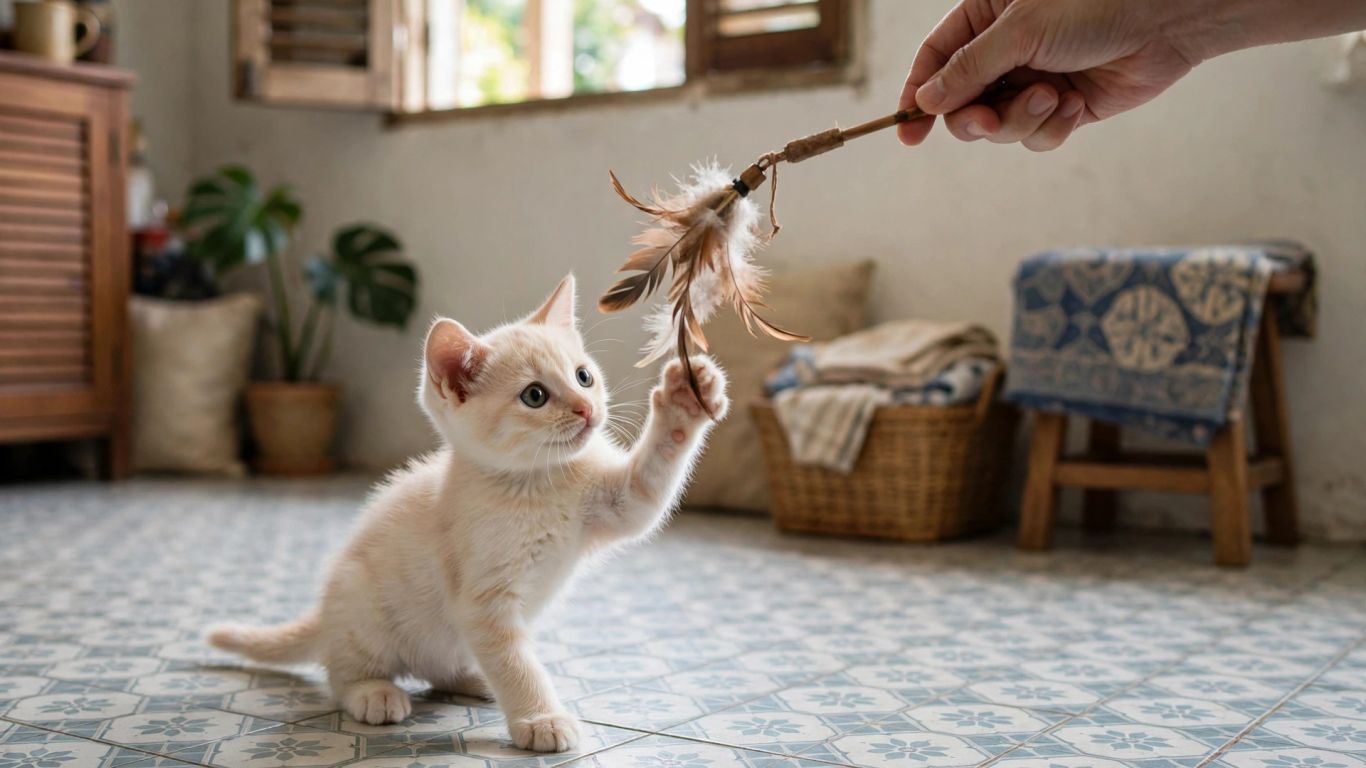
Wand toys and other suitable toys can invite a kitten to watch, stalk, chase, and pounce. Keep play sessions manageable and let the kitten catch the toy sometimes; the aim is engagement, not constant stimulation. Put away toys with loose strings or small parts when you cannot supervise.
Play is also a chance to learn what your kitten enjoys. Some prefer a quick chase, while others need a little time to warm up. End with a quiet transition, such as a meal or a rest, so the activity does not leave them wound up.
5. Consider calming products carefully
Calming products may be one part of a wider plan, but they do not replace addressing the cause of a kitten’s distress. First check whether the environment, routine, or health could be contributing. If you are considering an aid, ask a veterinarian which options are suitable for your kitten’s age and situation.
Ask a veterinarian about pheromone diffusers and supplements
Pheromone products and supplements are not all the same, and a kitten’s age, health, and specific circumstances matter. A veterinarian can help you weigh whether a product is appropriate and how to use it alongside environmental changes. PAWSONA offers cat pheromone diffuser kits as part of its cat stress-relief products; discuss whether a diffuser fits your kitten’s needs with your vet.
Give any approach time to be assessed, and keep track of what changes after you introduce it. If the kitten’s behavior worsens or a new symptom appears, pause and seek professional advice rather than adding more products.
Check labels and avoid unverified remedies
Read labels carefully and use products only as directed. Be wary of broad promises or ingredient claims that are not clear, and do not assume a product made for adult cats is suitable for a kitten. PAWSONA also offers nutritional supplements for cats, but a veterinarian can advise whether a supplement is appropriate for an individual kitten.
For a closer look at evaluating products, see this cat calming supplement guide. A separate skin consultation resource discusses preparing for a human skincare appointment; it is not advice about kittens, so use veterinary guidance for your cat. Choosing cautiously is more useful than trying several unverified remedies at once.
Keep essential oils and human medications away from kittens
Do not use human medications or essential oils on or around a kitten unless a veterinarian has specifically advised you to do so. Kittens are small, and a substance that seems harmless to a person may not be safe for them. Keep medicines, oil bottles, and treated items securely out of reach.
PAWSONA offers calming sprays for cats, but any product should be used only according to its label and veterinary advice when needed. Avoid spraying a kitten directly unless the directions explicitly say it is safe. If you think your kitten has ingested or been exposed to something unsafe, contact a veterinarian promptly.
6. Know when to seek veterinary help
Home adjustments can support a kitten, but they cannot determine whether a behavior change is caused by stress or illness. Contact a veterinarian when a change is sudden, persists, or worries you. Early advice can help you decide what to monitor and what needs attention.
Contact a vet for sudden or persistent behavior changes
A sudden shift in behavior deserves attention, particularly if it continues or appears alongside other changes. Tell the clinic what you have noticed and when it began; include any recent move, visitors, new pets, or routine changes. A veterinarian can assess whether there may be a medical cause and advise on next steps.
Try not to wait for several signs to appear before asking for help. If your kitten seems acutely unwell, contact a clinic promptly and follow its instructions.
Get prompt care for appetite loss or litter-box problems
A kitten who stops eating, repeatedly avoids the litter tray, or has a marked change in elimination needs prompt veterinary advice. These changes can have medical causes and should not automatically be put down to stress. If you notice straining, discomfort, or a sudden decline, contact a veterinarian without delay.
For a broad overview of recognizing cat anxiety, keep in mind that behavior guides cannot replace an examination. Your vet can help separate possible stress triggers from symptoms that need medical care.
Prepare for a visit with notes on symptoms and recent changes
A short record can make the conversation more useful. Note when changes began, how often they happen, what your kitten is eating, and whether their litter-box habits or sleep have shifted. Mention any recent changes at home, and bring the product packaging if you have used a calming aid.
Keep your notes factual and simple; there is no need to decide what the symptoms mean before the appointment. Clear observations help your veterinarian ask focused questions and recommend an appropriate plan. Advice about clear question-led resources concerns online content, not veterinary assessment, so rely on your clinic for medical guidance.
Conclusion
Helping a kitten feel secure usually begins with careful observation, a quiet place to retreat, and a routine that feels predictable. Make changes gradually, avoid guessing at the cause of concerning symptoms, and involve a veterinarian when behavior changes are sudden or persistent. With time and a little patience, you can build a home where your kitten feels safer exploring and settling in.
Frequently Asked Questions
How can I tell if my kitten is stressed?
Look for changes from your kitten’s usual behavior, such as hiding more, eating differently, grooming repeatedly, vocalizing unusually, or changing litter-box habits. A veterinarian can help assess signs that are sudden, persistent, or concerning.
Can moving house make a kitten anxious?
Yes, a move can bring unfamiliar smells, sounds, and rooms. Give your kitten a quiet retreat with familiar bedding and essentials, and let them explore at their own pace.
What should I do if my kitten is hiding?
Make sure the hiding place is safe and let your kitten choose when to come out. Avoid pulling them into interaction; offer calm company and accessible food, water, and a litter tray.
How can I help my kitten cope with visitors?
Provide a quiet room or retreat away from busy areas, and ask guests not to chase or pick up the kitten. Let the kitten approach only if they seem comfortable.
Should I use a calming product for my kitten?
Ask a veterinarian before using a calming product, especially for a young kitten. Products should be considered alongside changes to the environment and routine, not as a substitute for veterinary care.
When should I call a veterinarian about stress?
Contact a veterinarian for sudden or lasting behavior changes, and seek prompt advice for appetite loss or litter-box problems. A behavior change may also have a medical cause.
How can I make my home feel safer for a kitten?
Set up a quiet retreat with familiar bedding and accessible essentials, add safe hiding or climbing options, and keep daily routines reasonably predictable. Allow the kitten to approach new people and experiences gradually.