


Key Takeaways
Moving can unsettle a cat because it changes familiar territory, smells, and routines all at once. A calm, secure transition depends on planning ahead and watching how your individual cat responds.
- Keep daily feeding, play, and rest routines as steady as you can.
- Introduce the carrier and packing activity gradually, before moving day.
- Secure your cat in a quiet room and a closed carrier during the move.
- Start the new home with one familiar, cat-proof room and expand access slowly.
- Contact a veterinarian for concerning health changes or advice about calming support.
Understand why moving can trigger anxiety
Moving brings a bundle of unfamiliar sounds, smells, people, and routines into a cat’s environment. Even a move across town can feel significant when a cat relies on familiar territory to feel secure. Knowing what stress can look like helps you respond with patience instead of assuming your cat is being difficult.
Common signs of stress in cats
A stressed cat may hide more than usual, become unusually watchful, eat less, vocalize more, or avoid interaction. Some cats scratch or mark in new places, while others become defensive when approached. These changes are useful signals, not a diagnosis; for a broader guide to cat anxiety signs, consider how several behaviors fit together rather than focusing on one in isolation.
A simple comparison can help you notice a change from your cat’s normal pattern:
| What you notice | Possible stress response | What to check |
|---|---|---|
| Hiding more often | Seeking a sheltered place | Whether your cat comes out to eat and drink |
| Eating less | Disrupted appetite or routine | How much food is left compared with usual |
| Toileting outside the box | Unease or a possible health issue | Litter access, cleanliness, and signs of discomfort |
| Hissing or swatting | Feeling cornered or overwhelmed | Whether your cat has room to retreat |
A brief note on timing and context can be more useful than a single observation. If a behavior is new, severe, or persistent, consider both the move and other possible causes rather than treating every change as anxiety.
How cats respond to changes in territory and routine
Cats often use familiar scent, hiding places, and predictable daily patterns to orient themselves. Packing can gradually disrupt those cues before the actual move: a favorite chair disappears, boxes fill a room, and strangers may come and go. Keeping a few familiar things accessible and giving your cat somewhere undisturbed to retreat can make the changes feel less abrupt.
When stress may indicate a health problem
Stress can affect behavior, but a health problem can also cause hiding, appetite changes, irritability, or litter-box changes. Pay attention to how quickly a behavior started, whether it is worsening, and whether your cat seems physically uncomfortable. Difficulty breathing, repeated vomiting, marked weakness, or straining to urinate warrants prompt veterinary advice rather than waiting to see if the move settles down.
Prepare your cat before moving day
A little preparation can make the days around the move more predictable, even if the household itself is busy. Start early enough that your cat can get used to the carrier and packing supplies without being rushed. Aim for familiar routines and safe choices, not a perfectly quiet home.
Keep familiar routines as consistent as possible
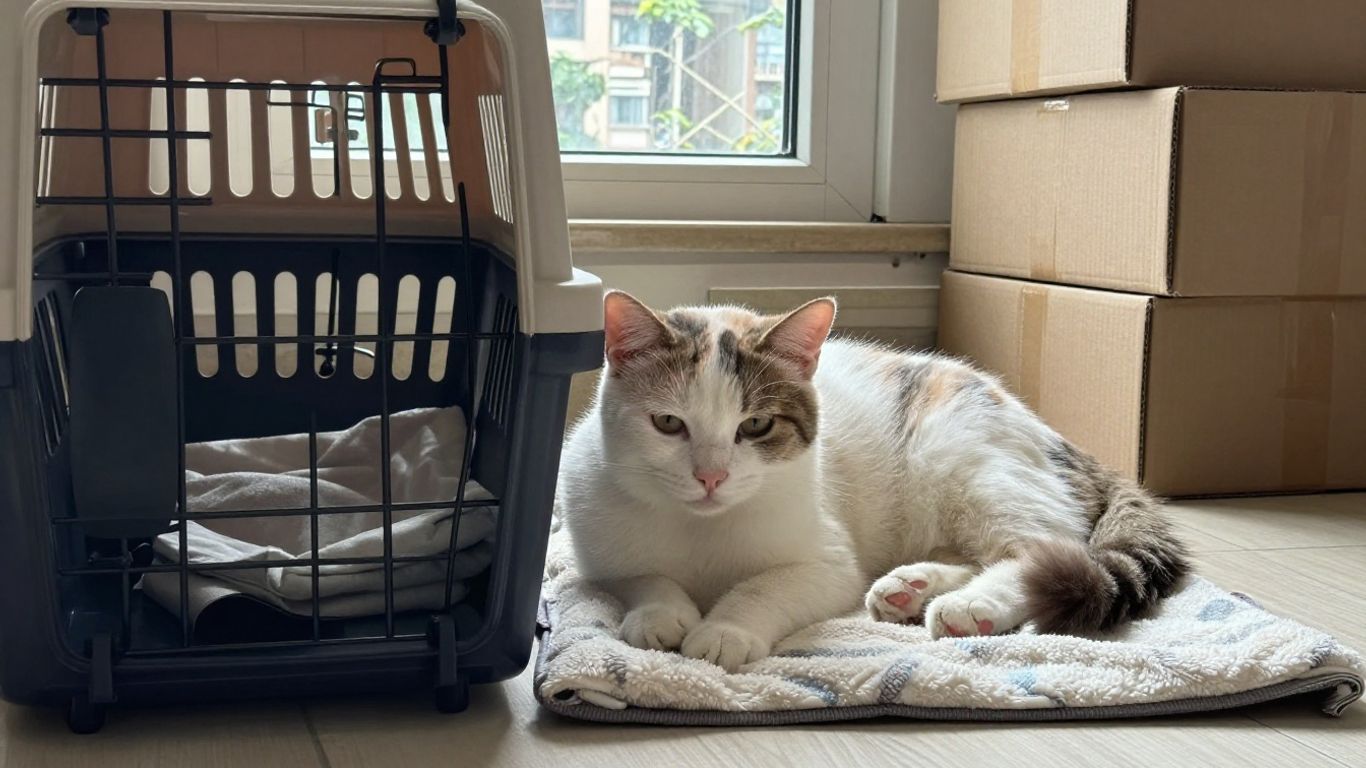
Try to keep meals, play, and quiet time close to their usual schedule. If you need to pack a room, leave a familiar resting place or a few well-used items available until later. Small, steady routines give your cat recognizable parts of the day while other things change.
Introduce the carrier and packing materials gradually
Leave the carrier open in a familiar room and let your cat approach it voluntarily. A blanket with a familiar scent or a treat placed nearby may encourage a positive association, though some cats need more time than others. You can also let your cat investigate boxes and packing materials while you supervise, rather than suddenly filling every room with them.
A short, low-pressure sequence is often easier to manage than a last-minute attempt to make the carrier feel familiar:
- Set the open carrier in a room your cat already uses.
- Add familiar bedding and let your cat choose whether to enter.
- Offer a treat or a brief play session near the carrier.
- Practice closing the door for a moment only if your cat remains comfortable.
If your cat backs away, pause and try again later instead of forcing the interaction. For more moving-day preparation, see this moving-day safety advice; the same principle applies at home: make new experiences gradual and keep your cat secure.
Create a quiet room away from packing activity
Choose a room that can stay calm while the rest of the home is packed. Put in water, a litter tray, bedding, and familiar toys, and make sure everyone helping with the move knows the door must stay shut. If visitors or noise are already unsettling your cat, a quiet retreat from household activity can be useful well before moving day, too.
Ask your vet about medication or calming support
If your cat has a history of severe travel distress, ask your veterinarian about a plan before the move. A veterinarian can consider your cat’s health and explain whether medication or another form of support is appropriate; do not give human medication or use a sedative without veterinary direction. For environmental support, PAWSONA® pheromone spray is described as a clinically proven spray designed to ease anxiety and stress, including during travel and other changes; ask your vet whether it fits your cat and follow the product directions. The guidance also covers using pheromone spray as part of a supportive environment, rather than as a substitute for addressing the source of stress.
Make moving day safer and less stressful
On moving day, safety comes before helping your cat explore or socialize. Open doors, unfamiliar people, and furniture being carried through the home can create opportunities for a frightened cat to slip away. Decide in advance where your cat will stay, who is responsible for checking on them, and how you will move them between homes.
Set up a secure room before movers arrive
Place your cat in the prepared room before loading begins, with the door closed and a clear notice for anyone entering the home. Keep the carrier and essentials in that room, but do not leave the door open while people are moving items. Check on your cat quietly at intervals without creating extra traffic in and out.
Choose a suitable carrier and plan the journey
Use a carrier that closes securely and gives your cat room to sit or lie down comfortably. Keep it stable in the vehicle and avoid opening it during the journey, even if your cat meows. Plan the route and likely stops ahead of time; if you expect an extended trip, ask your veterinarian how to handle food, water, and any health needs safely.
Keep your cat cool in Malaysia’s heat and humidity
Warm, humid weather can make a stressful journey harder, especially if a parked vehicle heats up. Keep the car ventilated and climate-controlled, never leave your cat unattended in a parked vehicle, and avoid placing the carrier in direct sun. For more general ideas about keeping cats comfortable in hot weather, consider your cat’s access to shade, water, and a cool resting place at both ends of the trip.
Prevent escapes during loading and travel
Before doors open, confirm that your cat is inside a closed carrier or a room that cannot be accessed by movers. Check the carrier latch and keep it close to you when transferring it to the vehicle. A simple handoff plan helps everyone avoid assumptions: one person is responsible for the cat, and that person confirms each door is closed before the next step begins.
Help your cat settle into the new home
The new home may be safe and comfortable, but it is still full of unfamiliar sounds and scents. Give your cat a small area to learn first rather than opening every room at once. A familiar setup and patient pacing help you see when your cat is ready for more space.
Start with one quiet, cat-proof room
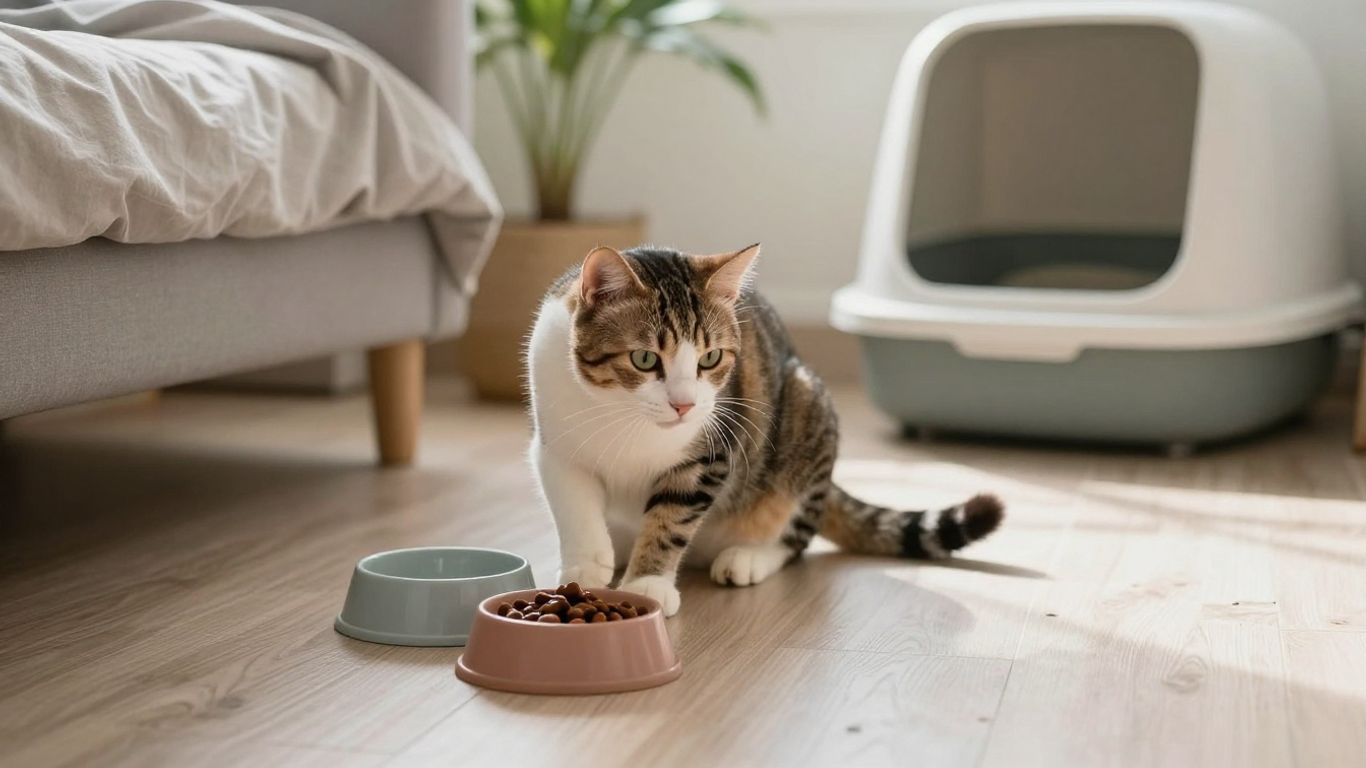
Begin with a room where windows and doors are secure and your cat has access to food, water, a litter tray, and a hiding place. Let your cat settle there while furniture and boxes are still being moved around the rest of the home. A gradual approach to settling into a new household also gives you a chance to notice whether your cat is eating, drinking, and using the litter normally.
Transfer familiar bedding, litter, and feeding items
Bring familiar bedding, bowls, and the usual litter setup into the first room if you can. Keeping these items recognizable makes the new space less unfamiliar; avoid washing every comfort item at once if it carries familiar home scent. A quiet, steady arrangement matters more than making the room look finished.
A pheromone diffuser may be one option to discuss as you prepare the new space. PAWSONA® Zenkit™ diffuser refill information describes support for stress related to travel and changes at home, with use according to the product directions; it is not a replacement for a secure room, routine, or veterinary care. The diffuser refill details can help you review its stated scope before deciding whether it suits your household.
Let your cat explore at their own pace
When your cat is eating, drinking, resting, and using the litter area comfortably, you can allow brief access to another cat-proofed area. Keep the first explorations quiet and let your cat return to the safe room whenever they choose. If they freeze, hide, or seem overwhelmed, make the available space smaller again and try later.
Update identification and secure doors and windows
Update your cat’s identification details with your current contact information, and check that doors, screens, and windows are secure before allowing access beyond the first room. Cats can be especially quick to bolt when they are startled in an unfamiliar home. Be cautious with balcony access and any gaps that could let a cat slip outside.
Adapt the plan to your move in Malaysia
A move in Malaysia can involve long periods in traffic, warm weather, and different building arrangements, so plans should allow for local conditions. Check the journey and destination details before the day rather than assuming the move will be quick or the new home will be ready at arrival. Keep the cat’s essentials together and accessible, separate from boxes that will be unloaded last.
Prepare for traffic and longer travel times
Allow extra time for traffic and avoid planning a tight schedule that depends on an exact arrival. Keep your cat secured in the carrier throughout the drive, and do not open it at roadside stops. Moving plans can overlap with unrelated errands—perhaps reading the Sagrada Família Blog, choosing sensitive-ear earrings, or reviewing account-based marketing—but keep those separate from the cat’s travel checklist so essentials do not get lost among other tasks.
Check building rules and pet policies
If you are moving into a condominium or managed building, confirm pet rules, lift access, and any move-in booking requirements before the day. These details can affect how you carry your cat and how long the carrier must remain closed in a busy shared space. Keep building approval and your cat’s secure transport plan as two separate checks; completing one does not guarantee the other.
A household move may also involve unrelated digital or business tasks. Whether arranging managed WordPress hosting or setting up Remapdash, keep those administrative projects apart from building pet permissions and the cat’s arrival plan.
Plan for local weather and power interruptions
Check the forecast and prepare for heat, heavy rain, or delays that could extend the journey. Have water and a cool, shaded place ready at the destination, and consider what you will do if a power interruption affects air conditioning. Keep the carrier out of direct sun and never leave your cat in a parked vehicle while you handle errands.
Find a nearby veterinarian before you arrive
Save contact details for a veterinary clinic near the new home before moving day, and check how to reach it from the property. This is practical preparation, not a prediction that something will go wrong; it simply makes it easier to act if your cat needs help. If your cat has an existing condition, ask your current veterinarian how to transfer relevant records and medication instructions.
Know when to seek extra help
Most cats need time and a steady environment to adjust, but changes in behavior deserve attention rather than dismissal. Keep an eye on basic daily habits and compare them with your cat’s normal pattern. If something seems physically wrong, contact a veterinarian rather than assuming the move is the only cause.
Track eating, drinking, litter use, and behavior
For the first days and weeks, note whether your cat is eating, drinking, urinating, passing stool, and resting as usual. You do not need a complicated chart; a few short observations can help you spot a pattern and explain it clearly to a veterinarian. Include changes in hiding, vocalizing, or aggression, especially if they continue or become more pronounced.
Recognize signs that need prompt veterinary attention
Seek prompt veterinary advice if your cat has difficulty breathing, repeatedly vomits, appears very weak, cannot urinate, or strains in the litter tray. A sudden refusal to eat or drink, obvious pain, or rapid deterioration also deserves a call. When in doubt, describe what you are seeing and ask the clinic how quickly your cat should be assessed.
Give your cat time to adjust before making further changes
Try not to introduce several new routines, visitors, or household changes at once while your cat is still learning the space. Keep interactions calm and let your cat choose when to approach. PAWSONA offers calming collars among its cat stress-relief products, but any support should fit your cat’s needs and never delay veterinary advice when concerning signs appear.
Conclusion
Moving house with a cat is not about preventing every anxious moment; it is about making the transition safer, more predictable, and easier to manage. Prepare a secure space, preserve familiar routines, travel with care, and let your cat set the pace at the new home. If behavior changes seem severe or may point to a health problem, your veterinarian can help you decide what to do next.
Frequently Asked Questions
How long does it take a cat to adjust after a move?
There is no single timeline. Some cats begin exploring within a few days, while others need longer; continue offering a safe room and predictable routines, and let your cat’s behavior guide the pace.
Should I let my cat explore the whole house on the first day?
Usually it is easier to begin with one quiet, cat-proof room. Gradually offer access to more space once your cat is eating, drinking, resting, and using the litter area comfortably.
Is it safe to move a cat in a carrier in the car?
A securely closed carrier is generally the safest way to transport a cat by car. Keep it stable, avoid opening it during the journey, and ask your veterinarian about any special travel needs.
What should I put in my cat’s safe room?
Provide water, a litter tray, familiar bedding, food, and a place to hide. Keep the room quiet and make sure everyone involved in the move knows to keep the door closed.
What if my cat hides after arriving at the new home?
Hiding can be a response to unfamiliar surroundings. Give your cat a quiet retreat and avoid pulling them out; check that they can reach food, water, and the litter tray, and contact a veterinarian if other concerning signs appear.
Should I feed my cat during a long move?
Travel and feeding needs differ between cats, and a long journey may require advance planning. Ask your veterinarian what is appropriate for your cat, especially if they have a health condition or are prone to travel sickness.
When should I call a veterinarian after a move?
Call if your cat has trouble breathing, repeatedly vomits, seems very weak or painful, strains to urinate, or has a significant change in eating or drinking. If you are uncertain whether a change is urgent, contact a clinic and describe what you have observed.