


Key Takeaways
Cats may show stress through small changes in behavior, not just dramatic reactions. Watching what changes and when can help you respond with care.
- Stress may be brief, or it may continue when a cat cannot adapt to an ongoing trigger.
- Hiding, appetite changes, overgrooming, and litter box changes can have several causes, including illness.
- Noise, visitors, limited space, other cats, travel, and disrupted routines may affect a cat’s sense of security.
- Tracking behavior and household changes can help you identify patterns and explain them to a veterinarian.
- Predictable routines, accessible resources, quiet retreats, and gradual introductions can support a calmer home.
What stress means for cats
Stress is a response to something a cat experiences as challenging or uncertain. It can help explain a change in behavior, but it is not a diagnosis on its own. Understanding feline stress malaysia starts with seeing a cat’s behavior in context: what is normal for that individual, what has changed, and whether the change is brief or persistent.
Short-term stress versus ongoing distress
A short-lived response may follow a visitor arriving, a sudden noise, or a trip in a carrier. A cat might hide until the home feels quiet again, then return to eating, resting, and interacting as usual. Ongoing distress is more concerning when a trigger remains, repeats often, or the cat does not return to their usual behavior between events.
There is no single timeline that defines stress for every cat. Pay attention to whether your cat can recover and carry on with ordinary routines. If signs keep recurring or grow more pronounced, consider what may be maintaining them and speak with a veterinarian.
How temperament and past experiences shape responses
Two cats can experience the same household change very differently. One may investigate a new object within minutes; another may keep its distance for days. Age, temperament, early social experiences, health, and past encounters can all shape how safe or manageable a situation feels to an individual cat.
A cautious response is not a character flaw, and forcing a cat to approach what worries them can make an encounter harder. Let the cat choose whether and when to explore. A gradual pace gives them room to build familiarity without losing access to places where they feel secure.
Why subtle behavior changes matter
Cats often communicate discomfort through small shifts rather than an unmistakable signal. A sociable cat that starts spending more time alone, or a tidy cat that begins avoiding the litter box, may be telling you something has changed. It helps to treat these differences as information rather than as misbehavior.
A useful starting point is to compare the new pattern with your cat’s ordinary habits. A change from baseline can matter even if it seems minor on its own. You can also read about subtle signs of feline stress while keeping in mind that a veterinarian is best placed to assess concerning or persistent changes.
How to recognize stress in your cat
There is no single behavior that proves a cat is stressed. Instead, look for a cluster of changes and consider when they began, how often they happen, and what else is different at home. Changes can also have medical causes, so observation is a way to gather clues, not a reason to diagnose your cat yourself.
Changes in eating, grooming, and litter box habits
A stressed cat may eat less, groom more or less than usual, or change how they use the litter box. Some cats may also scratch or vocalize differently. Each of these behaviors can arise for reasons other than stress, and any sudden shift in appetite or toileting deserves attention, particularly if it continues.
Notice details rather than relying on a general impression. Is your cat eating a smaller amount at every meal, or skipping food only after visitors arrive? Is grooming focused on one area? If a veterinarian is helping your cat manage weight, follow their advice rather than making feeding changes on your own; a vet-guided weight-loss plan can help owners think about measured portions and tracking progress safely.
Body language, hiding, and vocalization
A cat who hides more, withdraws from people or other cats, or becomes unusually vocal may be reacting to something in their surroundings. Watch the whole picture: posture, ears, tail, movement, and whether the cat is able to settle once the situation changes. A single hiss or retreat can be a normal response to needing space.
Consider whether your cat has a quiet place to retreat to and whether anyone is following or handling them there. If guests are the likely trigger, visitor-related stress guidance may offer practical ideas for keeping routines familiar and giving a cat space. A change in vocalization or body language that appears sudden, persistent, or unusual for your cat is worth discussing with a veterinarian.
When a behavior change may signal illness instead
Stress and illness can look alike, and they can occur at the same time. Pain or another health problem may change a cat’s appetite, grooming, energy, social behavior, or litter box habits. It is safer not to assume that a new behavior is “just stress,” especially when it appears suddenly or continues without a clear environmental explanation.
Seek prompt veterinary advice if your cat seems unwell or has trouble urinating. Straining to urinate, repeatedly visiting the litter box, or producing little or no urine can be urgent. Keep notes about what you see and when it happens; that record can help a veterinarian decide what to check.
Common stressors in Malaysian homes
A home can be safe and loving yet still contain things a cat finds unsettling. In Malaysia, as elsewhere, household changes, noise, unfamiliar people, and the way indoor space is shared may all play a part. The important question is not whether a trigger seems small to a person, but how your particular cat responds to it.
Noise, visitors, renovations, and busy surroundings
Drilling, repairs, loud gatherings, and unfamiliar visitors can disturb a cat’s usual resting places and routines. A cat may hide during the disruption and reappear later, or may remain wary after the noise stops. Try to notice whether the change happens only during the event or continues afterward.
If work is planned, make a quiet room available before it begins, with familiar bedding and access to essentials. Avoid bringing the cat out to meet guests or asking them to tolerate noise. When a move is adding to household disruption, a moving-house preparation guide can help you think through ways to keep the cat secure during the transition.
Indoor living, limited space, and multi-cat tension
Indoor life protects cats from many outdoor hazards, but the home still needs places to rest, hide, climb, and move without being blocked by another animal. Tension between cats can be quiet: one cat may wait until another leaves before eating or using the litter box, or may avoid a hallway where they have been cornered.
Observe how each cat moves through shared areas and whether access to food, water, resting spots, and litter boxes is interrupted. Separate resources and escape routes can reduce the need to compete. For more ideas about multi-cat household routines, focus on giving each cat usable space rather than expecting them to share every resource peacefully.
Travel, weather disruptions, and changes to routine
Car rides, boarding, visitors, and changes in the household schedule can unsettle a cat that relies on familiar patterns. Thunderstorms and other loud weather events may also lead to hiding, pacing, or appetite changes in some cats. If your cat is worried during a storm, give them access to a sheltered, familiar place and avoid pulling them out of hiding.
Changes in Malaysia’s warm, humid weather can also affect the home environment and daily routines. Keep an eye on whether a change in comfort or activity lines up with the behavior you are seeing. A resource on cat comfort in hot weather can help you consider weather alongside other possible triggers, rather than assuming it explains every change.
How to assess what may be causing stress
It can be difficult to identify a trigger when several things change at once. A move may coincide with new furniture, disrupted feeding times, and more visitors; a cat’s response might relate to one or several of those things. A calm, structured look at the pattern is more useful than changing everything at once.

Track behavior, timing, and changes at home
Write down what you notice, when it happens, and what was going on beforehand. Include ordinary days as well as difficult ones. This can help separate a repeating pattern from a one-off event, and gives you clearer details to share if you contact a veterinarian.
A simple record might include a few practical observations:
| What to note | Example observation | Why it may help |
|---|---|---|
| Behavior | Hides under the bed | Shows what changed from usual |
| Timing | After visitors arrive | May reveal a repeating pattern |
| Appetite | Eats half of dinner | Gives a concrete detail to discuss |
| Household change | Renovation noise began Monday | Connects behavior with a possible trigger |
Look across the notes for patterns, not proof. If hiding occurs only during noisy work and your cat returns to normal soon afterward, that is useful context; if appetite or litter box changes continue on quiet days too, mention that as well.
Check for resource competition and environmental triggers
Once you have a rough timeline, look at the spaces your cat uses. Check whether a resting place has become noisy, whether another pet blocks a route, or whether food and water are in a spot that feels exposed. Changes in access can matter even when the home’s layout seems unchanged to you.
A short walk through the home can help you spot practical issues. Consider whether your cat can reach and leave each important area without being cornered. You might check for:
- A quiet hiding place that remains undisturbed.
- More than one route away from a resting or feeding spot.
- Food, water, and litter areas that are easy to access.
- New noise, smells, or activity near a favored resting place.
These checks do not require you to rearrange the whole home. Start with the most plausible trigger and see whether a modest change makes daily life easier for your cat. For broader support, a cat stress and anxiety guide can help you consider signs, triggers, and home care together.
Share useful observations with a veterinarian
Bring your notes to a veterinary appointment, especially if the behavior is sudden, persistent, or accompanied by changes in eating, movement, or toileting. Mention when the change began, what has happened at home, and whether your cat’s behavior varies by time or situation. Concrete examples are often more useful than a general description such as “seems anxious.”
It may also help to note recent changes in food, medication, household members, or routine. Tell the veterinarian what you have already tried and how your cat responded. That context can support a discussion of both medical possibilities and environmental adjustments.
Practical ways to reduce stress at home
No single adjustment suits every cat, and calming a situation does not always mean making the home completely quiet or unchanging. The aim is to give your cat more choice and reliable access to what they need. Make changes gradually and observe whether your cat seems more able to eat, rest, explore, and interact in their own way.
Provide hiding places, vertical space, and quiet resting areas
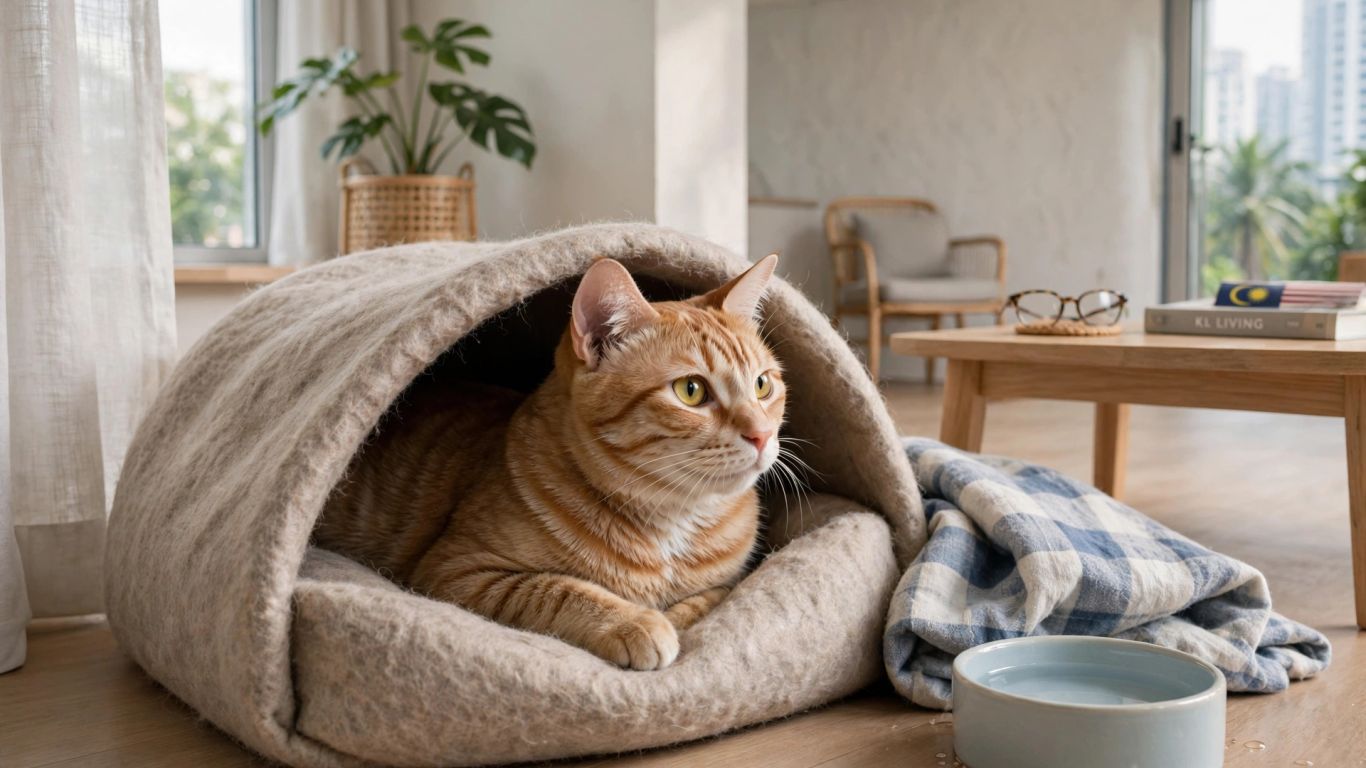
A safe retreat lets a cat pause without being chased or handled. This might be a covered bed, a box in a quiet corner, or a familiar shelf that the cat can reach safely. Vertical space can also give cats options to observe a room from above, while a quiet resting place helps them step away from household activity.
Let your cat decide when to use these areas. Keep children and visitors from reaching into a hiding spot, and make sure other pets cannot trap the cat there. If your cat retreats, the helpful response is usually to make the space feel safe, not to coax them out before they are ready.
Keep routines predictable and resources easy to reach
Regular feeding, play, and rest periods can make daily life feel more familiar. It may not be possible to keep every day identical, but a steady pattern can soften the effect of unavoidable changes. Keep essential resources in places your cat can reach without crossing a busy or contested area.
PAWSONA offers pheromone diffuser kits, calming sprays, calming collars, and nutritional supplements as part of its cat stress and behavior solutions. These are product options, not substitutes for identifying a trigger or checking a health concern. If you are considering any calming aid, discuss whether it suits your cat and situation with a veterinarian.
Introduce changes, people, and other pets gradually
A new person, pet, or household arrangement can feel like a major change from a cat’s point of view. Let your cat approach at their own pace and keep familiar spaces available while they adjust. For a new pet, avoid placing the animals together immediately; gradual introductions allow time to become familiar with one another without forced contact.
A move or new household member may also affect the people in the home. Owners managing their own stress can draw on general stress reduction techniques, while remembering that a cat needs species-appropriate support and a calm, patient introduction. For cats living through heat cycles or other changes at home, the PAWSONA® Zenkit™ Cat Calming Diffuser is described as supporting calmer behavior; discuss any product choice with your veterinarian and keep addressing the underlying situation.
Use play and enrichment suited to your cat
Play can give cats a chance to engage with their surroundings, but the best activity depends on the individual. Some cats enjoy a short wand-toy session; others prefer food puzzles, watching from a perch, or exploring a new object at a comfortable distance. Keep sessions brief if your cat loses interest, and let them disengage rather than pushing for interaction.
You can rotate a few toys or offer simple enrichment without making the room overwhelming. Notice what your cat chooses repeatedly and build on that. Enrichment is most helpful when it fits the cat’s age, health, confidence, and preferred pace.
When to seek professional help
Getting help does not mean you have failed to make the home comfortable. A veterinarian can assess whether a medical issue may be contributing and help you decide what support makes sense. This is especially useful when changes are sudden, persist despite reasonable adjustments, or affect everyday activities like eating, resting, or using the litter box.
Contact a veterinarian for sudden or persistent changes
Contact a veterinarian if your cat’s behavior changes suddenly, lasts, or keeps returning without a clear explanation. Changes in appetite, grooming, movement, toileting, or social behavior may call for an examination rather than more trial-and-error at home. If your cat is straining to urinate or seems acutely unwell, seek prompt veterinary advice.
A visit can be more productive if you bring your observations and a short timeline. Be specific about what changed and when, even if you are not sure whether it is related. If your cat has recently had surgery, follow the clinic’s recovery instructions and ask about new or worsening behavior.
Ask about medical causes before trying supplements
Supplements and other calming products should not be used to explain away a behavior change that could be medical. Talk with a veterinarian before giving a supplement, especially if your cat takes medication or has a health condition. PAWSONA offers nutritional supplements among its cat stress and behavior solutions, but a veterinarian can help you decide whether that type of support is appropriate for your cat.
If you are comparing options, check product information and ask about safety, fit, and how to monitor your cat’s response. A safe supplement selection guide can help you prepare questions, but it cannot replace veterinary advice. Start with the cause you can address and keep track of what changes after any adjustment.
Find appropriate support if access to care is difficult
If getting to a clinic is difficult, call a local veterinary practice to ask what options are available and how quickly your cat should be seen. Explain the signs you are noticing and ask whether the situation needs urgent attention. Do not delay seeking advice for serious symptoms simply because you are uncertain what they mean.
Practical barriers can affect how people provide care, and it is reasonable to ask for help planning next steps. A discussion of barriers to cat care may offer useful context, but your cat’s immediate needs are best assessed with a veterinary professional. When possible, arrange support from someone you trust for transport or observation.
Conclusion
Feline stress is easier to understand when you notice what has changed, consider the cat’s surroundings, and resist jumping to conclusions. Small environmental adjustments may help, but sudden or persistent changes deserve veterinary attention. With patient observation and support tailored to the individual cat, owners can make home feel more predictable and secure.
Frequently Asked Questions
Can cats experience stress indoors?
Yes. Indoor cats may respond to noise, visitors, changes in routine, limited access to resources, or tension with other pets. A secure home can still contain situations an individual cat finds difficult.
What are common signs of stress in cats?
Possible signs include hiding more, withdrawing, changes in appetite or grooming, unusual vocalization, and litter box changes. These signs can also have medical causes, so look at the overall pattern and seek veterinary advice when needed.
How can I tell whether my cat is stressed or ill?
It may not be possible to tell from behavior alone because stress and illness can produce overlapping changes. A veterinarian can assess medical causes, particularly when a change is sudden, persistent, or affects eating, movement, or toileting.
Should I try to bring a hiding cat out?
Usually, it is better to let the cat remain in a safe, undisturbed hiding place and allow them to emerge when ready. Make sure they can reach essential resources and that other people or pets do not block their way.
Can a new pet cause stress for a cat?
Yes. A new animal may change access to space, resting areas, and other resources. Gradual introductions and separate places to retreat can help cats adjust at their own pace.
What should I write down before contacting a veterinarian?
Record what behavior changed, when it happens, how often it occurs, and any recent household changes. Include appetite, grooming, litter box habits, and anything you have already tried.
When is a litter box change urgent?
A change in litter box habits should not automatically be blamed on stress. Straining to urinate, repeatedly trying to urinate, or producing little or no urine can require urgent veterinary attention.