


Key Takeaways
Choosing litter for several cats is less about finding a special label and more about making cleanup manageable while keeping every cat comfortable.
- Compare texture, odor control, dust, tracking, and disposal before choosing.
- Provide enough boxes in separate, easy-to-reach locations.
- Introduce a new litter gradually and watch how each cat responds.
- Scoop consistently; frequent use makes a steady routine especially helpful.
- Sudden litter-habit changes can signal a health issue and deserve veterinary attention.
Understand what makes litter suitable for multiple cats
In a home with several cats, litter boxes may be used often and by cats with different preferences. A suitable multi cat litter should make daily cleanup practical without putting off a cat that prefers a particular texture or scent. The label can be a starting point, but box setup and each cat’s response matter just as much.
How shared litter use affects odor and mess
More frequent box use can mean more waste to remove and less time for odors to dissipate between visits. Scooping regularly helps, but the room, ventilation, litter depth, and number of boxes also affect how fresh the area feels. Consider the whole setup rather than expecting one formula to solve every odor or tracking problem.
Why clumping strength matters in a busy litter box
With clumping litter, firm clumps can be easier to lift out without breaking apart, which helps keep the remaining litter cleaner. Easy-to-remove clumps can make a noticeable difference when boxes see frequent use. If clumps crumble or stick to the bottom, check that the litter is deep enough and follow the product’s care directions before deciding the formula is a poor fit.
When a multi-cat formula may not be the right fit
A product marketed for multiple cats may still be a mismatch for an individual cat that dislikes its scent, grain size, or feel underfoot. If one cat avoids the box after a change, take that response seriously instead of assuming the cat will simply get used to it. A familiar, well-liked option can be more useful than a formula chosen only for its label.
Compare the main types of cat litter
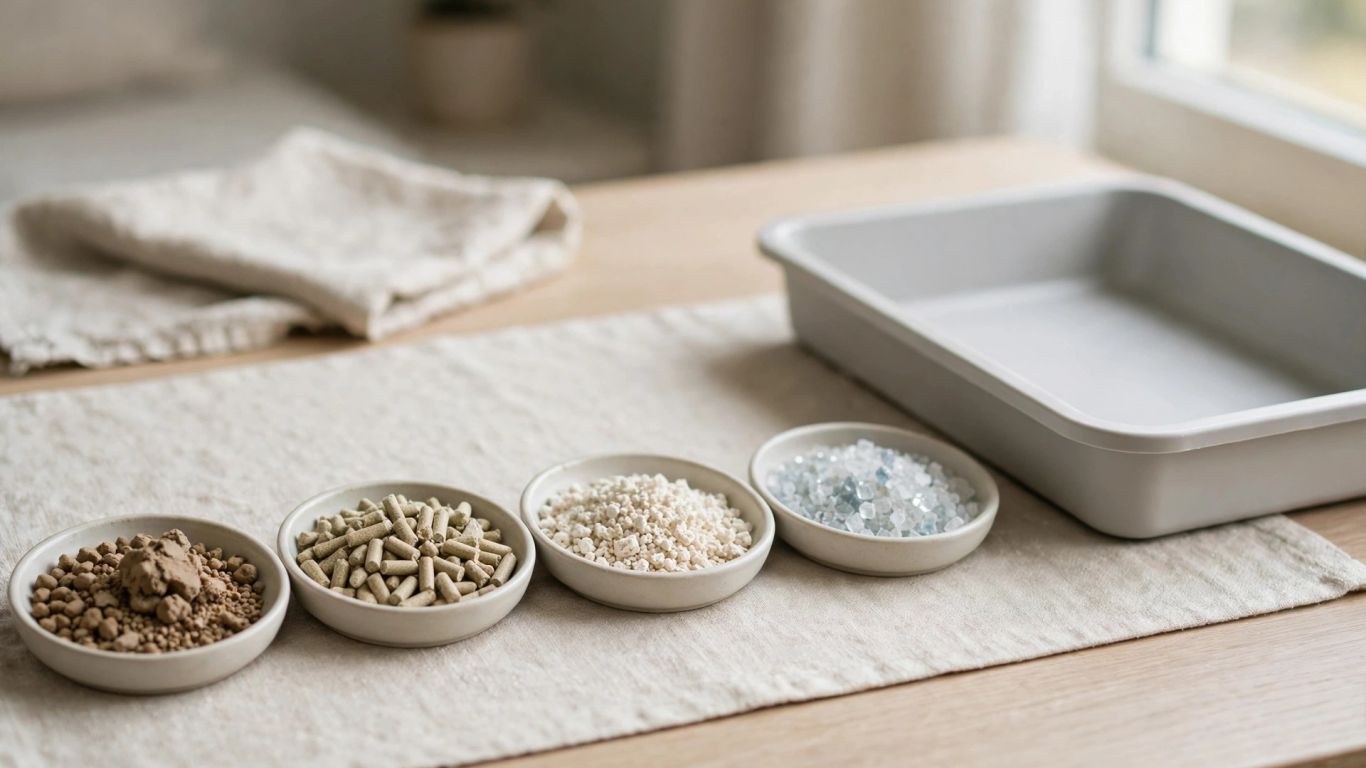
Litter materials differ in texture, weight, dust, and how waste is handled, so there is no single best type for every household. Notice what your cats already use comfortably, then weigh that against the time and effort you can give to daily cleaning. For a broader overview, see this guide to cat litter options; a separate multi-cat litter testing guide also discusses factors such as odor, scooping, dust, and tracking.
Clay litter for familiar texture and easy scooping
Many cats readily accept clay litter because its grainy feel is familiar, and clumping versions can make daily waste removal straightforward. The trade-offs can include weight, dust, and granules carried beyond the box. If you are comparing clay products, pay attention to how they perform in your actual space, not just how easily they pour from the bag.
Lightweight litter for easier carrying and pouring
Lightweight formulas can be easier to lift, store, and pour, which may matter if the box is far from where supplies are kept. Their lighter granules may travel outside the box more readily in some homes, so a mat and regular floor cleanup can help. Give your cat time to assess the texture rather than switching every box at once.
Natural and plant-based litter for alternative materials
Plant-based litters use different materials and may vary considerably in texture, clumping, and disposal instructions. Some cats accept them quickly; others need a gradual introduction, particularly if the new granules feel very different. Check the package directions and local waste rules rather than assuming all natural materials can be flushed or composted.
Silica litter for moisture absorption and lower maintenance
Silica crystal litter absorbs moisture, and some users find that it needs fewer full changes than certain other types; actual maintenance depends on the product and how many cats use it. The crystals feel unlike clay or plant-based granules, so a cat’s acceptance is worth checking before changing every box. This quick comparison can help narrow what to investigate:
| Litter type | What to consider | Routine question |
|---|---|---|
| Clumping clay | Familiar texture; can be heavy or dusty | Is scooping easy and consistent? |
| Lightweight | Easier to carry; may track | Can the surrounding floor stay tidy? |
| Plant-based | Material and texture vary | What disposal directions apply? |
| Silica crystals | Absorbs moisture; distinct feel | Does each cat accept the crystals? |
The comparison is a starting point, not a ranking. Try to match the material to both your cleaning habits and your cats’ willingness to use it.
Match litter features to your household
Once you have a few material options in mind, compare the details that shape everyday use. The most practical choice is one your cats will use reliably and that you can keep clean without too much effort. A large package is not automatically better value if it creates more dust, tracking, or waste than your household can comfortably manage.
Choose between scented and unscented formulas
A scented litter may seem like an easy way to cover odors, but a strong fragrance can be unpleasant for some cats and people. Unscented options let you judge odors more directly and may suit fragrance-sensitive households. If the room smells despite regular care, look first at scooping frequency, box count, and ventilation rather than adding more fragrance.
Balance dust control with tracking
Dust can bother people and cats, while small granules may scatter as cats step out of the box. The two issues are related to the formula and the individual cat’s habits, but a low-dust product does not necessarily mean low tracking. A mat placed outside the box and regular sweeping can help you manage scattered litter without changing a formula your cat accepts.
Consider clumping, flushability, and disposal requirements
Clumping can make daily scooping simpler, while non-clumping varieties may have different refresh and disposal routines. Do not flush litter unless the packaging and local wastewater guidance explicitly allow it; many products belong in household waste. Before buying, check the label for cleaning instructions, disposal guidance, and any restrictions relevant to your home.
Calculate cost by use rather than package size
Package weight alone does not tell you how economical a litter will be. Think about how often you scoop, how much gets discarded during refreshes, and whether the material works for all the cats using it. When comparing information online, keep sources relevant: a message-sorting system, Lisbon events guide, health privacy notice, IQ testing FAQ, and private AI video guide answer different questions; litter choices call for cat-specific guidance.
Set up enough litter boxes for your cats
Even a well-chosen litter can become unpleasant if too few boxes have to handle all the traffic. Cats may also prefer not to share, or may avoid a box that is difficult to reach. Box number, placement, size, and cleanliness work together, so consider the layout of your home as well as the number of cats.
Follow the number-of-cats-plus-one guideline
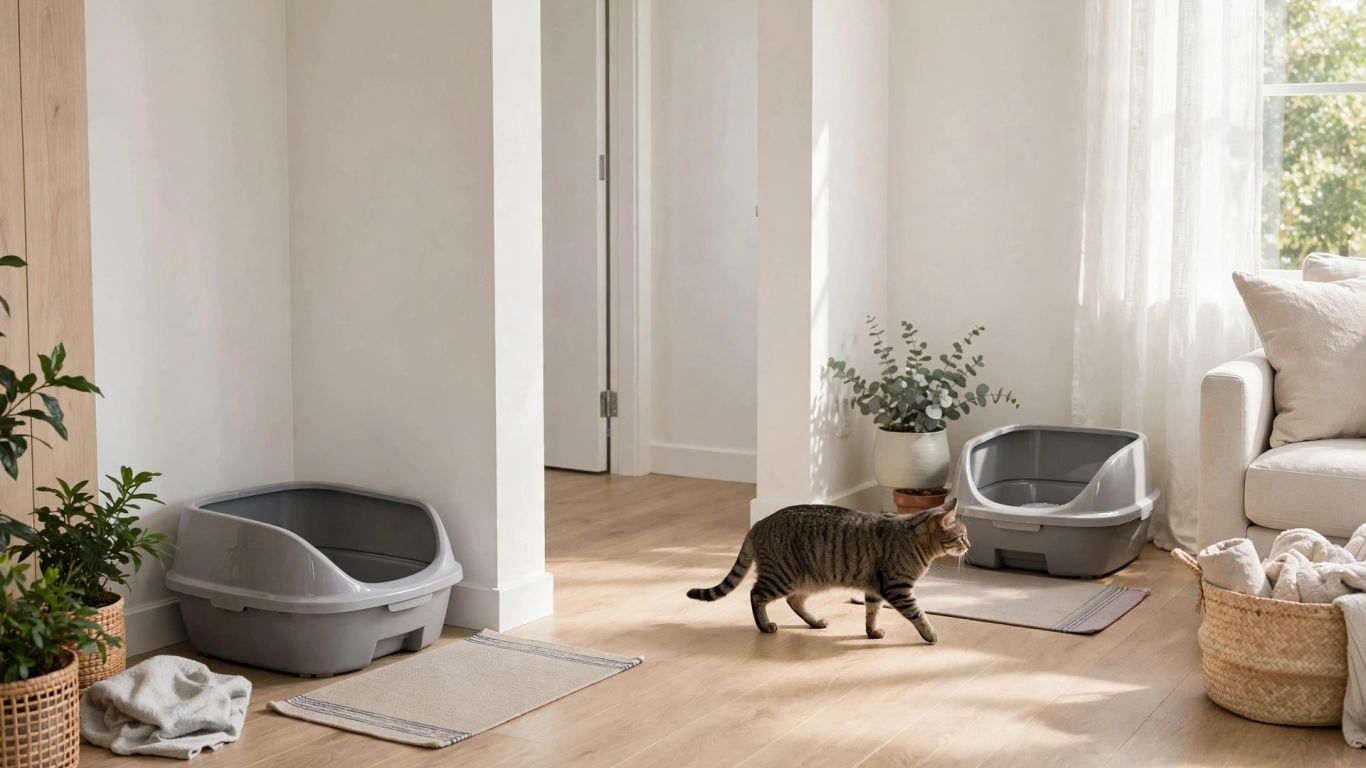
A common starting point is one litter box per cat, plus one extra. In practice, the right arrangement also depends on the home’s layout and whether every cat can reach a box without passing another cat that makes them uneasy. If adding every recommended box at once is difficult, start by making access easier and observe where your cats choose to go.
Place boxes in separate, accessible locations
Boxes placed side by side may function like one shared station rather than separate options. Choose quiet locations with a clear approach and an easy exit, avoiding spots where a cat can feel cornered. A few simple setup checks can help you assess the layout:
- Make sure each box is easy to reach throughout the day.
- Avoid putting all boxes in the same room or narrow passage.
- Keep a clear path so one cat cannot block another’s exit.
- Check that the location stays calm and is not startlingly noisy.
Then watch how each cat moves around the home. If a cat hesitates or waits for another to leave, try a different location and see whether access improves.
Choose box sizes and styles that suit each cat
A box should give a cat enough room to turn around, dig, and cover waste without feeling cramped. Older cats, kittens, and cats with mobility limits may find a high-sided entry difficult, while some cats prefer an open box. For more detail on selecting a litter box size and style, consider each cat’s body, movement, and preferences rather than choosing solely for appearance.
Keep food and water away from litter areas
Cats generally benefit from having eating and toileting areas separated. Place food and water where the cat can approach calmly and leave without passing through a litter area. In multi-cat homes, make sure resources are not clustered in a way that lets one cat control access to both meals and boxes.
Transition cats to a new litter
A gradual switch gives cats time to explore a new texture and scent without suddenly losing a familiar toileting option. This can be especially helpful when one cat is cautious or the new material feels very different. Make one change at a time so you can tell whether the litter itself is affecting box use.
Introduce the new formula gradually
Start by adding a small amount of the new litter alongside the familiar formula, then increase it slowly if your cats continue using the box comfortably. The pace can vary; there is no need to move forward just because a set number of days has passed. If a cat seems unsure, pause or return to a more familiar mix.
Watch for changes in box use and behavior
Notice whether each cat enters the box, digs, eliminates, and leaves as usual. Hesitation, repeated visits without eliminating, or new accidents are reasons to stop and reassess rather than pressing ahead with the switch. Keeping a simple note of which box and litter each cat uses can make a pattern easier to spot.
Keep a familiar option available during the transition
A separate box with the old litter lets a cat choose what feels comfortable while sampling the new formula. This is particularly useful if cats share spaces but do not share preferences. Once the new litter is being used reliably, you can decide whether to continue the transition or keep more than one option available.
Maintain litter boxes and manage common problems
Good litter-box care is a repeated routine, not a one-time fix. Multiple cats can make boxes dirty sooner, so the schedule may need to reflect actual use rather than a standard timetable. If a problem appears, check cleanliness, access, and stressors together before assuming the litter is the only cause.
Scoop and refresh litter on a consistent schedule
Scoop waste at least daily, and more often if the boxes are heavily used or odors build quickly. Follow the product label for how much litter to maintain and when to refresh it fully. A consistent routine keeps it easier to spot changes in a cat’s output, too.
Wash boxes without strong fragrances
When refreshing a box, wash it with mild soap and water and rinse it well. Strong fragrances or lingering cleaner residue can make a box less inviting to a cat with a sensitive nose. Let the box dry before refilling, and follow any care directions provided for the material.
Troubleshoot odor, tracking, and litter avoidance
If odor persists, first check whether the box is being scooped often enough and whether every cat has an accessible option. For tracking, a mat and a quick sweep around the box may help; for avoidance, consider whether the box is too small, too dirty, strongly scented, or in a stressful location. PAWSONA Zenkit is a pheromone diffuser refill designed to help ease stress, anxiety, scratching, hiding, and urine spraying for up to 30 days across 700 sq ft; it is a stress-support product, not a litter or a substitute for addressing box setup. A cat litter box guide can also help you review box size, style, location, and access.
Stress may be one part of a litter-box problem, but it is not the only possible cause. PAWSONA pheromone spray is described as helping ease anxiety, stress, and fear, and may reduce scratching, urine marking, and hiding when used as directed; it does not replace a suitable litter setup or veterinary care. For wider household context, this guide to reducing multi-cat stress discusses separating resources and noticing behavior patterns.
Know when a sudden change in litter habits needs veterinary attention
A sudden change in urination or defecation can have a medical cause, so contact a veterinarian rather than treating it as a training problem. Seek prompt advice if a cat strains, seems painful, produces very little urine, or repeatedly visits the box without eliminating. PAWSONA Zenkit may help ease stress-related behaviors as described for the product, but a diffuser should not be used to explain away a sudden health change or delay an examination.
Conclusion
The best litter arrangement is one your cats are willing to use and you can maintain consistently. Compare materials and practical details, provide accessible boxes, and make changes gradually; if litter habits shift suddenly, involve a veterinarian rather than relying on a product change alone.
Frequently Asked Questions
What is the best litter for a home with multiple cats?
There is no single best option for every household. Choose a material your cats accept and that suits your cleaning routine, budget, and disposal options.
How many litter boxes should I have for multiple cats?
A common guideline is one box per cat, plus one extra. The boxes should be accessible and spread across separate locations where possible.
Does multi-cat litter control odor by itself?
Litter can help manage moisture and odors, but regular scooping, adequate box numbers, and good placement also matter. Persistent odor may mean the setup or cleaning schedule needs attention.
Is scented or unscented litter better for cats?
Some cats may be sensitive to added fragrance, so unscented litter is a reasonable option to try if a cat avoids a scented formula. Individual preferences vary, so observe how your cat responds.
How should I switch my cat to a different litter?
Introduce the new material gradually, mixing it with the familiar litter and increasing the amount only while your cat continues using the box comfortably. Keep a familiar option available if needed.
Can cat litter be flushed down the toilet?
Do not flush it unless the product directions and local wastewater guidance specifically allow it. Check the package and follow local disposal rules.
When should I call a veterinarian about litter-box changes?
Contact a veterinarian if litter habits change suddenly, especially if your cat strains, seems uncomfortable, or repeatedly tries to urinate with little or no output. These changes may need prompt medical attention.