


Key Takeaways
Choosing a behaviour support product starts with understanding what may be driving your cat’s actions. Small, consistent changes at home matter just as much as the product itself.
- Look for patterns and possible triggers before choosing a product.
- Treat products as support, not as a substitute for veterinary care.
- Match the type of support to the situation and your cat’s needs.
- Follow product directions and observe your cat’s response over time.
- Seek professional help for sudden, persistent, or concerning changes.
Understand what cat behaviour support products can do
Cat behaviour support products Malaysia shoppers find can range from environmental aids to supplements, but none can explain a behaviour on its own. A product may be one part of a plan to help a cat feel more settled. Start by considering what changed, when the behaviour happens, and whether your cat seems unwell. This keeps the focus on the underlying need rather than simply trying to stop an inconvenient sign.
Separate behaviour support from medical treatment
A calming aid is not a diagnosis or a treatment for illness. Hiding, vocalising, avoiding the litter box, or eating less can occur alongside stress, but physical discomfort can also change a cat’s behaviour. If a behaviour is new, intense, or accompanied by other changes in health, contact a veterinarian rather than relying on a product to resolve it. A veterinarian can help decide whether a health assessment is needed before you make other changes.
Food is part of overall care, but changing food alone should not be treated as a fix for stress-related behaviour. When reviewing diet, a science-based food guide can help you consider ingredients, life-stage needs, and the food label alongside advice from your veterinarian.
Recognize when a product may help
Products may be worth considering when you can identify a situation that seems to unsettle your cat, such as a move, unfamiliar visitors, or tension between cats. They work best as one element in a thoughtful plan that also looks at access to essentials, safe resting places, and routine. PAWSONA offers pheromone diffuser kits, calming sprays, calming collars, and nutritional supplements as cat stress and behaviour support options. The right choice depends on the concern and the product’s directions, not simply on a broad promise to calm every cat.
For a broader overview of behaviour changes and practical home adjustments, see these cat behaviour solutions. Use general guidance as a starting point, then consider your individual cat’s health and circumstances.
Set realistic expectations for results
Cats differ, and a product that suits one situation may not suit another. Notice whether the behaviour changes, stays the same, or appears alongside new signs; avoid assuming that a product will work immediately or prevent every stress response. A gradual, observable change is more useful to assess than a vague impression that your cat seems different. Give any safe, appropriate change time while keeping your cat’s routine as steady as possible.
Match products to common behaviour concerns
The same behaviour can have more than one cause, so begin with context rather than a shopping list. Consider what happens just before and after the behaviour, where it occurs, and what has recently changed at home. Then choose practical support that addresses the situation without restricting normal feline needs. The sections below offer starting points, not a substitute for professional advice.
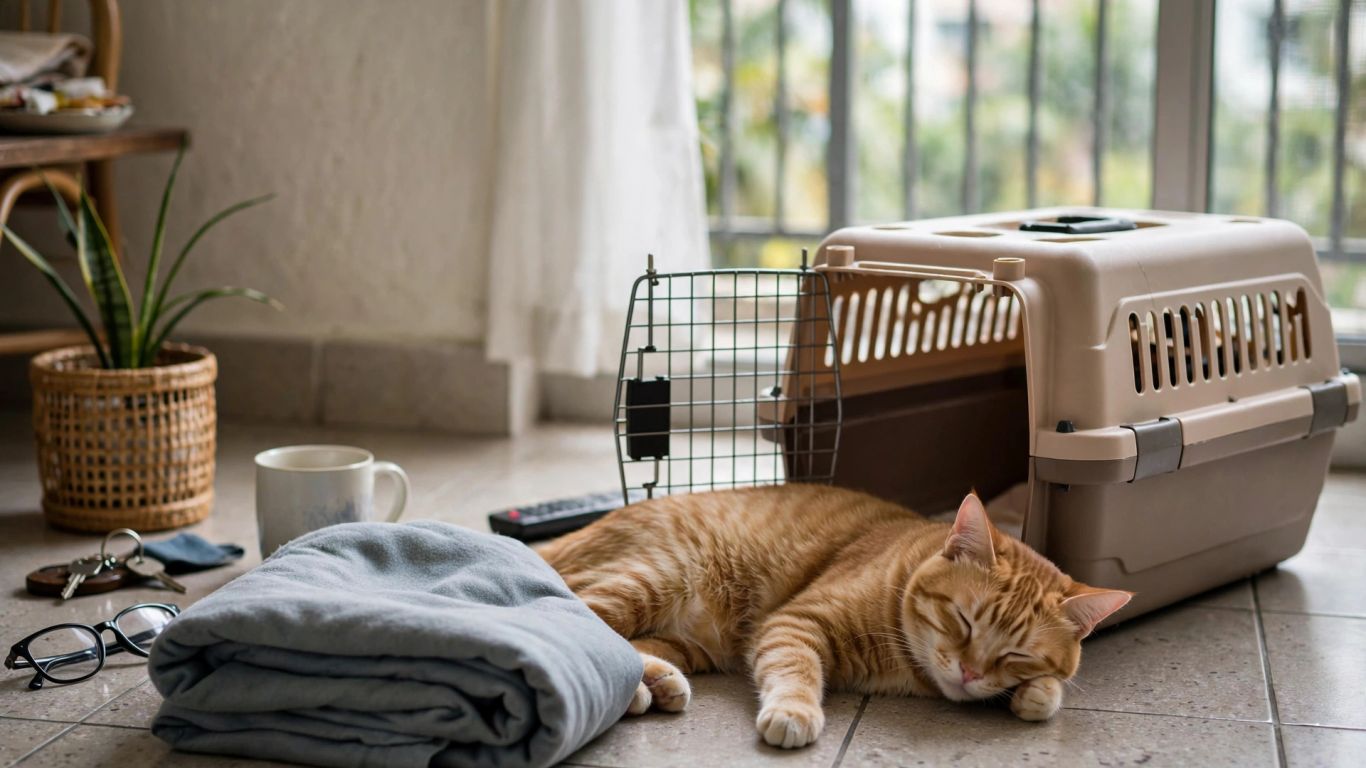
Reduce stress during travel or environmental changes
Travel, a new home, unfamiliar people, and changes in routine can unsettle some cats. Keep familiar items available where possible and let your cat approach a carrier or new room at a comfortable pace. A product should fit the setting and its label directions; a home diffuser, for example, is not automatically suited to travel use. For more context on travel planning for cats, this cat travel guide covers ways to make journeys and stays more comfortable.
Planning a person’s holiday is a separate task from preparing a cat for travel; a guide to regional safari destinations is relevant to the former, not a recommendation for taking a cat on safari. For the cat, focus on familiar surroundings, safe transport, and advice suited to the individual animal.
Support scratching, hiding, and enrichment needs
Scratching and hiding are normal cat behaviours, so support should make appropriate outlets available rather than trying to eliminate them. Offer a scratching surface your cat can reach easily, and provide a quiet retreat where the cat can choose to withdraw. Toys and food puzzles can add opportunities for exploration, provided they suit your cat’s age and mobility. If you are making a calming nook, remember that a recovery nook guide addresses gambling-related anxiety in people, not feline behaviour; it is not evidence for a cat product or a substitute for cat-specific advice.
Address urine marking and litter box challenges
Urine marking and litter-box avoidance deserve careful attention because they can reflect both environmental stress and health concerns. Note where and when it happens, whether the litter setup or household has changed, and whether other cats can access the area. Keep the box easy to reach and clean it regularly; if the behaviour is sudden or persistent, ask a veterinarian to assess possible medical causes. A cat litter comparison can help you think through practical litter factors, but a litter change is not a diagnosis or a guaranteed solution.
Compare the main product types
Behaviour support products vary in how they are used and what role they may play in a home. Read the label carefully and consider the specific situation before choosing a format. Some products are used in a room, others are applied or worn, and toys or environmental aids change what the cat can do in its surroundings. Comparing the options by use and limitations can keep expectations grounded.
Pheromone diffusers and sprays
Diffusers and sprays are different formats, so placement and use instructions matter. PAWSONA offers pheromone diffuser kits and calming sprays; follow the directions for the specific product rather than assuming that one format can be used like another. Check where a diffuser should be placed and whether a spray is intended for a particular surface or situation. This pheromone diffuser guide covers choosing and using a diffuser while observing a cat’s response.
Calming supplements and food products
Supplements are not interchangeable, and ingredients, directions, and cautions vary by product. Consider your cat’s age, health, and any medicines before introducing one, and consult a veterinarian if you are unsure whether it is appropriate. PAWSONA also offers nutritional supplements as part of its cat stress support range; that description does not mean every supplement suits every cat. A practical supplement safety guide can help you review labels and questions to raise with a veterinarian.
Toys, puzzles, and environmental aids
Toys, puzzles, and changes to the home can offer outlets for play, exploration, and retreat without being a supplement or topical product. Their usefulness depends on whether the cat can comfortably access and engage with them. A simple comparison can clarify what each category changes and what it cannot establish:
| Support type | What it changes | What to check |
|---|---|---|
| Toys and puzzles | Opportunities for play or food seeking | Fit, safety, and the cat’s interest |
| Hiding and resting spaces | Access to retreat and quiet | Location, comfort, and easy access |
| Scratching surfaces | Access to an appropriate scratching outlet | Stability, placement, and preference |
| Routine adjustments | Predictability around daily events | Whether the change is manageable and consistent |
These aids can improve the options available to a cat, but they do not identify the cause of a health problem. A separate article on clear report writing discusses organizing evidence for decisions; the same basic habit of recording what you observe can help you explain a behaviour pattern to a veterinarian, without treating a business report as veterinary guidance.
Choose products suited to your cat and home
A useful choice fits both the cat and the household, rather than relying on a product category alone. Check how the product is meant to be used, what the label says, and whether the routine is realistic for everyone at home. Consider your cat’s behaviour in context, including access to quiet areas and essential resources. A careful comparison can help you avoid buying something that does not address the situation you have observed.

Consider your cat’s age, health, and temperament
A kitten, a senior cat, and a cat with a known health concern may have different needs and tolerances. Think about how your cat responds to handling, unfamiliar objects, and changes to the home before choosing a format. If your cat takes medication or has a health condition, check with a veterinarian before adding a supplement or other product. A product that is convenient for the owner still needs to be appropriate for the cat.
Check ingredients, instructions, and product claims
Read the full label, including directions, warnings, storage information, and ingredients where listed. Be cautious of broad promises that imply one product will resolve every behaviour or replace veterinary assessment. Make sure you understand whether a product is meant to be used in the room, on an item, or in another way, and do not improvise a different use. Keep purchase records and the packaging so you can refer to the exact product if questions arise.
Account for Malaysia’s climate and living spaces
In Malaysia, think about the actual room where a product will be used, including airflow, heat, and how the household uses that space. Make sure a cat can still reach water, food, litter, and a comfortable retreat without being crowded out. In a smaller flat or a multi-cat home, placement and access can matter as much as the number of products. These cat-friendly home ideas offer additional context for setting up comfortable spaces in Malaysia.
Compare availability, cost, and ongoing use
Consider the full cost of ongoing use, including whether a product requires a refill or repeated purchase. Check seller details and instructions before ordering, and avoid choosing solely on the basis of a dramatic claim. If you manage a retail or marketing site, tracking campaign links is a separate way to measure online clicks; for your cat’s response, keep a simple behaviour record instead. That distinction helps keep online shopping data separate from evidence about whether a change is useful at home.
Use products safely and consistently
Even a product intended for calming support needs to be used as directed. Introduce one change at a time when practical, so you can notice how your cat responds and avoid making several adjustments that are difficult to assess. Store products as instructed and keep the household routine as steady as you can. If something seems to cause discomfort or a new concern, stop and seek appropriate advice.
Follow label directions and introduce products gradually
Read the directions before use, including any guidance on placement, amount, frequency, and intended setting. Avoid combining products or changing their use without checking whether that is appropriate. Gradual introduction can make it easier to notice whether your cat accepts a new object or routine. Keep the rest of the environment familiar where possible, especially during a period of change.
Keep supplements and sprays away from hazards
Store supplements and sprays securely, following the label’s storage instructions and keeping them out of reach of children and animals who should not access them. Do not apply a spray directly to your cat unless its instructions explicitly say that is the intended use. Avoid placing products where they could be knocked over, chewed, or interfere with access to daily essentials. When uncertain about safe use, ask a veterinarian or the product maker for clarification.
Track behaviour changes and possible side effects
A short log can make small patterns easier to see. Keep it simple and record what changed, when the behaviour occurred, and any other noticeable signs. For example, you might note:
- The behaviour and where it happened.
- Recent changes in visitors, routine, or the home.
- The product or environmental adjustment introduced and when.
- Any change in appetite, activity, or comfort.
Review the notes after a reasonable period rather than drawing conclusions from one moment. These observations can also help a veterinarian understand the timeline if the behaviour persists or your cat seems unwell.
Know when to seek professional help
Products are not the right first or only response to every behaviour concern. Sudden changes, repeated problems, or signs that your cat is uncomfortable deserve closer attention. A veterinarian can assess health concerns, while a qualified behaviour professional can help you understand patterns and plan humane adjustments. Support is most useful when it addresses both the cat’s environment and the reason the behaviour may be occurring.
Rule out health problems with a veterinarian
Contact a veterinarian when a behaviour change is sudden, persistent, or accompanied by changes in eating, drinking, movement, or elimination. Do not assume that litter-box problems or withdrawal are simply stress. A health assessment can help determine whether there is a medical concern and what steps are appropriate. Seek prompt veterinary guidance if your cat appears to be in distress.
Consult a qualified cat behaviour professional
If health concerns have been considered and a behaviour remains difficult to manage, a qualified cat behaviour professional may help identify triggers and develop a practical plan. Share your observations, household setup, and changes you have already tried. A professional can help you set realistic goals and avoid responses that increase fear or conflict. This is particularly useful when several cats or household members are involved.
Combine products with environmental and routine changes
A product is only one part of supporting a cat. Consider whether the cat has a safe place to withdraw, accessible essentials, opportunities for play, and a predictable routine. Make changes gradually and observe which adjustments seem to help. For further background on how to understand feline behaviour, use a gradual, positive approach and seek veterinary advice when health may be involved.
Conclusion
Choosing cat behaviour support products is less about finding a universal fix and more about understanding what your cat may need. Match any product to the situation, follow its directions, and make the home easier for your cat to navigate. If a behaviour is sudden, persistent, or worrying, involve a veterinarian rather than waiting for a product to solve it.
Frequently Asked Questions
What are cat behaviour support products?
They are products intended to support a cat’s comfort or provide useful outlets, such as calming aids, toys, puzzles, and environmental items. They do not diagnose or treat every cause of a behaviour.
Can a calming product replace a veterinarian?
No. A product cannot determine whether a behaviour is caused by illness or discomfort. Ask a veterinarian about sudden, persistent, or concerning changes.
How do I choose a product for my cat?
Start with the situation and your cat’s needs, then check the label, directions, cautions, and intended use. Consider asking a veterinarian if your cat has a health condition or takes medication.
How long does it take to see a change?
There is no single timeline that applies to every cat or product. Follow the directions, keep other changes manageable, and observe behaviour over time rather than expecting an immediate result.
Are supplements safe for every cat?
No supplement is automatically suitable for every cat. Review the ingredients and directions, and ask a veterinarian before use if you are unsure or your cat has health concerns.
What should I do if my cat urinates outside the litter box?
Note when and where it happens and check for recent changes, but do not assume the cause is behavioural. Contact a veterinarian, particularly if the problem is new or persistent.
Should I introduce several products at once?
Introducing one change at a time can make it easier to notice your cat’s response. Follow each product’s directions and seek professional advice if you are unsure whether products can be combined.