


Key Takeaways
The right litter is one your cat will use comfortably and that you can keep clean. Compare material, dust, odor control, disposal, and the practical realities of buying cat litter in Malaysia.
- Clay, tofu, silica, paper, and wood litters differ in texture, clumping, and cleanup.
- Your cat’s age, habits, and sensitivities matter as much as household convenience.
- Check how a litter manages odor and whether its texture or fragrance suits your cat.
- Read disposal guidance carefully; biodegradable does not automatically mean suitable for flushing or composting.
- Switch gradually and pay attention to changes in your cat’s litter-box habits.
Understand the main types of cat litter
Cat litter is commonly made from mineral materials or plant-based fibers, and each type behaves differently in the box. Some options form scoopable clumps, while others absorb moisture without clumping. Texture, dust, and how the used litter is handled can matter just as much as the material itself. A cat litter comparison guide can help you narrow the choices before you buy.
Clay litter: clumping and non-clumping options
Clumping clay is designed to bind moisture into pieces that can be scooped out, while non-clumping clay absorbs moisture through the litter bed. The first can make daily spot-cleaning straightforward, but the weight and amount of dust vary by product. Non-clumping versions may suit owners who prefer a simpler material or routine, though the whole tray generally needs more frequent attention. Compare labels and observe how your cat responds rather than assuming all clay behaves the same way.
Tofu litter and other plant-based choices
Tofu litter is typically made from plant-derived material and is often sold in forms that clump, though performance depends on the product. Other plant-based litters may use materials such as wood, paper, or agricultural fibers, and their texture and absorption can differ considerably. The word “natural” alone does not tell you how dusty a litter is, how well it contains odor, or how it should be discarded. For a broader local overview, you can also read this Malaysia litter guide.
Silica, paper, and wood litter compared
Silica crystal litter absorbs moisture, while paper and wood products are made from processed plant materials and may be sold as pellets or other forms. Some options are non-clumping, so the cleaning routine may involve removing solid waste and replacing the litter bed according to the package directions. These materials can feel and sound different under a cat’s paws, which may influence whether a particular cat accepts them. When comparing types, focus on the full routine—not just how long a bag is said to last.
Choose litter that suits your cat and household
A litter that works well for one cat may not suit another, even in the same home. Age, past experience, paw sensitivity, and preferred texture can shape whether a cat uses the tray consistently. Household space also affects how easily you can keep the box clean and well ventilated. Treat comfort and maintenance as a pair of needs, rather than asking the litter to solve every problem on its own.
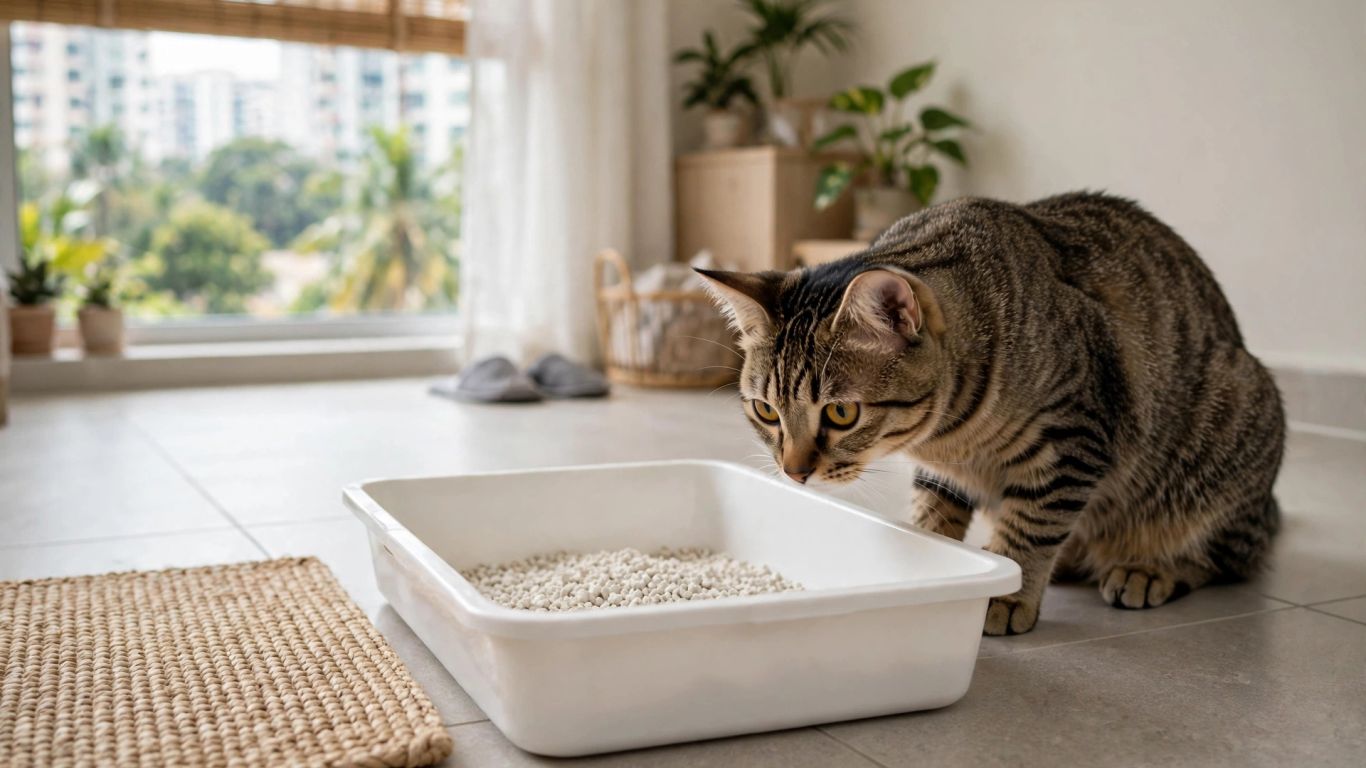
Consider your cat’s age, habits, and sensitivities
Kittens may need an easy-to-enter tray and close supervision as they learn where to go; older cats may benefit from a box they can access without strain. Notice whether your cat avoids strong scents, dislikes a rough texture, or seems reluctant to step into a deep bed of litter. A sudden change in toileting habits can have medical or stress-related causes, so do not assume that changing litter is the only answer. If your cat begins eliminating outside the box, consider a litter-box setup guide and contact a veterinarian when the change is persistent or concerning.
Match the litter to your home’s space and ventilation
Where the box sits can affect both the cat’s comfort and the way odor moves through your home. Choose a quiet, accessible location with enough room for the cat to enter, turn, and leave without feeling trapped. Good airflow can help a space feel fresher, but avoid placing the box somewhere your cat must pass noisy appliances or frequent foot traffic. A cat litter box guide can help you think through placement, size, and litter depth together.
Balance convenience, tracking, and cleanup
A finer texture may feel comfortable to some cats, while larger pieces or pellets may behave differently around the tray; tracking depends on the litter, the cat, and the box area. Consider the effort involved in scooping, carrying a bag, and cleaning the floor around the tray. A quick household check can make the trade-offs clearer:
- Notice how much litter lands outside the box each day.
- Check whether your scoop separates waste cleanly from unused litter.
- Consider how easily you can lift and store a full package.
- Make sure the cleaning routine fits your household schedule.
These small observations are more useful than choosing by convenience claims alone. If tracking is a recurring nuisance, try adjusting the mat or box position before assuming your cat needs a different litter.
Compare odor control and clumping performance
Odor control depends on absorption, how quickly waste is removed, airflow, and how often the litter is replaced. Clumping can make spot-cleaning easier, but a firm-looking clump is not the only measure of a clean box. Compare ingredient information and directions, and notice whether the product’s scent or texture changes your cat’s behavior. In a home with more than one cat, a predictable cleaning routine is especially helpful.
What to look for in odor-control ingredients
Product labels may describe ingredients or processes intended to absorb or reduce odor, but broad claims do not replace regular scooping and full cleaning. Check what the manufacturer says is included and follow its directions for use. If you are sensitive to fragrance, or your cat seems hesitant around a scented product, choose an option with clear ingredient information and observe the response. PAWSONA focuses on cat stress and behavior, a useful reminder that toileting changes can have causes beyond litter performance.
How clumping affects daily scooping
With clumping litter, the goal is to remove soiled material while leaving the remaining bed in place; how cleanly that works varies by product and depth. Non-clumping litter may call for more frequent replacement of the full contents, so check the package instructions and consider your schedule. The comparison below is a starting point, not a product rating:
| Litter type | Typical cleanup consideration | What to check |
|---|---|---|
| Clumping clay | Spot-scoop clumps | Dust and clump firmness |
| Non-clumping clay | More frequent litter-bed changes | Replacement directions |
| Tofu or other plant-based | Depends on form and formulation | Clumping and disposal guidance |
| Silica crystal | Often managed without clump removal | Replacement schedule and texture |
Choose based on the routine you can sustain and the way your cat uses the box. If clumps break apart or litter sticks to the tray, follow the product directions and reassess the depth before switching again.
When fragrance may be a drawback
A strong fragrance can make the box less appealing to some cats, even if the scent seems pleasant to people. Cats rely on smell to interpret their environment, so a noticeable perfume may be an unnecessary change in a space they use every day. If you suspect scent is putting your cat off, try a gradual transition to an unscented option and keep the box location familiar. PAWSONA’s cat-behavior education also encourages owners to look for the reason behind changes in elimination rather than treating them as a simple nuisance.
Consider safety and environmental impact
Safety is not determined by a material name alone: dust, ingredients, use, and disposal all matter. Read packaging carefully and avoid making assumptions based on marketing terms such as “natural” or “flushable.” Used litter may need to be handled differently from clean litter, depending on the material and local waste guidance. The aim is a choice that works for your cat while fitting the disposal options available where you live.
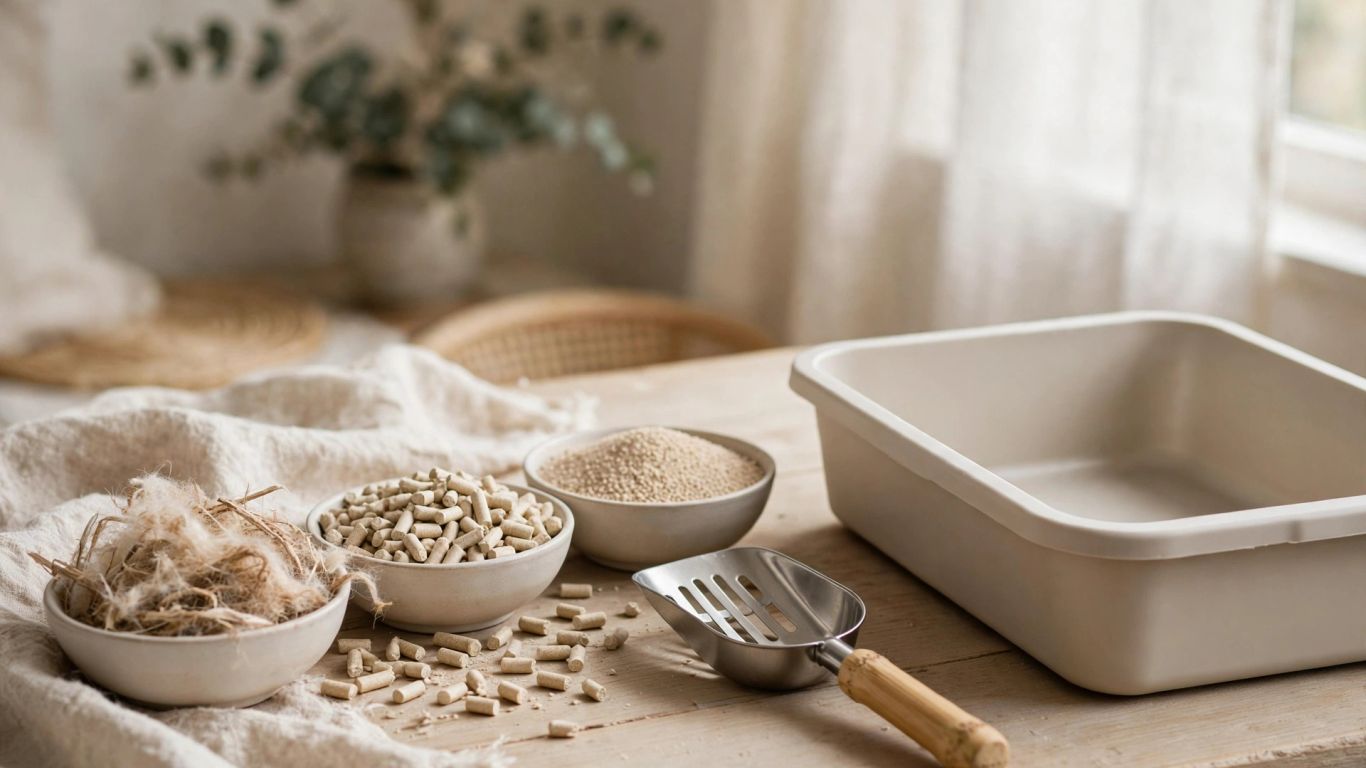
Check ingredients and dust levels
Look for an ingredient list and any directions or warnings about handling. When pouring or scooping, pay attention to visible dust and whether it seems to irritate your cat or anyone in the household. A low-dust description is a product claim to assess alongside what you observe, not a guarantee that no particles will be released. If your cat has a known sensitivity or develops respiratory symptoms, ask a veterinarian for advice rather than trying to diagnose the cause from the litter label.
Understand disposal and flushing claims
Do not assume that litter is safe for plumbing just because a package uses a flushing claim. Local plumbing, wastewater guidance, and the material itself can affect what is appropriate, and used cat waste should be handled with particular care. Read the product’s disposal instructions and check local rules before putting any litter down a toilet or drain. When in doubt, use the locally recommended solid-waste route.
Weigh biodegradable materials against local disposal options
Plant-derived materials may be described as biodegradable, but that does not mean they will break down in every disposal setting. Municipal collection rules, composting facilities, and household conditions vary, so check what is actually accepted locally. Avoid composting used cat litter for food-growing areas unless local guidance specifically permits it. A realistic disposal plan is part of choosing a litter, not an afterthought.
Find cat litter in Malaysia
Availability, delivery costs, and package sizes can vary between online shops and physical stores. For cat litter Malaysia shoppers, the useful comparison is not just the price on the listing, but what you receive and how easily you can replenish it. Confirm the product type and package details before ordering, especially when trying an unfamiliar material. Local buying guides such as this 2026 litter overview can provide another point of comparison.
Compare prices by weight and usable volume
Packages may show weight, volume, or both, and those measures are not interchangeable across materials. Compare the cost per stated kilogram or liter, then consider how much of the package is practical to use before replacement. A larger bag may be less convenient to store or carry, while a small trial size can help you check acceptance before committing. Keep a note of how long a package lasts in your own home for a more useful comparison over time.
Check online and in-store availability
Online listings make it easy to compare sizes, but stock and delivery terms can change; in-store shopping lets you inspect packaging and take the product home directly. If you are trying a new litter, check whether the seller offers a smaller size before buying a large quantity. PAWSONA® Zenkit Combo is described as a calming set intended to help ease stress and tension in multi-cat households; it is a separate consideration from litter selection, not a substitute for a suitable box or veterinary care.
Review packaging, delivery, and seller details
Before checkout, verify the material, package size, storage advice, shipping cost, and delivery coverage for your location. Some listings specify different delivery terms by area, so check the details rather than relying on a general banner. Household upkeep can involve other separate decisions too: Dansk Træpleje provides tree-care services, a keyless entry system guide covers access planning, and a pest-control content calendar addresses seasonal service planning. These topics do not determine which litter is right, but keeping practical home tasks organized can make replenishment and cleaning routines easier to manage.
When comparing household expenses, remember that unrelated paperwork guides are not litter advice: CIRS and CAE concern activity codes in Portugal, while life insurance coverage explains insurance choices. For litter itself, return to the package facts, seller terms, and your cat’s response.
Maintain the litter box and switch products carefully
A consistent box routine helps you notice changes before they become a pattern. Remove waste regularly, refresh the litter as directed, and clean the tray in a way that does not leave strong cleaning odors behind. Sudden changes to litter, location, or box access can unsettle some cats, so adjust one thing at a time when possible. A gradual litter-switching guide offers further practical pointers.
Set a practical scooping and replacement routine
Choose a scooping schedule you can maintain every day and follow the package directions for replacing the full bed. The number of cats, box size, and litter type all affect how quickly the tray becomes soiled. Clean the box with a mild approach and rinse it well, since lingering scents may discourage use. If the box still smells unpleasant shortly after cleaning, check the replacement schedule and the area around the tray rather than simply adding fragrance.
Introduce a new litter gradually
A sudden full change can make it harder to tell whether your cat dislikes the new texture, scent, or feel underfoot. If your cat is comfortable with the current litter, introduce the new one in small amounts and increase it over several days, slowing down if your cat hesitates. Keep the tray in its familiar location during the transition and provide another familiar option if you can. If your cat stops using the box or seems distressed, pause the change and seek veterinary advice when appropriate.
Adjust box placement and litter depth based on your cat’s response
Use the product’s depth guidance as a starting point, then watch whether your cat can dig and cover waste comfortably. A box that is too exposed, difficult to enter, or placed near a noisy appliance may be avoided regardless of litter type. Change one factor at a time so you can identify what helps. If avoidance continues or begins suddenly, consider both environmental and health causes; PAWSONA’s focus on feline behavior reflects why it can be useful to consider stress alongside the box setup.
Conclusion
The best litter is a practical match for your cat’s preferences, your cleaning routine, and the disposal options available at home. Compare materials and package details carefully, make changes gradually, and treat persistent litter-box changes as a reason to look beyond the litter itself.
Frequently Asked Questions
Which type of cat litter is best for most cats?
There is no single type that suits every cat. Compare texture, dust, clumping, and cleanup, then choose an option your cat accepts and you can maintain consistently.
Is clumping litter easier to maintain?
It can make daily spot-scooping convenient, but performance varies. Check how well the litter forms clumps and follow the package directions for full replacement.
Is plant-based litter always biodegradable?
Materials and disposal conditions differ. Read the label and check local waste or composting guidance rather than assuming every plant-based product breaks down in the same way.
Can cat litter be flushed down the toilet?
Do not rely on a general flushable claim. Check the product instructions and local plumbing and wastewater guidance before disposing of any litter in a drain.
How often should I change cat litter?
The schedule depends on the material, number of cats, and condition of the box. Scoop regularly and use the package’s replacement directions as a baseline.
How can I switch my cat to a new litter?
Mix a small amount of the new litter with the familiar one and increase it gradually if your cat continues using the box comfortably. Slow down or pause if your cat avoids the tray.
What should I do if my cat suddenly stops using the litter box?
Check for changes in the box, litter, or household environment, but do not assume the cause is behavioral. A sudden or persistent change can have a medical cause, so contact a veterinarian for guidance.