


Key Takeaways
A pheromone diffuser may be one part of helping an anxious cat feel safer at home. Careful product selection, thoughtful placement, and attention to your cat’s behavior matter just as much.
- Match the diffuser’s intended use and stated coverage area to your home.
- Place it in an open area where your cat spends time, following the product instructions.
- Keep familiar routines and safe hiding places available while your cat adjusts.
- Track behavior over several weeks rather than expecting an immediate change.
- Ask a veterinarian about sudden or persistent changes, especially litter-box problems or aggression.
How pheromone diffusers may help anxious cats
A diffuser is sometimes considered when a cat seems unsettled by changes or tension at home. It does not replace a calm environment, steady routines, or veterinary care when a health problem may be involved. If you are researching a pheromone diffuser for anxious cats malaysia, it helps to understand what the product is intended to do—and what it cannot promise.
What feline pheromones are and how synthetic versions work
Cats use pheromones as chemical signals in their environment, including signals associated with familiar or safe places. A synthetic pheromone product is designed to mimic a particular signal; a plug-in diffuser releases it into the surrounding area. Cats may respond differently, so it is better to view a diffuser as environmental support than as a guaranteed way to change behavior.
Situations that may trigger stress at home
A change that seems ordinary to a person can unsettle a cat. Moving, visitors, a new pet, loud noises, changes in household routines, or conflict between cats may affect how secure a cat feels. Hiding, urine marking, scratching, or changes in social behavior can be clues to investigate, rather than signs that a cat is being difficult. A guide to recognizing early anxiety signs can help owners notice patterns worth discussing with a professional.
What a diffuser can and cannot be expected to do
A diffuser may contribute to a more reassuring environment, but it does not remove the cause of stress or address every behavior in the same way. For example, tension between cats may also call for separate resources and safe places to retreat. The Pawsona Zenkit Calming Diffuser Kit is listed with a plug-in diffuser and 48 ml refill, with coverage of up to 700 sq ft and up to 30 days of use. Those listed specifications describe the product, not a guaranteed outcome for an individual cat.
How to choose a diffuser in Malaysia
Choosing a diffuser is less about finding the strongest-sounding promise and more about checking whether its intended use fits your situation. Product sizes, coverage statements, and instructions can differ, so read the label and verify the details for the item you are considering. The search phrase may be simple, but the room, the cat, and the household routine all matter.
Check the product’s intended use and coverage area
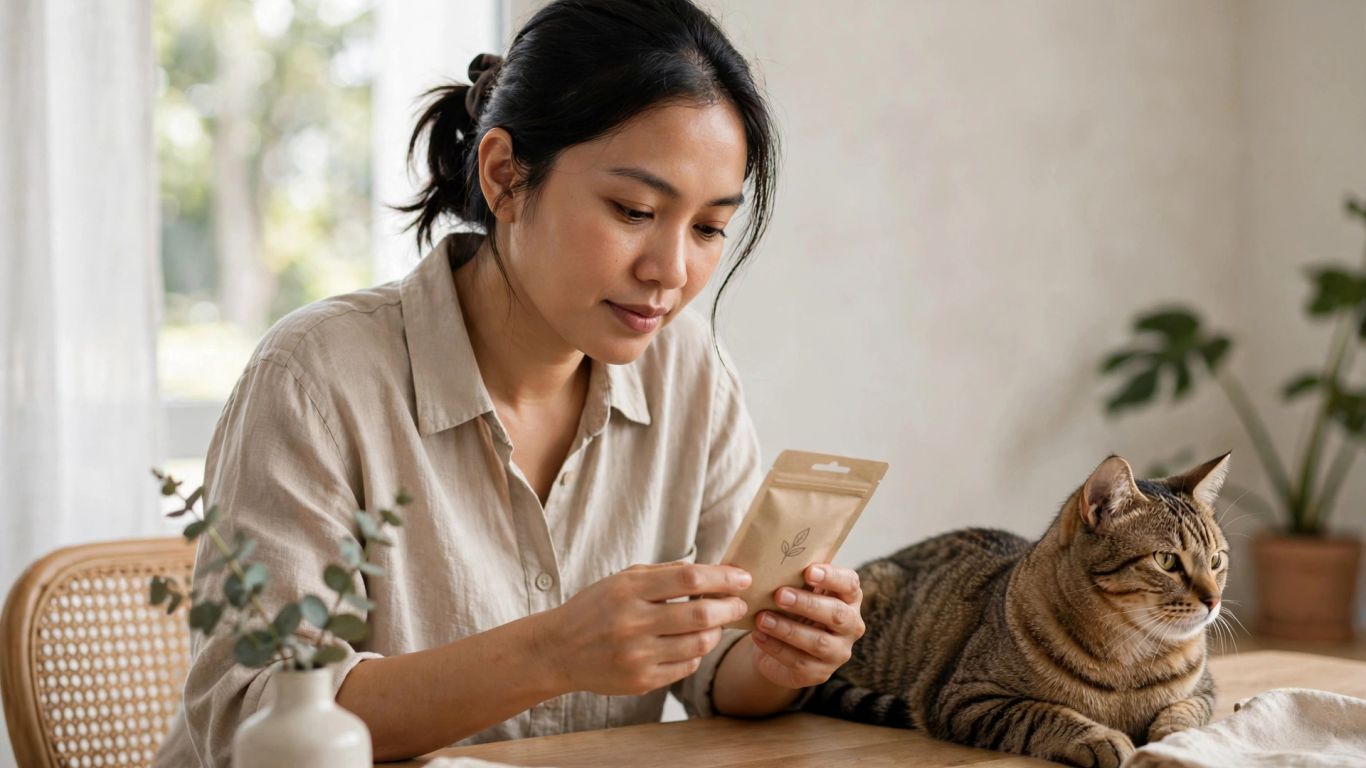
Start with the behavior or situation you want to support, then check that the product is described for that purpose. Compare the stated coverage area with the room where your cat spends time, and consider whether one room or several areas are involved. A product page may list a specific coverage figure; for example, the Pawsona Zenkit diffuser refill is described as a 48 ml refill for spaces up to 700 sq ft, with up to 30 days of coverage. Treat those numbers as product specifications and follow the current package directions.
Compare refill size, running costs, and availability
The refill size and replacement schedule affect the ongoing cost, so it is useful to compare them before buying. The table below gives a simple way to organize the details on product labels and retailer listings; it is not a ranking of brands.
| What to check | Why it matters | Where to verify |
|---|---|---|
| Refill volume | Helps you compare the amount supplied | Product label or listing |
| Stated coverage | Helps match the unit to the intended room | Manufacturer’s instructions |
| Replacement timing | Helps estimate ongoing use and cost | Refill packaging |
| Local availability | Helps you plan for replacement refills | Current retailer stock |
A larger refill does not automatically mean a better fit, and stock can change. Compare the details against how long you expect to use the diffuser and whether replacement refills are easy to obtain locally.
Buy from reputable local retailers and check product labels
A clear product label should identify what the diffuser is for and how to use it. Check that the refill is intended for the device, read any warnings, and avoid relying on broad claims that promise a particular result. The Pawsona cat calming products range includes diffusers, sprays, collars, and bundles; whatever product you consider, use its own label and directions rather than assuming that instructions are interchangeable. Keep the receipt and packaging in case you need to check product details later.
How to set up a diffuser for best coverage
Placement can affect how well a diffuser fits into your cat’s environment. Think about where your cat rests or spends time, then follow the manufacturer’s guidance for the specific device. A sensible setup keeps the unit accessible to the room’s air without putting it in the way of normal household activity.
Choose an open area where your cat spends time
A diffuser is generally most practical in a room your cat regularly uses, rather than a seldom-visited corner. Consider favorite resting areas and the locations where stress-related behavior tends to occur. If your cat has access to multiple rooms, check the stated coverage before assuming one unit will serve the whole home.
Keep the unit clear of furniture, curtains, and drafts
Furniture or fabric directly around a plug-in unit can restrict airflow, while a strong draft may carry the released product away from the area you intend to cover. Keep the surrounding space open and avoid placing the unit where it could be blocked or disturbed. These small details are easy to overlook when a socket happens to be convenient, so take a moment to check the space around it.
Follow the manufacturer’s instructions for plug placement and refills
Use the device only as directed, including any guidance about socket position and refill replacement. A short setup check can help prevent common avoidable problems:
- Confirm that the refill is designed for the diffuser unit.
- Read the package directions before assembling or plugging it in.
- Leave clear space around the unit and keep it away from curtains or furniture.
- Check the refill periodically and replace it as directed.
After setup, make sure the unit remains secure and unobstructed. If you are unsure about a placement or refill instruction, use the manufacturer’s guidance rather than improvising.
How to introduce a diffuser and track your cat’s response
A diffuser works best as one part of a thoughtful adjustment plan, not as a substitute for familiar care. Introduce it in a way that does not add unnecessary disruption, and keep expectations realistic. Observing your cat over time gives you a clearer picture than relying on a single good or difficult day.
Start before a move, visitor, or other predictable stressor
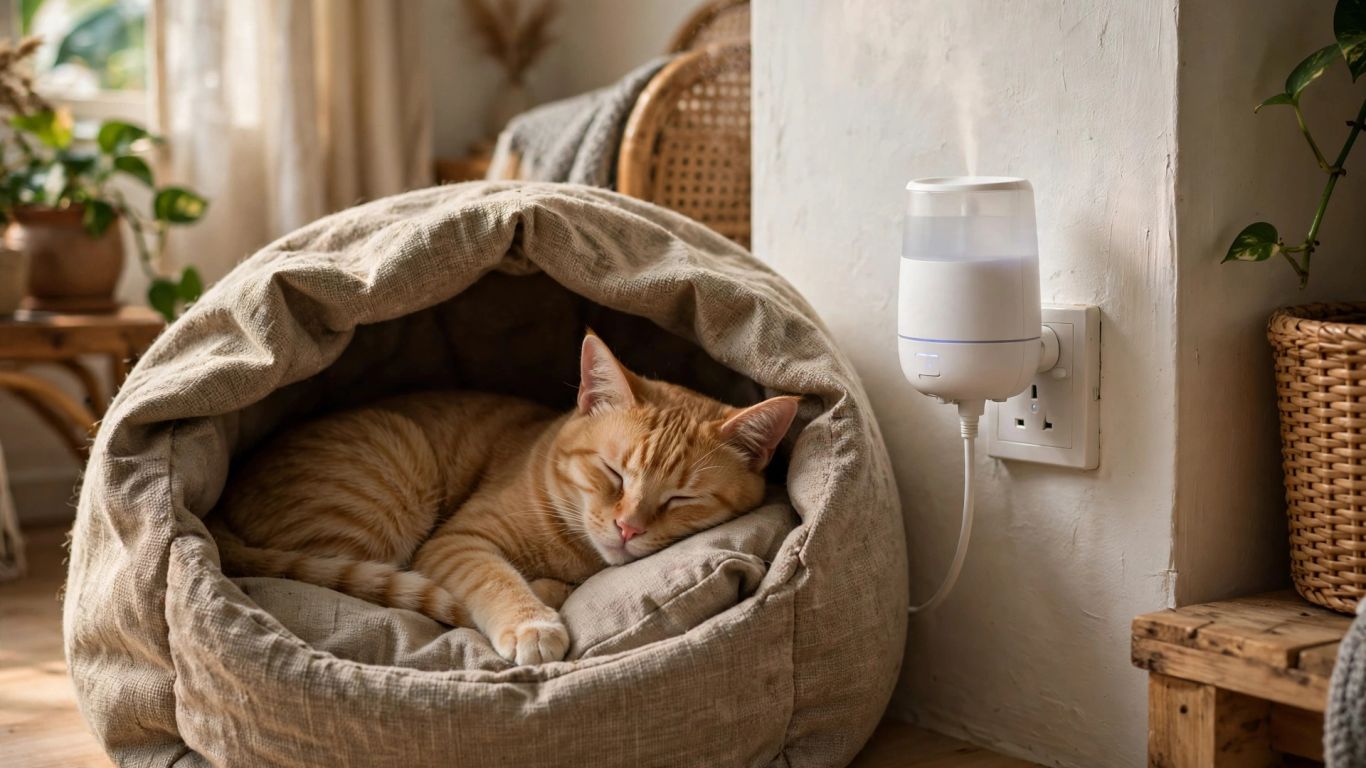
When a stressful change is planned, setting up the diffuser beforehand gives you time to check the placement and keep the rest of the environment steady. A move, a new arrival, or a period of visitors may call for additional preparation too. For a house move, gradual moving preparation can help you plan familiar spaces and a secure settling-in period alongside any calming support.
Keep routines and familiar hiding spots consistent
Cats often benefit from having access to familiar resources while they adjust. Keep feeding and play routines as steady as practical, and do not block a hiding place simply because you would prefer your cat to come out. If the change involves travel, arranging pet sitters and boarding services may be part of planning care, but any new arrangement should still take your cat’s needs and temperament into account.
Record changes in behavior over several weeks
A brief daily note can help separate a lasting pattern from ordinary variation. Record the behavior you are concerned about, when it happens, and any relevant changes in the home. You might track:
- How often your cat hides, sprays, scratches, or vocalizes.
- Whether eating, drinking, play, or social contact has changed.
- Which rooms or situations seem to bring on the behavior.
- When the diffuser was installed and when its refill was changed.
Look for gradual patterns over several weeks and note any new concerns as well. This record can also make a conversation with your veterinarian more specific.
Why a diffuser may not seem to work
It can be disappointing when a diffuser does not appear to change a behavior. That does not necessarily mean you have missed something, or that your cat is being stubborn; stress can have several causes, and a product may not be sufficient on its own. Recheck the setup and consider whether the underlying trigger has changed.
Check placement, room size, and whether the refill is empty
Confirm that the device is plugged in, unobstructed, and being used with the correct refill. Compare the room with the stated coverage and check the refill according to its instructions. If the unit is behind furniture or a curtain, or the refill is empty, correcting that practical issue may be a useful first step.
Consider stressors the diffuser cannot address
A diffuser cannot create extra litter boxes, stop one cat from guarding another’s food, or make a frightening event disappear. Look at the environment for specific pressures: competition over resources, limited places to retreat, unpredictable noise, or a sudden change in routine. For more general guidance on safe behavior-product choices, consider both the product and the environmental changes that may be needed alongside it.
Avoid expecting an immediate or guaranteed response
Cats vary, and behavior may take time to change even when the environment is being managed carefully. Avoid switching several things at once if you can; changing one factor at a time makes it easier to notice what seems helpful. A diffuser should not be treated as a guaranteed fix or a reason to delay care when a behavior is severe or persistent.
When to consult a veterinarian or consider other support
A behavior change can reflect stress, but it may also have a medical cause. A diffuser should not be used to explain away symptoms that are new, persistent, or getting worse. If you are worried about your cat, a veterinarian can help determine what needs attention and whether additional behavior support would be useful.
Seek advice for sudden or persistent behavior changes
Contact a veterinarian if a behavior begins suddenly, continues despite reasonable environmental changes, or is affecting your cat’s ability to eat, rest, or use the litter box. A professional can help you decide whether the next step is an examination, a behavior plan, or both. It is better to ask than to assume a product will resolve an unexplained change.
Rule out medical causes of hiding, aggression, or litter-box problems
Hiding, aggression, and elimination changes can have more than one explanation. Pain or another health issue may alter how a cat behaves, so persistent changes deserve veterinary attention rather than guesswork. Describe when the behavior began and bring any notes you have recorded; that context may help guide the conversation.
Discuss behavior plans and complementary calming options
Depending on the situation, a veterinarian may suggest environmental adjustments, a behavior professional, or other forms of support. Keep the focus on the trigger as well as the visible behavior: a calmer setting may involve predictable routines, separate resources, and safe retreat spaces. Separate household reading—not cat-care guidance—also includes plant-based meal ideas, trading course options, CBD marketing guidance, and Melbourne meditation retreats; these topics are not treatments for cats.
Conclusion
A pheromone diffuser may be a useful part of supporting an anxious cat, provided its intended use and coverage fit the home. Pair careful setup with steady routines and patient observation, and involve a veterinarian when behavior changes are sudden, persistent, or concerning. The aim is not simply to quiet a symptom, but to understand what your cat may need to feel safer.
Frequently Asked Questions
How long does a cat pheromone diffuser take to work?
There is no single response time for every cat. Follow the product directions and observe your cat over time rather than expecting an immediate change.
Can I use a diffuser in more than one room?
Check the product’s stated coverage and instructions before deciding. A single unit may not cover every room in a larger home.
Where should I plug in a cat diffuser?
Choose an open area in a room your cat uses, and follow the manufacturer’s placement guidance. Keep the unit clear of furniture, curtains, and other obstructions.
Should I leave a pheromone diffuser on all the time?
Use the diffuser according to its specific instructions. Directions can vary, so check the product label rather than assuming all devices are used in the same way.
Can a diffuser stop urine marking or scratching?
A diffuser may provide environmental support, but it cannot guarantee that a behavior will stop. Look for triggers and consult a veterinarian if the behavior is persistent or new.
Is a diffuser enough when cats are fighting?
Not necessarily. Cats may need separate resources, safe places to retreat, and a gradual behavior plan; seek veterinary or behavior guidance if conflict continues.
When should I contact a veterinarian about my cat’s anxiety?
Seek advice for sudden or persistent behavior changes, especially hiding, aggression, appetite changes, or litter-box problems. A veterinarian can help rule out medical causes and discuss appropriate support.