


Key Takeaways
A diffuser may help make shared spaces feel calmer, but it works best alongside thoughtful changes to the home and close attention to each cat.
- Look for subtle signs of tension, including blocking, hiding, and guarding access to resources.
- Match the diffuser’s stated coverage and refill format to your home, and check local product instructions.
- Place it in an open area where cats spend time, away from obstructions and strong airflow.
- Make food, water, litter, resting places, and escape routes easier to access separately.
- Track changes and contact a veterinarian about sudden behavior shifts, injuries, or persistent conflict.
How calming diffusers work in multi-cat homes
A calming diffuser is one possible support when cats share space but seem uneasy around one another. It does not resolve every source of tension, and it cannot tell you why a particular cat is hiding or swatting. Think of it as one part of a broader plan: observe the cats, adjust the environment, and seek professional advice when needed.
What feline pheromone diffusers are designed to signal
Cats use scent as part of how they experience familiar places and other cats. Pheromone products are designed to provide signals associated with comfort or calm, though the exact formulation and intended use depend on the product. For example, the PAWSONA Zenkit Calming Diffuser Kit is described as featuring feline facial pheromone analogs and helping ease stress, fear, scratching, urine spraying, and tension in multi-cat homes. Those stated aims are not a promise that every cat or household will respond the same way.
How they differ from sprays, supplements, and medication
A diffuser is intended for use in a room, while sprays are applied to particular items or areas according to their label. Supplements are given by mouth and have their own ingredients and directions; medication is a veterinary decision based on an individual cat’s health. These formats are not interchangeable, so it helps to compare their intended use rather than treating every calming aid as the same thing. A general guide to calming aid options can help clarify the differences between formats.
What results to expect and why effects vary
Some households may notice a change in behavior, while others may see little difference. Cats’ responses can vary with the source and severity of stress, their relationships, health, available resources, and how the product is used. A diffuser is support, not a substitute for checking whether a cat can reach food, water, litter, and safe resting places without being blocked. For broader context on pheromone products and typical questions about their use, see this general pheromone FAQ.
Recognize stress and conflict between cats
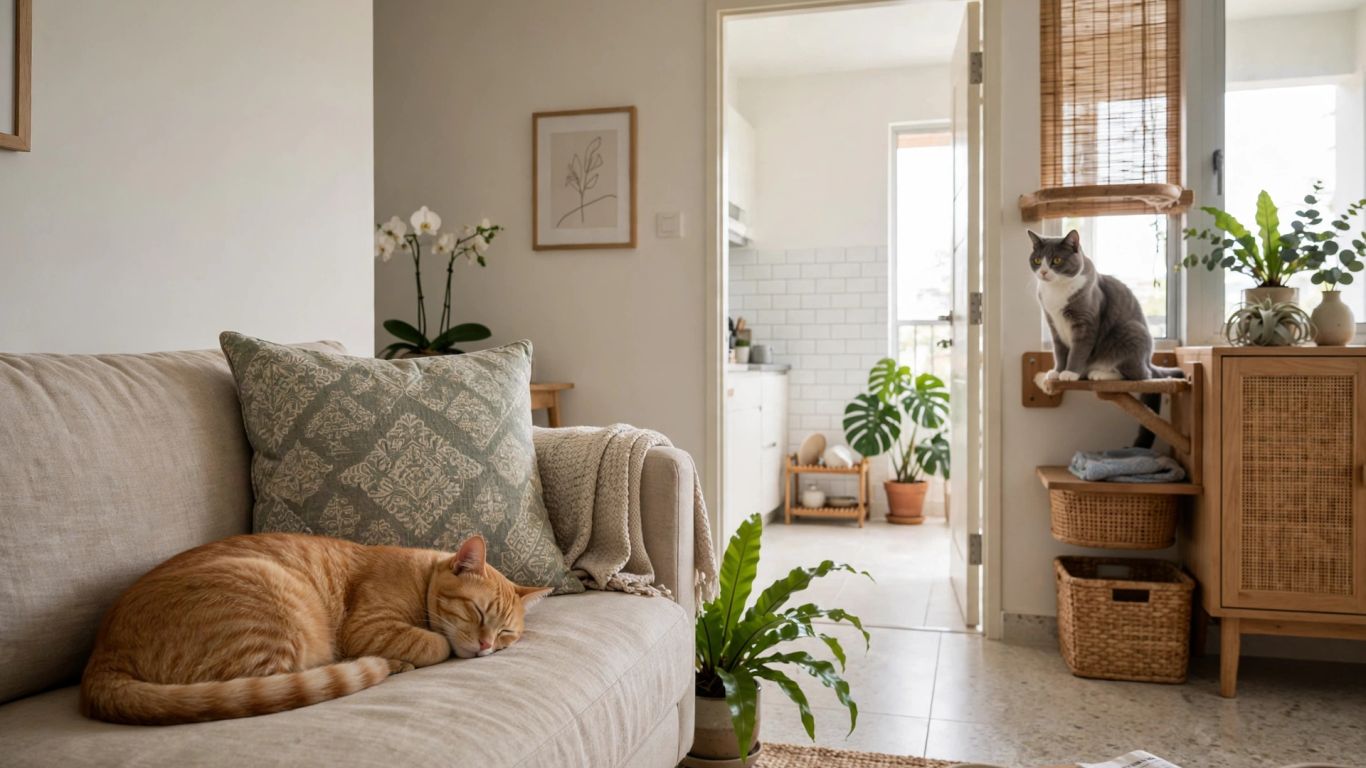
Tension between cats is not always loud or obvious. One cat may quietly control a hallway or a route to the litter box, while another spends more time out of sight. Look for patterns across the day rather than judging a relationship by one brief encounter. A simple household map can help you connect behaviors to specific locations.
Spot subtle signs such as blocking, hiding, and resource guarding
Watch for one cat staring, following, or waiting near a doorway while another hesitates to pass. Hiding more than usual, eating only when a housemate is elsewhere, avoiding a litter area, or guarding a favorite perch can also suggest that access feels difficult. These behaviors do not prove that another cat is the cause, but they are useful clues to discuss with a veterinarian if they persist or change suddenly.
Distinguish play, conflict, and changes in routine
Play often includes pauses and role changes, with both cats returning willingly. Conflict can look more one-sided: one cat pursues or corners the other, or the cat being approached repeatedly tries to escape. A move, visitors, a changed feeding schedule, or a new household member may also unsettle cats. If tension continues, practical multi-cat home adjustments can help you think through triggers, separate resources, and safe routes.
Track which cats and locations are involved
A short record can make a confusing pattern easier to see. Note the time, location, cats present, what happened just beforehand, and whether either cat could leave freely. When you record the room as well as the behavior, you may spot a bottleneck or a resource that needs to be moved. Location-by-location planning is also used in multi-office team systems, though a cat household calls for attention to access and comfort rather than work processes.
Choose a diffuser suited to your household in Malaysia
Start with the problem you are trying to address and the area where it occurs, then compare the product’s stated coverage, format, and instructions. In Malaysia, also confirm that the item is available from a seller who provides clear product details and refill information. A diffuser buying guide for Malaysia offers more specific points to check when comparing local and online options.
Compare product types, coverage, and refill availability
Diffusers, sprays, and other calming products differ in where and how they are used. Compare the label’s coverage and duration with the shape of your home, and make sure a compatible refill is available if you expect to use the diffuser over time. The PAWSONA Zenkit Calming Diffuser Refill is described as a 48 ml refill for a compatible diffuser, covering up to 700 sq. ft. and lasting up to 30 days when used as directed. These figures are product details, not a guarantee of a particular behavioral result.
A quick comparison can keep the decision practical:
| What to check | Why it matters | What to confirm |
|---|---|---|
| Product format | Different formats suit different settings | The intended use on the label |
| Coverage | Rooms and layouts vary | Stated area and any limits |
| Refill | Ongoing use may require replacement | Compatibility and local availability |
| Directions | Setup affects safe use | Instructions for the exact product |
Use the product’s own directions to resolve any uncertainty, rather than assuming two products with similar names work the same way. If you are weighing other home calming measures too, a guide to calming cats at home may help you consider routine and environment alongside products.
Check plug compatibility, local labeling, and instructions
Before buying, confirm that the plug and electrical specifications are suitable for your home, and read the locally supplied labeling rather than relying on a product photo. Check that the instructions explain where to place the device, how to replace a refill, and what precautions apply. If purchasing online, review seller information and relevant cookie and privacy details as part of understanding the site you are using. The product’s instructions should remain your guide to its safe use.
Consider room size, layout, and the number of cats
The number of cats matters, but the way rooms connect can matter just as much. A diffuser placed in one area may not address tension that happens at a distant food station or on a narrow passage between rooms. Sketch the locations where cats spend time and note where conflict happens; a space-planning option is a different example of matching space to use, while your home plan should prioritize each cat’s access to safe areas. If a single room is the main trouble spot, focus your product choice and environmental changes there first.
Set up the diffuser for effective coverage
Good setup begins with the place where the cats actually spend time, not simply the nearest convenient outlet. Keep the product’s stated coverage and instructions in view, and remember that furniture and airflow can affect how a room is used. A clear setup also makes it easier to check the device and notice whether anything in the area changes.
Choose an open location near where cats spend time
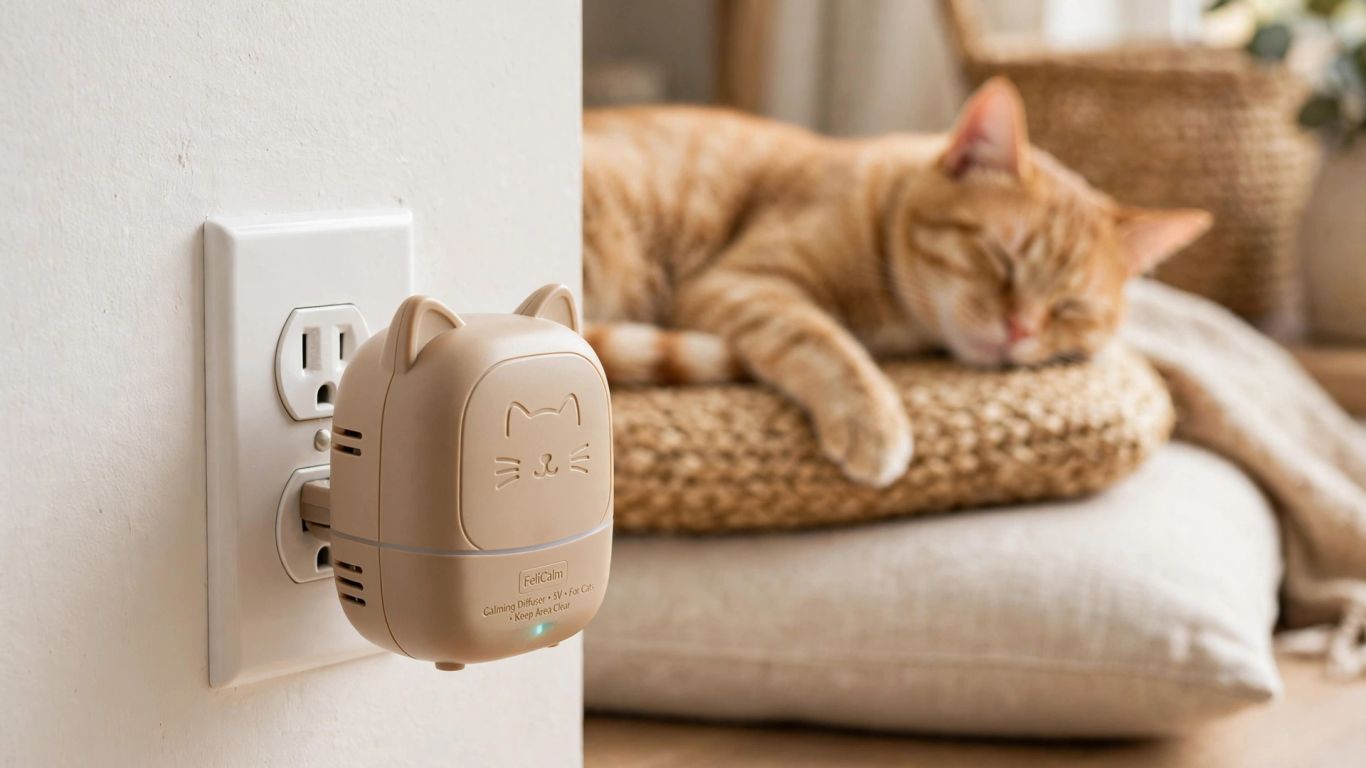
Choose an accessible outlet in a room the cats use, while making sure the device cannot be knocked over or reached as a toy. Avoid tucking it behind a door or placing it in a rarely used corner. The PAWSONA Zenkit Combo is described as a calming bundle with pheromone diffusers, a free refill, and calming spray; check the directions for each included item rather than assuming the spray and diffuser are set up in the same way.
Keep it clear of curtains, furniture, and strong airflow
Leave open space around the diffuser and follow the clearance advice on its label. Curtains, shelves, or large furniture can obstruct the area around it, while strong airflow may affect how the room is ventilated. Check the chosen spot after installation: it should remain open, stable, and out of the way of everyday activity. For ordinary home upkeep, guidance on sealing window gaps may be useful when considering drafts, though it is separate from diffuser placement.
Follow refill, replacement, and electrical safety guidance
Use only the refill type specified as compatible, and follow the product’s replacement schedule and electrical precautions. Do not cover the device or use it in a way its instructions prohibit. If the plug, refill, or label seems damaged or unclear, pause and ask the seller or manufacturer for clarification instead of improvising. A brief check when replacing a refill can also help you confirm that the diffuser remains unobstructed.
Support the diffuser with changes to the home
Cats may share a home more comfortably when they can meet basic needs without competing for access. A diffuser cannot create extra litter boxes, open a blocked route, or provide a hiding place. Look at the home from each cat’s point of view: where can they eat, drink, rest, and leave an interaction without being cornered?
Provide separate food, water, litter, and resting areas
Spread resources across the home rather than clustering them in one location that a cat can guard. Make sure cats can approach and leave each station without having to pass a housemate who makes them uneasy. The number and placement of resources should reflect the cats and the layout of your home; a veterinarian or qualified behavior professional can help if access remains a problem.
Add vertical space and escape routes
Shelves, sturdy cat trees, and other safe elevated spots can give cats options to rest apart from one another. Keep more than one route through shared areas where possible, and avoid creating narrow dead ends around favorite resting places. These changes work best when each cat can choose a comfortable distance rather than being pushed to interact. A guide to calmer home routines has more ideas for safe retreats and comfortable resting spots.
Reintroduce cats gradually when tension is persistent
If conflict keeps recurring, temporarily separate the cats in comfortable spaces and reintroduce them gradually rather than forcing them to share a room. Proceed at a pace each cat can tolerate, using calm, brief steps and watching for signs of distress. If either cat becomes frightened or aggressive, slow down and seek professional guidance. A gradual approach is a way to reduce pressure, not a guarantee that the cats will become close companions.
Monitor progress and know when to seek help
A fair assessment takes more than noticing whether the cats seem calm on one particular day. Keep the household routine as steady as practical while you observe behavior and make changes one at a time. That gives you a clearer sense of what may be helping and what still needs attention.
Keep a simple record of behaviors and household changes
Use brief notes rather than trying to remember every interaction. Include the date, location, cats involved, behavior, and any changes to the environment or routine. A few lines can show whether hiding is easing, whether a particular doorway remains a problem, or whether a new trigger has appeared. Bring those notes to a veterinary appointment if you are concerned.
Allow time for a fair trial without expecting guaranteed results
Follow the directions for the specific product and give environmental changes time to settle, while checking regularly for worsening behavior. Avoid changing several things at once if you can; otherwise, it may be hard to tell what made a difference. General advice on calmer cat routines can sit alongside your observations, but no product or timeline guarantees a response from every cat.
Consult a veterinarian for sudden behavior changes, injuries, or ongoing conflict
Sudden changes in eating, toileting, movement, or sociability can have medical causes, so do not assume they are only stress. Contact a veterinarian promptly about injuries, repeated fights, or behavior that is getting worse. A vet can assess health concerns and help decide whether additional behavioral support is needed. Seeking help early is a practical step, not a sign that you have failed your cats.
Conclusion
Choosing a cat calming diffuser for multi-cat households Malaysia starts with understanding where tension occurs, checking product details carefully, and setting up the home so every cat can reach essential resources and retreat safely. A diffuser may be one useful part of that effort, but observation, environmental changes, and veterinary guidance remain central when problems continue.
Frequently Asked Questions
Can a calming diffuser help when cats are fighting?
It may be one part of a broader plan, but repeated fighting also calls for attention to triggers, access to resources, safe separation, and veterinary or qualified behavior guidance when needed.
How do I know whether one cat is blocking another?
Watch for repeated waiting, staring, or guarding near doorways, food, litter, or resting places, especially if the other cat hesitates or takes a longer route.
Where should I place a diffuser in a multi-cat home?
Follow the product instructions and choose an open, stable outlet in a room the cats use, away from obstructions and strong airflow.
Should every room have a diffuser?
That depends on the product’s stated coverage, your home’s layout, and where the relevant behavior occurs. Check the label rather than assuming one device covers every space.
Can I use a diffuser and a spray together?
Do not assume that different formats have identical directions. Read each product’s instructions, and ask a veterinarian if you are unsure which approach fits your cat’s situation.
How long should I wait to assess a change?
Follow the product’s directions and record behavior over time. If stress worsens, a cat is injured, or a behavior changes suddenly, contact a veterinarian rather than waiting for a trial period to end.
What should I do if my cats still avoid each other?
Make sure they have separate access to food, water, litter, resting areas, and escape routes. Persistent tension is a good reason to consult a veterinarian or qualified behavior professional.