


Key Takeaways
Pheromone spray can be one part of a calmer, more considered approach to feline stress. Its usefulness depends on the situation, correct use, and attention to what your cat’s behavior may be telling you.
- Pheromone sprays mimic some familiar scent signals cats use to communicate.
- They may be useful around travel, vet visits, and changes at home.
- Spray objects and surfaces as directed, not your cat, and let the product dry.
- Results vary; track behavior and address possible causes of stress.
- Sudden or persistent changes deserve a conversation with a veterinarian.
What pheromone spray for cats is and how it works
A pheromone spray for cats is intended to recreate certain chemical signals cats use in communication. It does not work like a perfume or a sedative, and it cannot explain every change in behavior. Understanding how cats encounter these signals helps set realistic expectations. The details vary by product, so the label matters.
How synthetic pheromones mimic familiar scent signals
Cats leave chemical signals in their surroundings as they interact with objects and other cats. Some commercial products use synthetic analogs of feline pheromone signals, aiming to make a familiar message available in a particular place. The purpose is not to add a smell that humans need to notice. For a broader explanation of cat pheromone signals, the key idea is that these are part of feline communication, not a universal switch for calm.
How cats detect pheromones in their environment
Cats gather information about their surroundings through scent and specialized sensory pathways. A signal on a familiar object may be relevant to a cat even when a person cannot detect it. This is one reason that describing these products simply as “air fresheners” misses the point. A cat’s response still depends on its temperament, surroundings, and what else is happening.
How sprays differ from diffusers and other calming products
A spray is used on selected objects or areas, while a diffuser is designed to release product into the surrounding space according to its directions. Other calming approaches may involve changes to the environment or routine rather than a scent product. The comparison below is a starting point, not a promise of a particular result; details such as coverage and timing depend on the individual product.
| Format | Typical use | Practical consideration |
|---|---|---|
| Spray | A chosen object or surface | Follow the product’s application and drying directions |
| Diffuser | A room or area | Check placement and coverage instructions |
| Environmental changes | The cat’s routine or surroundings | Make changes gradually and observe the response |
Think about where the stress occurs before choosing a format. For example, a carrier-specific concern may call for a targeted approach, while a concern across a room may make you consider a diffuser. A cat calming sprays guide offers more on use and expectations, and pheromone diffusers have different setup and coverage considerations.
When pheromone spray may help
A spray may be worth considering when a cat faces a short-term or place-specific stressor, such as a carrier, a trip, or an unfamiliar room. It is a support tool, not a substitute for finding out why a cat is distressed. Keep other needs in view too: a change in appetite, for instance, can have several causes, and practical cat food guidance is not a replacement for veterinary advice about a sudden appetite change. Matching the response to the situation is more useful than expecting one product to solve every behavior.
Supporting cats during travel or vet visits
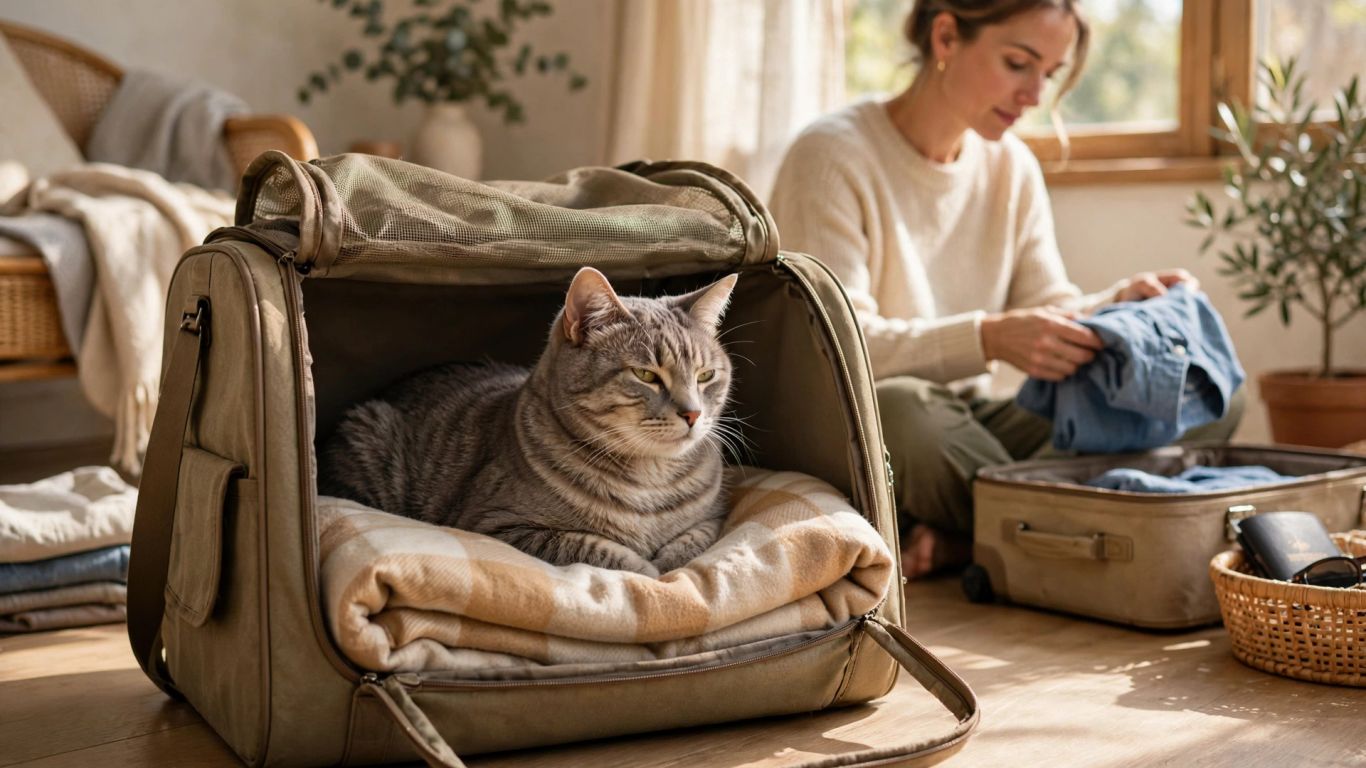
Travel can bring unfamiliar movement, sounds, and handling together, so a calm setup matters as much as any product. PAWSONA calming spray is described for use during travel and vet visits; check its label for suitable surfaces and timing. Give your cat a familiar carrier and allow time to settle before the trip. If travel distress is severe or worsening, ask your veterinarian for a plan tailored to your cat.
Making carriers and unfamiliar spaces feel more familiar
A carrier that appears only before an appointment can become a cue for worry. Leaving it out at home, adding familiar bedding, and rewarding voluntary exploration may help change that association over time. If a spray is appropriate, use it on the carrier as directed rather than applying it to the cat. Small, predictable steps often make an unfamiliar place less overwhelming than introducing several changes at once.
Managing stress around changes at home
Moving, visitors, new animals, or changes to household routines can unsettle cats. A pheromone product may be one element of a broader plan, but preserve familiar hiding places, resources, and routines wherever possible. Product information about helping cats adjust to a new environment can be read alongside these practical changes; for broader choices, cat calming options include approaches beyond sprays. Observe which situations trigger the behavior rather than assuming the change itself is the only cause.
How to choose a pheromone spray
Choosing a product begins with identifying the behavior and where it happens. A spray intended for targeted surfaces may not suit a concern that affects the whole home, and products with different purposes should not be treated as interchangeable. Look for clear instructions and a stated intended use. When comparing claims, careful reading is useful across subjects too, from advice on credit report disputes to information about gummy quality systems—but your cat’s needs and the product label should guide this decision.
Match the product to the situation and intended use
Think about whether you need support for a carrier, a particular resting area, or a broader change in the household. Check that the label describes the situation you have in mind and the surfaces where the product can be used. A product marketed for one specific behavior or life stage may not address a different concern. If the behavior is unclear or has several possible causes, a veterinarian can help you decide what to tackle first.
Check the label for ingredients and directions
Read the full label, including the intended use, application directions, and safety precautions. Do not assume that two sprays with similar names have the same formulation or instructions. Check for warnings about surfaces, ventilation, storage, and contact with people or animals. A clear label is a practical starting point; claims about what a product can do should remain within what its own documentation actually states.
Compare sprays with other forms of pheromone products
Different formats suit different settings, so compare them by where they are used and what the label says about coverage and timing. PAWSONA Zenkit™ Cat Calming Diffuser is a home-use diffuser option; its product information describes a diffuser and a compatible refill. A diffuser is not a direct substitute for targeted application, and a spray is not automatically the better choice just because it is portable.
| Consideration | Spray | Diffuser |
|---|---|---|
| Where it is used | Selected suitable objects or surfaces | A room or area, as directed |
| When it may fit | A carrier or specific location | Ongoing support in a chosen space |
| What to check | Application and drying instructions | Placement and coverage instructions |
Use these differences as a way to narrow the choice, not as a guarantee about results. Some households also benefit from a routine that makes observation easier; a lifecycle automation framework is about business workflows, not cat care, but it illustrates how a repeatable follow-up process can be organized. For your cat, a simple note on triggers and behavior is enough.
How to use pheromone spray safely
Safe use starts with the label, since directions can differ between products. In general, sprays are meant for suitable objects or surfaces rather than the animal itself. Keep your cat away from a freshly treated area until the product has dried and any specified waiting time has passed. A little patience helps prevent an unpleasant experience from becoming part of the association.
Apply it to objects rather than directly to your cat
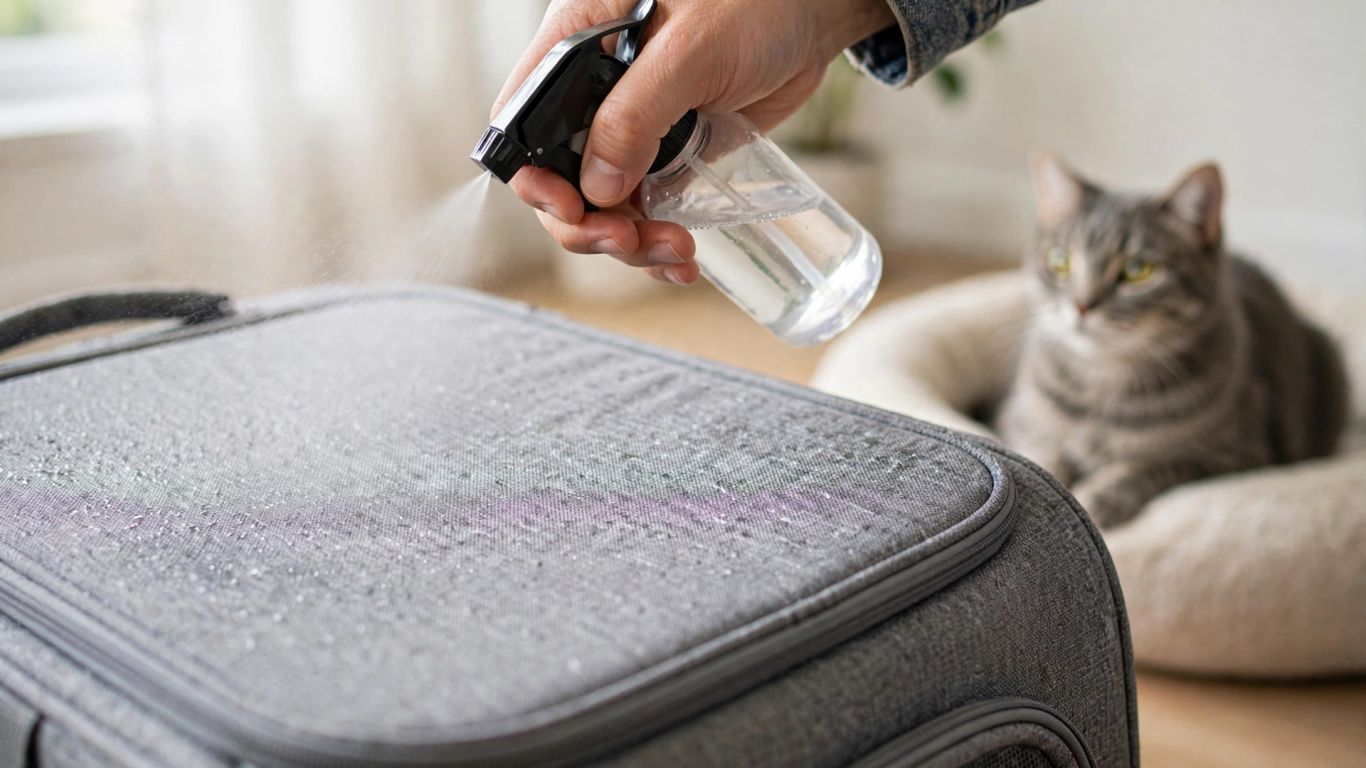
Apply the spray only to surfaces identified as suitable in its directions, such as a carrier if the label permits. Do not spray your cat unless a veterinarian and the product’s directions specifically support that use. Direct application can startle an animal and may expose it to a product in a way not intended by the manufacturer. For example, PAWSONA calming spray product information describes use on suitable surfaces, making the label the right place to confirm where it belongs.
Allow time for the alcohol carrier to evaporate
Some pheromone sprays use alcohol as a carrier, and the wet product may have a noticeable odor to people or cats. Let the treated area dry fully and follow any waiting period on the label before allowing your cat near it. Do not use a freshly sprayed carrier as an immediate refuge. Planning ahead gives the product time to dry and lets the cat encounter the space without the sensation of a wet surface.
Follow product directions for timing and reapplication
The right timing and frequency depend on the specific product and situation. Avoid adding extra applications simply because you have not seen an immediate change. A basic pre-use routine can keep things clear:
- Read the directions and check that the surface is suitable.
- Apply the stated amount in the recommended location.
- Allow the area to dry and observe your cat’s response.
- Reapply only as often as the product label directs.
That routine protects against guesswork and makes it easier to notice whether anything changes. If an application seems to make your cat avoid the area or act unusually, stop using it and ask your veterinarian for advice.
What to expect and what pheromone spray cannot do
A pheromone spray may support a calmer setting, but it cannot guarantee a behavior change or resolve every source of stress. Cats differ, and the same cat may react differently depending on the setting. It helps to pair realistic expectations with observation. Behavior is useful information: the pattern can point toward a trigger or a need that deserves attention.
Understand that responses vary between cats
Some cats may appear more comfortable in a treated area, while others show little obvious response. A lack of visible change does not necessarily tell you why the product did not help; the trigger, timing, environment, and the cat’s health all matter. Avoid judging success from one brief encounter. Look for a pattern over repeated, comparable situations instead.
Give the product time while tracking changes in behavior
Choose a simple behavior to observe, such as whether your cat enters the carrier or settles in a room, and note what was happening around it. Keep the routine as consistent as you can while you assess the response. In other fields, a London cabbie’s repeat-customer advice focuses on building consistent relationships; for a cat, the useful parallel is simply that predictable routines can matter. Keep notes brief, factual, and focused on your cat rather than assuming the product caused every change.
Recognize when stress may have another cause
Hiding, vocalizing, scratching, or changes in litter-box habits can be related to stress, but they can also have other explanations. Consider recent changes in the home alongside physical signs, appetite, and toileting. A spray cannot diagnose pain or illness, and it should not delay care if your cat seems unwell. If the behavior persists, reassess the environment and discuss it with a veterinarian.
When to consult a veterinarian
A new behavior can be a clue, especially when it appears suddenly or continues despite thoughtful adjustments at home. A veterinarian can help assess whether a health issue, pain, or stress is involved. Bring observations about timing, triggers, and other changes rather than relying on a guess about the cause. Seeking guidance is a practical way to support your cat, not a sign that you have failed.
Seek advice for sudden or persistent behavior changes
Contact a veterinarian when behavior changes abruptly, persists, or interferes with eating, drinking, toileting, or normal activity. Note when it began and whether anything changed in the home around the same time. This information can help the veterinary team assess the situation. Do not assume that a stress-related product is enough when the behavior is new or ongoing.
Discuss signs of pain, illness, or severe anxiety
Changes such as reduced appetite, unusual hiding, sensitivity to touch, or repeated attempts to urinate deserve attention, especially if they appear alongside other signs of illness. Severe fear or distress may also need more than environmental support. A veterinarian can advise whether examination or further care is appropriate. If you are unsure how urgent a sign is, call the clinic and describe what you see.
Combine behavior support with a veterinarian’s recommendations
If a veterinarian identifies stress as part of the picture, ask which environmental changes and calming supports make sense for your cat. Keep following medical advice and let the clinic know what products you are using. A pheromone spray can be considered as one part of a plan, but it should complement—not replace—care for an underlying condition or a veterinarian’s recommendations.
Conclusion
Pheromone spray may be a useful, targeted support when a cat faces travel, an unfamiliar space, or a change at home, provided it is chosen and used according to its label. Pair it with predictable routines, close observation, and attention to possible causes of stress. When behavior changes suddenly or does not improve, a veterinarian can help you find the next step.
Frequently Asked Questions
What is pheromone spray for cats?
It is a product designed to mimic certain feline chemical communication signals. Formulas and directions vary, so check the label for what the specific spray is intended to do.
Does pheromone spray work for every cat?
No. Cats respond differently, and a spray may not make a noticeable difference for some animals. The cause of the behavior and the setting matter too.
Can I spray pheromone product directly on my cat?
Use it on your cat only if the product directions specifically say to do so and your veterinarian agrees. Many sprays are intended for suitable objects or surfaces instead.
How long should I wait before letting my cat near a sprayed area?
Follow the product label’s waiting instructions. If it says to let the area dry, keep your cat away until it is fully dry.
Can I use pheromone spray in a cat carrier?
Some products are intended for use on suitable surfaces such as a carrier, but confirm that use on the label. Apply it early enough to follow the drying and waiting directions.
Is a spray or a diffuser better for a cat?
It depends on where support is needed and what the product directions say. A spray is generally applied to a selected location, while a diffuser is intended for a space; compare their instructions and coverage.
When should I call a veterinarian about my cat’s behavior?
Seek advice for sudden, persistent, or severe changes, especially when they occur with signs of pain, illness, or altered eating or toileting. A veterinarian can help identify causes that a calming product cannot address.