


Key Takeaways
A pheromone diffuser may be one part of helping a cat feel more settled, especially during change. It works best alongside thoughtful environmental support and attention to what your cat’s behavior is telling you.
- Pheromone diffusers release synthetic versions of feline chemical signals into the surrounding space.
- They may be worth considering during moves, routine changes, or tension between cats.
- Choose a product with coverage and refill details that fit the space where your cat spends time.
- Follow setup directions, keep the outlet unobstructed, and allow time to observe any response.
- Persistent or sudden behavior changes deserve a conversation with a veterinarian.
How pheromone diffusers work
A pheromone diffuser for cats is designed to release chemical signals that cats naturally use to communicate. It does not sedate a cat or replace the everyday conditions that help them feel secure. Understanding what the device can and cannot do makes it easier to set reasonable expectations.
What feline pheromones are
Pheromones are chemical signals that animals release and detect, and cats use them to convey information in their environment. Some are associated with familiar, reassuring spaces, while others help cats communicate with one another. Their role is different from a spoken command: a cat may respond to the surrounding signal without consciously deciding to do so. For a straightforward overview of feline signals and diffusers, see this guide to feline pheromones.
How a diffuser releases synthetic pheromones
A plug-in device warms or otherwise disperses a liquid formulation, allowing its contents to spread through the nearby air. The exact formula, room coverage, refill size, and replacement interval depend on the product, so check its package rather than assuming all devices work alike. A diffuser is intended to affect the environment around it, not to be applied directly to a cat. Placement and coverage matter because a device cannot reach a space it does not adequately cover.
What stress-related behaviors it may help address
Some diffuser products are intended to support cats showing stress-related behaviors such as hiding, scratching, urine marking, or conflict with other cats. The relationship between a behavior and stress is not always obvious, though, and similar signs can have more than one cause. It helps to observe the context rather than labeling a cat as difficult. For a contrast in how people respond to excitement and risk, this article explores human sensation seeking; cats’ behavior should be understood on its own terms.
When a diffuser may be useful
A change that seems minor to a person can unsettle a cat whose sense of safety depends on familiar territory and routine. A diffuser may be considered as one supportive measure during a transition, rather than as a guaranteed fix. Pair it with predictable care, quiet places to retreat, and time to adjust. The right response depends on the individual cat and the situation.
Adjusting to a new home or household member
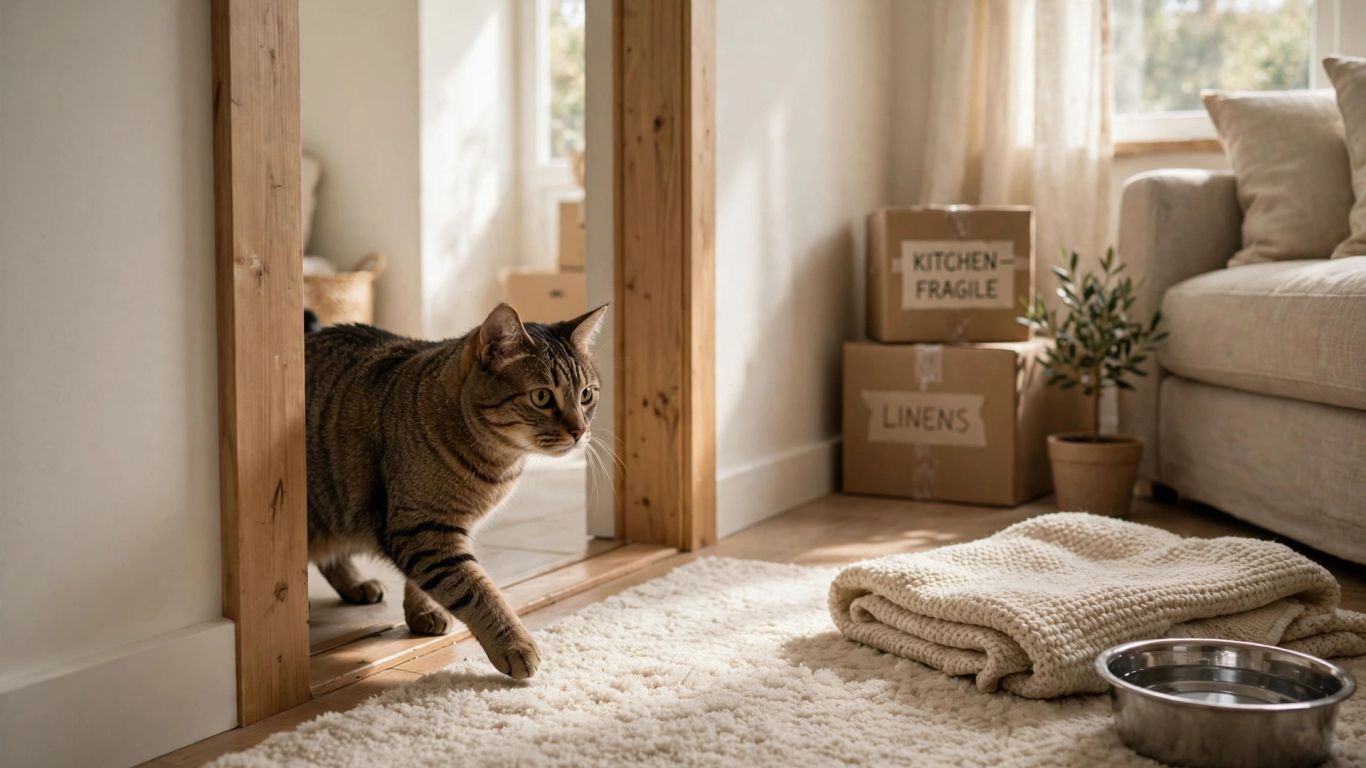
Moving, adopting a cat, or welcoming a new person can alter the smells, sounds, and patterns of a home all at once. Give a cat a calm area with familiar bedding, food, water, and a litter box, then let them explore at their own pace. A diffuser may be considered in the room where the cat spends the most time, but it should not be used to rush introductions or force contact. A gradual approach to settling a new cat can help keep the transition more manageable.
Coping with changes in routine or environment
Visitors, renovations, travel preparations, or a changed daily schedule can make a familiar home feel less predictable. Keep feeding and play routines as steady as possible, and preserve access to hiding spots and resting places. If the change involves a larger home project, practical choices such as flooring trade-offs or wood-floor refinishing are separate considerations from cat behavior; changes to the space may still affect a cat’s routine. For school facilities, guidance on sports-floor damp repairs concerns a different setting, but illustrates why environmental changes should be planned rather than treated as a behavior problem.
Managing tension between cats
When cats share a home, tension may appear as staring, blocking routes, chasing, or avoiding shared areas. A diffuser can be considered as one part of support, but each cat also needs access to separate essentials and places to retreat. A multi-cat product page describes the PAWSONA Zenkit Combo as featuring three diffusers, a free refill, and a calming spray, designed to help ease cat stress, tension, and aggression. Those are product claims, not a promise that every conflict will resolve; calm human interactions matter too, and these passenger boundary tips offer a separate example of setting expectations without escalating tension.
How to choose a diffuser
Start with the behavior and setting you want to address, then compare the product’s stated formula, coverage, and refill details. Do not choose solely by a broad promise of calm: a clear match between the instructions and your situation is more useful. A diffuser also should not distract from investigating a sudden or persistent change in behavior. Comparing these basic factors can make the options easier to sort.
Matching the product to your cat’s needs
Consider where the behavior happens and whether it appears tied to a particular room, transition, or interaction. A product page for the PAWSONA Zenkit Calming Diffuser Kit describes a feline facial pheromone formula that helps ease stress, anxiety, fear, spraying, and scratching, with coverage for rooms up to 700 sq. ft. That description can help you compare its stated use with your situation, but no product description can diagnose why a cat is spraying or scratching. If you are uncertain about the cause, ask a veterinarian for guidance.
Checking room coverage and refill options
Check the stated coverage against the room where the cat spends time, and look at how often the manufacturer says the refill should be replaced. Coverage figures are product-specific, so compare them only with the space and setup described in the instructions. For example, the PAWSONA ZenKit refill is described as 48 ml, compatible with a diffuser, and providing up to 30 days of coverage for areas up to 700 sq ft. Use the product’s own compatibility and replacement directions rather than assuming that refills fit other devices.
Comparing diffuser kits, refills, and costs
A starter kit generally gives you the device and its initial refill, while a refill is for a compatible device you already have. Compare the full cost over the period you expect to use it, not just the first purchase price. This small table can help keep the comparison practical:
| What to compare | What to check | Why it matters |
|---|---|---|
| Starter kit | Which device and refill are included | Clarifies what is needed to begin |
| Refill | Compatibility and liquid amount | Helps avoid buying a refill that will not fit |
| Coverage | Stated area and replacement interval | Helps match the product to the intended room |
| Ongoing cost | Refill price and frequency | Makes longer-term costs easier to estimate |
Use the product directions to confirm the details behind each row, since formats and claims vary. A broader diffuser and spray comparison can also help readers understand that formats differ, though the right choice still depends on the cat and the home.
Where and how to set up a diffuser
The setup affects whether the device can disperse its contents into the intended area. Choose a location based on where your cat spends time, then check the package instructions before plugging it in. Keep the unit away from obstructions and use a suitable outlet. A diffuser is only one environmental support; it cannot make an otherwise inaccessible or stressful room feel safe by itself.
Choosing a suitable room and outlet
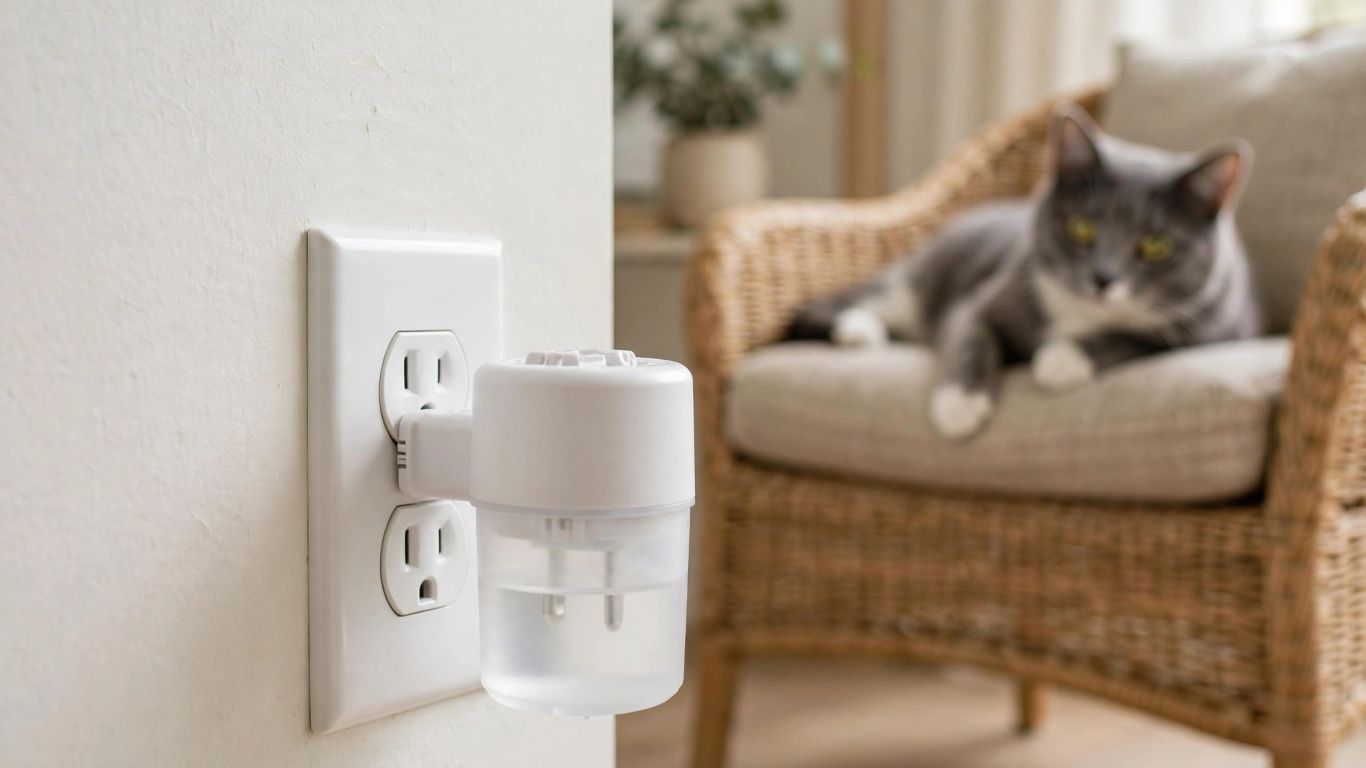
Choose a room where the cat regularly rests or spends time, rather than an isolated area they rarely visit. Use an outlet that allows the device to sit as directed and is not hidden behind a door or a large object. In a multi-cat home, think about where each cat can comfortably spend time, not only where the conflict occurs. The chosen location should make it easy to keep the diffuser in place and check it as needed.
Keeping the diffuser clear of furniture and curtains
Furniture, curtains, and shelves can restrict airflow around a plug-in device. Leave the area around it open according to the manufacturer’s instructions, and avoid placing it where fabric hangs over or touches it. If you are rearranging a room, check that the new layout does not block the device or reduce access to your cat’s resting areas. A clear space makes it easier to follow the setup directions consistently.
Following the product’s setup and replacement instructions
Read the product label for assembly, placement, compatibility, and refill timing before use. Do not assume that one diffuser’s guidance applies to another model, especially when replacing a refill. It can help to make the instructions part of a simple home routine:
- Confirm that the refill is intended for the diffuser you own.
- Plug the device into an outlet in the selected room.
- Keep the surrounding space clear as directed on the label.
- Check the refill and replace it according to the product instructions.
These small checks reduce guesswork and make it easier to notice when a refill needs attention. If the instructions differ from general advice, follow the product’s directions.
What to expect after plugging it in
A diffuser is not an instant answer to a complicated behavior concern. Give the product time according to its directions, and notice whether the cat’s behavior changes in the places and situations that prompted you to try it. Keep supporting the cat with steady routines and appropriate resources. Observations are more useful than expecting a dramatic overnight shift.
Allowing time to assess any changes
Follow the time frame stated by the manufacturer and avoid judging the result after only a brief period. Cats may need time to adjust to changes in their environment, and a diffuser is only one part of that environment. If there is no clear improvement, it does not mean you have failed; it may mean the cause needs another look or additional support. Be patient, but take persistent or worsening signs seriously.
Tracking behaviors before and after use
A brief record can help you distinguish a real pattern from a day-to-day fluctuation. Note when and where the behavior occurs, what happened beforehand, and whether anything about the household changed. Keep the record simple enough to maintain for more than a day or two. For example, track:
- Hiding or time spent in usual resting areas.
- Scratching or urine marking, including location and timing.
- Interactions between cats, such as chasing or blocking access.
- Changes in eating, play, or litter-box habits.
After a period of observation, compare similar situations rather than relying on memory alone. Share the notes with a veterinarian if the behavior persists, changes suddenly, or raises concern.
Knowing when to adjust placement or coverage
If the diffuser is in a room your cat rarely uses, revisit whether the selected location makes sense. Check the coverage and placement directions before moving it, and make sure the device is not obstructed. Avoid adding devices or changing the setup in ways the product does not recommend. If the behavior continues despite a suitable setup, consider whether other environmental needs or a medical concern could be involved.
Safety, limitations, and additional support
Diffusers are household products, so use them according to the package directions and keep the setup appropriate for your home. They are not a substitute for a veterinary assessment or for making needed changes to a cat’s environment. Responses vary, and a product’s stated purpose should not be confused with a guaranteed outcome. When a behavior change is persistent or sudden, it is sensible to ask for help rather than relying on a diffuser alone.
Using the diffuser as directed
Use only the refill specified for the device, and follow its instructions for placement and replacement. Do not apply diffuser liquid to your cat, and do not modify the unit. Keep the outlet and surrounding area in the condition recommended on the label. If you have questions about safe use in your household, consult the manufacturer’s directions or your veterinarian.
Understanding why results can vary
Cats differ in temperament, history, health, and sensitivity to change, while stressors differ from home to home. A diffuser may not address the reason behind a behavior, and environmental support often needs to include predictable routines, separate resources, and safe places to retreat. Even when one change appears helpful, it is worth continuing to observe the cat rather than assuming the problem has been solved. A calming product overview can offer broader context on evaluating behavior support thoughtfully.
Consulting a veterinarian about persistent behavior changes
A sudden change in litter-box habits, appetite, grooming, activity, or social behavior can have a medical cause as well as an environmental one. Contact a veterinarian when signs persist, worsen, or seem unusual for your cat. Bring your observations, including when the behavior began and what has changed at home. That context can help guide the next step and ensure that a health concern is not overlooked.
Conclusion
A pheromone diffuser may offer environmental support during stressful transitions, but thoughtful placement, steady routines, and careful observation are just as important. Choose according to the product’s directions and your cat’s needs, and involve a veterinarian when behavior changes persist or raise concern.
Frequently Asked Questions
What does a pheromone diffuser do for cats?
It releases synthetic versions of chemical signals associated with feline communication into the surrounding space. Products differ, and a diffuser should be viewed as one possible support rather than a guaranteed solution.
How long does a cat diffuser take to work?
Timing varies by product and cat. Follow the manufacturer’s directions and observe behavior over an appropriate period instead of expecting an immediate change.
Where should I plug in a pheromone diffuser?
Use an outlet in a room your cat regularly uses, and follow the product’s placement instructions. Keep the device clear of furniture and curtains as directed.
Can I use a diffuser in a home with multiple cats?
It may be considered as one part of supporting a multi-cat household. Make sure each cat can access separate essentials and safe resting places, and seek guidance if conflict persists.
Can a pheromone diffuser stop urine marking?
Some products are intended to help with stress-related marking, but marking can have several causes. A veterinarian can help assess persistent or new urination changes.
Is a pheromone diffuser a substitute for veterinary care?
No. It does not diagnose or treat every cause of a behavior change. Contact a veterinarian about sudden, persistent, or worsening signs.
Should I keep a diffuser plugged in all the time?
Use it for the period and in the manner specified by the product instructions. Check the refill and device as directed, and ask your veterinarian if you are unsure whether continued use is appropriate.