


Key Takeaways
A calming aid can support a cat, but it works best as part of a thoughtful response to what is causing stress. Start with small, practical changes and ask your veterinarian about persistent or sudden behavior changes.
- Pheromone diffusers and sprays can support a calmer environment in different ways.
- Treats and supplements call for careful label reading and veterinary guidance.
- Collars may suit some situations, while not every cat will tolerate wearing one.
- Play, puzzles, hiding places, and predictable routines help cats feel more secure.
- Notice patterns in your cat’s behavior and address the underlying stressor when possible.
1. Pheromone diffusers
A diffuser can provide steady support in a room where a cat spends much of the day. It may be worth considering during a move, a new household routine, or the introduction of another pet, but it is not a substitute for figuring out what is making the cat uneasy. The settling-in guidance also offers ideas for pairing calming products with patience and a secure space.
The PAWSONA Zenkit Cat Calming Diffuser is designed to help ease feline stress and anxiety with soothing pheromones. When comparing any diffuser, think about the room where it will be used and whether the placement allows the product to be used as directed. A diffuser is most useful as one part of a calmer, more predictable environment, rather than as a fix for every behavior.
It helps to match the format to the situation, while keeping expectations realistic. These broad differences can help guide that choice:
| Format | May fit | Keep in mind |
|---|---|---|
| Diffuser | Ongoing support in a familiar room | Use it as directed in an appropriate space |
| Spray | A specific surface or travel setup | Follow label directions and allow time to dry if instructed |
| Treat | A cat that readily accepts a food-based option | Check ingredients and serving directions |
The table is a starting point, not a promise of a particular result. Cats respond differently, and a new or worsening behavior may call for a veterinary check rather than another product.
2. Calming sprays
A spray can be useful when stress is tied to a particular place or event, such as a carrier, a visit to the veterinarian, or a change at home. Unlike a diffuser, it can be directed toward a specific setting, but it should be used exactly as its label instructs. For cats who dislike unfamiliar smells, introduce any new product thoughtfully and watch their response.
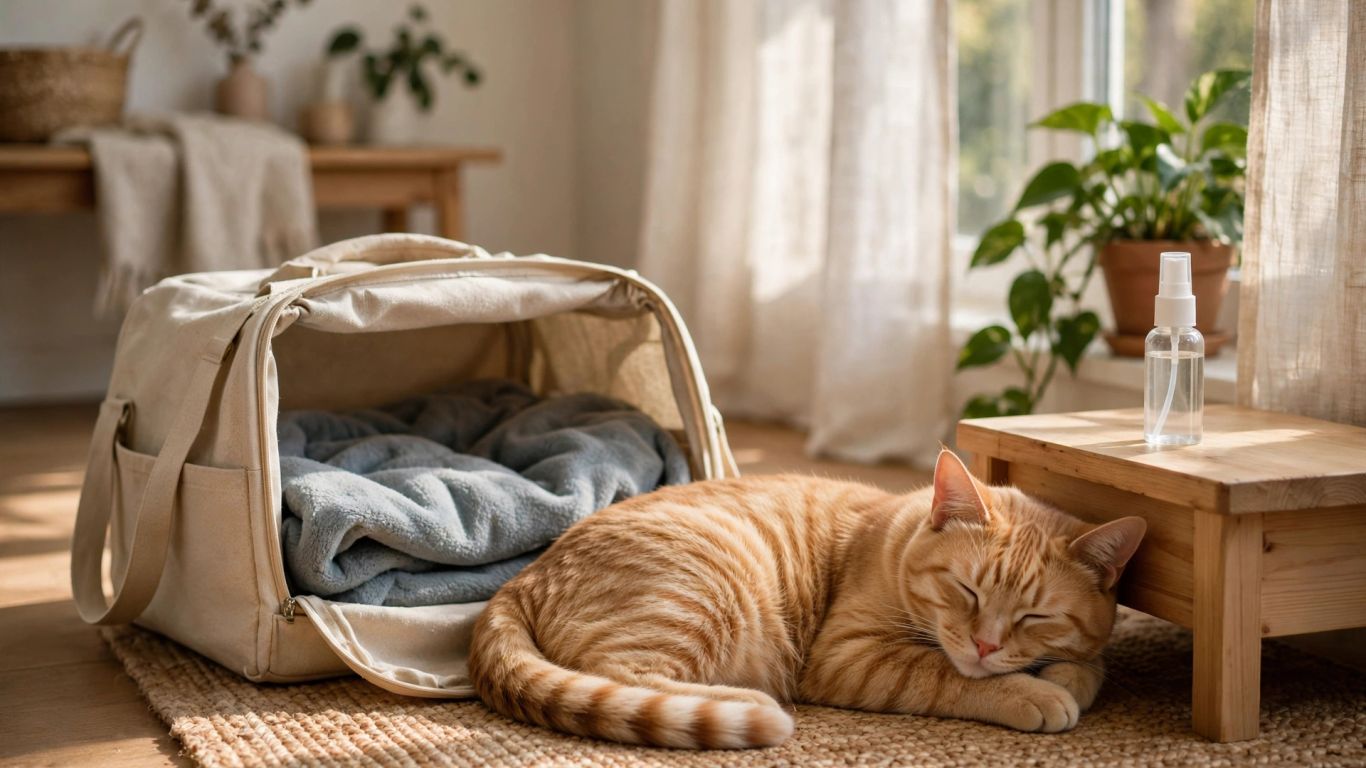
The PAWSONA pheromone calming spray is described as helping ease everyday stress and supporting cats at home, while traveling, or during vet visits. Avoid spraying it directly on your cat unless the product label specifically says to do so; follow the directions for the particular item you have. A quiet, familiar setup still matters, especially when the stressful event cannot be avoided.
For a trip, prepare the carrier in advance and give your cat time to explore it without pressure. A spray is one possible support, not a guarantee that travel or a vet visit will feel easy. If you want to see a broader overview of the category, this calming aids comparison covers several types of support.
3. Calming treats
Calming treats may be convenient for cats that are comfortable taking food from a person, particularly around predictable events. Their ingredients and directions vary, so read the package rather than assuming that every treat is intended for the same use or frequency. If your cat has a health condition, follows a special diet, or takes medication, ask a veterinarian before adding one.
A treat should not become the only response to hiding, appetite changes, or conflict with another cat. Notice when the behavior happens and what came before it: a noisy visitor, an unfamiliar scent, or competition over a resting spot may point to a change you can make at home. For a cat who refuses the treat, do not force it; choose a different support and keep interactions low-pressure.
The aim is not to make a cat seem quiet at any cost, but to help them feel safer. Changes in behavior that persist or appear suddenly deserve attention, especially if eating, drinking, or litter-box habits also change. A veterinarian can help assess the cause and whether a calming aid makes sense.
4. Calming supplements
Supplements can look appealing when stress seems persistent, but the word “calming” does not tell you whether an ingredient, dose, or combination suits an individual cat. Check the full ingredient panel, directions, and cautions, and avoid stacking products without professional advice. The cat supplement safety guide offers a useful reminder to look closely at ingredients and doses.

Some labels refer to amino acids or peptides, terms also used in broader discussions of pharma insights. That link is not a guide to choosing a cat supplement; for a pet product, rely on its own label and discuss suitability with your veterinarian. Be especially cautious of claims that promise a quick or universal change in behavior.
If you decide to try a supplement, keep the rest of your cat’s routine as steady as possible so you can observe what changes. Write down the timing, the behavior you are tracking, and any unwanted response, then share that information with your veterinarian. This is more useful than adding several new products at once and guessing which one mattered.
5. Calming collars
A calming collar is a wearable option that may suit some cats and situations, but comfort comes first. Check the fit and safety instructions, and observe whether your cat tolerates wearing it. If the collar causes distress or your cat keeps trying to remove it, stop and seek advice rather than insisting on use.
The PAWSONA Calming Collar for Cats is described as helping ease stress and anxiety related to travel, loud noises, vet visits, and other changes. Its product information describes it as odourless and designed for up to 30 days of continuous use. Follow the package directions for fitting and use, and do not assume that a wearable product will work for every cat.
A collar can be one part of a wider plan, alongside familiar routines and a quiet retreat. For fear linked to a particular event, prepare the environment as well as choosing a product: give your cat a place to withdraw and do not force contact. If anxiety is intense or recurring, consult your veterinarian about the next step.
6. Interactive toys and puzzles
Play and food puzzles offer a practical way to give a cat activity and choice, especially indoors. Begin with something simple and let your cat approach at their own pace; a puzzle that is too difficult can become another source of frustration. Short sessions can be easier to fit into a routine than one long burst of activity.
Watch which kinds of play your cat enjoys. Some will chase a moving toy, while others prefer searching for food or watching from a safe distance before joining in. Keep toys in good condition, put away anything with loose parts that could be swallowed, and rotate options so they remain interesting without overwhelming the space.
If you are also looking for help with another animal’s stress, dog separation anxiety help is a separate topic and should not be treated as cat behavior advice. For your cat, focus on their own signals: engagement, relaxed movement, and the ability to stop and retreat are more useful than trying to make every play session look the same.
7. Covered beds and hiding spaces
A covered bed, box, or quiet nook can give a cat somewhere to retreat when visitors arrive or the household feels busy. Choose a spot away from constant foot traffic and keep essential resources accessible. A hiding place is not a failure to socialize; for many cats, having control over when to come out is part of feeling secure.
A few small setup choices can make a retreat more inviting:
- Place it somewhere quiet and easy for your cat to reach.
- Keep food, water, and the litter box accessible without crowding the hiding spot.
- Add familiar bedding, and avoid forcing your cat inside.
- Preserve the retreat when household routines or visitors change.
Then give the cat time to use the space on their own terms. If they choose a cupboard or another unsafe location, offer a safer alternative nearby rather than pulling them out. For a cat adjusting to a new home, this secure-space advice can help you build a calmer, more predictable setup.
Household changes can involve all kinds of planning, from agricultural solar panels on a farm to an Apple home event for people interested in smart-home devices; neither is a guide to feline behavior. For the cat, the useful question is simpler: can they retreat, reach their essentials, and return to familiar routines? A dependable safe space supports those needs without asking the cat to cope before they are ready.
Conclusion
Effective cat calming products can offer support, but the best choice depends on the cat, the situation, and the underlying cause of stress. Pair any aid with patient observation, a predictable home, and veterinary guidance when behavior changes persist or raise concern.
Frequently Asked Questions
How can I tell if my cat is stressed?
Changes such as increased hiding, unusual vocalizing, reduced appetite, or changes in litter-box habits can signal stress, though they can also have medical causes. Keep track of what has changed and consult a veterinarian if the behavior is sudden or persistent.
How quickly do calming products work?
Timing varies by product, situation, and individual cat. Follow the label directions and avoid judging a product from a single stressful moment; ask a veterinarian if you are uncertain what to expect.
Can I use more than one calming product at once?
Do not combine products without checking their labels and asking your veterinarian, particularly if your cat has a health condition or takes medication. Introducing one change at a time also makes it easier to notice how your cat responds.
Are calming treats safe for every cat?
No single treat is suitable for every cat. Review its ingredients and serving directions, and check with a veterinarian if your cat has dietary restrictions, a medical condition, or is taking medication.
Should I use a calming spray directly on my cat?
Use a spray only as its label directs, and do not apply it directly to your cat unless the instructions explicitly allow that. If your cat reacts negatively, stop using it and seek guidance.
What should I do if a calming aid does not help?
Revisit the environment and look for a trigger such as noise, conflict, or a recent change. Persistent or worsening signs deserve veterinary advice, since an underlying health issue may need attention.
Is a hiding place helpful for an anxious cat?
A safe, quiet retreat can give a cat more control over how much interaction they want. Keep essentials accessible and allow the cat to come and go without being forced out.