


Key Takeaways
A stressed cat usually needs safety, space, and patience rather than more attention. Watch for changes, reduce pressure, and involve a veterinarian when behavior shifts suddenly or physical symptoms appear.
- Look for changes in hiding, appetite, grooming, vocalization, toileting, or social behavior.
- Give your cat a quiet retreat and let them decide when to come closer.
- Keep food, water, litter boxes, resting places, and routines predictable.
- Prepare gradually for visitors, travel, new pets, moves, and loud household events.
- Seek veterinary guidance when stress is severe, persistent, or paired with illness signs.
Recognize the signs and possible causes of stress
Cats often communicate discomfort through small changes rather than obvious distress. A cat that suddenly disappears under the bed, stops eating normally, or avoids touch may be responding to stress, pain, or both. Learning your cat’s usual habits makes unusual behavior easier to spot. For a broader overview of cat stress signs, compare several changes together instead of judging one behavior in isolation.
Behavioral changes that may signal distress
Stress can show up as hiding, increased vocalization, irritability, scratching, spraying, or urinating outside the litter box. Some cats become unusually clingy, while others withdraw and stop joining normal household activity. Fighting, chasing, or swatting can also reflect fear or tension, especially when another cat or a recent change is involved.
A behavioral shift is more meaningful when it is new, repeated, or linked to a particular event. Note when it happens, what came before it, and what helps your cat settle. That simple record can reveal patterns and give your veterinarian useful context.
Physical signs to watch for
A stressed cat may groom excessively, develop thin patches of fur, eat less, sleep differently, or carry their body low and tense. Wide pupils, flattened ears, a rapidly flicking tail, crouching, and sudden freezing can signal fear in the moment. Changes in toileting also deserve attention, even when stress seems like the obvious explanation.
These signs can overlap with medical problems, so avoid assuming that every physical change is emotional. Keep track of appetite, water intake, urination, bowel movements, and energy. A clear timeline helps separate a brief reaction from a problem that is continuing to affect your cat’s health.
Common household and environmental triggers
Cats may react to visitors, unfamiliar smells, building work, loud music, fireworks, storms, travel, or a changed feeding schedule. A new baby, pet, roommate, or piece of furniture can alter the territory they rely on. Even a seemingly minor change, such as moving a litter box, may matter to a sensitive cat.
Overstimulation can be a trigger too. Repeated handling, children following a hiding cat, competition over resources, or a lack of quiet sleeping areas can keep the nervous system on alert. Look at the whole environment, not just the moment when the behavior occurs.
When stress could indicate an underlying illness
A sudden change without a clear trigger should be treated as a health question as well as a behavior question. Pain, urinary problems, digestive illness, dental disease, and age-related changes can all alter how a cat eats, moves, rests, or responds to people. Sudden behavior changes deserve attention rather than punishment.
Contact a veterinarian promptly if your cat stops eating, strains to urinate, has trouble breathing, vomits repeatedly, seems weak, or appears painful. Even less dramatic changes deserve an appointment when they persist. A calm home helps, but it cannot replace an examination when illness is possible.
Help your cat calm down in the moment
When a cat is frightened, the goal is not to make them act friendly immediately. It is to lower the number of things they must process and give them control over distance. Move slowly, keep your expectations modest, and allow recovery to take as long as it takes.
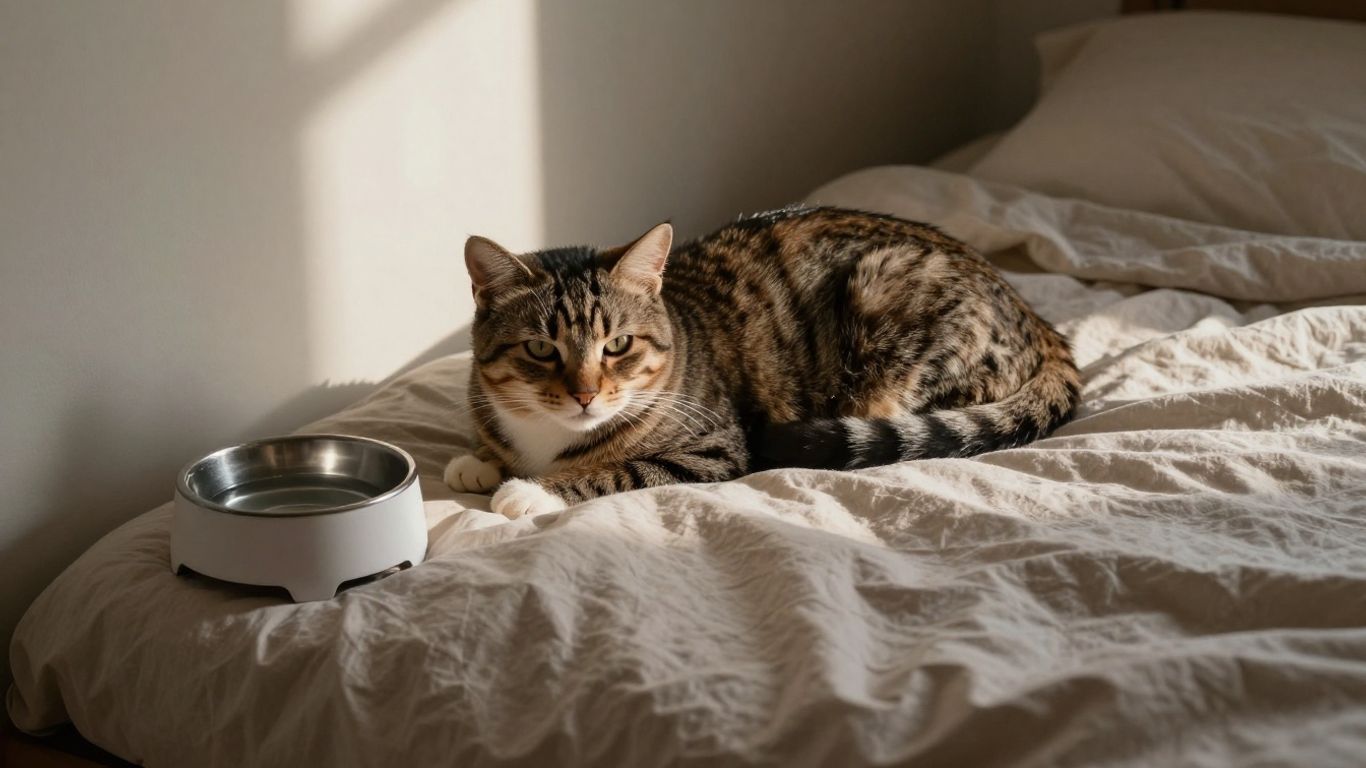
Give your cat a quiet, secure place to retreat
Choose a low-traffic room, covered bed, open carrier, or sturdy box where your cat can hide without being trapped. Keep the space away from children, dogs, and sudden foot traffic, while leaving a clear route to food, water, and the litter box. Never pull a frightened cat from its hiding place unless there is an immediate safety or medical concern.
A retreat works best when it is available before a stressful event, not only after panic begins. Keep it familiar and avoid repeatedly checking inside. Your cat may settle faster when the hiding place is treated as a normal part of the home rather than a problem to solve.
Use a calm voice and avoid forced interaction
Speak softly, keep your body turned slightly to the side, and avoid reaching over your cat. Sitting nearby without staring can be less threatening than trying to pet or pick them up. If your cat approaches, offer a hand at a comfortable distance and let them decide whether contact continues.
Do not corner, carry, or coax repeatedly. A cat that hisses or swats is communicating that the interaction is too much, not being difficult. Respecting that boundary now can make future interactions safer and more trusting.
Reduce noise, movement, and other immediate stressors
Turn down televisions, close windows if outside noise is startling, and ask people to pause movement around the cat’s retreat. Remove the specific trigger when possible, or create more distance from it. Dim lighting may also help if your cat is already hiding, though the main benefit comes from reducing activity and unpredictability.
Work through the immediate surroundings in a practical order:
- Move children and other pets away from the hiding area.
- Stop loud appliances, music, or unnecessary household activity.
- Close curtains if outdoor animals or traffic are causing alarm.
- Keep pathways clear so your cat can leave without feeling cornered.
After these changes, give the room time to become boring again. Repeatedly entering to see whether your cat is better can restart the stress response, so observe quietly from a distance.
Know when to stop approaching or handling your cat
Stop when your cat freezes, crouches lower, turns their head away, flattens their ears, growls, hisses, or swishes their tail sharply. These are useful warnings. Continuing to touch or restrain the cat after those signals increases the chance of a bite or scratch and may make the next encounter harder.
If handling is necessary for safety, use a towel or carrier only when you can do so without prolonged chasing. Otherwise, pause and seek veterinary or behavior guidance. Calm restraint is different from repeated attempts to force reassurance.
Create a home environment that supports relaxation
A calmer home is built through ordinary details: safe places to rest, reliable access to essentials, familiar smells, and a rhythm your cat can predict. These changes do not need to be expensive or dramatic. They work best when they fit your cat’s habits and remain consistent over time.
Set up hiding places and elevated resting areas
Offer more than one retreat so your cat does not have to defend a single safe spot. A covered bed, a box with two openings, or a shelf made secure can give them options. Elevated resting places may help cats observe activity from a distance, while low hiding spaces can feel safer during intense fear.
Place these areas where your cat can rest without being disturbed. Avoid putting a hiding box beside a noisy appliance or in a narrow route where people must step over it. The best setup gives your cat privacy while preserving an easy exit.
Make food, water, and litter boxes easy to access
Keep essential resources in calm, reachable locations. Food and water should not be crowded beside a litter box, and a nervous cat should not need to cross a busy room to eat or drink. In multi-cat homes, separate resources can reduce competition and let each animal make choices.
Watch whether your cat avoids a resource after a household change. A litter box that is technically available may still feel unsafe if it is next to a washing machine or exposed to another cat. Small placement changes can remove a daily source of pressure.
Use familiar scents and comforting items
A blanket, bed, or toy that already smells like home may be more reassuring than a new item. Avoid strong air fresheners and sudden scent changes around a cat that is unsettled. Let new objects enter gradually, especially after moving or rearranging rooms.
Some owners also consider calming products as one part of a wider plan. PAWSONA offers calming sprays among its cat stress relief products, but any product should support environmental changes rather than replace attention to the underlying trigger. Introduce one change at a time so you can see how your cat responds.
Provide predictable daily routines
Regular meal times, quiet periods, play sessions, and cleaning routines help reduce uncertainty. The schedule does not have to be exact to the minute; a recognizable pattern is usually enough. If a change is unavoidable, preserve familiar anchors such as the same feeding area or bedtime routine.
A simple routine might look like this:
| Daily anchor | Helpful approach | Why it may help |
|---|---|---|
| Meals | Feed at familiar times and places | Reduces uncertainty around a basic need |
| Rest | Protect quiet sleeping periods | Prevents repeated disruption |
| Play | Offer short sessions suited to comfort | Provides controlled activity |
| Litter care | Keep boxes clean and easy to reach | Supports safe, predictable toileting |
The table is a framework, not a rigid prescription. Follow your cat’s normal sleep and activity patterns, then make changes gradually. Consistency matters more than creating a perfect schedule.
Reduce stress during common challenging situations
Some stressful events can be anticipated, which gives you time to prepare. Start before the visitors arrive, the carrier comes out, or the boxes are packed. A cat is more likely to cope when new sights, sounds, and smells are introduced in small steps.
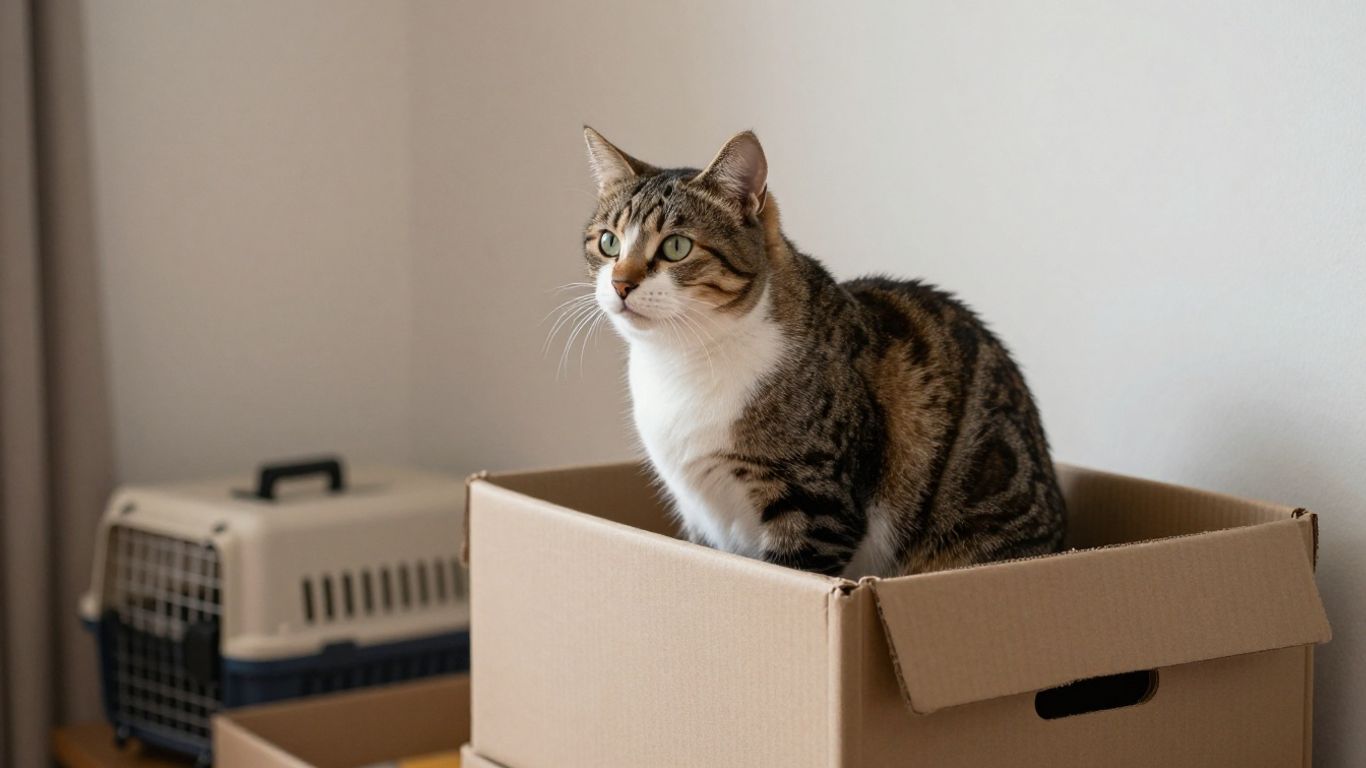
Preparing for visitors and household changes
Give your cat access to a quiet room before guests arrive, with familiar bedding, water, litter, and a hiding option. Tell visitors not to pursue, stare at, or handle the cat. Some cats will investigate later; others may remain apart for the entire visit, and that is acceptable.
For a new household member, let your cat experience the person’s scent and voice gradually. Keep feeding and play routines steady. If you are bringing home a new cat, a quiet base room and slow introductions can prevent pressure from building too quickly.
Making travel and carrier use less frightening
Leave the carrier open in a familiar room well before travel. Place bedding inside and allow your cat to investigate without being shut in at first. Short, calm practice sessions are more useful than bringing out the carrier only for an appointment.
On travel day, move deliberately and avoid chasing your cat around the home. Secure the carrier so it does not slide, keep the car quiet, and ask your veterinarian about travel anxiety if your cat becomes extremely distressed. Practice can change the carrier from a warning signal into a more ordinary object.
Helping your cat adjust to a new pet
Keep cats separated at first, with each animal having its own food, water, litter, resting spaces, and hiding areas. Exchange scents before allowing visual contact, then use brief, calm sessions through a barrier. Increase access only when both cats remain reasonably relaxed.
Do not allow them to “work it out” through fighting. If tension rises, separate them and return to an easier stage. Guidance on peaceful cat introductions can help you recognize when to slow down and how to rebuild positive associations.
Managing moving, remodeling, and loud noises
Before a move or renovation, establish a protected room with familiar belongings and closed windows or doors. During noisy work, keep your cat away from tools, dust, open exits, and unfamiliar workers. Afterward, allow exploration one room at a time rather than opening the entire changed home at once.
For fireworks or storms, prepare the retreat early, close curtains, and use steady background sound if your cat tolerates it. A move may take days or weeks to adjust to, so focus on small signs of progress such as eating, grooming, or emerging briefly. The moving with a cat guide offers a useful reminder to let behavior set the pace.
Use enrichment and gentle interaction to build confidence
Enrichment should make life more interesting without making your cat feel exposed. The right activity gives them choices, lets them use natural behaviors, and ends before they become overwhelmed. Confidence grows through repeated experiences that feel manageable.
Choose play that matches your cat’s comfort level
A wand toy used from a distance may suit a cautious cat better than a toy placed directly in their face. Other cats prefer chasing lightweight toys, batting objects, climbing, or exploring a food puzzle. Begin with short sessions and watch for relaxed engagement rather than insisting on a particular game.
Let your cat catch the toy occasionally and finish with a calm pause. If they stop participating, hide, or become agitated, end the session without making it a test. Enrichment is successful when your cat can choose to return to it.
Introduce new experiences gradually
Change one variable at a time: a new toy, a different room, a visitor’s scent, or a brief carrier session. Start far enough away that your cat can notice the change without panicking. Pair the experience with something familiar, then stop while the response is still calm.
Progress is not always linear. A cat may manage a new sound one day and retreat from it the next. Reduce the intensity and try again later rather than treating a setback as failure.
Encourage positive associations with treats and praise
Reward calm choices, such as looking at a new object, stepping out of a hiding place, or approaching without tension. Place a treat nearby instead of reaching toward the cat. Quiet praise, slow blinking, or simply allowing space can be more effective than enthusiastic attention.
Keep rewards appropriate for your cat and avoid withholding food to force participation. If appetite is already reduced, focus first on veterinary advice and easy access to familiar food. The aim is to make safe experiences feel worthwhile, not to bargain with a frightened animal.
Avoid punishment and overstimulation
Punishment can add fear to an already stressful situation and may suppress warning signals without solving the cause. Yelling, spraying water, or forcing a cat into a confrontation can damage trust. Redirect unwanted behavior when possible, then change the environment that is provoking it.
Watch for overstimulation during petting or play. Tail flicking, skin twitching, sudden head turns, and tense posture mean it is time to pause. Gentle interaction includes knowing when to stop.
Know when professional help is needed
Home adjustments are valuable, but they are not a substitute for medical care. A cat that is suffering, not eating, or changing rapidly needs more than patience. Veterinary support can rule out physical causes and help you choose a safe behavior plan.
Stress symptoms that require prompt veterinary attention
Seek prompt care for difficulty urinating, repeated vomiting, breathing trouble, collapse, severe pain, injury, or a sudden inability to eat or drink. Urinary blockage can be an emergency, particularly in male cats. Call a clinic when you are unsure how serious a symptom is rather than waiting for it to resolve.
Arrange an appointment for persistent hiding, overgrooming, aggression, toileting changes, weight loss, or a lasting appetite shift. These signs may reflect stress, illness, or both. Early attention is often kinder and simpler than waiting until the pattern is entrenched.
How a veterinarian can identify medical causes
A veterinarian may ask about timing, household changes, diet, elimination, sleep, medications, and interactions with other animals. They may perform a physical examination and recommend tests based on the symptoms. Bring notes or short videos if they can be gathered safely without disturbing your cat.
Be specific about what changed and when. Saying that your cat is “acting strange” is understandable, but details such as hiding after meals or straining in the litter box give the clinician a clearer starting point. Medical and behavioral support can then work together.
When pheromone products or medication may help
Pheromone products may be considered as supportive tools when environmental changes alone are not enough. The PAWSONA Cat Calming Diffuser is described as providing up to 30 days of continuous calming coverage in a 700-square-foot area, and its source describes a mild chamomile fragrance and support for behaviors including fear, urine spraying, scratching, and aggression. Discuss suitability with your veterinarian, especially if symptoms are severe or unexplained.
Medication may be appropriate for some cats, but only a veterinarian can decide whether it fits the situation and how it should be used. Products and medication should never be used to avoid investigating pain, illness, resource competition, or an unsafe environment.
Creating a long-term stress-management plan with your vet
A useful plan identifies likely triggers, protects essential resources, sets a gradual training pace, and defines what improvement looks like. Keep a simple log of appetite, litter habits, hiding, interactions, and stressful events. Review it with your veterinarian rather than changing several interventions at once.
If fear or aggression continues, ask whether a qualified feline behavior professional should be involved. Reassess the plan as your cat’s age, health, household, and preferences change. The goal is not to make every cat outgoing; it is to help your cat feel safe enough to eat, rest, move, and communicate normally.
Conclusion
Learning how to calm a stressed cat begins with listening to behavior instead of punishing it. Give your cat distance, predictable care, safe choices, and gradual support, while treating sudden or serious changes as reasons to contact a veterinarian. A calmer environment is built through many small, respectful decisions repeated every day.
Frequently Asked Questions
How can I tell whether my cat is stressed?
Look for new or repeated changes such as hiding, appetite loss, overgrooming, unusual vocalization, aggression, altered sleep, or litter box problems. A sudden change should also prompt consideration of an underlying medical issue.
What is the fastest way to calm a frightened cat?
Reduce noise and movement, provide a secure hiding place, and stop trying to touch or approach the cat. Give them time and space while checking that food, water, and litter access remain available.
Should I pull my cat out of hiding?
Usually not. Hiding can help a cat regulate fear. Avoid removing them unless they are in immediate danger or need urgent medical care, and make the hiding area safe and accessible instead.
Can a new pet cause stress in a resident cat?
Yes. A new animal changes territory, smells, routines, and access to resources. Separation, scent exchange, gradual visual contact, and multiple resources can make the adjustment easier.
How long does it take for a stressed cat to settle?
It varies with the cat, the trigger, health, past experiences, and the support available. Some cats improve within hours, while others need days or weeks of predictable routines and gradual adjustment.
Are calming products enough to solve cat anxiety?
They may support a broader plan, but they do not replace veterinary assessment, environmental changes, safe retreats, or gradual behavior work. Addressing the trigger is usually essential for lasting improvement.
When should I call a veterinarian about stress?
Call promptly for breathing trouble, severe pain, repeated vomiting, collapse, difficulty urinating, or refusal to eat. Make an appointment for persistent hiding, appetite changes, aggression, overgrooming, or toileting problems.