


Key Takeaways
Good cat grooming is less about doing everything at once and more about helping your cat feel safe. Keep sessions brief, adapt the routine to your cat, and ask a professional for help when grooming becomes difficult or painful.
- Brush according to your cat’s coat, comfort, and needs.
- Trim only the nail tip, and pause whenever your cat needs a break.
- Bathe only when necessary and use products made for cats.
- Keep ear, eye, and tooth care gentle; seek veterinary advice about concerning changes.
- Build trust with patient handling, rewards, and short sessions.
Build a grooming routine that suits your cat
A steady routine makes it easier to notice changes in your cat’s coat, skin, and comfort. There is no single schedule that suits every cat: age, health, coat type, and tolerance all matter. Start with the smallest amount of handling your cat accepts, then adjust as you learn what works. For more general feline wellness ideas, explore cat care and behavior tips.
Consider coat length, age, and health
Long coats tend to tangle more readily and may need more frequent brushing than short coats. A cat who is older, overweight, stiff, or unwell may also find it harder to groom themselves, so check for areas they cannot easily reach. If your cat has a skin condition or a recent change in grooming habits, ask a veterinarian before trying a new product or routine. Diet is one part of overall health, and a guide to choosing food for your cat can help you consider life stage and individual needs.
Choose a schedule your cat can tolerate
A few calm minutes on a regular basis can be more useful than a long session that leaves your cat tense. The right frequency depends on what you are doing and how your cat responds; use the table as a starting point, not a rulebook.
| Grooming task | A reasonable starting point | Adjust when |
|---|---|---|
| Brushing | Brief sessions several times a week | The coat tangles or sheds more, or your cat dislikes the brush |
| Nail checks | Check regularly, then trim as needed | Nails catch on fabric or become difficult to retract |
| Bathing | Only when your cat is dirty or needs help cleaning | A veterinarian recommends bathing for a health concern |
| Teeth and face checks | Make a gentle check part of routine handling | You notice odor, discharge, or a change in comfort |
Watch your cat rather than the calendar. If they begin moving away, flattening their ears, or resisting more than usual, make the next session shorter or stop for the day.
Set up a calm, comfortable grooming space
Choose a quiet, familiar place with good light and a stable surface. Put supplies within reach before bringing your cat over, so you do not have to leave them unattended or rummage around mid-session. If you are looking up advice online, search results may stray into unrelated subjects such as MBS88 slot games, dentist disability coverage, Barcelona home buying, and educational video platforms; keep your attention on reliable cat-care guidance instead. A practical cat adoption and care guide can also help new owners plan for everyday needs.
Brush your cat safely and effectively
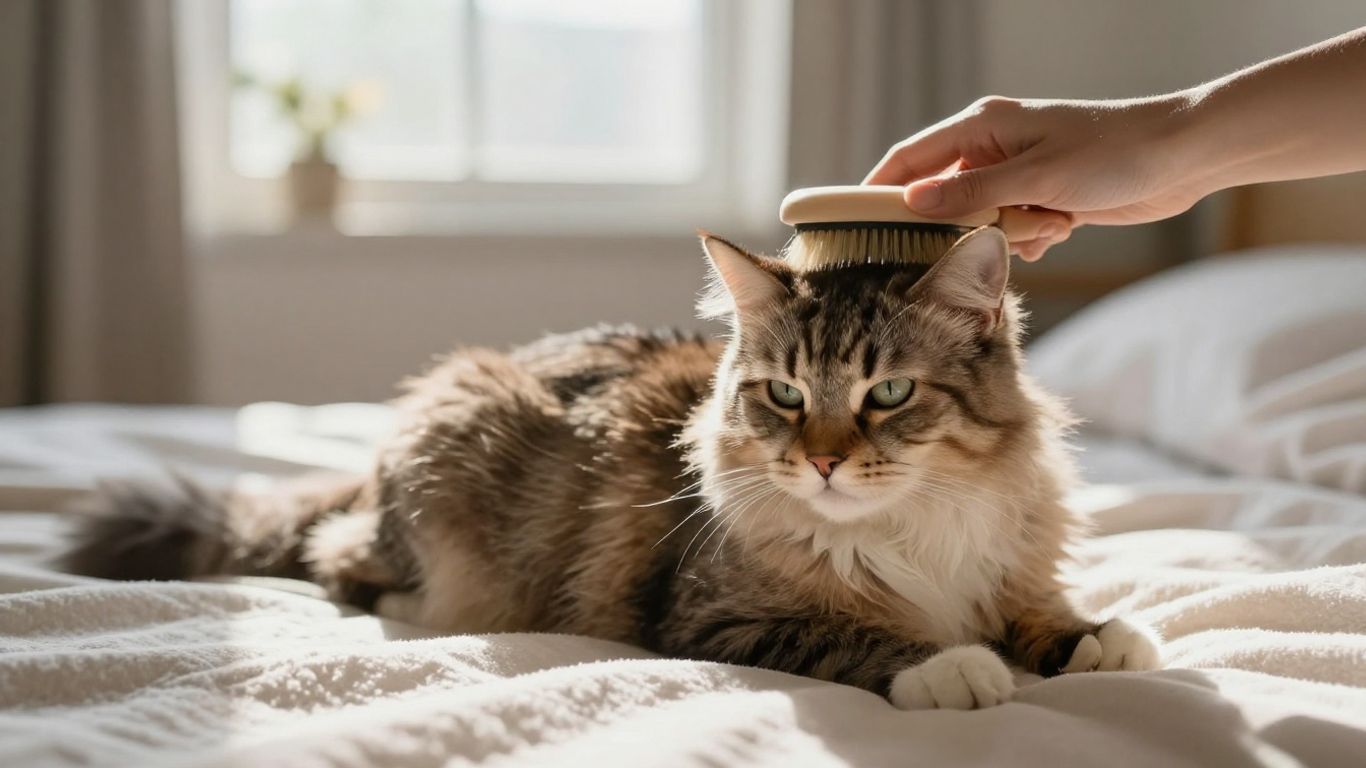
Brushing can remove loose hair, help you spot coat or skin changes, and give you a chance to get your cat used to gentle handling. Let your cat see and sniff the brush before you begin, and brush in the direction the coat naturally lies. The goal is a comfortable coat and a calm cat, not a perfectly polished finish. For another overview of routine techniques, see these ASPCA cat grooming tips.
Select a brush for your cat’s coat
A soft brush or grooming comb may suit a short, smooth coat, while a longer or denser coat may need a comb that can reach through the fur without scraping the skin. Start with light strokes in an easy-to-reach area, such as the shoulders, and notice how your cat reacts. Avoid pushing a tool through the coat if it catches; a gentler tool or shorter session may be a better fit. Brushing should not leave the skin red or sore.
Work through tangles without pulling
A small tangle may loosen with your fingers or a comb if you hold the fur close to the skin to reduce tugging. Work patiently from the outer edge of the tangle, taking tiny sections rather than pulling the brush through in one stroke. If your cat turns, flinches, or tries to leave, pause. Comfort matters more than speed, especially around sensitive areas such as the belly, armpits, and hindquarters.
Handle shedding and loose undercoat
Loose hair is easier to manage with regular, gentle brushing than with forceful strokes in a single marathon session. Choose a tool suited to the coat, and keep pressure light; repeated scraping can irritate skin. If your cat’s shedding seems unusually heavy or you notice bald patches, sores, or persistent scratching, check with a veterinarian rather than assuming it is ordinary seasonal shedding. An appropriate routine also helps you notice when the coat changes.
Recognize when a mat needs professional help
Mats can tighten close to the skin, where pulling or cutting at home may hurt your cat. Do not use scissors to cut out a mat: cat skin can be difficult to see through the fur, and a sudden movement can cause an injury. A professional groomer or veterinarian can assess mats that are large, tight, close to the skin, or painful to touch. If the coat is repeatedly matting, ask for advice on a safer maintenance plan.
Trim nails with care
Nail trimming is a small task that can feel big to a cat who is not used to having their paws handled. Begin by touching a paw briefly during a relaxed moment, then let go before your cat becomes uncomfortable. Use a proper cat nail clipper and take off only the sharp tip. If your cat resists, it is fine to stop and try another day.
Gather the right clippers and supplies
Use a clean clipper designed for pet nails, along with a towel and a few treats if your cat enjoys them. Choose a place where your cat can sit or lie comfortably and where you can see each nail clearly. Keep a small amount of gauze nearby in case you need it. Have everything ready before you start, so the session stays brief and predictable.
Identify the quick before trimming
The quick is the living part inside the nail, and cutting into it can cause pain and bleeding. On light-colored nails, it may appear as a pink area; on dark nails, it can be harder to see, so remove only a tiny amount at a time. If you are uncertain, ask a veterinary professional to demonstrate a safe trim. Never try to finish a nail just because you have already started.
Trim one paw at a time and offer breaks
Short, manageable steps are usually easier than trying to trim every nail in one sitting. You might begin with one nail, reward your cat, and end the session there. If your cat stays relaxed, you can continue a little further, but there is no need to push your luck. A simple sequence can help you keep the experience calm:
- Let your cat settle in a comfortable position.
- Touch a paw gently, then release it.
- Press lightly to extend one nail and inspect it.
- Clip only the pointed tip if you can clearly avoid the quick.
- Pause, reward, or stop if your cat tenses or pulls away.
Each small success gives your cat a chance to become more comfortable with the handling. If they become upset, put the clippers away and try again another time rather than restraining them to finish.
Know when to ask a groomer or veterinarian
Ask a professional for help if you cannot see where to trim, your cat is highly distressed, or the nails are overgrown or curling. A veterinarian is the right person to contact if a nail looks damaged, swollen, or infected, or if your cat seems painful when a paw is touched. For cats who cannot tolerate home grooming safely, a trained groomer or veterinary team can advise on suitable options.
Bathe your cat only when needed
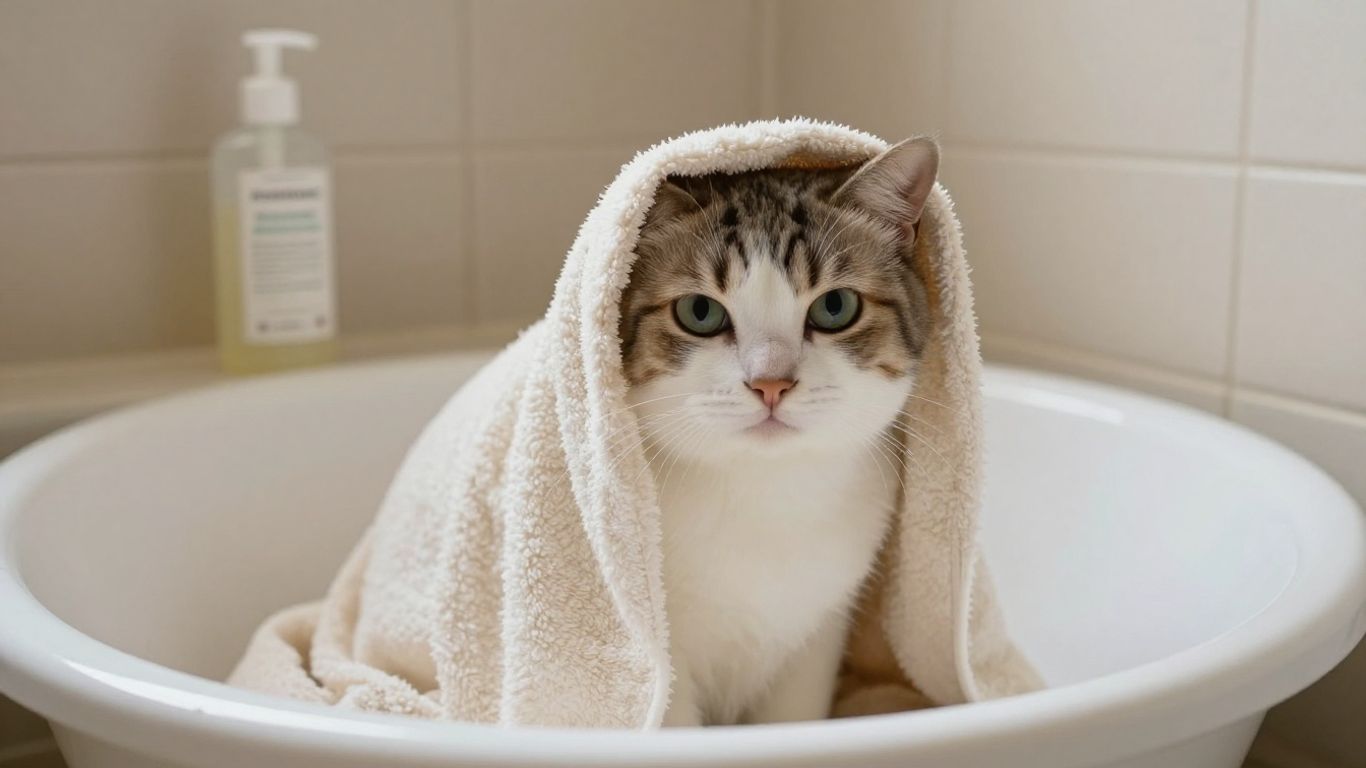
Most cats keep themselves clean, so a bath is not a routine requirement for every cat. It may be needed if your cat gets into something they cannot safely lick off, becomes unusually dirty, or has a bathing plan recommended by a veterinarian. Keep the experience simple and avoid turning an occasional cleanup into a stressful struggle. If water is a strong source of anxiety, consider whether a gentle wipe or another suitable approach is enough.
Decide whether a bath is necessary
Before filling a basin, check what is on the coat and whether it can be removed safely without a full bath. If the substance may be toxic, or you are unsure whether it is safe for your cat to lick, contact a veterinarian promptly for guidance. Some cats with mobility or health issues may need extra help keeping clean, but a veterinarian can help you decide on the safest method. A bath should solve a real need, not simply follow a calendar.
Prepare the water, shampoo, and towels
Set out cat-safe shampoo, a non-slip surface, and towels before bringing your cat into the room. Use comfortably lukewarm water and keep the bathing area quiet, with doors and windows closed so your cat cannot bolt into an unsafe space. A small amount of water and a gentle approach may feel less daunting than a deep tub. Never leave a wet cat unattended.
Wash and dry your cat with minimal stress
Wet the coat gently, avoiding the face, ears, and nose, and follow the shampoo label directions. Keep your movements slow and your voice calm. Rinse thoroughly so no residue remains, then wrap your cat in a towel and pat rather than rub. Give them a warm, quiet place to finish drying; do not use a hot dryer or force them to remain in one position if they are distressed.
Avoid products that can irritate or harm cats
Use products labeled for cats, and do not assume that a human shampoo or a product made for another animal is suitable. If your cat dislikes water, PAWSONA® Calming Foam Dry Shampoo for Cats is described as a no-rinse formula for cleaning dirt, oil, and odor. Follow the product directions, and ask a veterinarian before using any grooming product on irritated or injured skin. A dry shampoo does not replace veterinary care when a skin or coat problem needs diagnosis.
Care for ears, eyes, and teeth
Small, gentle checks can help you notice changes before they become harder to manage. Choose a calm moment and stop if your cat pulls away or seems uncomfortable. Use separate clean materials for different areas, and keep liquids and tools away from sensitive openings. A sudden change in appearance, smell, or behavior deserves attention rather than repeated cleaning at home.
Check ears without inserting anything
Look at the visible part of each ear for dirt, redness, swelling, or an unusual odor. If you see loose debris on the outer ear, you can wipe it away gently with a soft, damp cloth. Do not insert cotton swabs, fingers, or other objects into the ear canal, and do not pour cleaner in unless your veterinarian has advised it. Head shaking, frequent scratching, discharge, or pain are reasons to contact a veterinarian.
Wipe away eye discharge gently
For a small amount of dried discharge, use a soft, clean cloth moistened with warm water and wipe gently away from the eye. Use a fresh part of the cloth for the other eye, and do not rub or press on the eyeball. If discharge returns often, becomes thick, or is accompanied by redness, squinting, or swelling, contact your veterinarian. Avoid using human eye drops unless a veterinarian specifically directs you to do so.
Introduce toothbrushing step by step
Start by letting your cat sniff a pet toothbrush and taste a small amount of toothpaste formulated for cats. When they are comfortable, briefly touch the lips, then work up to lifting them and brushing a few teeth with gentle motions. Keep early attempts short, and build gradually rather than holding your cat still for a full brushing. Human toothpaste is not appropriate for cats, so use a product made for them.
Spot signs that need veterinary attention
A grooming check is not a diagnosis, but it can help you notice changes worth discussing. Contact a veterinarian about persistent ear discharge, eye irritation, bad breath, bleeding gums, mouth pain, or a sudden reluctance to be touched. If your cat stops eating or seems unwell, do not wait for a grooming session to see whether it passes. You can find more cat health and wellness guidance, but a veterinarian can assess your individual cat.
Make grooming easier for a nervous or sensitive cat
A cat who resists grooming is not being difficult on purpose; they may be frightened, uncomfortable, or simply unfamiliar with the sensation. Letting them control the pace can make future handling easier. Look for early signs of stress—such as a tense posture, tail flicking, flattened ears, or attempts to leave—and respond before they escalate. For a broader approach to calming a stressed cat, start with safety, space, and predictable routines.
Use gradual handling and short sessions
Introduce one part of grooming at a time: seeing the brush, sniffing it, feeling a brief stroke, then taking a break. Keep sessions short enough to end while your cat is still coping, even if you have not completed the task. A familiar blanket or a quiet place may help your cat settle, but avoid trapping them or blocking their way out. Products in PAWSONA Cat Grooming and Care Essentials include calming sprays, pheromone diffusers, and collars described as designed to help cats feel more relaxed; use them according to their directions and keep your cat’s comfort central.
Pair grooming with rewards and breaks
Offer a favorite treat, gentle praise, or a short play break after a small step your cat accepts. The reward should follow the calm interaction, not be used to lure your cat into a prolonged session they cannot tolerate. Some cats prefer a pause in another room; others settle with a familiar routine. Make the experience predictable and stop before the reward becomes a way of pushing past clear distress.
Adjust your approach for senior cats
Older cats may have stiff joints, sensitive skin, or reduced flexibility that makes familiar positions uncomfortable. Let them remain in a posture they choose, support them gently, and avoid lifting or turning them more than necessary. Shorter sessions and softer tools may be more comfortable, but a change in coat condition or self-grooming can also signal a health issue. The PAWSONA Cat Stress & Care Blog offers behavior-focused reading; for new pain or mobility changes, ask your veterinarian for individualized advice.
Stop if grooming causes pain or distress
Pause immediately if your cat cries out, struggles hard, pants, tries to bite, or shows a sudden change in behavior. Do not scold or force them to continue; give them space and consider whether pain or fear may be involved. A veterinarian can check for an underlying health problem, while a professional groomer may help with tasks that are difficult to manage at home. When in doubt, safety matters more than finishing the session.
Conclusion
A useful cat grooming routine is gentle, flexible, and shaped around the cat in front of you. Keep brushing and handling manageable, bathe only when there is a good reason, and seek professional advice when a task feels unsafe or your cat seems uncomfortable. With patience, small steps can make everyday care easier for both of you.
Frequently Asked Questions
Grooming needs vary from cat to cat, and your cat’s comfort is a useful guide. These quick answers cover common questions about routine care and when to ask for help.
How often should I brush my cat?
It depends on coat length, shedding, and how well your cat grooms themselves. Long-haired cats often need more frequent brushing, while many short-haired cats do well with brief, regular sessions. Adjust if the coat tangles or your cat becomes uncomfortable.
Do cats need regular baths?
Most cats do not need routine baths because they groom themselves. Bathe only when your cat is dirty in a way they cannot manage safely or when a veterinarian recommends it. Use a cat-safe product and keep the session calm.
How can I tell if a mat needs professional help?
Get help if a mat is tight, large, close to the skin, or painful to touch. Do not cut it out with scissors or pull hard on it. A groomer or veterinarian can assess the safest way to remove it.
How much of a cat’s nail should I trim?
Trim only the sharp tip, staying well clear of the quick inside the nail. If you cannot see the quick clearly, take off less or ask a veterinary professional to show you how. Stop if your cat becomes distressed.
Can I use human shampoo on my cat?
Use a shampoo labeled for cats rather than assuming a human product is suitable. If your cat has irritated skin or a medical condition, ask a veterinarian what product to use. Follow the label directions and rinse thoroughly.
What should I do if my cat hates being groomed?
Break the task into tiny steps, keep sessions brief, and reward calm handling. Let your cat take breaks and do not restrain them to finish a non-urgent task. If grooming is unsafe or causes significant distress, ask a groomer or veterinarian for help.
When should I contact a veterinarian about grooming concerns?
Seek advice for painful or damaged nails, persistent eye or ear discharge, irritated skin, sudden changes in self-grooming, or signs of pain. A veterinarian can check whether a health problem is making grooming uncomfortable and recommend an appropriate care plan.