


Key Takeaways
Choosing cat food is less about finding one universally perfect recipe and more about matching nutrition, texture, life stage, health, and household routine. A thoughtful feeding plan can also make meals calmer and easier to monitor.
- Choose food that is nutritionally complete for your cat’s life stage.
- Compare moisture, calories, protein, and feeding guidance rather than relying on marketing alone.
- Ask your veterinarian before using a therapeutic diet or changing food for a medical reason.
- Transition gradually and watch for changes in appetite, stool, weight, and behavior.
- Treat food-related stress as useful information, not bad behavior.
Understand your cat’s nutritional needs
Cats are obligate carnivores, but that does not mean every meat-forward product is automatically suitable. Their diet must provide the right balance of amino acids, fatty acids, vitamins, minerals, and energy. Age, activity, body condition, and medical history all influence what “right” looks like. Start with your cat rather than the front of the package.
Essential nutrients cats need
Cats need dietary protein to maintain muscle and support everyday body functions. They also require nutrients such as taurine, arachidonic acid, vitamin A, and certain B vitamins that they cannot make in adequate amounts from plant ingredients alone. Water is equally significant, especially for cats that do not drink much from a bowl. Nutritional completeness matters most when comparing appealing flavors or fashionable ingredient lists.
A recipe should provide balanced nutrition rather than just one attractive ingredient. Treats, toppers, and supplements can add calories or upset that balance, so they should remain a small part of the overall plan. If you are researching basic feline nutrition, these cat diet tips offer another practical starting point.
Life-stage nutrition for kittens, adults, and seniors
Kittens need concentrated energy and carefully balanced nutrients for growth, while adult cats generally need food that maintains a healthy body condition. Senior cats vary widely: one may need help preserving muscle, while another may have dental, kidney, thyroid, or mobility concerns. “Senior” on a label is not a diagnosis, and it should not replace an individual assessment.
Choose a food labeled for the appropriate life stage and adjust portions as your cat grows or becomes less active. A newly adopted kitten may also eat differently while settling into a new home; predictable meals and a quiet feeding area can reduce pressure during that transition.
How health conditions affect dietary needs
Kidney disease, diabetes, urinary problems, obesity, gastrointestinal disorders, and food allergies can all change the best diet. The right response may involve a prescription formula, a controlled nutrient profile, a novel protein, or simply closer calorie management. Avoid changing several variables at once, because you may lose track of what helped or caused a problem.
Stress can affect appetite and digestion too. A cat that hides, refuses food, or changes litter-box habits may need an environmental review as well as a nutritional conversation. Food cannot correct every behavior or illness, but a calmer routine can make eating easier to observe.
When to ask your veterinarian for guidance
Contact your veterinarian if your cat stops eating, loses weight unexpectedly, vomits repeatedly, has persistent diarrhea, drinks or urinates much more than usual, or seems painful while eating. A sudden change is more informative than a single picky meal, but prolonged appetite loss deserves prompt attention. Your veterinarian can interpret examination findings and recommend appropriate testing.
Bring the food package, treat list, feeding measurements, and a short record of symptoms. That information is more useful than relying on memory, particularly when a cat’s behavior changes during a move, new-pet introduction, or other stressful event.
Compare the main types of cat food
Dry, wet, fresh, and freeze-dried foods can all fit into a sensible plan when they are complete and appropriate for the cat. Texture and smell matter because cats often form strong preferences early in life. Practical concerns matter too: storage, cost, serving size, and how reliably a caregiver can feed the cat. The best option is one your cat eats consistently and you can handle safely.
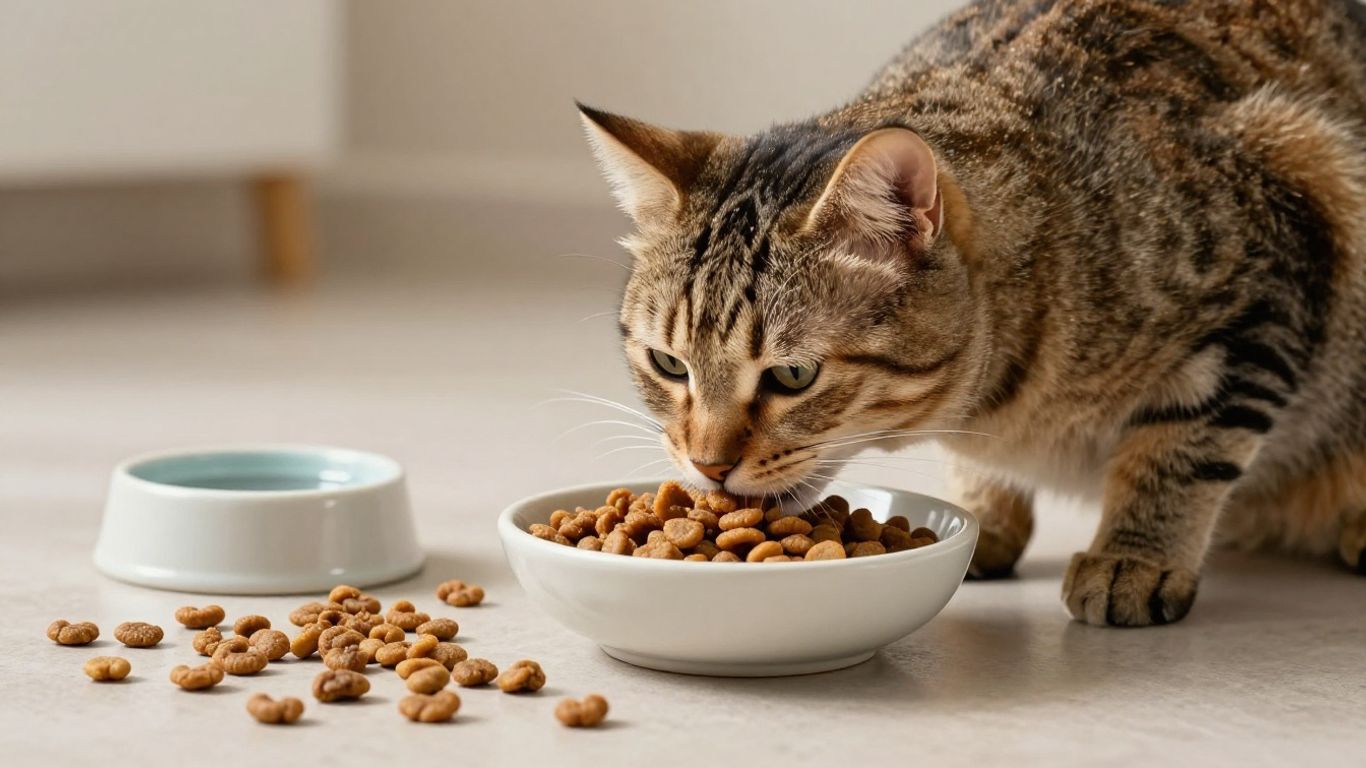
Dry cat food for convenience and portion control
Dry food is easy to store, simple to measure, and useful for households where meals need to be prepared ahead of time. Its low moisture content means fresh water should always be available. Some cats can regulate their intake, while others graze past their energy needs, so a measured daily portion is often safer than keeping the bowl full.
Use a kitchen scale or a standard measuring cup when accuracy matters. Puzzle feeders can make a measured portion more engaging and slow down fast eating; this puzzle feeder guide explains why food-based enrichment can support both movement and mental stimulation.
Wet cat food for moisture and palatability
Wet food contains substantially more water than kibble and is often appealing to cats that prefer strong aromas or soft textures. It can be especially useful for cats with low thirst drives, although the complete nutritional statement still matters. Once opened, refrigerate unused food and follow the package’s storage guidance.
Some cats prefer pâté, while others want chunks or shredded pieces. Introduce textures patiently rather than assuming refusal of one style means refusal of all wet food. A selection of wet food options can help explain how moisture and texture vary across products.
Fresh and freeze-dried options
Fresh and freeze-dried diets differ in preparation, moisture, storage, and handling. Freeze-dried food may need rehydration, and some products are intended as complete meals while others are toppers or treats. Read the directions carefully instead of judging suitability from the product format alone.
Raw or minimally processed does not automatically mean balanced or risk-free. Follow handling instructions, wash bowls and surfaces, and keep food away from other household foods. Cats with compromised health or homes with vulnerable people may need especially cautious advice from a veterinarian.
Combining different food types
A combination of wet and dry food can offer moisture, variety, and convenience, provided the total daily calories remain appropriate. The key is to combine portions rather than adding one food on top of a full serving of another. Change one part of the routine at a time so you can see how your cat responds.
A simple plan might use wet food at scheduled meals and measured dry food in a feeder, but there is no single required pattern. Consistency often helps anxious cats, and the feeding environment should be quiet, predictable, and separate from household conflict.
Learn how to read a cat food label
Packaging can make cat food seem more complicated than it is. Begin with the nutritional adequacy statement, then consider the guaranteed analysis, calories, ingredients, and feeding directions together. Marketing language can be useful context, but it should not outrank the information that explains what the food is designed to provide.
Checking the nutritional adequacy statement
Look for a statement indicating that the food is complete and balanced for a stated life stage or for all life stages. This is different from a product labeled for intermittent or supplemental feeding, which may be intended only as a topper or treat. Check that the claim matches your kitten, adult, or senior cat.
If a package is unclear, contact the manufacturer or ask your veterinarian. It is also wise to compare labels calmly rather than relying on a single “premium” or “natural” claim. Even a guide to different types of banks illustrates a useful general habit: classification helps you compare like with like.
Comparing protein, fat, and carbohydrate levels
The guaranteed analysis lists percentages, but those numbers can be misleading when foods contain different amounts of water. Dry-matter comparisons are more useful when you are evaluating protein or fat across wet and dry products. Calorie density also matters because two foods with similar percentages may provide different energy per serving.
For most healthy cats, look for adequate animal-based protein and a calorie level that supports a stable body condition. A veterinarian can help interpret targets for obesity, diabetes, kidney disease, or other conditions rather than asking you to make a medical decision from a label alone.
Understanding ingredients and byproducts
Ingredients are listed by weight before processing, so an ingredient near the top is not the whole story. Named meats, organs, grains, vegetables, fats, vitamins, and minerals can all have a role. Byproducts are not automatically poor quality; they can include nutrient-rich edible parts of an animal, depending on the formulation and standards used.
Be cautious with absolute claims such as “pure,” “detox,” or “human-grade” unless you understand exactly what they mean. For perspective, even a page about QR code types demonstrates why labels and categories need context: a category can describe format without proving usefulness.
Evaluating calories and feeding recommendations
Feeding charts are starting points, not precise prescriptions. The correct amount depends on body condition, activity, age, neuter status, and whether treats are included. Weigh food when possible, then reassess your cat’s shape and weight over several weeks.
A package that offers calories per can or cup makes portion planning easier. Divide the daily amount among the meals your cat handles best, and adjust gradually if weight is rising or falling. Treats should come from that daily calorie budget rather than sitting outside it.
Choose cat food for specific needs
Specific needs call for a narrower decision process. A kitten, overweight adult, food-sensitive cat, and cat with urinary disease should not be treated as interchangeable shoppers. Start by identifying the actual need, then select a complete food that fits it. Sometimes the most helpful step is not a new formula but a veterinary examination or a calmer feeding setup.
Food for kittens and growing cats
Growing cats need food formulated for development, with sufficient energy and appropriately balanced nutrients. Feed according to the kitten’s current size and growth pattern, not simply until the bowl is empty. Small, regular meals may suit a young kitten better than one large serving.
Keep fresh water available and introduce new textures gradually. If a kitten refuses food, has diarrhea, vomits, or fails to gain weight, seek veterinary advice promptly because young animals can become unwell quickly.
Weight-management formulas
Weight management begins with measured calories and regular monitoring. A cat can gain weight on any food when portions are too generous, including food marketed for indoor cats. A veterinarian can distinguish excess body fat from muscle loss and recommend a safe rate of weight reduction.
Use play, climbing opportunities, or food puzzles to increase activity without turning meals into a source of frustration. Never impose a crash diet; cats that eat too little can develop serious liver problems.
Diets for sensitive stomachs and food allergies
Vomiting, loose stool, itching, and ear problems can have many causes, including parasites, infection, stress, and dietary reactions. A limited-ingredient or novel-protein diet may help in some cases, but a proper elimination trial requires strict consistency. Extra treats, flavored medicines, and shared household food can undermine the result.
Change food slowly unless your veterinarian gives different instructions. If digestive upset continues, document timing, stool appearance, appetite, and environmental changes. The Pre+Probiotics product is described as a cat-only supplement with probiotics and digestive enzymes, but a supplement should not replace diagnosis or a complete diet.
Foods for urinary, kidney, and dental health
Urinary and kidney diets are not interchangeable, and both should be chosen with professional guidance. Moisture, mineral balance, urine concentration, and the cat’s diagnosed condition all matter. Dental diets may support oral care for some cats, but brushing and veterinary dental examinations remain important.
Do not add supplements to a therapeutic diet without checking first. For example, Urinary & Kidney Support is described as a supplement intended to support urinary tract and kidney health; that description does not make it a substitute for treatment, testing, or a prescribed diet.
Evaluate ingredients, quality, and safety
Quality is a combination of nutritional adequacy, manufacturing controls, honest labeling, safe handling, and suitability for the individual cat. It is not established by one ingredient or a glossy package. A sensible buyer reads the label, checks the company’s information, and watches the cat’s response over time.
Identifying high-quality animal protein sources
Named animal proteins can make a label easier to understand, but ingredient names alone do not reveal the complete nutrient profile. Look for a complete-and-balanced statement and a recipe appropriate for your cat’s life stage. Organ meats and properly defined byproducts may contribute useful nutrients rather than being automatic warning signs.
Cats need protein, but “more” is not always better for every medical situation. If your cat has kidney disease or another condition affected by nutrient intake, follow a tailored recommendation instead of choosing the highest number on the shelf.
Understanding grain-free and limited-ingredient diets
Grain-free food is not automatically lower in carbohydrates, more digestible, or necessary for a healthy cat. It may replace grains with peas, potatoes, or other carbohydrate sources. Limited-ingredient food can be useful during a supervised food trial, but fewer ingredients do not guarantee balanced nutrition.
Choose these diets for a clear reason, not because the label sounds cleaner. If your cat is thriving on a complete food that contains grains, there is generally no need to remove them without veterinary advice.
Recognizing unnecessary additives and misleading claims
Some additives preserve freshness, maintain texture, or provide essential vitamins and minerals. Others may be unnecessary for your particular cat, but the label alone cannot always tell you which is which. Claims such as “natural,” “holistic,” or “premium” deserve a second look because they may not describe nutritional adequacy.
Focus on verifiable details: life-stage suitability, calorie information, feeding directions, manufacturer contact information, and storage instructions. When shopping across a broad cat product listing, narrowing your search by your cat’s actual needs is more useful than choosing the most dramatic claim.
Checking recalls, expiration dates, and storage guidance
Check the expiration or best-by date before buying and keep the lot number until the food is finished. Store dry food in a cool, dry place, ideally in its original bag inside a clean, sealed container. Refrigerate opened wet food and discard portions that have sat out beyond the package’s guidance.
If your cat becomes ill after a food change, stop and record the product, lot number, symptoms, and timing. Look for official recall notices and contact your veterinarian when symptoms are significant or persistent. A page reviewing service terms is unrelated to nutrition, but it reinforces a broader reading habit: details that seem small can define what you are agreeing to or using.
Create a safe feeding routine
A good diet works best when the routine around it is calm and repeatable. Feed in a quiet location away from litter boxes, loud appliances, and other pets that may guard the bowl. Cats often eat less when they feel watched, threatened, or rushed, so the environment deserves as much attention as the recipe.
Determining portions and meal frequency
Use the food’s calorie information and your veterinarian’s advice to estimate a daily amount, then divide it into meals that suit your cat. Many adults do well with two or more scheduled meals, while kittens may need more frequent feeding. Measure portions instead of topping up the bowl by guesswork.
Keep treats, toppers, and supplements in the calculation. A useful routine might include:
- Measuring the full day’s food before the first meal.
- Dividing it into consistent portions and times.
- Feeding cats separately when competition causes stress.
- Recording treats so they do not quietly increase daily calories.
After a week or two, review the routine rather than changing it impulsively. Stable portions make it easier to see whether appetite, weight, or behavior is truly changing.
Transitioning to a new cat food
Most cats do better when a new food is introduced gradually over roughly a week or longer. Start with a small amount of the new food mixed into the familiar food, then increase it in stages. A slower transition is sensible for cats with sensitive digestion or strong food preferences.
If vomiting, diarrhea, or refusal appears, pause the transition and contact your veterinarian if symptoms continue. Do not let a cat go without eating simply to force acceptance of a new recipe.
Encouraging adequate water intake
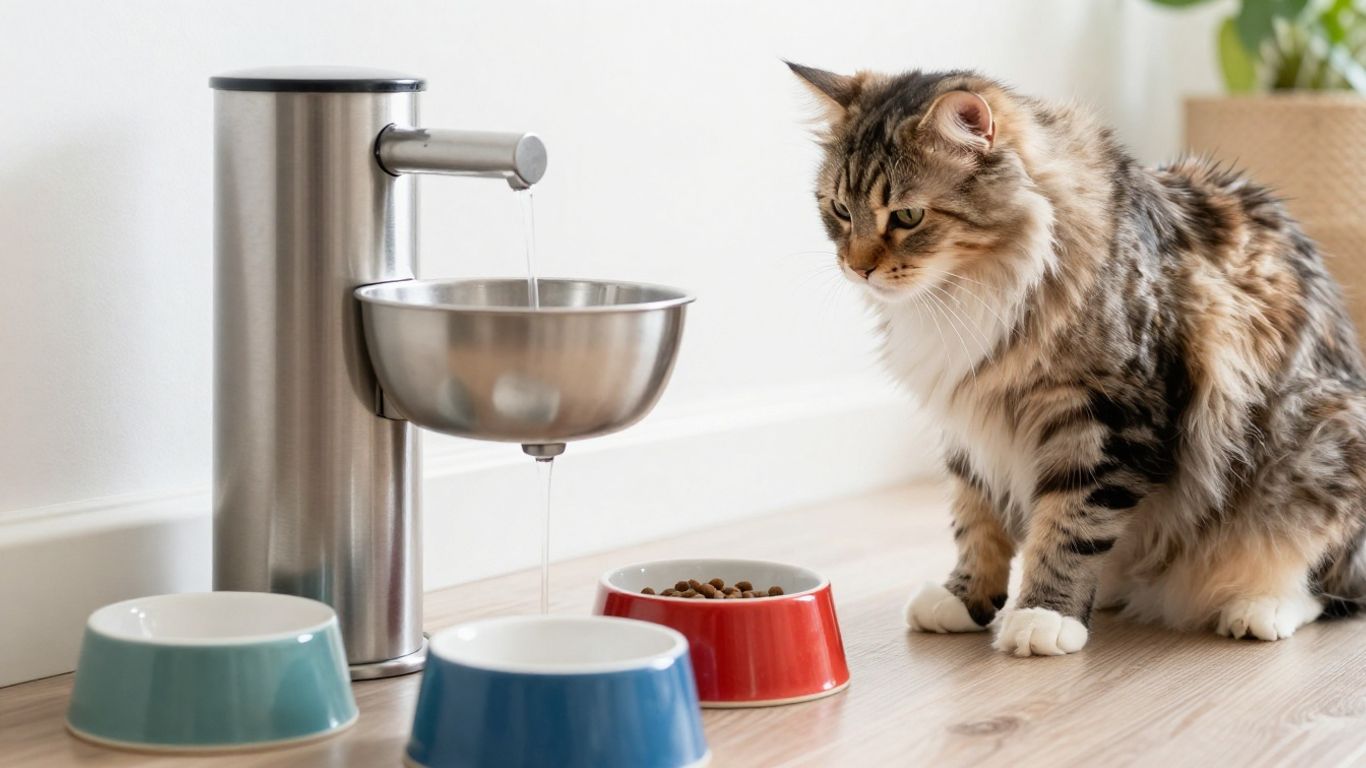
Place clean water in several quiet locations and refresh it regularly. Some cats prefer wide, shallow bowls, while others enjoy a fountain or water mixed into wet food. Keep water away from litter boxes and, if your cat prefers it, separate from the food bowl.
A sudden increase or decrease in drinking can signal a health problem. Encourage normal access, but do not attempt to manage an illness with water changes alone; discuss notable changes with your veterinarian.
Monitoring weight, appetite, and digestive changes
Track body weight, appetite, stool quality, vomiting, grooming, and energy. Small changes are easier to interpret when you know what is normal for your cat. Behavior matters too: hiding at mealtimes, guarding food, or refusing a favorite texture can point to pain, stress, or illness rather than simple fussiness.
If stress is part of the picture, keep meals predictable and reduce conflict around the feeding area. A quiet environment, separate resources, and patience can help, while persistent symptoms call for professional help rather than repeated food experiments.
Conclusion
The right cat food is the one that is complete for your cat’s life stage, fits their health needs, and can be served consistently in a calm routine. Read beyond the front label, measure portions, transition slowly, and treat changes in appetite or behavior as information. With that steady approach, feeding becomes less guesswork and more attentive care.
Frequently Asked Questions
What is the healthiest cat food?
The healthiest choice is a complete and balanced food appropriate for your cat’s life stage, health, calorie needs, and preferences. There is no single recipe that suits every cat.
Is wet or dry cat food better?
Neither format is automatically best. Wet food supplies more moisture, while dry food is convenient to measure and store; many cats can thrive on either or a carefully portioned combination.
How often should I feed my cat?
Many adult cats do well with two or more measured meals daily, while kittens usually need more frequent meals. Your cat’s age, health, and eating behavior should guide the schedule.
How do I know if a cat food is complete and balanced?
Read the nutritional adequacy statement on the package. It should identify the life stage or life stages for which the food is formulated and distinguish complete food from supplemental products.
Should cats eat grain-free food?
Most healthy cats do not need a grain-free diet simply because it is grain-free. Choose one for a specific, professionally discussed reason rather than for marketing language alone.
How quickly should I change my cat’s food?
A gradual transition over about a week or longer often reduces digestive upset and refusal. Move more slowly for a sensitive cat, and pause to seek advice if significant symptoms appear.
When should I call a veterinarian about eating changes?
Call when your cat stops eating, loses weight, vomits repeatedly, has persistent diarrhea, seems painful, or shows a sudden and sustained change in appetite or drinking. Prompt advice is especially important for kittens and cats with known illness.