


Key Takeaways
Cat fighting can be frightening, but reading the cats’ body language and acting calmly can help you protect them. Focus first on safety, then on what may have triggered the conflict.
- Tense posture, persistent pursuit, and trouble disengaging point to a real conflict more than relaxed, reciprocal play.
- Never reach between fighting cats; use a barrier to interrupt them and separate them safely.
- Check for injuries when the cats are calm, and contact a veterinarian about bites or other wounds.
- Give each cat access to separate resources and reintroduce them gradually after a fight.
- Sudden or recurring aggression deserves veterinary or qualified behavior support.
How to tell fighting from rough play
Cats can chase, wrestle, and swat during play, so movement alone doesn’t tell the whole story. Look at the cats’ bodies, listen to their sounds, and notice whether both animals have a chance to pause or leave. The overall pattern is more useful than any single hiss or pounce.
Look for relaxed versus tense body language
Play often includes loose, springy movement, brief pauses, and bodies that shift easily between chasing and being chased. In a serious conflict, cats may look stiff, crouch low, flatten their ears, puff up, or fix their gaze on one another. No one signal proves what is happening, but a cluster of tense signals should make you cautious.
A simple comparison can help you read the moment without relying on one dramatic movement:
| What you notice | More consistent with play | More concerning for conflict |
|---|---|---|
| Body posture | Loose, changing positions | Stiff, crouched, or puffed up |
| Chasing | The cats take turns | One cat persistently pursues |
| Pauses | Both cats briefly reset | One cat stays cornered or guarded |
| Contact | Brief, inhibited pawing | Forceful swatting or biting |
Treat the table as a guide, not a diagnosis. If one cat seems frightened, trapped, or unable to get away, calmly interrupt and give both cats space.
Listen for vocalizations and watch how the cats take turns
Some cats play quietly, while others make noise, so sound needs to be read alongside posture and movement. Repeated growling, yowling, or loud hissing paired with rigid bodies can signal that the interaction has become too intense. During play, cats are more likely to pause or switch roles; a one-sided chase that keeps escalating is a reason to step in safely. This guide to telling play from fighting offers another way to compare the signs.
Notice whether both cats can disengage
A cat who can turn away, pause, or leave has an option to end the interaction. If one cat follows relentlessly, blocks an exit, or keeps attacking while the other tries to hide, don’t assume they are simply playing. Make room for the less confident cat to retreat and avoid forcing the cats back together.
Why cats fight
Fighting is often a response to pressure, fear, or competition rather than a sign that a cat is simply “bad.” The trigger may be obvious, such as a new cat entering the home, or subtle, like a change in access to a favorite resting place. Understanding what happened before the fight helps you choose a safer and more lasting response.
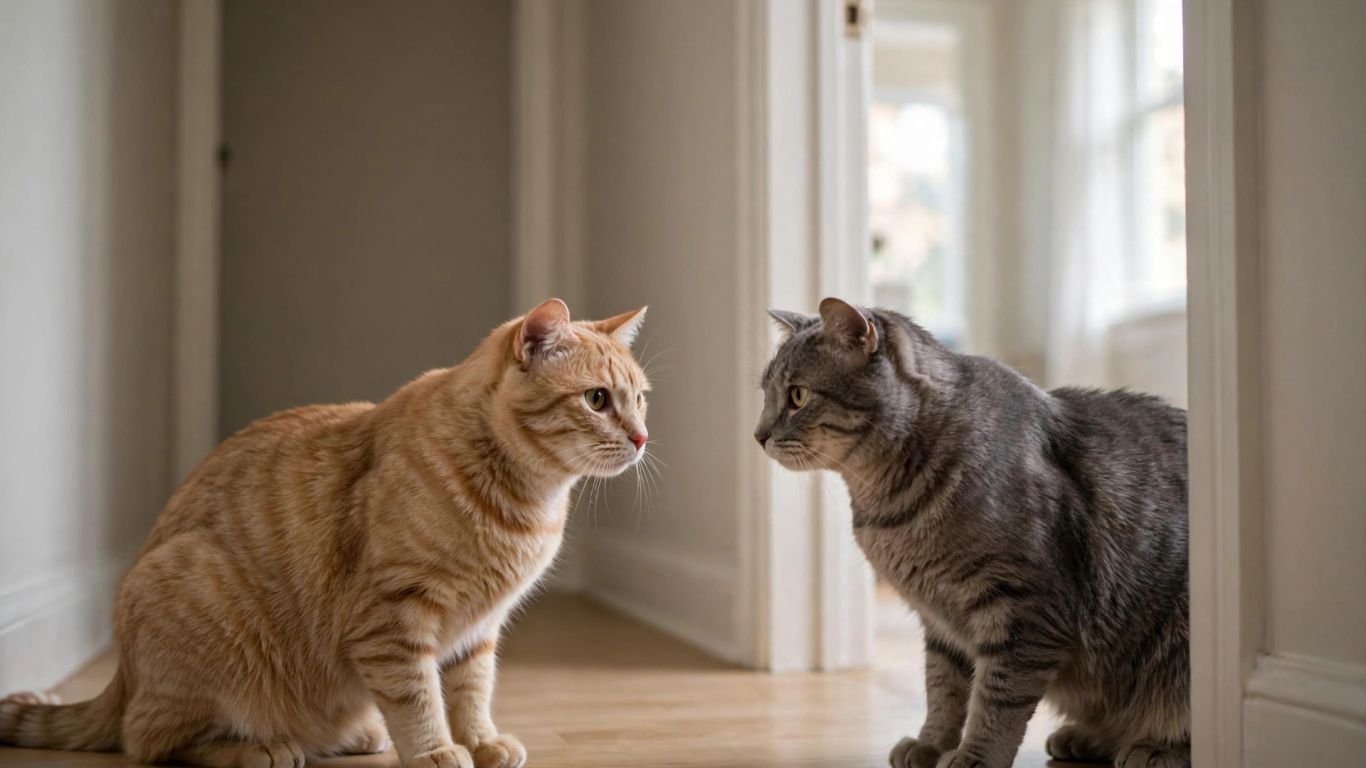
Territorial disputes and competition for resources
Cats may feel unsettled when another cat approaches a space or resource they rely on. Tension can build around food, water, litter boxes, resting spots, narrow hallways, or access to a person’s attention. Conflict can also be quiet: staring, blocking a route, or keeping another cat away from a resource may happen before a chase or fight. This overview of cat conflict signals discusses how cats communicate tension as well as overt aggression.
Fear, stress, and changes at home
A move, a new pet, unfamiliar visitors, or a change in the household routine can make some cats feel less secure. A cat may then react defensively to another cat, even one it previously tolerated. PAWSONA is a cat-only brand focused on cat stress relief and behavior solutions; its educational approach emphasizes looking for root causes of stress rather than treating a cat as misbehaving. During a move, even the practical load of a direct home sale can make routines harder to maintain, so try to preserve the cats’ familiar feeding and resting patterns.
Redirected aggression and unfamiliar cats outdoors
Sometimes a cat becomes aroused by something it cannot reach, such as an unfamiliar cat seen through a window, and lashes out at a nearby housemate instead. The cats may not have been in conflict before, which can make the episode feel sudden. If you suspect an outdoor cat is a trigger, block the view where possible and watch for repeat patterns around windows or doors. A cat-fight safety guide can help you think through safe separation and what to do next.
How to stop a cat fight safely
When cats are actively fighting, your first job is to prevent injury—not to decide which cat started it. Keep your hands and face well away from their claws and teeth. Use a calm, practical approach: interrupt from a distance, separate them, and let their arousal settle before considering any contact again.
Avoid reaching between fighting cats
Do not grab a cat, pick one up, or put your hands between the animals during a fight. A frightened or highly aroused cat may bite or scratch whoever is closest, including a familiar person. Keep children and other pets away, and give yourself room to move safely. If you can’t intervene without getting close, wait for a safer opportunity and get help from another adult if available.
Interrupt the conflict with a barrier or sudden noise
A large piece of cardboard, a cushion, or another sturdy object can help block the cats’ line of sight and create space between them. A brief noise from a distance may also interrupt the moment, but avoid shouting or chasing the cats, which can add to the commotion. Choose the least frightening option that lets you guide them apart without touching them.
Separate the cats and give them time to calm down
Once they have stopped, move each cat into a separate, secure room with water, a litter box, and somewhere to rest. Don’t open the doors again just because the room has gone quiet; each cat needs time to settle. A gradual reset is safer than expecting them to work it out on their own. If a fight followed an introduction, use a paced new-cat introduction plan rather than placing the cats together again right away.
What to do after a fight
After the immediate danger has passed, take the time to check each cat and reduce the chance of another encounter. Cats may hide discomfort, and tiny punctures can be hard to see beneath fur. Keep the environment quiet and make decisions based on each cat’s condition, not on pressure to reunite them quickly.

Check for wounds without forcing contact
Wait until a cat is calm enough to approach safely, then look gently for bleeding, swelling, tenderness, limping, or a change in how it moves. Don’t restrain or handle a frightened cat if doing so could provoke another bite or scratch. If you can’t inspect safely, or you notice anything concerning, call your veterinarian for advice rather than continuing to probe the area.
Contact a veterinarian about bites or other injuries
Contact a veterinarian if you find a bite, puncture, bleeding wound, swelling, or other injury. A small mark can still need attention, and a veterinarian can advise you on what examination or treatment is appropriate. For more detail on why bites may be difficult to spot, read about hidden fight wounds, but use your veterinarian—not an online article—to guide care for an injured cat.
Keep the cats apart while monitoring their behavior
Continue separate spaces until both cats appear settled and you can manage a calm, gradual reintroduction. Watch for hiding, reluctance to eat, unusual guarding, or renewed fixation on the other cat. Keep notes on what you observe and when it happens; a clear record can help your veterinarian or behavior professional understand the pattern.
How to prevent fights between household cats
Prevention is mostly about making daily life feel less competitive and more predictable. Cats need ways to get to essential resources without having to pass or confront one another. Small changes can help, especially when they address the trigger you observed rather than simply trying to suppress a noisy moment.
Provide separate food, water, litter boxes, and resting spots
Place resources in more than one location so one cat cannot easily guard everything. Separate feeding areas and resting places can be especially helpful if a cat is being blocked or watched. Aim for a layout that gives each cat a clear route away, rather than putting every important item in one busy corner. These steps are practical, but adjust them to your home and your cats’ behavior.
Reintroduce cats gradually after a conflict
After a serious fight, start with separate spaces and let the cats settle before arranging any visual contact. Then move forward in small steps, watching whether both cats can stay relaxed. If tension returns, increase distance and slow the process down rather than pushing through. A gradual sequence can look like this:
- Keep the cats in separate areas while they calm down.
- Swap familiar bedding or other scents without making the cats meet.
- Allow brief visual contact through a secure barrier when both seem settled.
- Arrange short, supervised time together and end it before tension rises.
The pace should be set by the cats’ comfort, not by a fixed calendar. Returning to an earlier step is useful information, not a failure.
Reduce stress with predictable routines and enrichment
Regular feeding and play, quiet hiding places, and safe elevated spots can give cats more control over their surroundings. PAWSONA offers calming products as part of its broader cat stress and behavior focus; these are not a substitute for separating cats during a fight or addressing the cause of recurring conflict. A household’s human tasks can shift during stressful periods too: ordering Cambridge meal boxes or updating WordPress pages may be on the family’s list, but try to keep the cats’ own routine steady. For more ideas, see this multi-cat stress guidance.
When to seek professional help
Some conflict settles as the environment changes, but repeated fights or a sudden shift in behavior deserve closer attention. A veterinarian can help assess whether a health issue may be involved, while a qualified behavior professional can help you identify triggers and plan safer interactions. Seek help early if one cat is routinely frightened, injured, or unable to reach basic resources.
Ask a veterinarian about sudden changes in aggression
If a cat that was previously comfortable with its housemate suddenly becomes aggressive, arrange a veterinary conversation, especially if you notice other changes in appetite, movement, or daily habits. A sudden behavior change can have more than one explanation, and a veterinarian can help assess the cat’s health. Avoid assuming that the conflict is purely a training issue before considering a medical check.
Work with a qualified behavior professional for recurring fights
When fights keep happening despite separation and environmental adjustments, a qualified cat behavior professional can help you build a plan around the cats’ specific triggers and responses. Look for someone who prioritizes safe management and gradual steps rather than forcing contact. PAWSONA’s educational content is grounded in understanding stress and behavior, but recurring aggression may call for individualized veterinary and behavior support.
Make a safety plan if one cat is at risk of injury
If one cat is repeatedly cornered or hurt, keep the cats separated while you arrange professional guidance. Plan how you will move between rooms, where each cat can retreat, and how food, water, and litter access will remain available. If your own schedule includes appointments such as pain management care, arrange another responsible person to help maintain the cats’ separation and routine while you are away.
Conclusion
Cat fighting is frightening, but a careful response can reduce immediate risk and reveal what needs to change. Separate cats safely, check for injuries, and give them time before attempting a gradual reunion. With secure resources, predictable routines, and professional help when needed, many households can make daily life calmer for both cats.
Frequently Asked Questions
How can I tell whether my cats are fighting or playing?
Look for the whole pattern: relaxed, reciprocal movement and pauses are more consistent with play, while stiff posture, persistent pursuit, and one cat being unable to leave are more concerning for conflict.
Should I use my hands to separate fighting cats?
No. Keep your hands and face away from the cats, and use a barrier or another safe interruption from a distance before separating them into different rooms.
How long should I keep cats separated after a fight?
There is no fixed timeline. Keep them apart until both are calm, then reintroduce them gradually and slow down if either cat shows signs of stress.
Can cats that have fought live together peacefully again?
Some cats can share a home more comfortably after the trigger is addressed and they are reintroduced at a pace they can manage. Repeated conflict may require veterinary or qualified behavior support.
What should I do if I find a bite wound?
Contact a veterinarian for guidance. Bite marks can be difficult to see, and a professional can advise you on whether the cat needs an examination or treatment.
Why did my cats suddenly start fighting?
A change in health, stress, household routine, access to resources, or an unfamiliar cat outside may contribute. Note what happened before the conflict and discuss sudden changes with your veterinarian.
Should I let my cats fight it out?
No. Allowing a conflict to continue can put either cat at risk and may make future interactions harder. Separate them safely and address the cause before arranging contact again.