


Key Takeaways
A pheromone diffuser may be one part of a thoughtful plan to help a cat feel more settled. Choose it for the situation at hand, follow the label, and keep an eye on your cat’s health and behavior.
- Pheromone diffusers release synthetic signals intended to mimic some feline pheromones.
- They may help with stress-related behaviors, but results vary and they do not address every cause.
- Match the product’s stated use, coverage, and refill schedule to your home.
- Pair diffuser use with steady routines, safe spaces, and other practical environmental changes.
- Seek veterinary advice for sudden, persistent, or concerning behavior changes.
How pheromone diffusers work
Cats communicate in ways people cannot see or hear, and chemical signals are one part of that communication. A diffuser releases a synthetic version of selected feline pheromones into the surrounding area. It may be a useful support for some cats, but it is not a sedative and should not be expected to change every behavior.
What feline pheromones are
Pheromones are chemical signals that animals release and other members of the same species can detect. Cats use them in social and environmental communication, including when they rub their faces against familiar objects. To learn more about feline pheromone signals, it helps to think of them as one small part of how a cat reads its surroundings, rather than as a general-purpose calming switch.
How a diffuser releases synthetic pheromones
A plug-in diffuser warms its contents so that the product can disperse into the room over time. The synthetic pheromone is intended to imitate a feline signal; it does not remove the source of stress or make a cat feel sleepy. Follow the product’s instructions for where to place it and how often to replace its refill, since details vary by product.
What behaviors it may help address
Depending on the product, a diffuser may be intended to support cats showing signs associated with stress, such as hiding, scratching, urine marking, or tension with other cats. These behaviors can have different causes, so the setting matters: marking after a household change is not the same as a sudden change in urination that might have a medical cause. A diffuser is best viewed as one supportive measure, not a diagnosis or a substitute for understanding what has changed for the cat.
What to expect from the evidence
Research on pheromone products offers useful clues, but it does not mean every cat will respond or that a product will resolve every behavior. For example, a randomized pilot study examined aggression and social tension among housemate cats; a pilot study can inform questions, but it is not a guarantee for an individual household. Evidence is topic-specific: material about CBD content writing, Elare, metal and wood railings, Karma Hill Photography, or Maui destination weddings does not establish whether a cat diffuser is effective. Use the product label and veterinary guidance alongside realistic observation, and for a broader overview, see this diffuser selection guide.
When a pheromone diffuser may help
A diffuser may be worth considering when a cat is adjusting to a change or showing behaviors that could be related to stress. The aim is to make the home feel more familiar and predictable, not to suppress a cat’s communication. Consider what happened before the behavior began, and keep other explanations in mind.
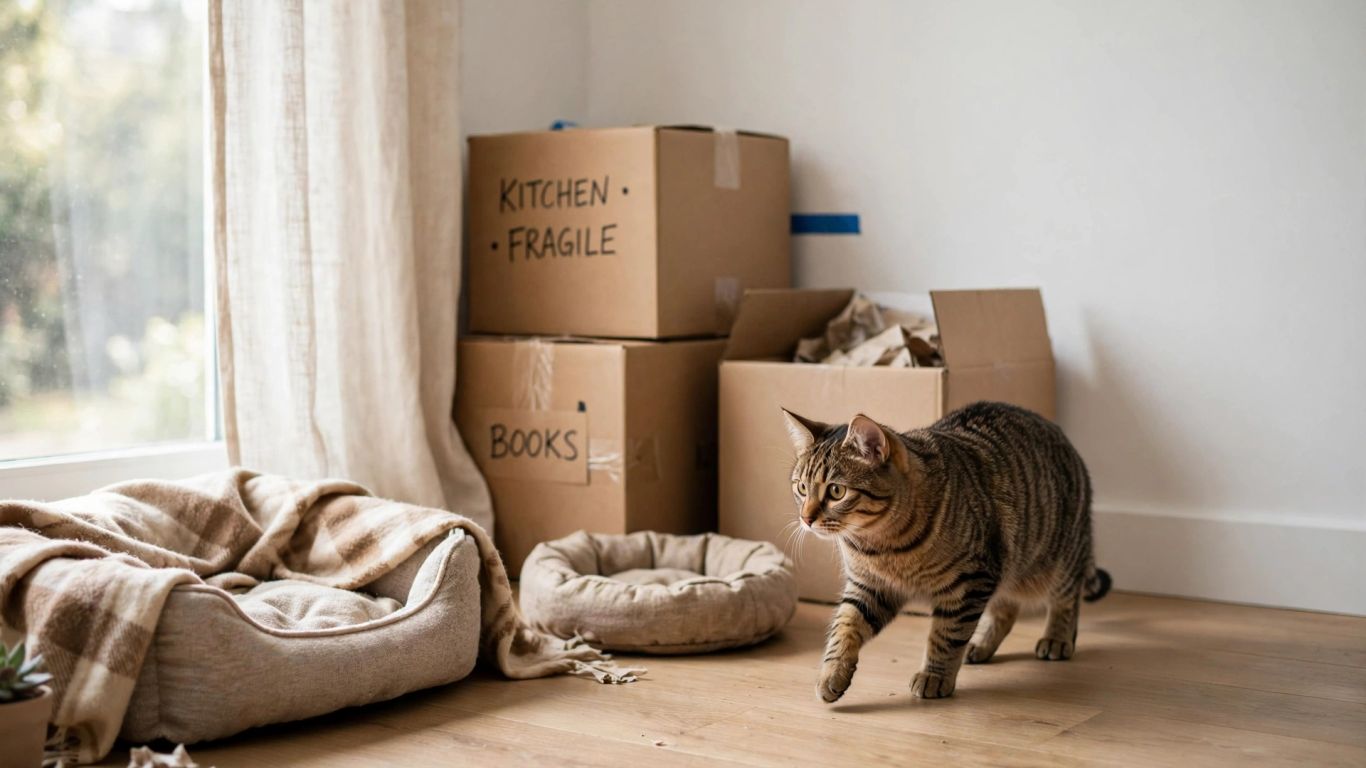
Stress related to moving or home changes
Moving, new furniture, visitors, or a change in household routine can make a familiar space feel unfamiliar to a cat. If you use a diffuser during a transition, give your cat a quiet room with familiar bedding, food, water, and litter while they explore at their own pace. A gradual introduction to new spaces and steady routines can matter just as much as the diffuser.
Tension between cats in a household
When cats are uneasy around one another, look for patterns rather than waiting for a serious fight. Staring, blocking access to resources, chasing, or avoiding shared areas may point to tension. Provide separate food and water stations, resting spots, and litter access, and make sure each cat can move away without being cornered. A diffuser may be considered as one part of this broader plan.
Common signs of stress, such as hiding or urine marking
Hiding, scratching, or urine marking can be frustrating to live with, but they are not spiteful acts. Before trying a product, note what the behavior looks like and when it happens; that context can help you decide what support is relevant. A short record is often more useful than relying on memory alone. For example, note:
- When and where the behavior happens.
- Any recent changes in the home or routine.
- Which cats, people, or events are nearby.
- Whether eating, drinking, litter use, or activity has changed.
Reviewing these details may reveal a pattern, and it gives you clearer information to share with a veterinarian if the behavior continues.
Situations that call for veterinary advice
A sudden change in litter box habits, appetite, activity, or sociability deserves attention, especially if it persists or comes with signs of illness. Urinary problems can require prompt veterinary care; do not assume that peeing outside the box is only stress. A veterinarian can help check for medical causes and suggest behavior support if needed.
How to choose a diffuser
Start with the behavior and setting you want to address, then compare what each product actually says it is designed to do. Check its instructions, room coverage, and refill schedule rather than relying on broad claims about calm. The right choice is one that fits your cat’s situation and that you can use as directed.
Match the product to the behavior you want to address
Products can differ in the signals they use and the situations they are intended to support, so read the label carefully. For instance, the Zenkit™ Cat Diffuser is described as helping ease stress and fear, reduce spraying and scratching, and support harmony in multi-cat households. Those are product claims, not a promise of a particular result for every cat; consider whether the stated use matches what you are seeing at home.
Compare coverage area and refill options
Coverage and refill timing affect where a diffuser can be used and what ongoing use may involve. Compare those details before buying, especially if you are deciding between one room and a larger shared space. The table below illustrates the information to check; the exact figures should come from the specific product’s label.
| Detail to compare | What to check | Why it matters |
|---|---|---|
| Coverage area | The area stated on the label | Helps you judge whether the intended room fits |
| Refill duration | How long a refill is designed to last | Helps you plan replacement timing |
| Refill availability | Whether refills are sold separately | Affects ongoing use and convenience |
| Placement directions | Any limits on location or outlet | Helps you set it up as instructed |
Treat coverage and duration as product-specific details, not universal standards. If a room is outside the stated coverage, do not assume that the diffuser will work equally well throughout it.
Check ingredients and product instructions
Read the product information to confirm that the diffuser is intended for cats and to understand its contents and use. Follow any stated limits, including instructions about ventilation, placement, or other products used nearby. If your cat has a medical condition or you are unsure whether a product is suitable, ask a veterinarian before using it.
Consider cost over time
The initial kit is only part of the cost if the product calls for regular refills. Work out the likely ongoing expense using the refill schedule on the label, and compare that with what you can realistically sustain. A product that is used consistently as directed is a more practical choice than one you cannot maintain.
How to set up a pheromone diffuser
A diffuser works in the space where it is plugged in, so placement and steady use matter. Read the package instructions before plugging it in, and choose a location that is safe and open rather than tucked behind furniture. Keep the cat’s other needs—quiet, access to resources, and a way to retreat—at the center of the setup.
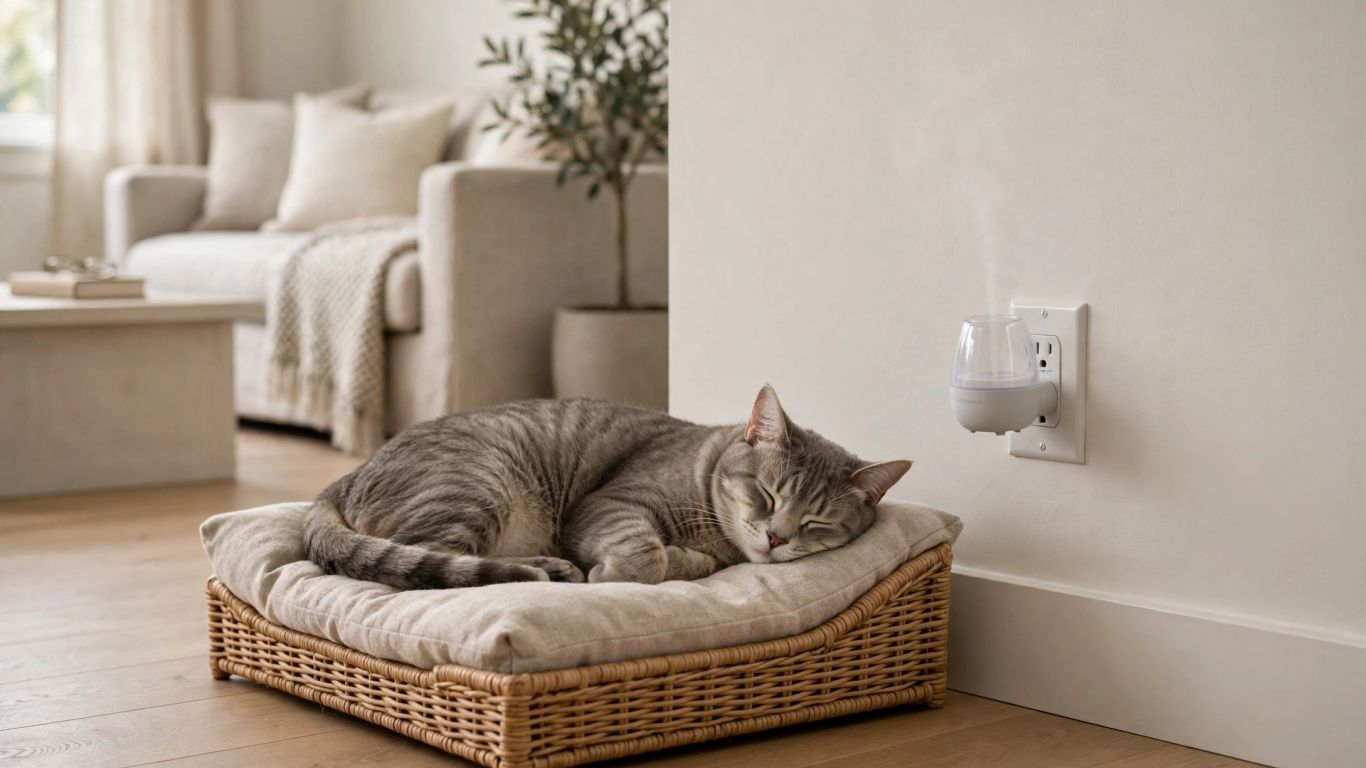
Choose a suitable outlet and location
Choose an outlet in the room where your cat spends time or where the stressful situation is most relevant, while following the product’s specific placement directions. An outlet near the cat’s usual resting area may be practical, provided the diffuser remains clear of furnishings and hazards. Avoid placing it where a cat might knock it, chew it, or be unable to move away from the area.
Keep the diffuser unobstructed
Furniture, curtains, and shelves can restrict the space around a diffuser, so leave the area clear as directed on the label. Do not hide it behind a sofa or place it where airflow is blocked. The PAWSONA® Zenkit™ Cat Calming Diffuser is described as covering up to 700 sq ft with a 30-day refill; check the package directions and the layout of your room rather than assuming that one placement suits every home.
Follow refill and replacement directions
Use the refill and replacement schedule provided for the product you chose. Do not refill a unit with a different liquid or improvise with essential oils; use only the specified components. If the device appears damaged, unusually hot, or is not working as described, unplug it if safe to do so and follow the manufacturer’s guidance.
Use it consistently during stressful changes
When a stressful change is predictable, begin using the diffuser according to its directions and keep the setup steady through the transition. Avoid moving it repeatedly unless the instructions or a practical safety concern call for it. Pair consistent use with familiar bedding, a quiet retreat, and a routine your cat can rely on.
How to assess whether it is helping
It can be hard to tell whether a cat is improving if you only notice the difficult moments. Decide in advance which behaviors you are watching and record them in a simple, consistent way. Look for a pattern over the product’s recommended trial period, while remembering that changes in routine or health can also affect behavior.
Note your cat’s behavior before starting
Before plugging in a diffuser, jot down what you see: how often your cat hides, where marking occurs, or how often conflict happens. Include relevant changes in appetite, litter box habits, and daily activity. This baseline helps you judge whether anything has shifted and gives your veterinarian a clearer account if you need advice.
Track changes over the recommended trial period
Use the product for the period its instructions recommend, and keep notes at a steady pace rather than checking constantly for immediate results. Focus on whether the frequency or intensity of the behavior changes, and whether your cat seems more comfortable in the spaces involved. Results are individual; improvement may be gradual, limited, or absent.
Adjust the environment alongside diffuser use
A diffuser cannot make an unsafe or uncomfortable situation feel right by itself. Continue to address what may be stressing your cat: reduce competition for resources, preserve hiding places, and introduce changes slowly. These everyday steps can help you understand whether the environment is improving, rather than attributing every change to the product.
Know when to try another approach
If there is no meaningful improvement after the recommended trial, or behavior worsens, revisit the likely cause rather than simply adding more products. Ask a veterinarian about persistent signs, and consider whether the home setup, routine, or interactions between pets need a different plan. For the PAWSONA® Zenkit™ Cat Calming Diffuser, follow the stated product directions and seek veterinary advice when the behavior itself raises concern.
Safety and limitations to keep in mind
A pheromone diffuser is a support product, not a treatment for every medical or behavioral problem. Use it carefully and keep the cat’s individual health and living conditions in view. If you have doubts about safety or the cause of a behavior, a veterinarian is the right person to guide next steps.
Use products made specifically for cats
Choose a product labeled for cats and follow its directions; do not assume that a diffuser made for another animal or for general home fragrance is suitable. Keep the packaging so you can check ingredients and instructions, and contact a veterinarian if your cat has a health condition or reacts unexpectedly.
Keep diffusers away from water and heat
Use the diffuser only as directed and keep it away from water, sources of heat, and places where it could be covered or knocked over. Follow any clearance requirements in the instructions. Unplug the device before handling or replacing a refill if the label directs you to do so.
Don’t use a diffuser as a substitute for medical care
Changes in urination, appetite, grooming, movement, or social behavior can have medical as well as environmental causes. A diffuser cannot diagnose or treat those conditions, and using one should not delay an examination. If your cat seems unwell or the change is sudden, contact a veterinarian.
Ask a veterinarian about persistent or sudden behavior changes
Get professional advice when a behavior is new, continues despite reasonable environmental support, or is accompanied by signs of pain or illness. Share your notes about timing and context, and mention any products you have used. That gives the veterinarian useful information for deciding whether the next step is medical care, behavior support, or both.
Conclusion
A pheromone diffuser may support some cats during stressful changes, but it works best as one piece of a wider plan: understand the behavior, make the environment easier to navigate, use the product exactly as directed, and seek veterinary advice when changes are sudden or persistent.
Frequently Asked Questions
How long does a pheromone diffuser take to work?
Timing varies by cat and product. Follow the label’s recommended trial period and track behavior over time rather than expecting an immediate change.
Can a pheromone diffuser stop a cat from spraying?
It may help support some cats when spraying is associated with stress, but spraying can also have medical or environmental causes. A veterinarian can help identify what is contributing to it.
Should I use a diffuser in every room?
Not necessarily. Check the product’s stated coverage and placement instructions, then consider where your cat spends time and where the relevant behavior occurs.
Is a pheromone diffuser safe for kittens?
Suitability depends on the specific product and its instructions. Check the label and ask a veterinarian if you are unsure, especially for a very young kitten or one with health concerns.
Can I use a diffuser in a home with several cats?
You can consider one if its label describes use in a multi-cat setting, but also provide separate resources and safe resting places. A diffuser does not replace careful management of cat-to-cat tension.
Can a diffuser help with a new home or a new pet?
It may be one part of a gradual adjustment plan. Give your cat a secure base area, introduce new spaces or pets slowly, and keep routines as predictable as you can.
When should I contact a veterinarian instead of trying a diffuser?
Seek veterinary advice for sudden or persistent behavior changes, signs of illness or pain, or changes in urination or appetite. A diffuser should never delay medical care.