


Key Takeaways
A supplement may be one part of a broader plan, but it should not take the place of identifying what is troubling your cat or checking for illness. Choose carefully, seek veterinary advice, and observe your cat over time.
- Look for changes in behavior and consider what has changed at home.
- Treat supplements as possible support, not a substitute for addressing stressors or health concerns.
- Check ingredients, amounts, directions, seller details, and expiry dates before buying.
- Ask your veterinarian about suitability and possible interactions, especially if your cat has health concerns or takes medicine.
- Introduce one change at a time and keep a simple record of your cat’s response.
Understand what may be causing your cat’s stress
A cat’s behavior can change when its surroundings, routine, or health changes. A supplement may be worth discussing, but it is more useful when you have a sense of what is driving the stress in the first place. Notice what is different, when the behavior began, and whether it happens in a particular situation.
Look for changes in behavior and routine
Stress does not look the same in every cat. You might notice more hiding, unusual vocalizing, reduced appetite, over-grooming, or a change in litter box habits. These signs can have more than one cause, so note when they started and how often they occur rather than assuming they are simply anxiety. A guide to recognizing anxious-cat signs can help you think through common behavior changes, while a broader cat behavior products guide places calming aids alongside enrichment and veterinary care.
Consider environmental triggers at home
Cats often respond to small disruptions that people barely register: a new pet, visitors, construction noise, a moved resource, or a change in household schedule. Try to connect the behavior to a specific event or setting. A short list can make patterns easier to spot, especially when several changes have happened close together.
- Note new people, pets, or changes in who is at home.
- Check whether food, water, litter, and resting places have moved.
- Listen for recurring noises or note busy times of day.
- Watch for tension around shared spaces in a multi-cat home.
Once you have a few observations, you can try to reduce the likely trigger or offer a quieter retreat. Predictable routines and accessible resources may help your cat feel more settled, though persistent behavior changes deserve more than a home adjustment alone.
Know when stress may signal a health problem
A sudden change in appetite, litter box use, activity, or social behavior can be a sign of illness or pain as well as stress. Contact a veterinarian if a change is abrupt, severe, persistent, or accompanied by other concerning symptoms. Avoid using a supplement to delay an examination; understanding the cause is the first step toward choosing appropriate support.
Explore common types of calming supplements
Calming products use different ingredients and formats, and the word “calming” does not tell you exactly how a formula works. Evidence and suitability can vary, so read the label rather than relying on broad category names. The aim is to understand what is in the product and what kind of support the manufacturer claims it provides.
Learn about L-theanine and other amino acids
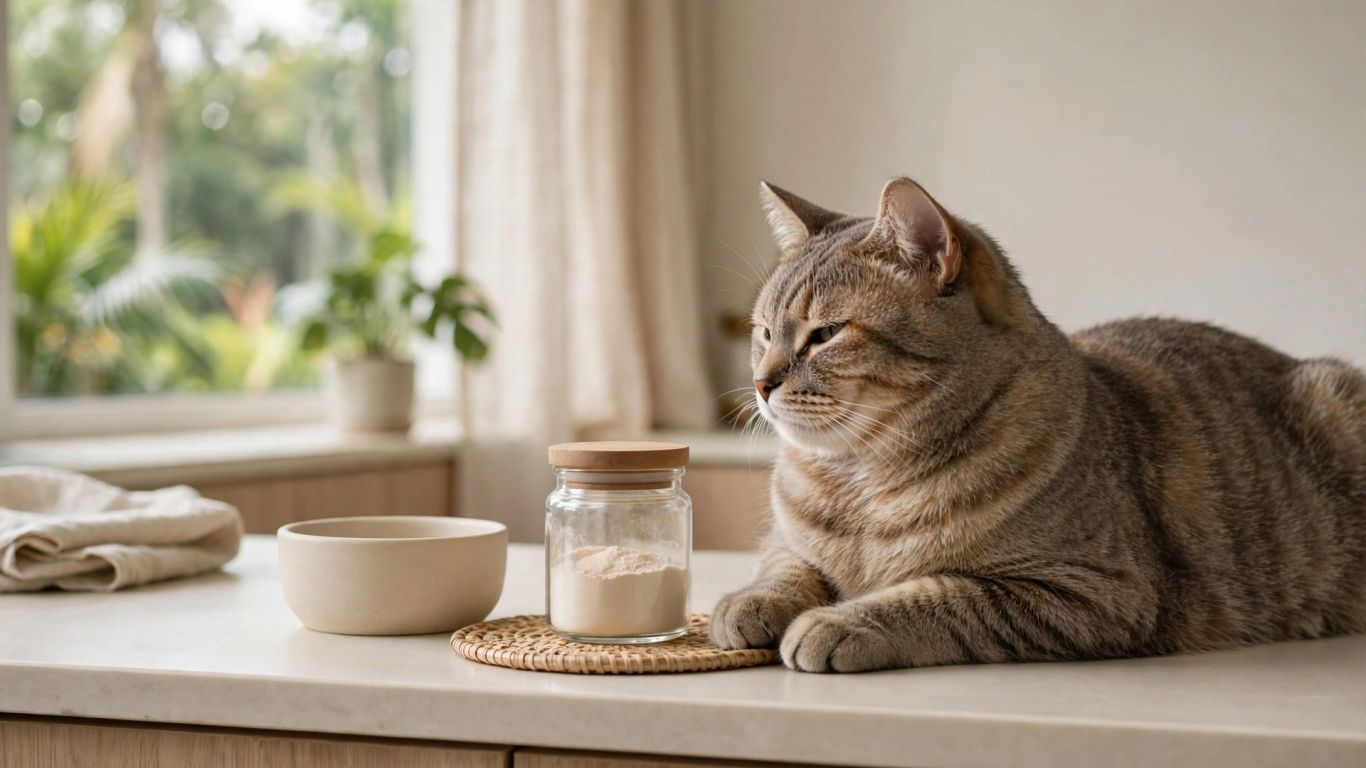
L-theanine is an amino acid found in some calming products for pets. Other formulas may include different amino acids or nutrients, but ingredients should not be treated as interchangeable just because they appear in products with similar marketing. Check the amount per serving and ask your veterinarian whether the ingredient and dose make sense for your cat.
Compare milk-protein derivatives and herbal ingredients
Some products use milk-protein derivatives, while others include herbs or combine several ingredients. The label should identify what is included; vague terms such as “natural calming blend” do not tell you enough to assess a formula. This table is a starting point for questions to ask, not a claim that one ingredient type is best.
| Ingredient category | What to check on the label | Useful question |
|---|---|---|
| Amino acids | Ingredient name and amount per serving | Is the stated amount appropriate for my cat? |
| Milk-protein derivatives | Exact ingredient and feeding directions | Is this suitable for my cat’s diet and health? |
| Herbal ingredients | Plant names and amounts, if listed | Are any ingredients unsuitable alongside current care? |
| Combination formulas | Full ingredient list and serving size | Can each active ingredient be identified clearly? |
A clearly described ingredient list makes a product easier to discuss with a veterinarian. If the label does not let you identify the formula or serving, set it aside until you can get a clearer answer.
Understand probiotics and products marketed for stress
Some products marketed for stress contain probiotics or are described as supporting the gut-brain connection. Marketing language alone does not establish that a particular product will ease a particular cat’s behavior. Check which organisms and amounts are listed, and ask a veterinarian whether the product is relevant to your cat’s needs. PAWSONA offers nutritional supplements among its cat stress-relief solutions, but the label for any product should guide questions about its ingredients and use.
Evaluate ingredients and product claims
A product description can sound reassuring without giving you enough detail to make a careful choice. Look for a complete label, an identifiable manufacturer, clear directions, and claims that stay within the evidence available. The goal is not to find the boldest promise; it is to choose something you can assess and discuss with your veterinarian.
Check the active ingredients and amounts
Read the full ingredient list, serving size, and directions, including any warnings. If amounts are given only for a blend rather than for each active ingredient, it may be difficult to know how much of each component your cat receives. Keep a photo of the label or the package information so your veterinarian can review the exact product.
Look for evidence behind calming claims
A claim should be specific enough to understand and should not promise to resolve every behavior problem. Ask whether the product information explains which ingredients are included, how it is intended to be used, and what limits apply. Good consumer guidance depends on matching advice to the question: the details in sensitive-ear metals, road-trip neck comfort, business funding partners, English learning software, and wellness-center choices address different needs, just as a cat supplement label should be judged on its own terms.
Be cautious with essential oils and unclear formulas
Cats can be sensitive to substances that seem harmless to people, and concentrated essential oils may pose risks. Do not assume that “natural” means safe to ingest, apply, or diffuse around a cat. If ingredients are incomplete, directions are vague, or the product is not clearly made for cats, ask a veterinarian before use rather than guessing.
Choose a supplement available in Malaysia
Availability is only one part of choosing a product in Malaysia. A clear label and dependable seller matter more than a convenient listing or an appealing claim. PAWSONA is a cat-only brand that offers nutritional supplements among its cat stress and behavior solutions; whichever product you consider, confirm that its information fits your cat and can be reviewed by your veterinarian.

Check the label, manufacturer, and seller
Look for the product name, full ingredients, feeding directions, manufacturer details, batch information, and contact information. If buying online, check that the seller provides clear package images and answers basic questions about storage, expiry, and authenticity. A product listing that omits essential label details is a reason to pause, not a reason to fill in the gaps yourself.
Compare formats such as powders, chews, and liquids
Format can affect whether a supplement fits your cat’s routine, but it does not tell you whether the formula is suitable. Powders may be mixed with food, chews can be offered directly if accepted, and liquids may have their own measuring directions. Consider how your cat normally eats and whether the product can be given consistently without changing the serving instructions.
Review storage needs and product expiry dates
Check the expiry date before purchase and again when opening the package. Some products may need to be kept away from heat, moisture, or direct light, so follow the printed storage directions rather than relying on a general rule. In Malaysia’s warm, humid conditions, careful storage is especially practical; discard products that have expired or changed noticeably in appearance or smell.
Check safety with your veterinarian
A supplement can still have risks, even when it is sold for pets and follows the label. Your veterinarian can help weigh the product against your cat’s age, health, diet, and current treatment. Bring the package or a clear photo of its ingredients and directions so the discussion is specific.
Consider your cat’s age and health conditions
Kittens, senior cats, pregnant or nursing cats, and cats with ongoing health conditions may need extra care when starting a supplement. Changes in appetite, digestion, mobility, or behavior can also affect which options are appropriate. PAWSONA’s nutritional supplements are part of its cat-focused stress-relief offerings, but a product category alone does not determine whether a particular formula suits an individual cat.
Review possible interactions with medicines
Tell your veterinarian about all medicines and supplements your cat receives, including products bought without a prescription. Ingredients can overlap, and a new product may complicate efforts to understand an unwanted effect or a change in symptoms. Ask whether to introduce the supplement, adjust the timing, or avoid combining it with anything your cat already takes.
Ask when a supplement is not appropriate
Ask directly whether the behavior should be assessed before trying a supplement, and what signs would mean you should stop. If your cat is unwell, not eating, having trouble urinating, or showing a sudden severe behavior change, prioritize veterinary advice. A supplement should not replace diagnosis or delay urgent care.
Introduce a supplement and track your cat’s response
A careful trial gives you a better chance of noticing whether anything changes. Keep other parts of your cat’s routine as steady as possible, and avoid starting multiple new products at once. PAWSONA offers nutritional supplements as one part of its broader cat stress-relief solutions, but any decision to use one should be guided by its own label and your veterinarian’s advice.
Follow the label and your veterinarian’s advice
Use the directions for the specific product and confirm the serving with your veterinarian if anything is unclear. Do not assume that a larger amount will work better or that a product for another animal is appropriate for a cat. Keep the package available throughout the trial so you can refer back to the instructions.
Start gradually and watch for unwanted effects
If your veterinarian agrees that a product is appropriate, introduce it as advised and monitor your cat closely. Watch for changes in appetite, stool, energy, skin, or behavior, and contact your veterinarian if you notice a concerning reaction. One change at a time makes it easier to tell what may be helping or causing a problem.
Record behavior changes and reassess the plan
Make brief notes about the behavior you hope to address, when it occurs, and how often you see it. Record the start date, serving, and any changes in the home, then review the notes with your veterinarian after the agreed trial period. If the behavior is unchanged or worsening, reassess the trigger and care plan instead of continuing automatically.
Conclusion
Choosing a supplement for a stressed cat starts with understanding the behavior, checking the product carefully, and making sure it is appropriate for that individual animal. In Malaysia, compare labels and sellers with the same care you would use anywhere, and involve your veterinarian when health, medicines, or persistent behavior changes are part of the picture. A calm routine and a thoughtful response to your cat’s needs remain central, whether or not a supplement is part of the plan.
Frequently Asked Questions
Can supplements help a stressed cat?
Some products are marketed to support calm behavior, but they are not guaranteed to help every cat or address every cause of stress. The right choice depends on the ingredients, the cat, and the situation.
How can I tell if my cat is stressed?
Possible signs include hiding more, changes in appetite or grooming, unusual vocalizing, and litter box changes. These behaviors can also signal illness or pain, so consider veterinary advice when they are sudden, persistent, or severe.
Should I try a supplement before changing my cat’s environment?
First look for likely stressors and practical changes, such as a quiet retreat, predictable routines, and accessible resources. A supplement should not take the place of addressing environmental needs.
How long does it take for a calming supplement to work?
Timing can depend on the product and the individual cat, and there is no single timeline that applies to all formulas. Follow the label and ask your veterinarian when to assess the trial.
Are natural calming ingredients always safe for cats?
No. Natural ingredients can still be unsuitable or harmful, and cats may be sensitive to some substances, including certain essential oils. Check the full formula with a veterinarian if you are unsure.
Can I give my cat a supplement while they take medication?
Check with your veterinarian before combining a supplement with medication. Share the full ingredient list and serving directions so possible interactions can be assessed.
What should I do if my cat’s behavior does not improve?
Revisit the likely trigger and speak with your veterinarian, particularly if the behavior continues, worsens, or comes with other changes in health. Do not simply increase the serving or add several products without guidance.