


The Short Answer
Choose cat toys by watching what your cat already enjoys: stalking and chasing, batting, foraging, or grabbing and kicking. Start with a few safe options, try different ways of playing, and let your cat’s reactions guide you. A toy that suits your cat’s instincts is more useful than a large collection they ignore.
Play can add movement, exploration, and variety to an indoor cat’s day. It can also offer an appropriate outlet for curiosity, but it won’t explain every behaviour change or replace investigating a possible source of stress.
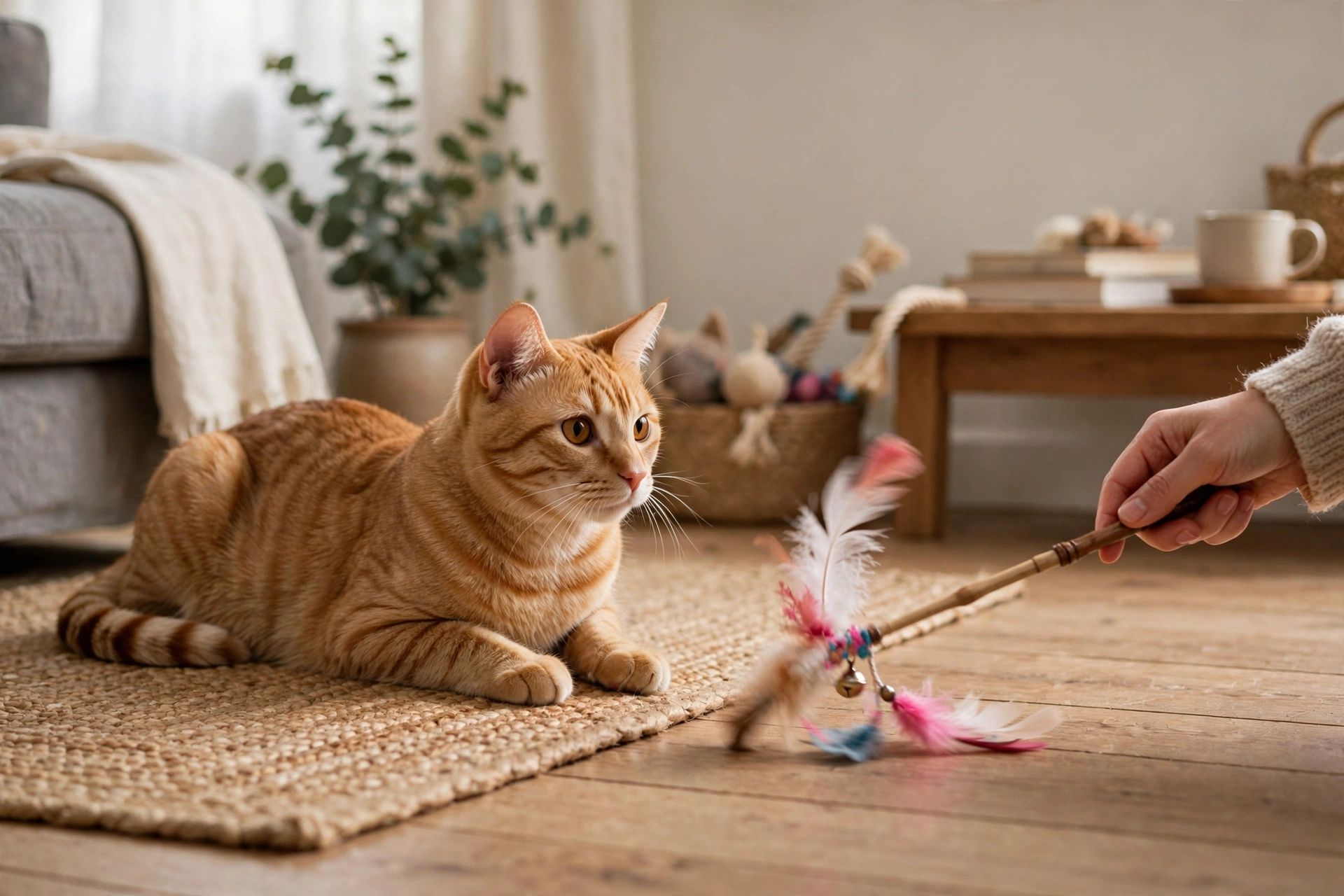
What Happened When I Fostered This Cat
The material provided for this article didn’t include a specific foster-cat story, so I can’t honestly describe what an individual cat did, what I tried, or how that cat responded. I won’t invent a first-hand experience to fill in those details.
The useful starting point, whether you’re fostering or caring for your own cat, is to observe before choosing a toy. Notice what draws your cat’s attention: a moving target, a small object to bat, food to investigate, or a soft toy to grab. Those clues can help you offer play that feels inviting rather than demanding.
What I Noticed
There are no individual behaviours or changes described in the experience provided. In general, though, a cat’s approach to play can reveal preferences. A cat who crouches and tracks moving objects may enjoy a chase toy; one who noses around for food may be interested in a simple puzzle feeder. Some cats prefer batting toys across the floor, while others like to grab a soft kicker.
These preferences aren’t diagnoses or fixed personality labels. A cat may ignore a toy because of its movement, texture, timing, or the cat’s mood. If a cat suddenly stops playing or shows other changes in behaviour, consider the wider picture rather than assuming they simply need a different toy.
What I Learned From This Experience
Because no specific foster experience was supplied, I can’t draw personal lessons from a particular cat. The general lesson I’d carry into a foster home is to treat play as an invitation, not a test. Offer a suitable option, give the cat room to approach, and pay attention to whether they return to it or choose to walk away.
That kind of observation is more helpful than assuming every cat should love the same toy. It also makes it easier to adjust play gently for a kitten, an adult cat, a senior cat, or a cat still settling into a new home.
Why Cats May Behave This Way
Play gives cats opportunities to move, explore, and act out parts of the natural sequence of noticing, stalking, chasing, and catching. Indoor cats may have fewer chances to encounter varied sights and activities, so appropriate play and enrichment can add useful variety to their routine.
A cat who seems restless or gets into objects may benefit from more suitable opportunities to investigate and play, but toys are not a universal fix. Hiding, fighting, spraying, or changes in appetite or litter-box habits can have different causes, including stress or medical concerns. Behaviour needs to be understood in context, not dismissed as mischief.
What I Would Do If I Faced This Again
Without a particular foster-cat story, I can’t say what I would repeat or change for that cat. For a new cat in my care, I would start with a calm space and a small choice of safe toys rather than presenting lots of unfamiliar objects at once. I’d try a short, low-pressure play invitation and let the cat decide whether to join.
I’d also check toys for loose parts and damage, put away strings and wand toys after supervised play, and adjust the toy’s movement if the cat loses interest. If the cat seemed uncomfortable or their behaviour changed suddenly, I’d look beyond toys and consider veterinary advice.
What Other Cat Owners Can Learn From This
A toy preference is individual. These starting points may help, but your cat’s response matters more than a category or product description:
- For stalking and pouncing: Try a wand toy or a small rolling toy. Move it away from your cat, pause, and let them decide when to chase.
- For curious, food-motivated cats: Introduce an easy puzzle feeder with a small amount of their usual food. Make it simpler if they seem frustrated.
- For batting and short solo chases: Offer a suitably sized ball or toy mouse, checking it regularly for loose pieces.
- For grabbing and kicking: Try a soft kicker and see whether your cat chooses to engage.
Start with one or two options, then notice what your cat seeks out. One cat’s enthusiasm doesn’t guarantee another cat will respond the same way.
Practical Ways to Help a Stressed Cat
Play can be one part of a supportive environment, alongside predictable routines, comfortable resting places, and opportunities to retreat. If your cat seems stressed, first consider what may have changed: a move, visitors, a new animal, household noise, or disruption to their usual routine.
- Keep sessions short and flexible. A few engaged minutes may be enough. Let your cat pause or leave.
- Vary the movement. For a chase toy, try letting it pause or slip partly out of sight instead of waving it constantly in front of your cat.
- Rotate a small selection. Put some toys away and bring them out later. There’s no need to buy a large collection.
- Make the space feel safe. Let your cat play or watch from a place where they can withdraw without being followed or forced to interact.
- Check toys for hazards. Put away strings, ribbons, and wand toys after supervised play. Replace anything torn, frayed, or shedding pieces.
- Look at the whole behaviour picture. If signs such as hiding, conflict, or inappropriate elimination persist, investigate possible triggers and consult a veterinarian rather than relying on play alone.
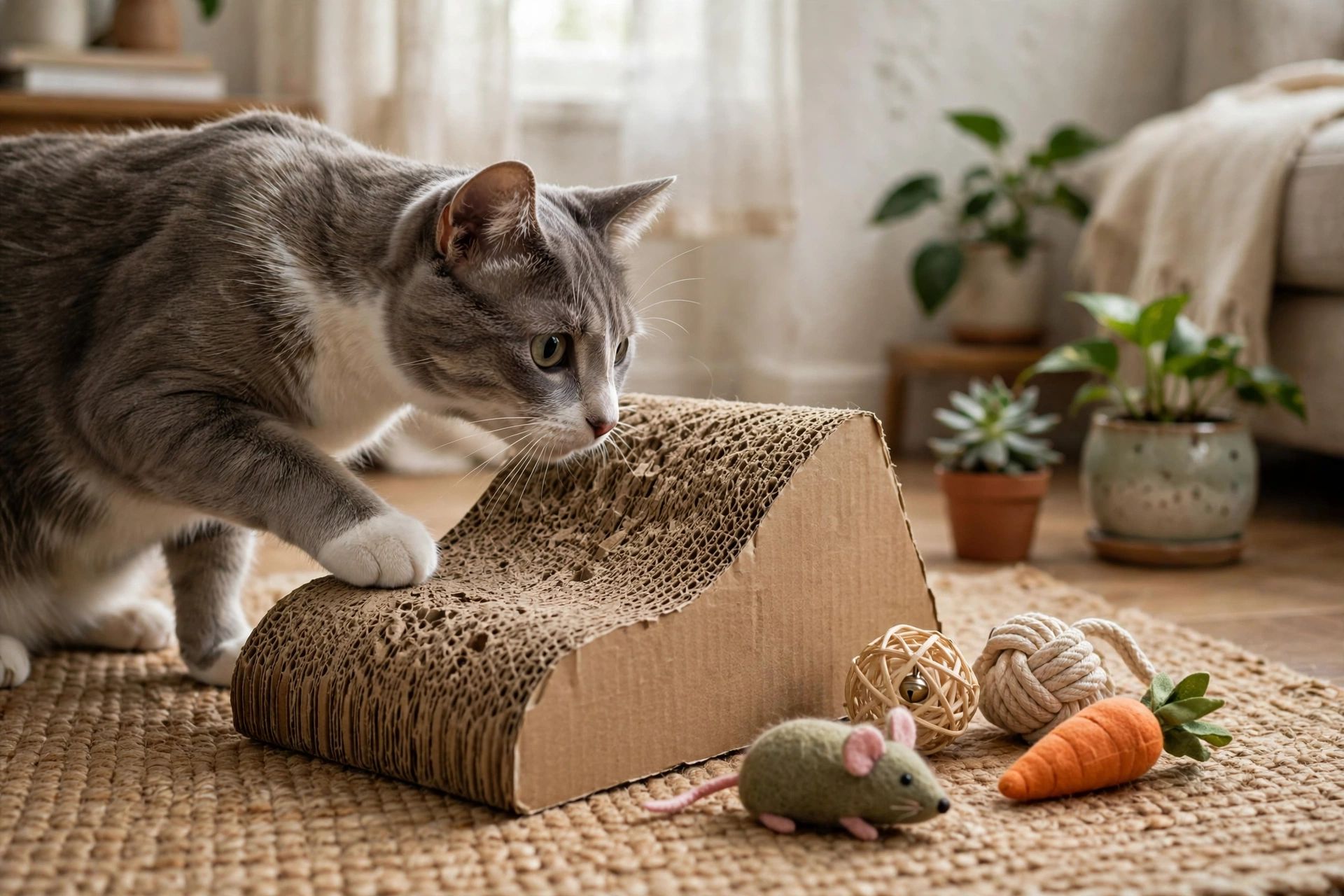
A cardboard scratcher can offer an additional outlet for scratching and exploration; for example, this cardboard cat scratching box combines a scratching surface with a place to investigate.
Can Cat Calming Products Help?
Calming products may be one part of a broader plan when stress is affecting a cat’s comfort. PAWSONA offers options such as a cat pheromone calming diffuser, sprays, and collars intended to support a calmer environment. They don’t replace play, environmental changes, or finding the cause of a cat’s distress, and no product can guarantee a result for every cat.
If you try a calming product, consider the situation it is intended to support and follow the product directions. Observe your cat’s behaviour over time and seek professional advice if the problem continues or worsens.
When to Seek Veterinary Help
A new or persistent behaviour change deserves attention, especially if it comes with changes in eating, drinking, movement, grooming, or litter-box habits. Pain and other medical conditions can affect how a cat behaves, so don’t assume a sudden change is purely emotional or a play issue.
Contact a veterinarian if your cat stops eating, appears unwell or painful, has trouble urinating, or shows a significant change in behaviour. For ongoing stress-related concerns, a veterinarian can help assess health factors and advise whether a qualified feline behaviour professional may be useful.
Key Takeaways
- Match toys to what your cat chooses to do: chase, bat, forage, or grab.
- Start with a small selection and let your cat’s interest guide what you try next.
- Short, flexible play sessions can be more inviting than a long session that your cat leaves.
- Supervise toys with strings or small parts, and remove damaged toys.
- Play can enrich a cat’s day, but it doesn’t explain or resolve every behaviour change.
- No specific foster-cat story was provided here, so individual observations or outcomes shouldn’t be invented.
- Persistent or sudden changes warrant attention to possible stressors and, when appropriate, veterinary advice.
Frequently Asked Questions
How many toys does a cat need?
There’s no fixed number. A small selection that suits your cat’s interests, with occasional rotation, may be more useful than a large pile of toys they rarely use.
How often should I play with my cat?
Offer regular chances to play and let your cat’s interest set the pace. Several brief sessions may suit some cats better than one long session.
Why does my cat ignore new toys?
Cats can have preferences for movement, texture, sound, and timing. Try a different style of movement or offer the toy later, without pushing your cat to interact.
Are cat toys safe to leave out when I’m away?
Some intact, simple toys may be suitable, depending on your cat and the toy. Put away strings, wand toys, and items with small or loose parts after supervised play, and check toys for damage.
What toys are best for indoor cats?
There isn’t one best toy for every indoor cat. A mix of options for chasing, batting, foraging, or grabbing can provide variety; choose based on your cat’s preferences and supervise when needed.
Can play help a stressed cat?
Play may add positive activity and variety, but it is only one part of supporting a stressed cat. Look for possible triggers, provide safe places and predictable routines, and seek veterinary advice for persistent or sudden behaviour changes.
When should I replace a cat toy?
Replace a toy if it is torn, frayed, cracked, shedding pieces, or has a loose part that could be swallowed. Check toys regularly, especially if your cat chews them.
Final Thoughts
The most useful guidance I can offer without a specific foster story is to watch the cat in front of you. Their interest, comfort, and choice to approach or walk away are better guides than any one-size-fits-all toy list. Start simply, keep play safe, and remember that a change in behaviour may call for more than a new toy.