


Key Takeaways
The best cat toys match your cat’s instincts, habits, and abilities—not just what looks fun on the shelf. A few thoughtful choices and regular play can make a real difference.
- Choose toys based on whether your cat likes to chase, forage, bat, or wrestle.
- Use interactive toys to encourage movement and shared play.
- Check toys for loose parts, damaged seams, and strings that could be swallowed.
- Rotate toys and keep play sessions short enough to hold your cat’s interest.
- Compare cost with durability, and favor toys your cat returns to often.
Understand the benefits of play
Play gives cats a chance to move, explore, and act out parts of their natural hunting sequence. It can also add variety to a quiet indoor day, especially when the toys and play style suit the individual cat. Think of it as one part of a healthy routine, alongside comfortable resting places, appropriate food, and attention to changes in behavior.
How toys support exercise and healthy weight
Chasing, pouncing, and batting encourage bursts of movement that may be missing from a cat’s day. Play is not a substitute for veterinary guidance or a suitable feeding plan, but regular chances to move can support an active routine. Keep sessions comfortable and let your cat pause when they need to; a few enthusiastic minutes can be more useful than a long session they lose interest in.
Why play can reduce boredom and unwanted behavior
A cat with few opportunities to investigate or play may find other ways to occupy themselves, such as pulling at objects or pestering their person. Enrichment can give that curiosity a more appropriate outlet, though it won’t explain every behavior change. If hiding, fighting, spraying, or other signs of stress persist, look for possible triggers and consider veterinary advice. PAWSONA cat calming products include diffusers, sprays, and collars intended to help ease anxiety and stress; they are not a replacement for play or for investigating what may be troubling a cat. For multi-cat homes, the PAWSONA® Zenkit Combo includes calming diffusers, a pheromone refill, and calming spray to help ease stress and encourage harmony.
How interactive play strengthens your bond
When you move a wand or roll a toy, your cat gets to respond to you rather than simply encounter another object in the room. Watch what catches their attention, give them time to stalk or pause, and avoid turning every session into a test of speed. A predictable invitation to play can become a pleasant shared routine. If you’re also thinking about the wider needs of a new companion, these cat care basics cover other parts of building a comfortable home.
Match toys to your cat’s play style
A toy that delights one cat may be ignored by another, so start with what your cat already does. Does your cat watch and pounce, nose around for food, or grab soft objects with their front paws? Those small clues help narrow the choices. Begin with one or two options, then notice which movements and textures bring your cat back for more.
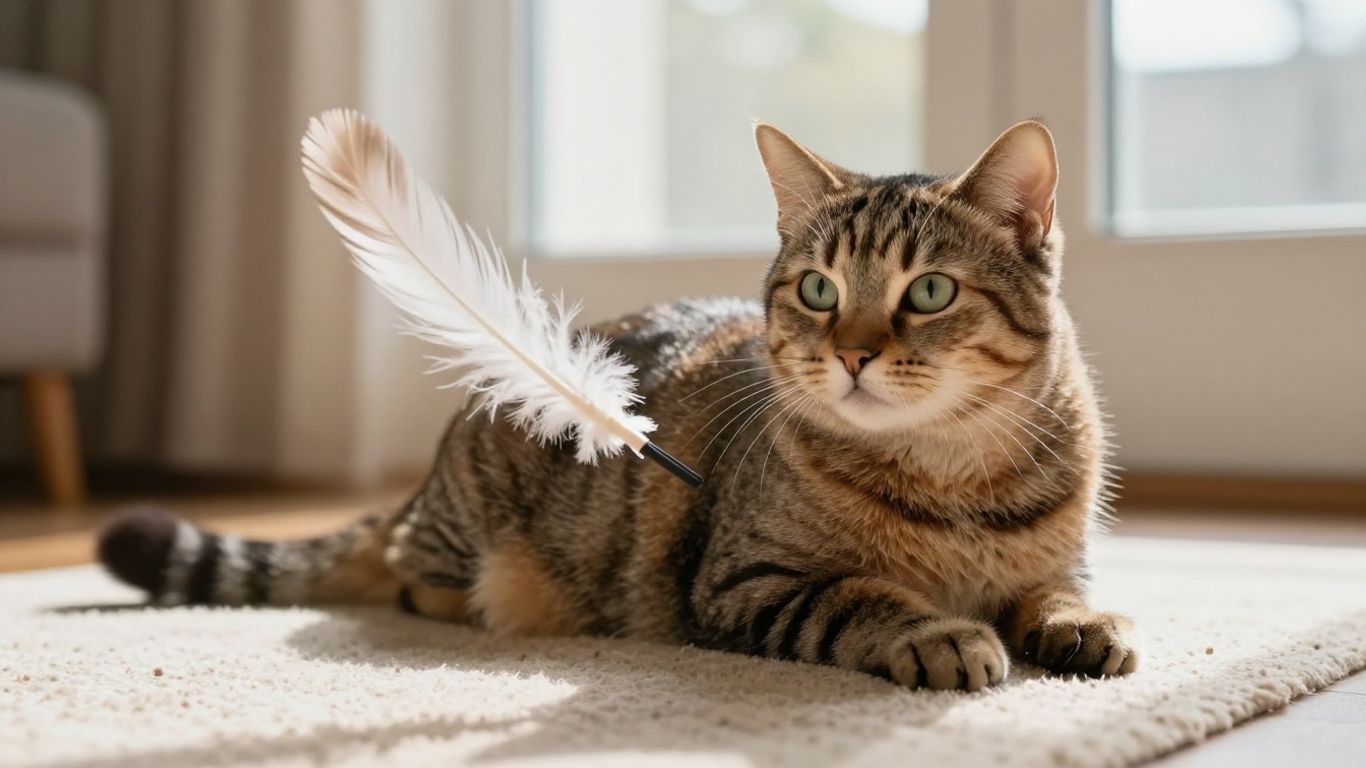
Choose chase toys for cats who stalk and pounce
Some cats like to crouch, track a moving target, and spring at just the right moment. A wand toy or a small rolling object can give them a target to follow, but vary the pace rather than waving it constantly in their face. Let the toy pause, disappear briefly behind furniture, and move away from your cat now and then. That gives the chase a little shape and lets your cat decide when to leap.
Try puzzle toys for curious, food-motivated cats
For a cat who investigates cupboards or seems especially interested in mealtimes, a puzzle feeder can turn part of the daily routine into a search. Start with an easy design and a small amount of the cat’s usual food, then make adjustments based on whether your cat stays curious or becomes frustrated. This puzzle feeder guide explains ways to introduce food puzzles and choose one that fits your cat. Keep the first attempts simple; the goal is a satisfying challenge, not a puzzle your cat gives up on.
Offer kickers and plush toys for wrestling and bunny kicks
A soft kicker gives a cat something suitable to hold and kick with the back feet. Some cats prefer a long plush shape, while others will only engage with a small, lightweight toy. Offer it when your cat is in a playful mood and let them choose how to interact. If they ignore it, try a different texture or shape rather than assuming they need more encouragement.
Compare the main types of cat toys
Different toy types invite different kinds of play, and there’s no need to fill a basket with every option. Think about when you’ll use the toy, how closely you can supervise, and whether your cat tends to play alone or with you. The quick comparison below can help you narrow the field, but your cat’s response is the best guide.
Wand toys for supervised, interactive play
Wand toys let you guide a moving target and respond to your cat’s pace. Keep the toy low and make it dart, pause, or slip out of sight instead of making big, repetitive circles. A useful principle in interactive-play reviews is to choose movement that invites a cat’s natural hunting behavior. After a successful pounce, give your cat a moment with the toy before starting another round.
Balls and mice for independent batting and chasing
Small balls and toy mice can be easy to bat around between shared play sessions. Some cats enjoy carrying a toy from room to room; others prefer batting one across a clear patch of floor. Choose a size that is easy to handle but not small enough to swallow, and check it regularly for loose parts. These toys work best when they’re accessible but not scattered everywhere all the time.
Electronic toys for movement when you’re busy
Electronic toys can provide moving targets when you cannot guide a wand yourself, but they don’t suit every cat. Look for a design that moves in a way your cat can follow and that has clear instructions for use. This table summarizes the main trade-offs; use it as a starting point, not a ranking.
| Toy type | Best suited to | Keep in mind |
|---|---|---|
| Wand toy | Shared stalking and chasing | Put it away after supervised play |
| Ball or mouse | Batting and short solo chases | Check size and condition |
| Puzzle toy | Foraging and food-motivated play | Start with an easy challenge |
| Electronic toy | Movement when you’re occupied | Follow the maker’s supervision guidance |
The most useful choice is the one your cat actually engages with safely. You might keep one toy for shared play and another for occasional independent activity, then see what gets used rather than buying several versions at once.
Choose toys that are safe and durable
A toy can look sturdy and still develop a loose seam or detached piece after repeated play. Give new toys a quick inspection before offering them, then check again as they wear. Supervision matters most when a toy has long attachments, small parts, or anything your cat tends to chew or swallow.
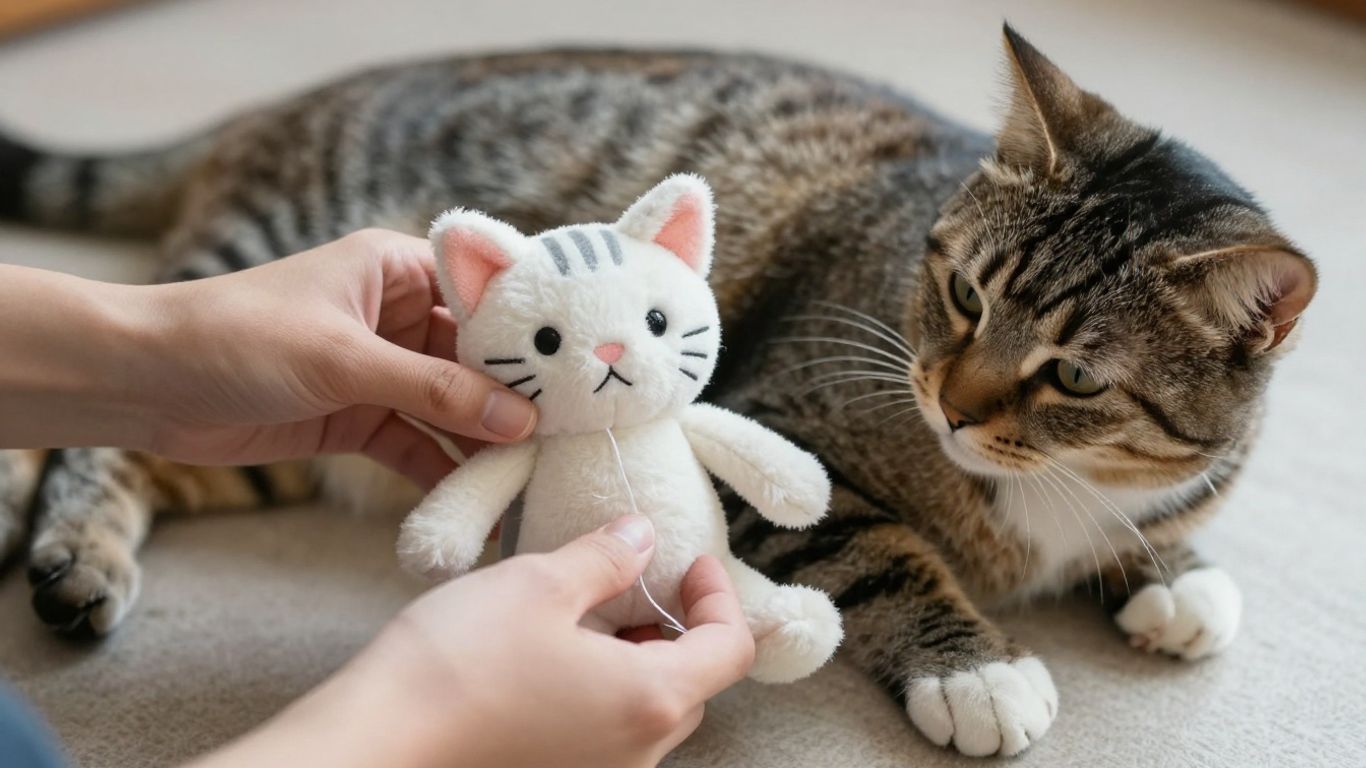
Check materials, seams, strings, and small parts
Run your fingers over seams and attachments before the first play session. Look for loose threads, small decorations, bells, or other pieces that might come off, and remove a damaged toy rather than trying to patch a part that could be swallowed. Strings and ribbons can be especially tempting to chew, so use them only while you’re present and store them out of reach afterward.
Select toys that suit your cat’s size and chewing habits
A toy should be large enough that your cat cannot swallow it, while still being manageable for batting, carrying, or grabbing. If your cat chews rather than paws at toys, choose sturdy options and check for wear more often. A simple safety routine can help you decide what to offer:
- Check seams and attachments before play.
- Choose a size your cat cannot swallow.
- Put away strings and ribbons after supervised play.
- Replace toys that are torn or shedding pieces.
These checks take only a moment, and they’re especially useful for cats that are enthusiastic chewers. If your cat repeatedly tries to eat non-food objects, ask your veterinarian for advice rather than relying on toy changes alone.
Know when to supervise play or put a toy away
Wand toys, strings, and toys with small attachments are best used while you can watch. Put them away when play ends, and remove any toy that has become frayed, cracked, or partly detached. Even a toy normally used independently deserves a quick look now and then. A little supervision helps keep play enjoyable without making it feel restrictive.
Keep play engaging over time
Cats can lose interest in a toy that is always in the same place and moves in the same way. A small rotation can make familiar toys feel worth investigating again, while short sessions give your cat a chance to focus without tiring quickly. Pay attention to the signals your cat gives: returning to the toy, relaxed pauses, or walking away all tell you something about the pace and appeal.
Rotate toys to renew your cat’s interest
Keep a few toys available and put the rest away for a while, then swap them every few days or when interest fades. You don’t need a large collection; changing which toys are visible can be enough to prompt a fresh look. Rotate by type as well as by appearance, so a cat who has had plenty of chasing can try a puzzle or soft kicker next. This guide to what cats enjoy includes play among the everyday comforts and activities that can engage cats.
Use short play sessions that follow a natural hunt
Try a simple rhythm: invite your cat to notice the toy, let them stalk and chase, then give them a chance to catch it. A short pause or a slower movement can make the activity feel less frantic. End while your cat is still engaged, and let them settle afterward. If you use food as part of the routine, account for it within their usual daily amount rather than adding extra portions.
Adjust activities for kittens, adults, and senior cats
Kittens may enjoy frequent, brief chances to chase and investigate, while adult cats can show strong preferences for a particular pace or toy type. Senior cats may still enjoy play, but gentler movements and easy-to-reach toys can make participation more comfortable. Let your cat set the intensity, and check with a veterinarian if movement seems painful or changes suddenly. There is no single schedule that fits every age or personality.
Shop for cat toys on a budget
A modest toy collection can work well when it matches your cat’s habits and you use it creatively. Before buying, think about which toys already get attention, how quickly they wear out, and whether a toy offers a kind of play your cat enjoys. It can help to compare the total cost over time rather than choosing by the lowest price alone.
Prioritize toys your cat will use regularly
Start with the play style you see at home and choose one toy that supports it. If you’re unsure, test a low-cost option before investing in a more elaborate version. When shopping online, check the dimensions, materials, and care instructions, not only the product photo. The same broad habit of matching a purchase to its purpose applies to very different searches, from wooden toy ideas to birthday card styles, but for cat toys your cat’s real interest matters most.
Make simple enrichment toys from household items
A clean cardboard box can become a place to hide, peek, or investigate, and a paper ball may invite a few rounds of batting. Keep homemade play simple and remove staples, tape, plastic, handles, or other pieces that could be chewed or swallowed. Stay nearby the first time you offer something new, especially if your cat tends to eat non-food materials. Everyday objects are only useful as toys when they remain safe for that particular cat.
Compare cost, durability, and replacement needs
A low-priced toy may be a good value if it lasts and gets used, while a more expensive one may sit untouched. Compare the expected lifespan, whether pieces need replacing, and how easy the toy is to inspect and clean. Other kinds of online research have their own criteria too, such as keyword research, local business profiles, or NFC card makers; those purchases are different, but the basic habit of checking fit and quality still applies. Keep your cat’s preferences and safety at the center of the decision.
Conclusion
Choosing cat toys is less about finding a perfect product and more about noticing what makes your cat curious, comfortable, and ready to play. Start with a few safe options, vary the way you use them, and let your cat’s reactions guide what comes next. With a little observation, play can become an easy, rewarding part of your shared routine.
Frequently Asked Questions
How many toys does a cat need?
There is no fixed number. A small selection that suits your cat’s play style, rotated occasionally, may be more useful than a large pile of toys that are rarely used.
How often should I play with my cat?
Offer regular opportunities for play and let your cat’s interest guide the length of each session. Several short sessions may work better than one long session for many cats.
Are cat toys safe to leave out when I’m away?
Some simple, intact toys may be suitable to leave out, but strings, wand toys, and toys with small parts should be put away after supervised play. Check each toy for damage before leaving it accessible.
What toys are best for indoor cats?
Indoor cats can enjoy a mix of toys for chasing, batting, foraging, and wrestling. Choose options that fit your cat’s preferences and provide opportunities for movement and exploration.
Why does my cat ignore new toys?
Cats can be particular about movement, texture, sound, and timing. Try offering the toy at a different time or moving it in a way that suits your cat, and give them room to approach at their own pace.
Can I make cat toys at home?
Yes, simple items such as a clean cardboard box or paper ball may offer safe entertainment when used thoughtfully. Remove hazards and supervise your cat, especially if they chew or swallow non-food materials.
When should I replace a cat toy?
Replace a toy when it is torn, frayed, cracked, shedding pieces, or has a loose part that could be swallowed. Regular checks help you catch damage before the next play session.