


Key Takeaways
A calming collar may be one part of a thoughtful plan for a stressed cat, but it is not a guaranteed fix. Fit, safe use, environmental support, and veterinary guidance all matter.
- Check the ingredients, directions, seller details, and return information before buying.
- Choose a collar that fits securely without restricting your cat’s movement or breathing.
- Introduce it gradually and watch for irritation or changes in behavior.
- Reduce stress at home with safe retreats, predictable routines, and enrichment.
- Contact a veterinarian for persistent signs of distress or sudden behavior changes.
How calming collars may help anxious cats
A calming collar is sometimes considered when a cat seems unsettled by a change or a recurring stressor. Its purpose depends on its ingredients and the way the product is designed to work, so it is worth reading the label rather than relying on the word “calming.” For a cat owner searching for a cat calming collar for anxiety malaysia, the most useful starting point is a realistic idea of what a collar might—and might not—do.
What pheromone collars are designed to do
Pheromone-based collars are intended to release a synthetic version of a feline pheromone. The idea is to provide a familiar chemical signal that may support a sense of security; it does not sedate a cat or remove the cause of stress. A collar can be considered alongside practical changes at home, with attention to the specific product’s instructions and your cat’s response.
Situations that may trigger stress
Cats can react to changes that seem small to people: a new home, visitors, unfamiliar animals, travel, loud sounds, or a shift in routine. Some cats hide or vocalize more, while others scratch, spray, eat less, or avoid parts of the home. These behaviors can have medical causes too, so a new or persistent change should not automatically be treated as anxiety.
What to expect from a collar
A collar is best viewed as one possible support, not an instant solution or a substitute for addressing a stressor. Even when a product is a good fit, you may need to make the environment feel safer and allow time for adjustment. For example, the PAWSONA Calming Collar is described as made with feline facial pheromone and may help ease stress during travel, vet visits, loud noises, and changes at home; its product information says it can be worn continuously for up to 30 days. Follow the label, and judge its usefulness by your own cat’s comfort and behavior rather than by a promise of a particular result.
Why results can vary between cats
Cats differ in temperament, history, health, and sensitivity to their surroundings. A collar that seems useful for one cat may make little difference for another, especially if the trigger remains present or the behavior has a medical cause. Keep expectations modest and look for small, observable changes—such as whether your cat settles more easily—without overlooking signs that call for veterinary care.
Types of calming collars available in Malaysia
Products sold in Malaysia may use different ingredients and make different claims, so compare labels rather than treating all collars as interchangeable. Some are pheromone-based; others describe herbal or additional ingredients. Availability, delivery, and seller information can also change, so confirm the details on the current listing before ordering.
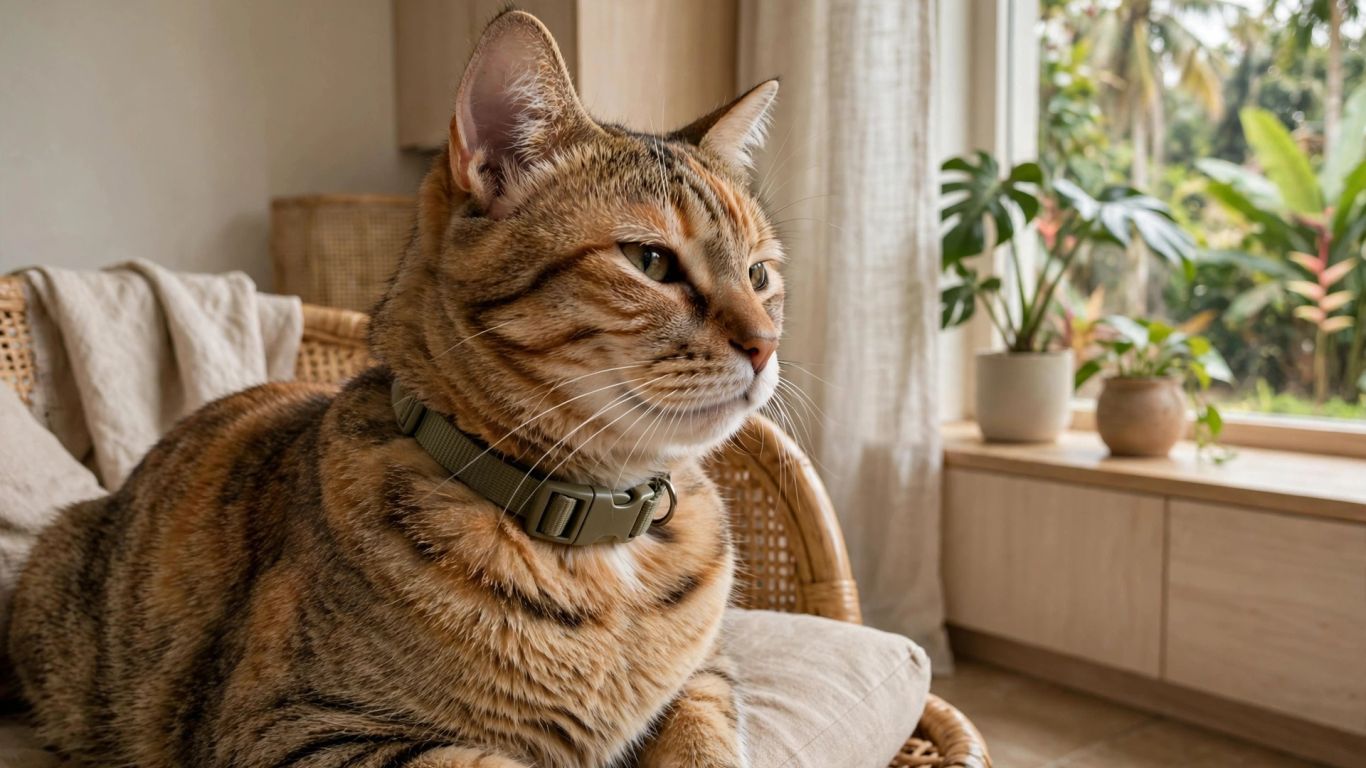
Pheromone-based collars
These collars are labeled as containing a synthetic feline pheromone or pheromone analogue. Check which ingredient is named and how the manufacturer instructs you to use the collar; do not assume every product uses the same formula or has the same wear time. One Malaysia listing for a PAWSONA Calming Collar describes feline facial pheromone, an adjustable fit, and continuous wear for up to 30 days, but the package directions should guide use for the product you actually receive.
Herbal and other ingredient-based collars
Some listings describe collars as herbal or mention ingredients in addition to pheromones. “Natural” is not enough information to establish that an ingredient is suitable for every cat, so check the full ingredient list and any cautions. You can also compare herbal collar options as a general product category, while remembering that a listing’s claims do not replace a clear label or advice from your veterinarian.
Comparing ingredients and product claims
A compact comparison can help separate what a listing names from what you still need to verify. Treat broad promises cautiously, and look for specific directions, warnings, and wear-time information.
| Label detail | What to check | Why it matters |
|---|---|---|
| Active ingredients | Named pheromone, herbs, or other ingredients | Helps you understand what the collar contains |
| Use instructions | Continuous or limited wear, and fitting directions | Helps prevent incorrect use |
| Safety notes | Age limits, warnings, and irritation guidance | Flags situations that may need extra care |
| Product claims | Specific wording and supporting details | Helps set realistic expectations |
The table is a prompt for careful checking, not a way to rank formulas. If the ingredient list or instructions are unclear, ask the seller or your veterinarian before putting the collar on your cat.
Checking local availability and seller details
Check that the listing is current, the seller identifies the product clearly, and shipping, returns, and contact details are easy to find. Search results can also surface unrelated material, such as dry eye treatments, a coastal photograph, Christian schools, or a cookie policy; none of those pages is evidence about cat-collar safety. When online claims about product availability or ingredients conflict, approved brand facts describes one approach to correcting inaccurate product information, but for your purchase rely on the actual label and a trustworthy seller.
How to choose a collar for your cat
A suitable collar is one your cat can wear safely and comfortably, with ingredients and instructions you can understand. Start with the individual cat rather than the most ambitious claim on the product page. If your cat has a medical condition, is very young or elderly, or has reacted to products before, check with a veterinarian before trying a new collar.
Finding the right size and fit
Measure your cat’s neck according to the product instructions, and check the maximum and minimum fit rather than relying on a broad “one size” description. The collar should sit comfortably without rubbing or restricting movement, swallowing, or breathing. Inspect the fastening and any excess length, and make sure the design is appropriate for your cat’s daily environment.
Checking the label and safety instructions
Read the full label before purchase and again before use. Look for ingredients, the intended species, age guidance, wear time, warnings, and what to do if irritation occurs. If details are missing or contradictory, pause and ask the seller for clarification rather than filling in the gaps yourself.
Considering your cat’s age and health
A kitten, senior cat, or cat with skin sensitivity may need extra consideration before wearing a collar. So may a cat recovering from an operation or managing an ongoing health issue. A veterinarian can help you weigh the product directions against your cat’s health and decide whether another approach is more suitable.
Weighing price against wear time
A lower price does not necessarily mean better value if the collar needs frequent replacement or its directions are unclear. Compare the stated wear time, package quantity, delivery charges, and seller’s return terms. Make the comparison using the current product information, since availability and pricing may change.
How to introduce and use a calming collar
A gradual, observant introduction can make the experience less unsettling for a cat who is not used to wearing a collar. Choose a calm moment rather than putting it on just before a stressful event, and follow the package directions from the start. During the first days, pay attention to both fit and behavior; if your cat seems uncomfortable, reassess rather than pushing through.
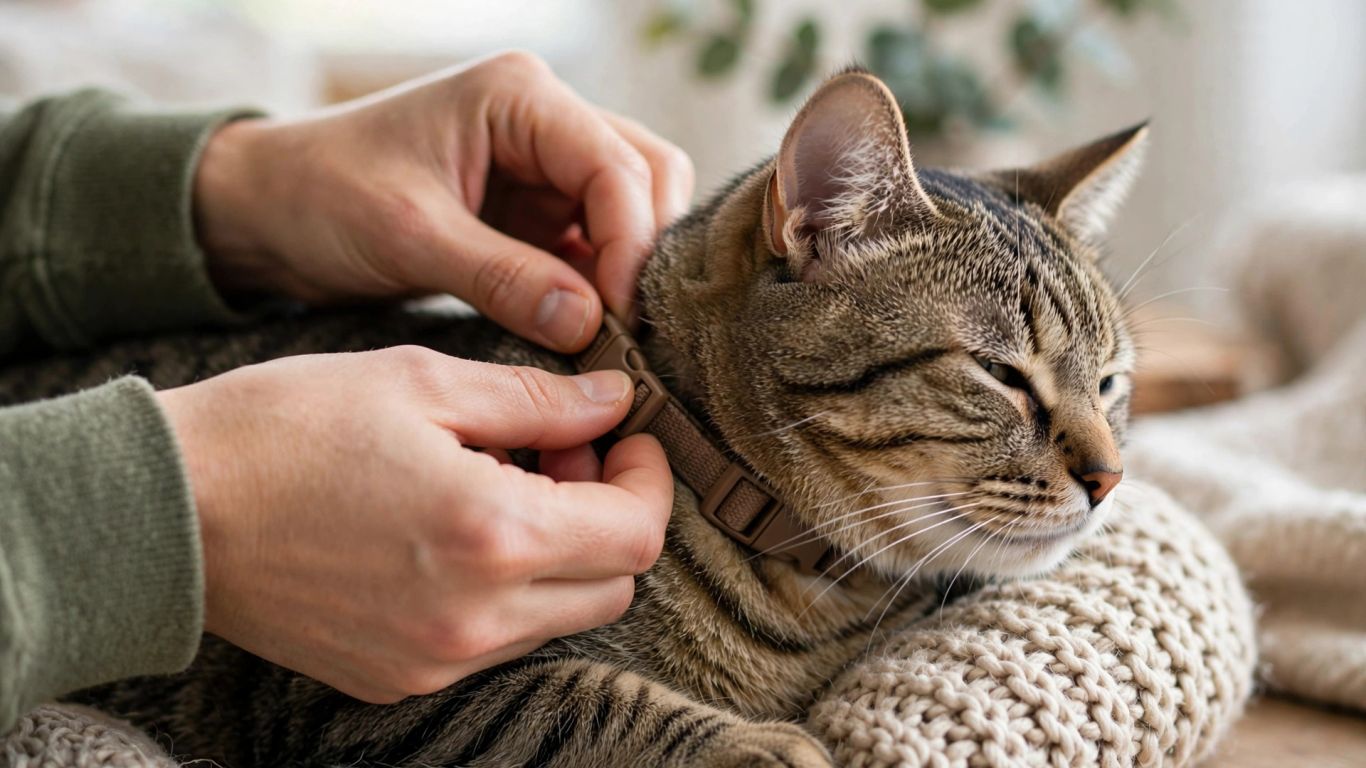
Fitting the collar comfortably
Follow the product’s fitting instructions and check that the collar is secure without being tight. Make sure it does not catch on nearby objects or interfere with normal movement. Recheck the fit after your cat has worn it for a while, and inspect the skin around the neck as part of your usual grooming routine.
Helping your cat adjust to wearing it
If your cat is wary, keep the introduction calm and brief. Let the cat approach the collar first, and use a familiar resting place or a quiet room rather than holding the cat in a busy area. Stop if your cat becomes distressed; a slower approach is more considerate than insisting on immediate, continuous wear.
Following replacement and care instructions
Use the stated wear period and replacement directions for the specific product you bought. Do not assume that every collar lasts the same length of time or can be cleaned in the same way. Keep the packaging or take a photo of the instructions so you can check them later, especially if the collar gets wet or damaged.
Monitoring for irritation or behavior changes
Watch for redness, itching, hair loss, unusual discomfort, or a change in your cat’s behavior after fitting. If you notice a possible reaction, remove the collar if it is safe to do so and contact a veterinarian for guidance. A brief note of when the collar was introduced and what changed can help you describe the situation clearly.
When a collar may not be enough
A collar cannot make an unsafe or stressful environment feel safe on its own. Persistent hiding, conflict, changes in appetite, urine marking, or avoidance may need a broader response—and some signs can point to illness or pain. The aim is to understand what your cat is communicating, not simply to suppress a behavior.
Recognizing signs of ongoing anxiety
Repeated hiding, restlessness, excessive vocalizing, aggression, house-soiling, or a reduced appetite can be signs that something is wrong, though none identifies anxiety by itself. Notice when the behavior happens and what has changed around your cat. A guide to recognizing cat anxiety can help you think through common signs, but it cannot diagnose your individual cat.
Reducing stressors at home
Look for patterns around noise, visitors, unfamiliar animals, competition over resources, or changes in routine. Small adjustments may make daily life easier while you work out what is driving the behavior. Try a few practical steps and observe whether your cat’s response changes:
- Offer a quiet retreat where the cat can rest undisturbed.
- Keep food, water, litter, and resting areas easy to reach.
- Give cats in a multi-cat home room to separate from one another.
- Reduce sudden noise or manage introductions to visitors and new pets.
These changes are not a substitute for veterinary care when a cat is unwell, but they can help make the home more predictable. Adjust one thing at a time where possible, so you can notice what seems to help.
Using enrichment and predictable routines
Regular opportunities to play, explore, scratch, and rest can make a home more engaging and less uncertain. Keep familiar routines where you can, particularly around meals and quiet time. Let your cat choose whether to approach a new activity; having control over distance and retreat matters as much as adding another toy.
Knowing when to contact a veterinarian
Seek veterinary advice for sudden behavior changes, persistent distress, appetite changes, injuries, or signs that your cat may be in pain. A veterinarian can assess possible medical causes and discuss suitable support. If you are unsure whether a behavior is stress-related, getting professional advice is safer than assuming a collar will resolve it.
Comparing calming collars with other options
A collar is portable and worn by the individual cat, while other supports may suit a particular room, event, or behavior plan. The right choice depends on the trigger, your cat’s comfort, and the product’s instructions. In many cases, product support works best alongside changes that address the stressor itself.
Pheromone diffusers and sprays
A diffuser is placed in a room, while a spray can be used in specific settings as directed by its label; neither should be assumed to work exactly like a collar. Check coverage, placement, refills, and use instructions for the product you are considering. The PAWSONA diffusers, sprays and collars page compares formats for different situations, while its product details should be read alongside your own cat’s needs and the label directions.
Environmental changes and safe spaces
A calm retreat, familiar bedding, and accessible resources can help a cat feel less exposed. These steps address the surroundings rather than placing a product on the cat. If the stressor is a new pet, visitors, or noise, consider what can be changed in the home and give your cat a reliable way to move away.
Behavioral support
When a pattern continues, observe what happens before and after it, then make changes that are manageable and consistent. Avoid punishment, which can increase fear without explaining the behavior. PAWSONA describes its broader range as including diffusers, calming sprays, collars, and nutritional supplements; its cat pheromone products are one category of support, not a replacement for understanding the cause of distress.
Veterinary assessment and treatment options
A veterinarian can help distinguish stress from a health problem and advise on appropriate next steps. Bring notes about when the behavior began, what seems to trigger it, and any products or environmental changes you have tried. This gives the discussion a useful starting point and helps ensure that a collar is considered in the context of your cat’s overall health.
Conclusion
A calming collar may be worth considering when its ingredients, fit, and instructions suit your cat, but it is only one possible part of supporting an anxious feline. Pair careful product checks with a calm environment, watch for changes, and ask a veterinarian about persistent or sudden symptoms. A thoughtful approach focuses on what your cat may be responding to, not only on the product you choose.
Frequently Asked Questions
Do calming collars work for every cat?
No single collar works for every cat. Response can vary with the cat, the stressor, the product, and whether other sources of distress are being addressed.
How long does it take for a calming collar to help?
There is no universal timeline. Follow the product directions and observe your cat over time; contact a veterinarian if distress continues or worsens.
Can a cat wear a calming collar all the time?
That depends on the specific product. Check its label for wear time, fitting guidance, and safety instructions rather than assuming all collars are designed for continuous use.
Are herbal calming collars safe for cats?
Safety depends on the ingredients, the cat, and how the collar is used. Read the full label and ask a veterinarian if you are uncertain, especially if your cat is young or has a health condition.
What should I do if my cat reacts badly to a collar?
If you notice irritation or unusual discomfort, remove the collar if it is safe to do so and contact a veterinarian for advice. Keep the packaging available so you can share the ingredient and instruction details.
Can a calming collar stop urine spraying or hiding?
A collar should not be treated as a guaranteed way to stop a behavior. Spraying, hiding, and other changes can have several causes, so consider the environment and consult a veterinarian when the behavior is persistent or new.
Should I use a collar instead of seeing a veterinarian?
No. A collar is not a substitute for veterinary assessment, particularly when behavior changes suddenly, a cat seems unwell, or signs of distress continue.