


Key Takeaways
A calmer boarding stay begins with understanding what unsettles your cat and planning around their individual needs. Small, familiar routines can make the change easier to manage.
- Choose care based on your cat’s temperament, health, and comfort around other animals.
- Prepare the carrier and practice brief separations before travel.
- Give the boarding team clear details about food, medication, habits, and triggers.
- Confirm health requirements, emergency plans, and communication arrangements in advance.
- Allow your cat time to readjust at home, and contact a veterinarian if concerning signs persist.
Understand why boarding can make cats anxious
A boarding stay can bring several changes at once: unfamiliar people, new smells, different sounds, and a disrupted routine. Even a well-run setting may feel like a lot to a cat who relies on familiar places and predictable patterns. Understanding what your cat finds difficult makes it easier to choose practical cat boarding anxiety solutions malaysia owners can use before, during, and after a stay.
How changes in routine and surroundings affect cats
Cats often feel more secure when their environment and daily rhythms are familiar. A different feeding time, unfamiliar voices, or the loss of a usual hiding place can make a boarding stay feel unpredictable, especially for a shy cat or one that has not spent much time away from home. Preparing for changes gradually, while keeping familiar routines where possible, can help. For more ideas on recognizing cat anxiety, notice what your cat does when something in their home routine changes.
Common signs of stress before and during a stay
Stress can show up in different ways, and a change in behavior is more useful as a signal than as a label. Your cat may hide more, vocalize, eat less, groom differently, or avoid interaction. Before boarding, pay attention to what is normal for your cat so you can describe any meaningful change to the care team. The guidance on cat behavior solutions also covers how to observe behavior without assuming it is simply mischief.
When anxiety may have an underlying health cause
A sudden or persistent change in appetite, toileting, activity, or sociability can have more than one explanation. It is sensible to check with a veterinarian before boarding if the change is new, pronounced, or accompanied by other signs of illness. Share relevant health history with the boarding team, too. Anxiety may be part of the picture, but it should not be used to explain away a possible medical problem.
Choose a boarding option that fits your cat
The right arrangement depends on your cat, not on a single standard for what boarding should look like. Some cats manage a new place better with attentive staff and a dedicated space; others may be more comfortable staying at home with a trusted caregiver. Ask specific questions, consider your cat’s past reactions to change, and visit or review the setting before making a decision. A general guide to pet boarding can help clarify what to ask when comparing care arrangements.
Questions to ask a cat hotel before booking
A conversation with the facility can reveal how well its daily routines fit your cat’s needs. Ask how feeding, cleaning, rest, and medication are handled, and what staff do if a cat hides or refuses food. It also helps to clarify which belongings are allowed and how the team contacts you if something changes. These questions make the service easier to compare than a quick look at photos alone.
A simple comparison can keep the important details in view while you talk to different providers:
| What to ask | Why it matters | What to clarify |
|---|---|---|
| How are cats housed? | Helps you understand noise, privacy, and separation | Whether cats have an individual space |
| How are meals managed? | Supports familiar feeding habits | Whether you can bring your cat’s usual food |
| What happens if a cat seems unwell? | Sets expectations for prompt care | Who is contacted and how veterinary care is arranged |
| How are updates shared? | Reduces uncertainty while you are away | The channel and expected frequency |
Use the answers to judge whether the setting can accommodate your cat’s needs, rather than relying on one feature in isolation. Clear, consistent responses are a useful sign that you can communicate your instructions effectively.
Comparing boarding facilities with in-home care
Boarding offers a staffed environment away from home, while in-home care keeps the cat in familiar surroundings but depends on the caregiver’s availability and agreed visits. Neither is automatically less stressful: a cat may be unsettled by new surroundings, or by a change in who provides care at home. Think about previous separations, your cat’s health and social preferences, and the level of supervision they need. If you choose in-home care, explain the usual routine and make sure the caregiver knows how to reach you.
Checking for quiet spaces, hiding spots, and safe separation
A cat needs a way to retreat when the environment feels busy. Ask whether the boarding space offers a quiet resting area, a suitable hiding place, and separation from unfamiliar animals. For cats from the same household, check whether they can remain together if that is what they are used to, or be separated safely if they need space. Details like these help you assess whether the setting allows your cat to settle at their own pace.
Prepare your cat before the stay
Preparation does not mean trying to make a cat love every change. The aim is to make the steps leading to boarding less startling and to give the care team useful information. A few low-pressure practice sessions can help you spot what needs more time. Keep expectations modest; confidence often grows through repetition rather than one big rehearsal.
Help your cat get comfortable with the carrier
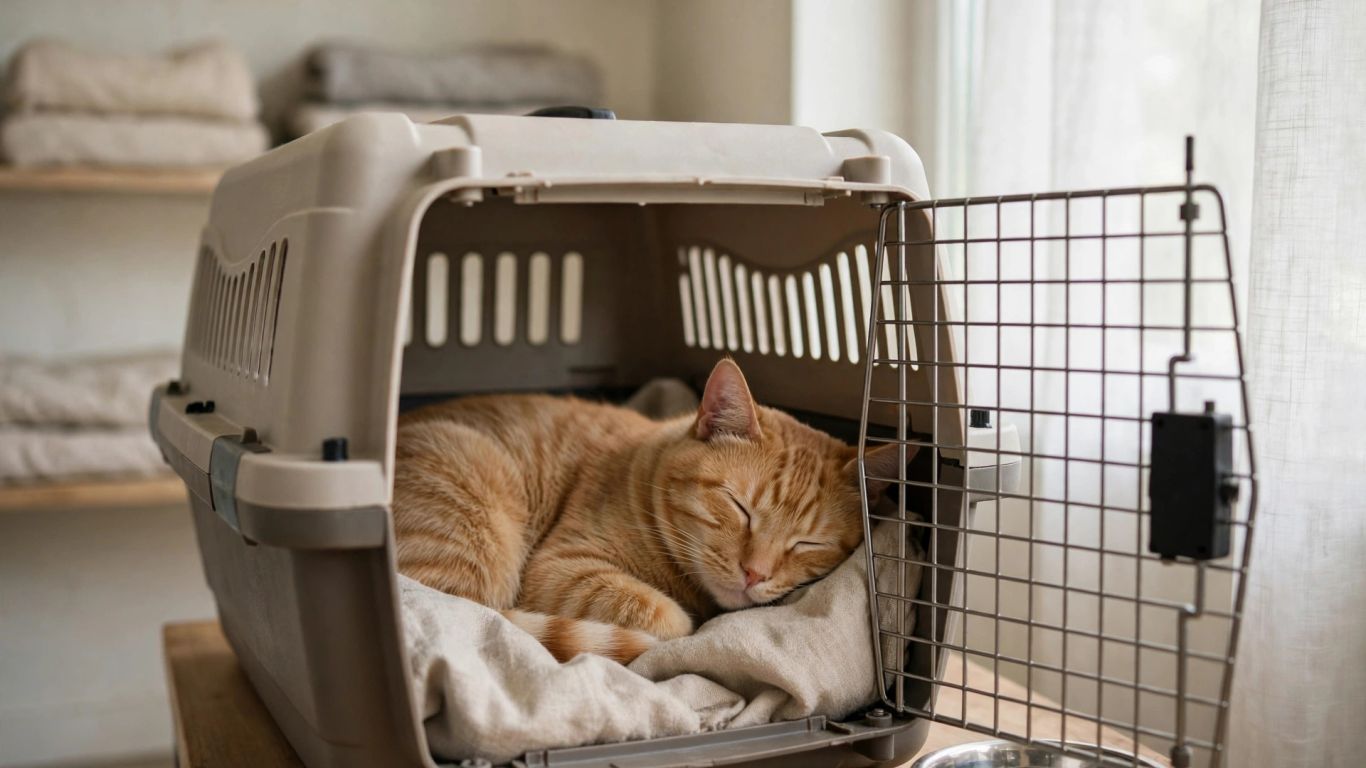
Leave the carrier open at home well before the trip, with familiar bedding inside, so your cat can investigate it without being rushed. If they choose to rest near or inside it, let that happen on their terms. Once they seem comfortable, try closing the door briefly and opening it again, then build toward a short trip only if they remain settled. Avoid turning the carrier into a last-minute surprise if you can help it.
Practice short separations and changes to routine
Brief, manageable practice can give you a clearer sense of how your cat responds to time apart. Keep departures calm and predictable, and avoid extending a practice separation if your cat is becoming distressed. You can also keep key parts of the daily schedule steady as travel approaches, such as meals and familiar play. A gradual approach is generally more useful than changing several routines at once.
Share your cat’s habits, triggers, and care needs
The boarding team cannot follow your cat’s usual routine unless you explain what it looks like. Write down the practical details, including preferences and behaviors that may not be obvious to a new caregiver. A short handover can cover:
- Usual meal times, food, and portion instructions.
- Favorite resting places, toys, and ways your cat likes to play.
- Situations that tend to cause hiding, fear, or frustration.
- Medication directions and the veterinarian’s contact information, if relevant.
Keep the notes clear and specific, and mention what is normal for your cat. That context can help staff distinguish an ordinary quiet day from a noticeable change that should be shared with you.
Make the boarding environment feel more familiar
You may not be able to recreate home at a boarding facility, but familiar cues can make the transition less abrupt. Ask the team in advance what items they accept and how they keep personal belongings identifiable. A consistent approach to meals and care instructions matters just as much as what you pack. The goal is to support your cat’s sense of predictability without assuming that any single comfort item will solve every stress response.

Pack familiar bedding and approved comfort items
A blanket or bedding that smells like home may be reassuring for some cats, while others may prefer a familiar toy or another small, safe item. Check facility rules before packing anything, particularly items that could be chewed or swallowed. Label belongings clearly and choose a small number of items the staff can manage easily. Your cat’s own preferences are the best guide to what is worth bringing.
Keep feeding and medication instructions consistent
Give written feeding instructions, including the food your cat eats and any relevant timing or portion details. If medication is needed, confirm that the facility can follow the directions and explain how it is usually given. PAWSONA nutritional supplements are among the brand’s cat stress relief products; discuss any supplement with your veterinarian and the boarding team rather than adding it without a clear plan. Consistency and accurate instructions help everyone provide care in line with your cat’s established needs.
Ask how staff handle hiding, appetite changes, and play
Cats may need time to observe a new place before they interact. Ask whether staff allow a hiding cat to settle, how they monitor eating and drinking, and how they adapt play to an individual cat’s comfort level. If you are considering PAWSONA calming sprays, check the directions and discuss their use with the boarding team and your veterinarian; the brand describes its products as part of its range for creating a calmer environment. A product should complement attentive care, not replace communication about a behavior change.
Plan for Malaysia’s practical boarding considerations
Travel timing, local requirements, and the details of handover can all affect how smoothly a stay begins. Ask the facility what it needs from you and confirm the arrangements directly, since policies and availability vary. If you are traveling during a busy period, leaving time to compare options can prevent a rushed decision. The practical details are easier to manage when they are written down alongside your cat’s care instructions.
Book early for school holidays and festive travel periods
Boarding availability may be tighter when many families travel at once, including school breaks and festive periods. Contact facilities early enough to ask questions, arrange a visit if possible, and confirm the dates and terms. If plans are not final, ask how long a reservation can be held and what happens if travel dates change. Booking ahead gives you more room to choose a suitable fit rather than settling for the first available space.
Check vaccination, health, and emergency-care requirements
Before confirming a stay, ask which vaccination records or health details are required and how they should be provided. Discuss any ongoing condition or recent change with your veterinarian, and make sure the facility knows who to contact in an emergency. Keep the clinic’s details current and clarify what authorization the boarding team needs if veterinary attention becomes necessary. Requirements can differ between facilities, so verify them directly rather than relying on assumptions.
Confirm drop-off, collection, and update arrangements
Agree on the drop-off and collection times, what belongings to bring, and the best contact method while you are away. Make sure the person collecting your cat knows what to expect and has any necessary confirmation details. Travel preparation can also involve unrelated reading, such as bladder-friendly food guidance, property upkeep in Limassol, tree pruning in Vejle, seasonal pest planning, or medical leave during holidays; these are separate from cat care, but may be on an owner’s wider planning list. Keep the boarding arrangements themselves clear and focused on your cat.
Support your cat during and after boarding
Even with careful preparation, a cat may need time to adjust to a boarding stay and then to the return home. Your role is to keep communication straightforward, share relevant changes, and avoid adding pressure when your cat is trying to settle. A quiet return to familiar routines is often a better start than immediately expecting normal social behavior. Be patient, and use your knowledge of your cat’s usual habits to notice whether they are gradually returning to baseline.
Agree on a communication plan with the boarding team
Before the stay, decide how and when you will receive updates and which changes the team should report promptly. Share a reliable contact number and an alternate contact if appropriate. PAWSONA pheromone diffuser kits are part of the brand’s range of calming products designed to help create a calmer environment; if you are considering one for home before or after boarding, follow its directions and ask your veterinarian about your cat’s circumstances. That home preparation is separate from agreeing on clear updates with the facility.
Give your cat time and space to settle back at home
When you return, let your cat choose when to approach and explore. Set up familiar food, water, litter, and resting places, and keep the household relatively calm while they readjust. Some cats may seek company; others may hide or prefer a little distance at first. Follow their cues and return to normal routines gradually rather than trying to coax them into interaction.
Know when lingering stress warrants veterinary advice
A brief period of hiding or caution may happen after a change, but ongoing or worsening signs deserve attention. Contact a veterinarian if your cat is not eating, seems unwell, has a marked toileting change, or does not begin returning toward their usual behavior. PAWSONA calming collars are another product in the brand’s cat stress relief range, but a product is not a substitute for checking a persistent or concerning change with a veterinarian. If you are unsure, describe what you have observed and ask for guidance.
Conclusion
A calmer boarding experience starts with matching care to your cat, preparing familiar routines, and sharing clear instructions with the people looking after them. No plan can remove every new sensation, but thoughtful preparation and a gentle return home can give your cat a steadier path through the change.
Frequently Asked Questions
How can I tell if my cat is anxious about boarding?
Look for changes from your cat’s usual behavior, such as increased hiding, reduced appetite, unusual vocalizing, or avoidance. Note when the change happens and share it with the boarding team or veterinarian as appropriate.
Should I choose a cat hotel or in-home care?
Consider your cat’s response to unfamiliar places, people, and routines, as well as the supervision they need. Compare the care arrangements and choose the one that best fits your cat rather than assuming one option suits every animal.
How early should I prepare my cat for boarding?
Start as soon as your travel dates are likely, especially if your cat is unfamiliar with the carrier or has difficulty with change. Gradual practice gives you time to adjust if your cat needs a slower pace.
What should I pack for my cat’s boarding stay?
Ask the facility what it allows, then consider familiar bedding, approved comfort items, and your cat’s usual food if requested. Label belongings and provide written care and medication instructions where relevant.
Can I board a cat that takes medication?
Possibly, but confirm directly that the facility can follow the medication directions and ask what information it needs. Share the plan with your veterinarian and provide clear written instructions.
How long will my cat take to settle after boarding?
It varies by cat and by the length and nature of the stay. Give your cat a calm space and time to return to familiar routines, and seek veterinary advice if concerning signs persist or worsen.
When should I contact a veterinarian after boarding?
Contact a veterinarian for significant or persistent changes, including not eating, signs of illness, or a marked change in toileting or behavior. If you are concerned, it is reasonable to ask for advice rather than waiting for the problem to resolve on its own.