


Key Takeaways
Calming supplements may be one part of a plan for a stressed cat, but they work best alongside veterinary guidance and changes that address the source of stress.
- A sudden change in behavior can signal stress or a health problem, so consider both.
- Ingredients and evidence vary; check the full label rather than relying on broad calming claims.
- Ask a veterinarian before starting a supplement, especially if your cat has a health condition or takes medication.
- Choose a product with clear directions that your cat can take comfortably, and never exceed the label.
- Track behavior and make practical changes at home so you can judge whether your approach is helping.
What calming supplements can and cannot do
A supplement may be worth discussing when a cat faces a predictable stressor or seems unsettled during a change at home. It is not a guaranteed fix, and a product cannot tell you why your cat is behaving differently. The most helpful first step is to look at what changed, how long the signs have been happening, and whether anything else seems wrong.
Situations where a supplement may help
Some owners consider supplements when a cat is adjusting to a new home, travel, visitors, or another disruption to its usual routine. Whether a particular product is suitable depends on its ingredients, the cat’s health, and the situation; a veterinarian can help weigh those details. For more ideas on calming a cat, this anxious-cat guide covers common signs and gentle support options.
A supplement is best viewed as one possible part of a broader plan, not a way to make a difficult situation disappear. If stress is tied to a predictable event, discuss timing and expectations with your veterinarian before using anything. A gradual plan may be more realistic than expecting an immediate change.
Stress signs that deserve attention
Cats often show distress through small changes rather than an obvious display of fear. Hiding more than usual, reduced appetite, unusual vocalizing, changes in grooming, or toileting outside the litter box can all deserve attention. Because these signs may also have medical causes, a new or persistent behavior change should not automatically be treated as anxiety.
Look at the pattern as well as the behavior itself: when it started, where it happens, and whether it follows a noise, visitor, conflict, or change in routine. If you are unsure what you are seeing, this feline stress overview discusses common triggers and signs. Notes about timing and context can also help your veterinarian assess what might be going on.
Why supplements are not a substitute for addressing the cause
A calming product cannot remove a loud recurring noise, resolve conflict between cats, or make an unsafe-feeling space comfortable by itself. If the trigger remains, the cat may continue to feel unsettled even while you try a supplement. Address the source of stress wherever you can, and use a product only as a considered addition to that work.
For example, a cat that hides when guests arrive may need a quiet room and the option to avoid contact, not pressure to socialize. Changes in appetite or litter-box habits also merit a veterinary conversation instead of simply adding a supplement. Matching support to the actual situation is more useful than treating every behavior change as the same problem.
Common ingredients and what to know about them
Calming supplements do not all use the same ingredients, amounts, or formats. An ingredient name on the front of a package does not tell you whether a product suits your cat or whether its claims are well supported. Read the full label, and ask your veterinarian to help interpret unfamiliar ingredients, especially if your cat has a health condition or takes medication.
L-theanine, tryptophan, and other amino acids
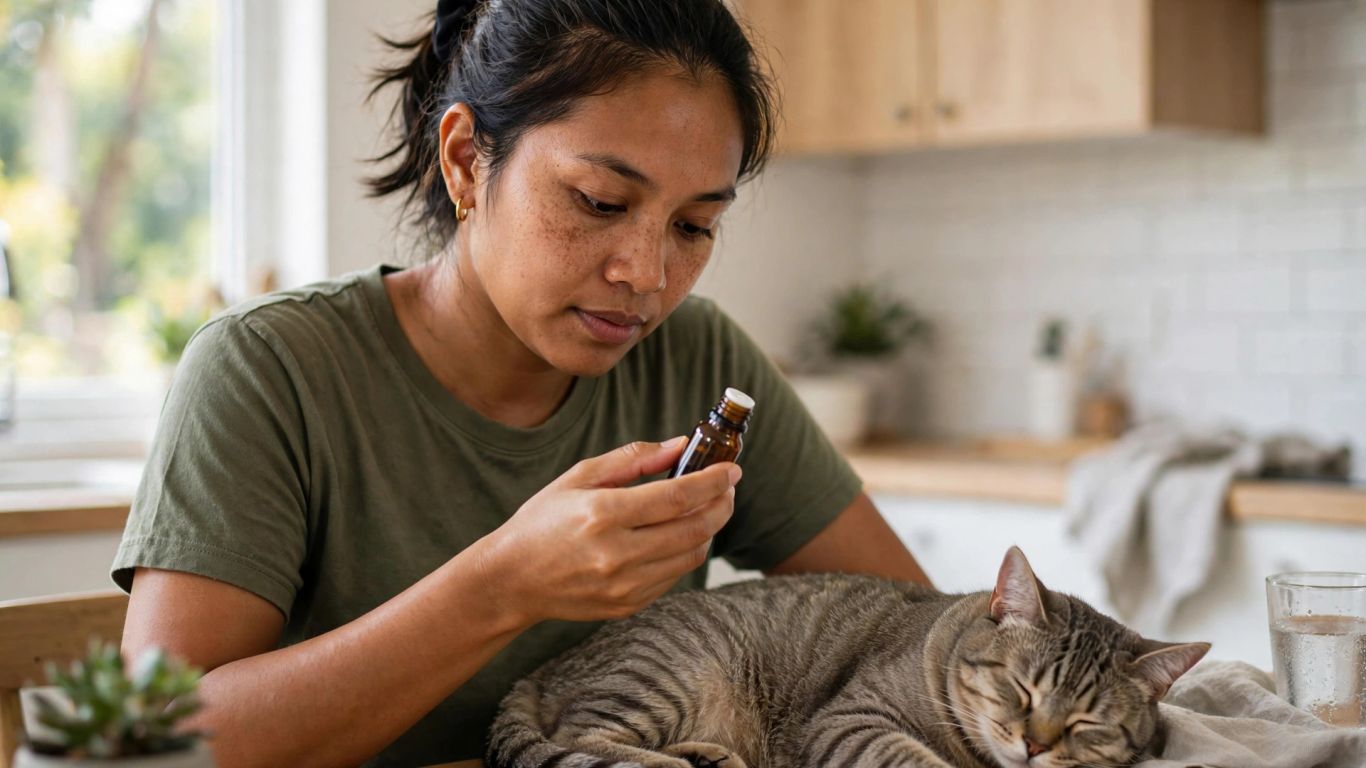
Some products include amino acids such as L-theanine or tryptophan, but the presence of an ingredient alone is not proof that a supplement will help a particular cat. Formulas and directions differ, so compare the complete ingredient list and use the serving guidance on the product rather than trying to calculate a dose from an ingredient name. A veterinarian can help consider whether a formula fits your cat’s circumstances.
A simple comparison can help you identify what a label does and does not tell you. It is not a substitute for veterinary advice, but it can keep a marketing phrase from standing in for useful details.
| Label detail | What to look for | Why it matters |
|---|---|---|
| Named ingredients | A complete ingredient list | Helps identify what the product contains |
| Serving directions | Clear amounts and frequency | Reduces guesswork about use |
| Intended animal | Cat-specific directions | Helps avoid using a product not labeled for cats |
| Cautions | Warnings and storage information | Flags questions to raise with a veterinarian |
Use the table as a starting point, then check the package itself for the directions and cautions that apply to that product. For help comparing food labels and life-stage needs, this cat food guide covers a separate but related part of everyday nutrition; it does not replace advice about a calming supplement.
Milk proteins and other calming compounds
Some formulas use milk-derived proteins or other compounds, and products may combine several ingredients. Do not assume that two products with similar front-label wording are interchangeable. Look for the actual ingredient names and amounts when provided, along with directions and cautions, and take the label to your veterinarian if anything is unclear.
Cats can also have individual dietary sensitivities or other health considerations. If a product contains an ingredient your cat has not had before, ask whether it is appropriate before offering it, especially when the cat is already receiving a prescribed diet or treatment. A familiar-sounding ingredient is not automatically suitable for every cat.
Herbal ingredients and limits of the evidence
Herbal ingredients may appear in calming products, but “natural” does not mean risk-free or proven effective for every cat. Products can vary in composition and concentration, and information about an ingredient in one form may not apply to another formula. Be cautious about broad claims and avoid giving human herbal products unless your veterinarian specifically advises it.
If the label does not make clear what is included or how to use the product, pause rather than guessing. The same careful reading applies to products in other categories: for instance, a personal lubricant guide discusses checking ingredients and compatibility for a different kind of product. That comparison is not evidence about cat supplements; it is simply a reminder to check what a product is actually designed for.
Choosing a supplement in Malaysia
Shopping in Malaysia may mean comparing local stores, veterinary clinics, and online listings. Wherever you buy, focus on whether the product is clearly intended for cats, whether its label is complete, and whether you can verify the seller and storage conditions. PAWSONA offers nutritional supplements among its cat stress-relief and behavior products; that category alone does not establish whether a particular supplement is right for an individual cat.
Compare product formats and ingredient lists
Supplements may come in formats such as powders, liquids, chews, or treats, and each has practical trade-offs. A format that seems convenient is not useful if your cat refuses it or if the directions are unclear. Compare the serving instructions and full ingredient lists, and do not select a product solely because its front label uses a familiar calming term.
It can also help to separate product facts from claims. For instance, a gummy supplement compliance guide concerns labeling and claims for a different supplement category, not cat products. Its subject should not be taken as a standard for evaluating a cat formula; for a cat-specific starting point, see this guide to safe supplement choices.
Check labeling, storage, and expiry details
Before buying, check that the package identifies the intended animal, lists ingredients, provides usable directions, and includes any cautions or storage requirements. Confirm the expiry date and inspect the packaging for damage. If a listing does not show enough information to assess what is inside, contact the seller or choose a source that can answer basic product questions.
Storage matters after purchase, too. Follow the package instructions and keep the product away from heat, moisture, and curious pets when appropriate. A different kind of travel-comfort question appears in this sheepskin seat-cover guide, which concerns older passengers rather than cats; it is not guidance on supplements, but it illustrates why the intended use of a product matters.
Buy from reputable local or veterinary sources
A reliable seller should be able to provide clear product information, answer questions about storage and expiry, and supply an intact package. A veterinary clinic can be especially useful when your cat has health concerns or takes medication, because product selection can be discussed alongside the cat’s care. If ordering online, check that the listing matches the package details and that delivery conditions are suitable for the product.
Be wary of listings that promise to stop every stress behavior or use vague claims without clear directions. Even practical guides should be judged by whether their advice fits the decision at hand: a London cabbie guide, for example, concerns building repeat business in a different field, not pet products. Keep your buying decision focused on cat-specific labeling and advice from a veterinary professional.
Safety checks before giving a supplement
Before giving a supplement, make sure you have considered the cat’s health, current treatments, and the reason for the behavior change. A product sold without a prescription is not necessarily suitable for every cat. If you are uncertain, wait and ask a veterinarian rather than improvising a dose or combining products.

Ask a veterinarian about health conditions and medications
A veterinarian can help you decide whether a supplement makes sense and whether its ingredients could be unsuitable alongside your cat’s condition or medication. Bring the package or a clear photo of its ingredients and directions. Mention any other supplements or calming products your cat receives, since the full combination matters.
Do not stop, change, or replace prescribed treatment with a supplement unless your veterinarian directs you to do so. If your cat’s behavior change is sudden, severe, or accompanied by signs of illness, arrange veterinary advice rather than waiting to see whether a calming product changes it.
Use extra care with kittens, senior cats, and pregnant cats
Kittens, senior cats, and pregnant or nursing cats may need additional caution because age and life stage can affect what is appropriate. Do not assume that a product suitable for a healthy adult cat is suitable for them. Check the label for age or life-stage restrictions, and ask a veterinarian before starting anything.
A veterinarian can also help distinguish stress from pain or another health issue, which may be less obvious in cats. This is particularly useful when a cat’s activity, appetite, or social behavior has shifted without a clear environmental cause. Avoid relying on a general online dose or another cat’s experience.
Watch for side effects and stop if problems arise
Follow the label and observe your cat after introducing a product. If you notice a concerning change, stop giving it and contact your veterinarian for guidance. Seek prompt veterinary help if your cat seems seriously unwell; do not give another serving in an attempt to counteract a reaction.
Keep the package available so you can report the product, ingredients, and amount given. It can be hard to tell whether a change came from a supplement or another event, so a clear record is useful. When in doubt, prioritize the cat’s health over finishing a product.
Matching a product to your cat’s needs
The best choice starts with the situation, not the most prominent claim on a package. Consider what seems to trigger the behavior, how often it occurs, and whether the cat can avoid or recover from the event. If signs are persistent, changing, or hard to interpret, ask a veterinarian before deciding that a supplement is the right response.
Consider the stress trigger and how often it occurs
A one-time disruption and a repeated daily stressor call for different plans. Note whether the behavior follows visitors, noise, travel, conflict with another cat, or a change in routine. If the trigger is something you can adjust, make that environmental change as well as discussing any supplement; the product should not be expected to compensate for a recurring problem on its own.
Consider how long the behavior lasts and whether it affects eating, drinking, toileting, sleep, or normal interaction. A short note about when it happens can reveal patterns that are easy to miss in the moment. If you cannot identify a trigger, a veterinary assessment may help rule out medical causes.
Choose a format your cat will accept
Practicality matters: a product only works as directed if you can give it without creating more distress. Consider whether your cat accepts a liquid, powder mixed with food, or another labeled format, and avoid forcing administration in a way that risks a bite or worsens fear. Ask your veterinarian about alternatives if the format is difficult.
Never disguise a supplement in a meal your cat must reliably eat if doing so could make the cat avoid that food. Follow any instructions about giving the product with food or separately. A low-stress method is part of a sensible choice, not a minor detail.
Compare dosing directions without exceeding the label
Products can differ in serving size, frequency, and instructions about when to give them. Read the directions for the exact product you have, and confirm with your veterinarian if the cat’s weight, age, or health makes the guidance unclear. Do not combine products or increase a serving because you have not noticed an immediate effect.
When comparing options, write down the instructions rather than relying on memory. Ask the veterinarian to clarify any wording you do not understand, especially if another product already contains similar ingredients. The goal is not to find the strongest-sounding formula; it is to make a safe, informed choice for this cat.
Introducing a supplement and tracking its effects
Once you and your veterinarian have chosen a suitable product, a calm and consistent approach makes it easier to assess what happens. Follow the package directions, avoid changing several things at once if possible, and note both behavior and context. Improvement may be subtle, and a record can help you see whether there is a meaningful pattern rather than relying on a single good or difficult day.
Follow the product’s directions consistently
Use the product according to its label and any veterinary advice, including directions about timing, food, and storage. Do not give extra servings on especially stressful days unless the directions or your veterinarian specifically allow it. If a dose is missed or you are unsure what to do, check the product instructions or ask your veterinarian instead of doubling the next serving.
Introduce the product in a way that keeps handling as relaxed as possible. If your cat resists, do not turn each attempt into a struggle; contact the veterinarian to discuss a different format or plan. Consistency means following appropriate directions, not pushing through signs that your cat is distressed.
Keep a simple record of stress signs and changes
A brief log can help you connect behavior with events and see whether anything changes after starting a supplement. Record the date, the likely trigger, the behavior, and any relevant changes at home. Keep it simple enough that you can continue for several days or weeks, depending on the plan you discussed with your veterinarian.
For example, you might note whether the cat ate normally, hid for a shorter or longer period, or settled after visitors left. Avoid interpreting one calm evening as proof that a product worked, especially if the trigger was absent. Context makes the record more useful than a tally of “good” and “bad” days alone.
Reassess with your veterinarian if there is no improvement
If you see no improvement, if signs become more frequent, or if a new symptom appears, check back with your veterinarian. The product may not match the problem, the trigger may still be present, or another health issue may need attention. Do not respond by raising the amount beyond the label.
Bring your notes and the product packaging to the conversation. Your veterinarian can help decide whether to continue, stop, or change the plan and whether an examination is appropriate. Reassessment is part of careful use, not a sign that you have failed your cat.
Supporting calm with changes at home
A cat’s surroundings can shape how secure it feels, so environmental adjustments are often central to any stress plan. Small, steady changes may be more manageable than rearranging the whole home at once. Think about where the cat can retreat, whether key resources are easy to reach, and which sounds or interactions seem to cause tension.
Provide hiding places, vertical space, and predictable routines
Cats often benefit from having a quiet place where they can retreat without being followed or disturbed. A covered bed, an accessible hiding spot, or a stable elevated perch may offer useful options, as long as the cat can reach them safely. Keep food, water, litter, and resting areas arranged so the cat does not have to pass a source of tension to reach them.
Predictable routines can also make daily life easier to navigate. Keep feeding and play times reasonably steady, and let the cat approach people or new spaces at its own pace. PAWSONA offers pheromone diffuser kits as part of its cat stress-relief product range; a diffuser is a different kind of product from a nutritional supplement, and its presence does not replace changes to the home environment.
Reduce common triggers such as noise or resource competition
Notice when and where tension builds, then make the simplest safe adjustment you can. In a multi-cat home, separate access to essential resources and provide more than one route away from shared spaces. If noise or visitors are the issue, a quiet retreat can help the cat choose distance instead of being cornered.
A few manageable changes can make a difference to the options available to your cat:
- Keep a quiet retreat available and let the cat leave it undisturbed.
- Place food, water, litter, and resting areas where the cat can reach them safely.
- Reduce avoidable noise or sudden activity near the cat’s resting space.
- Watch for tension around shared resources and make access less competitive.
Make changes gradually and observe whether the cat uses the new arrangement. PAWSONA also offers calming sprays among its cat stress-relief products; any calming aid should be considered alongside the practical steps that address the cat’s surroundings and routine.
Use gradual, positive introductions for travel or household changes
When a change is foreseeable, give your cat time to become familiar with parts of it at a comfortable pace. Keep a carrier accessible before travel, and allow exploration of a new room without forcing contact. During introductions to people or animals, use distance and short, calm sessions; end them before the cat becomes overwhelmed.
Moving or travel can disrupt familiar smells, spaces, and routines, so preserve familiar bedding or feeding patterns where practical. If your cat has a history of intense distress during travel or major changes, ask your veterinarian for a plan in advance. A supplement may be only one possible element, and safe handling and preparation still matter.
Conclusion
Calming supplements can be a reasonable topic to discuss with a veterinarian, but safe use begins with understanding the cat and the stressor. Check ingredients and directions, watch for unwanted changes, and keep a simple record of what happens. Pair any product with a calmer, more predictable environment, and seek veterinary guidance when behavior changes persist or raise concern.
Frequently Asked Questions
How do I know if my cat is stressed?
Possible signs include hiding more than usual, changes in appetite or grooming, unusual vocalizing, or changes in toileting. These can also have medical causes, so discuss new or persistent signs with a veterinarian.
How quickly do calming supplements work for cats?
Timing can vary by product and cat, and some products may not help. Follow the label and your veterinarian’s advice rather than giving extra servings if you do not see an immediate change.
Can I give my cat a human calming supplement?
Do not give a human product unless your veterinarian specifically advises it. Ingredients, amounts, and other components may not be suitable for cats.
Should I use a supplement for a kitten?
Ask a veterinarian before giving a supplement to a kitten. Check any age restrictions on the product and do not assume that adult-cat directions apply.
Can I combine two calming products?
Do not combine products without checking with your veterinarian. Ingredients may overlap, and your veterinarian can help assess the full combination and the cat’s needs.
What should I do if my cat seems worse after taking a supplement?
Stop giving the product and contact your veterinarian for guidance. Keep the package available, and seek prompt veterinary help if your cat seems seriously unwell.
What else can help a stressed cat at home?
Offer a quiet retreat, keep routines predictable, reduce avoidable triggers, and make food, water, litter, and resting places accessible. Gradual changes and veterinary advice can help you build a plan suited to your cat.