


Key Takeaways
Recovery is easier when your cat can rest in a quiet, familiar place and you follow the care plan from the clinic. Watch for changes, and ask your veterinarian when something seems wrong.
- A sleepy cat may be recovering from anesthesia, but worsening or unusual signs deserve a call to the clinic.
- Make food, water, litter, and bedding easy to reach in a calm recovery space.
- Follow your veterinarian’s directions for medication, confinement, and activity.
- Don’t give calming supplements or medication without checking with your veterinarian.
- Keep the clinic’s contact details and after-hours instructions close at hand.
Understand your cat’s behavior after surgery
A cat may be quiet, clingy, unsettled, or less interested in usual routines after coming home. Anesthesia, the unfamiliar clinic environment, pain, and changes to movement can all affect behavior, so one sign alone rarely tells the whole story. Note what is different from your cat’s normal pattern and whether it is improving or getting worse. For more context on behavior shifts, see this guide to cat anxiety.
Distinguish grogginess from signs of distress
Some drowsiness and unsteadiness may occur as anesthesia wears off, but your clinic’s discharge instructions are the best guide to what is expected for your cat and procedure. Keep your cat somewhere safe where they cannot fall from furniture or stairs. If you’re unsure whether your cat is recovering normally, call the clinic rather than trying to assess the cause yourself. The post-visit recovery guide also discusses the transition home and the value of a quiet place to rest.
Notice changes in hiding, vocalizing, appetite, or grooming
A cat might hide or vocalize more than usual, eat less, or groom differently while recovering. Track changes alongside practical details such as when they began and whether they are becoming more pronounced. The quick comparison below can help you organize what you notice, but it cannot diagnose a problem.
| What you notice | What to record | A sensible next step |
|---|---|---|
| Hiding or avoiding contact | When it started and whether it is increasing | Give space and contact your clinic if it worsens |
| More vocalizing than usual | How often it happens and in what situations | Note it for the veterinary team |
| Appetite changes | What your cat has eaten and when | Follow discharge guidance and ask the clinic if concerned |
| Grooming changes | Whether your cat is licking a particular area | Prevent access to the incision as instructed and call if needed |
This record gives your veterinarian a clearer picture than a general description like “not acting right.” A sudden or persistent change is worth discussing, particularly if it comes with other signs of illness.
Consider pain or complications as possible causes of behavior changes
Behavior changes can reflect discomfort or a complication as well as stress. Don’t assume that hiding, restlessness, or reduced appetite is simply anxiety, and don’t give human pain medicine unless a veterinarian specifically directs you to. A sudden change deserves attention when it is worsening, appears alongside physical symptoms, or does not match the recovery guidance you were given.
Set up a calm recovery space
A small, familiar room can make it easier to rest and can help you keep an eye on your cat without hovering. Choose a place away from busy household activity and set it up before bringing your cat home, if possible. Limit access to places where a sleepy or unsteady cat could jump or fall. In Malaysia, also consider the room’s temperature and airflow.
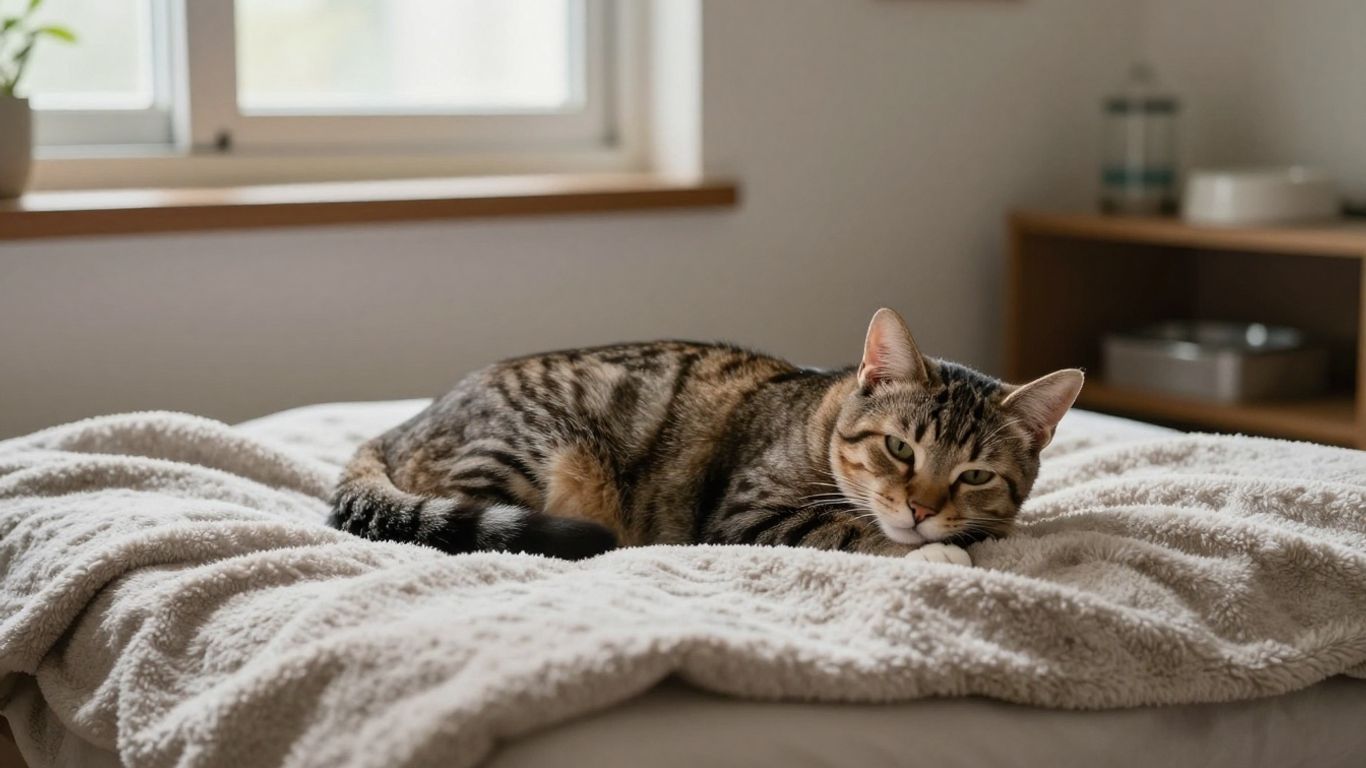
Choose a quiet, familiar room away from household activity
Pick a room your cat already knows, with a door that can be closed gently and safely. Reduce sudden noise and keep other pets and children from crowding the space. A familiar blanket or bed may make the room feel less strange, but let your cat choose whether to settle on it or in a safe hiding spot. A calm room supports rest without forcing contact.
Make food, water, litter, and bedding easy to reach
Keep essentials nearby so your cat does not need to walk far or climb to reach them. Arrange the space simply, while leaving enough room to move safely between resting, eating, drinking, and toileting areas. These basics are also a useful way to check that the room works before your cat arrives:
- Place fresh water within easy reach.
- Set out food according to the clinic’s instructions.
- Use an accessible litter tray with a low entry if appropriate.
- Put familiar bedding on a stable, low surface.
After setting things up, walk through the space as if you were a tired cat: remove obstacles, block risky climbing routes, and make sure the litter tray is not tucked into a hard-to-reach corner. Small adjustments can make the room both calmer and safer.
Keep the space comfortably cool in Malaysia’s warm climate
Choose a room with comfortable airflow and a place to rest away from direct sunlight. Keep fresh water available, and avoid directing strong air-conditioning or a fan straight at your cat. Temperatures and humidity vary across Malaysia, and indoor conditions can change through the day, so check the room rather than relying on a fixed setting. If your cat seems overheated or unusually uncomfortable, seek veterinary advice.
Reduce stress while supporting recovery
Post-surgery anxiety in Malaysia can be shaped by the trip home, household noise, heat, and changes to a cat’s normal routine. Aim for a quiet, predictable few days, while remembering that the procedure itself determines the care your cat needs. You do not have to keep your cat entertained or constantly comforted; a safe place and calm presence are often more useful. The central goal is to support healing without adding avoidable activity or pressure.
Handle your cat gently and only when necessary
Give your cat room to settle, and avoid picking them up just to check whether they seem calmer. When handling is needed, move slowly and follow the clinic’s instructions about supporting your cat’s body and avoiding the surgical area. If your cat resists, pause rather than turning a brief check into a stressful struggle. Watch from nearby when you can.
Follow your veterinarian’s instructions for confinement and activity
Activity limits depend on the procedure and your cat’s individual condition, so use the discharge plan rather than a general rule from the internet. Keep your cat from jumping or running if instructed, and use any cone or recovery garment exactly as the clinic advises. If the directions are unclear or difficult to follow at home, ask the veterinary team to explain a safer arrangement. Advice for recovering after surgery should be specific to the operation, as reflected in these post-operative care tips.
Keep routines predictable and visitors to a minimum
Quiet, familiar rhythms can make home feel less demanding while your cat recovers. Keep feeding and medication times steady as far as the discharge plan allows, and ask visitors to leave your cat undisturbed. If your household is busy, explain that the recovery room is off-limits for now. Advice on cat stress relief strategies can also help you think about environmental changes, while your veterinarian’s post-surgery instructions remain the priority.
Coordinate anxiety care with your veterinarian
Your veterinary team can explain which behavior changes are expected for this operation and which ones need a call. Ask before adding a new calming product, supplement, or medication, since post-operative care and existing prescriptions matter. Keep the conversation practical: describe what you have observed, when it began, and what instructions you are following. That gives the clinic a useful starting point.
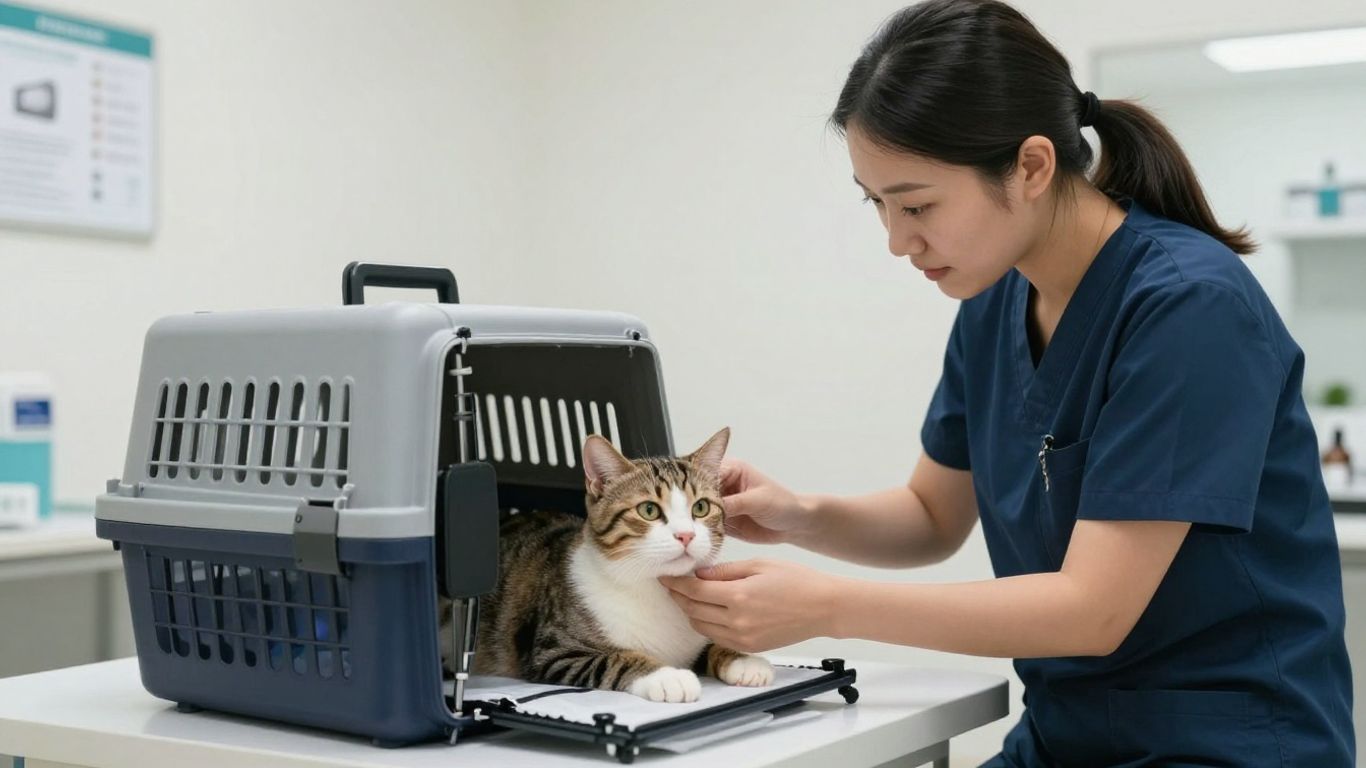
Ask what behavior changes are expected after your cat’s procedure
Before you leave the clinic, or by phone afterward, ask what your cat may do as they recover from anesthesia and how long those effects may last. You can also ask which changes in appetite, movement, or mood should prompt a call. Keep the written discharge notes in a place you can find quickly. Clear expectations can make it easier to notice when your cat’s recovery is not following the plan.
Discuss safe calming options before using supplements or medication
Do not start an anxiety medicine or supplement without veterinary approval, particularly while your cat is taking prescribed medication or recovering from anesthesia. PAWSONA Pheromone Spray for Cats is described as supporting a reassuring environment, but its product information says it is not intended for medical conditions; ask your veterinarian before considering any calming aid during recovery. PAWSONA Calming Collar is described as using synthetic cat pheromones to reduce fear and promote comfort, while PAWSONA Zenkit Cat Calming Diffuser is described as providing continuous stress support. Those general product descriptions do not establish that either is suitable for your cat after surgery, so let your veterinary team guide the decision.
Confirm how to give prescribed pain relief and other medicines
Ask the clinic to show you the correct dose, timing, and method for each medicine, and make sure you know what to do if a dose is missed or your cat spits it out. Keep medicines in their original packaging and follow the label and discharge instructions. Never add a second pain reliever or change a dose based on how your cat looks. If giving a medicine becomes difficult, call the clinic for an alternative plan rather than forcing it.
Know when to seek veterinary help
It can be hard to tell stress from pain when a cat is recovering, so contact the clinic when behavior is worsening or feels unusual for your cat. Breathing problems, bleeding, and repeated vomiting need prompt veterinary attention rather than home calming measures. Follow the discharge paperwork for procedure-specific warnings, and ask where to go if your regular clinic is closed. Keeping clear notes can help you explain the situation quickly.
Contact your clinic about worsening distress or unusual behavior
Call if your cat’s distress is increasing, if they seem markedly different from what the clinic described, or if you cannot carry out the care plan safely. Mention the procedure, medicines given, when the change started, and any other symptoms you have noticed. If you are searching online, keep unrelated material separate from veterinary advice—for example, non-invasive pain clinics, military training camps, EkoGroup, bridal accessory storage, and plastic product FAQs are not guidance for a cat’s surgical recovery. Ask your clinic to interpret your cat’s signs.
Seek prompt care for breathing trouble, bleeding, or repeated vomiting
Breathing trouble, active bleeding, or repeated vomiting should not be watched at home in the hope that anxiety support will resolve them. Contact your veterinarian or the emergency service named in your discharge instructions promptly. If you can do so without delaying care, bring the medication list and note when the symptoms began. The veterinary team can tell you how to proceed while you arrange help.
Use your discharge instructions to guide after-hours decisions
Read the after-hours section before you need it, including the clinic’s phone number and any emergency arrangements. If a warning sign appears, use those instructions instead of waiting for the clinic to reopen. When the paperwork does not cover what you are seeing, call the listed service and describe the signs plainly. A short, clear account is more useful than trying to interpret symptoms alone.
Plan follow-up care in Malaysia
A little planning makes it easier to respond if your cat needs reassessment. Save your regular clinic’s number and confirm which emergency service to use outside normal hours. Think through travel before a return appointment, since traffic, weather, and a long wait can add strain. Ask the clinic to confirm the timing and purpose of every follow-up visit.
Save your clinic’s contact details and emergency options
Store the clinic number in your phone and keep a written copy with the discharge notes. Confirm whether the clinic wants a call before you travel in, and which service to contact after hours. If more than one person is caring for your cat, make sure everyone knows where the instructions and medicines are kept. This avoids confusion when plans need to change quickly.
Arrange transport that keeps your cat secure and undisturbed
Use a secure carrier that your cat can enter without being squeezed or lifted awkwardly. Keep the trip as quiet as practical, and protect your cat from direct sun and excessive heat while traveling in Malaysia. Ask the clinic how to position the carrier and whether any special handling is needed for your cat’s procedure. For broader planning around getting a cat from place to place, this cat travel guide may be useful, but surgical transport directions should come from your veterinary team.
Confirm the timing of wound checks, medication reviews, and follow-up visits
Before leaving the clinic, confirm when your cat should return and whether a wound check or medication review is planned. Write the dates down and ask which changes should prompt an earlier visit. If you are unsure how to inspect the incision or prevent licking, ask for a demonstration or clear instructions. Knowing what the next step is can make home care feel less uncertain.
Conclusion
A calm room, gentle handling, and predictable routines can make home recovery feel less overwhelming for both you and your cat. Follow the plan your veterinarian gave you, and call whenever a change worries you or a warning sign appears. You do not need to solve every behavior change on your own; the clinic can help you decide what your cat needs next.
Frequently Asked Questions
Recovery varies with the procedure, your cat’s health, and the instructions from your veterinary team. These answers offer general guidance, but they do not replace advice tailored to your cat.
Is it normal for a cat to hide after surgery?
Some cats seek quiet or familiar hiding places after a stressful clinic visit. Keep essentials close and follow the recovery plan, but contact your veterinarian if hiding worsens or comes with other concerning changes.
How long can a cat be groggy after anesthesia?
The expected duration depends on the procedure, medications, and individual cat. Follow the clinic’s discharge instructions and call if your cat’s alertness or coordination worries you or does not seem to be improving as expected.
Should I comfort my cat if they seem anxious?
Offer a quiet, safe space and let your cat choose whether to approach. Avoid forcing interaction or handling unless needed for care, and check with your veterinarian if the distress is increasing.
What should I do if my cat will not eat after surgery?
Follow the feeding directions from your clinic and note what your cat has eaten and when. Contact the veterinary team if appetite loss persists or if you are worried, especially when it occurs with other symptoms.
Can I give my cat a calming supplement after surgery?
Ask your veterinarian before giving any supplement or calming medication. The team needs to consider the procedure, anesthesia, and any prescribed medicines before advising you.
When should I call a vet about my cat’s recovery?
Call if distress worsens, behavior seems unusual, or you are unable to follow the care instructions safely. Seek prompt veterinary care for breathing trouble, bleeding, or repeated vomiting.
How can I make a car trip to a follow-up visit less stressful?
Use a secure carrier, keep the trip as calm as possible, and protect your cat from heat and direct sun. Ask the clinic for any handling or transport instructions specific to the surgery.