


Key Takeaways
A cat’s meow makes more sense when you consider what is happening around it, not just the sound itself. Notice changes from your cat’s usual pattern and respond to the underlying need.
- Cats often use meows to communicate with people, even though adult cats rarely meow to one another.
- A short meow, a drawn-out yowl, and a hiss can have different meanings; none has a single universal translation.
- Time, location, body language, and changes in routine help you interpret vocalizing.
- Hunger, stress, heat, aging, and health problems can all contribute to frequent meowing.
- A sudden change or meowing paired with other concerning symptoms warrants veterinary advice.
Why cats meow
Meowing is one way cats communicate with people, but its meaning depends on the individual cat and the situation. A vocal cat may be greeting you, asking for something, or responding to a change at home. There is no universal dictionary for every sound, so it helps to notice what tends to happen before and after it.
How meowing communicates with people
Cats may meow to greet someone, request food or access to a room, or invite attention. Over time, a cat and its person can develop familiar patterns: a particular sound near the food bowl, for instance, may reliably precede a meal. These sounds are useful clues, but the surrounding routine matters as much as the pitch. For a broader overview of common cat vocalizations, compare the sound with what your cat is doing at the time.
Why adult cats rarely meow at one another
Adult cats tend to rely on scent, posture, facial expression, and other vocal sounds when communicating with other cats. Meowing is especially noticeable in exchanges between cats and people, though cats may vocalize around other cats too. Hissing, growling, and yowling can occur in feline interactions, so “cats do not meow at each other” is too absolute. The important distinction is that a meow directed at you may be a learned way of getting your attention.
How age, personality, and breed affect vocalizing
Some cats are naturally more talkative than others, and a vocal habit that is normal for one cat may be unusual for another. Kittens may call when they need their mother, while older cats can develop new vocal patterns for several reasons, including changes in health or senses. Breed can influence how chatty a cat tends to be, but it should not be used to dismiss a sudden change. Your cat’s baseline matters most when deciding whether the amount or tone of meowing is unusual.
What different cat meows can mean
A sound can offer a hint, but it rarely gives a complete explanation on its own. A brief call might be social, while repeated or prolonged vocalizing can be a request, a response to stress, or a sign that something feels wrong. These patterns are starting points for observation, not fixed translations.
Short meows and repeated requests
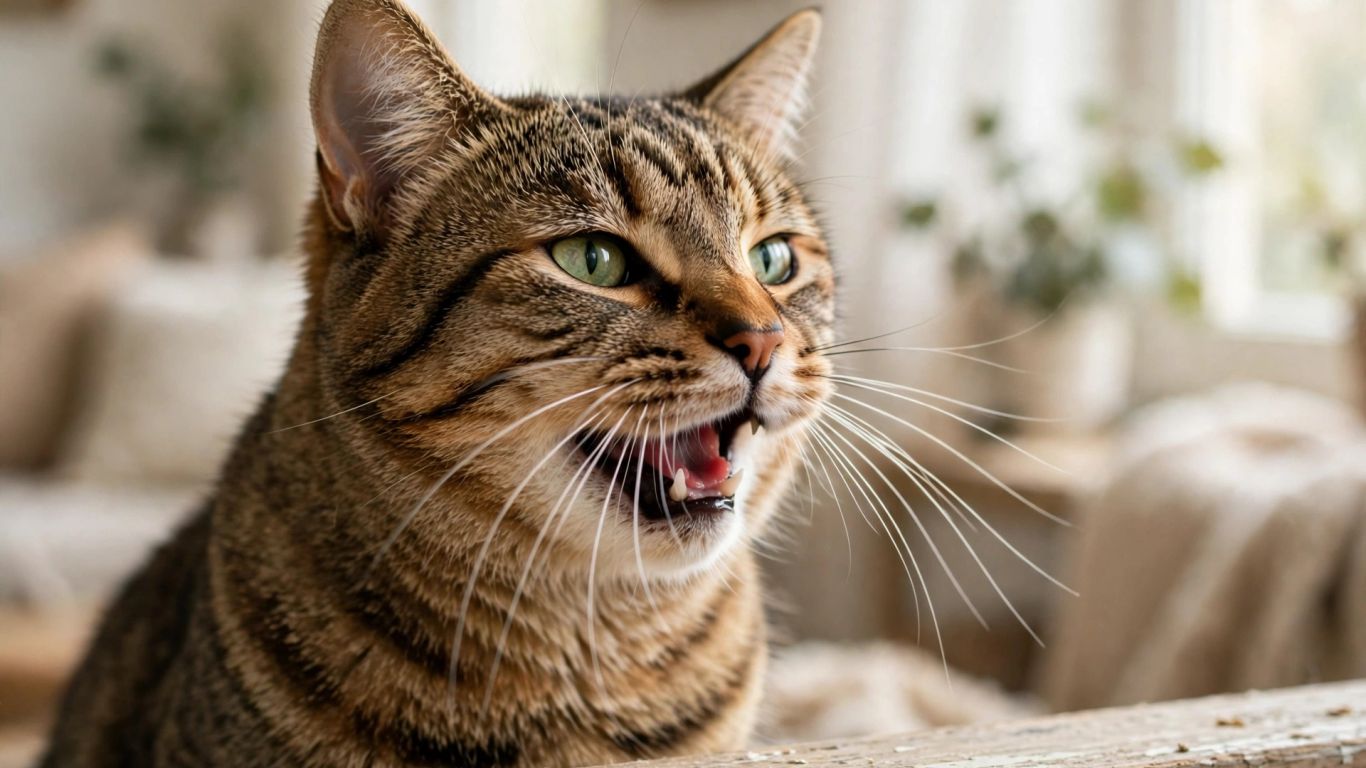
A short meow may be a greeting or a quick bid for attention. Repeated calls near a food bowl, door, or favorite resting spot may be associated with a familiar request, particularly if the same sequence happens regularly. If you are unsure whether a food-related pattern reflects routine or inadequate portions, this cat feeding guide explains calorie estimates and portion planning. Keep the sound in perspective: a familiar request can still accompany an unmet need or a change in routine.
Long yowls, trills, and chirps
A long yowl is more drawn out than an ordinary meow and can occur for different reasons, including social or reproductive behavior, distress, and discomfort. Trills and chirps are often brief, distinctive sounds that some cats use during friendly interactions or when focused on something nearby. Rather than assigning one meaning to each sound, note what your cat is looking at, where it is, and whether the vocalization is new. This simple comparison can help organize observations:
| Sound or pattern | Possible context | What to notice |
|---|---|---|
| Brief meow | Greeting or request | Where your cat is and what follows |
| Repeated meows | Attention, food, or access | Whether it happens at a predictable time |
| Long yowl | Social, reproductive, or distress-related behavior | Whether the sound is new or paired with other changes |
| Trill or chirp | Interaction or attention to something nearby | Your cat’s posture and focus |
Use the table as a prompt to watch and listen, not as a diagnostic key. A new or persistent yowl deserves attention, especially if it comes with signs of pain or illness.
Hissing and growling as warning signals
Hissing and growling are different from ordinary requests for attention. They can signal that a cat feels threatened, uncomfortable, or unwilling to be approached, so give it space rather than reaching in or forcing contact. Look for the situation that prompted the warning, such as a nearby animal, an unfamiliar visitor, or handling. If the behavior is new or happens alongside other changes, a veterinary check can help rule out pain or illness.
How context helps you interpret a meow
The same sound can mean different things at different times, and the same request can sound different from one cat to another. To understand your cat’s meowing, look at its routine, surroundings, and body language together. A short written record can make patterns clearer, particularly when a change is gradual.
Consider the time, location, and situation
Notice whether meowing happens around meals, at a doorway, during the night, or when someone leaves. A call that consistently appears in one setting may relate to that setting, while a sound with no obvious pattern may need closer observation. Changes in visitors, household activity, or daily schedules can also affect behavior. If the vocalizing appears during a stressful situation, recognizing cat stress signs may help you consider the wider pattern rather than treating the sound in isolation.
Read body language alongside vocal sounds
A relaxed posture and an alert, social approach tell a different story from a crouched body, flattened ears, or a tense stance. Watch where the cat is looking and whether it approaches, hides, or moves away after vocalizing. Do not assume that a cat wants to be touched simply because it meows; let it choose whether to come closer. Body language can help you decide whether to offer interaction, remove a stressor, or give the cat room.
Track changes in your cat’s usual patterns
Write down when the meowing starts, how long it lasts, what is happening nearby, and any other behavior changes. A brief record can help separate a long-standing habit from a new pattern and give a veterinarian clearer information if you need advice. If your cat also vomits, changes its appetite, or seems unwell, note those details too; this guide to cat vomiting causes describes signs that may need veterinary attention. Changes in vocalizing are most informative when considered alongside the whole cat.
Common reasons a cat meows excessively
“Excessive” is not the same for every cat. What matters is whether the meowing is new, increasing, disruptive, or paired with other changes in behavior or health. Start by considering ordinary needs and recent changes, while staying open to the possibility that a medical issue is involved.
Hunger, thirst, or a change in routine
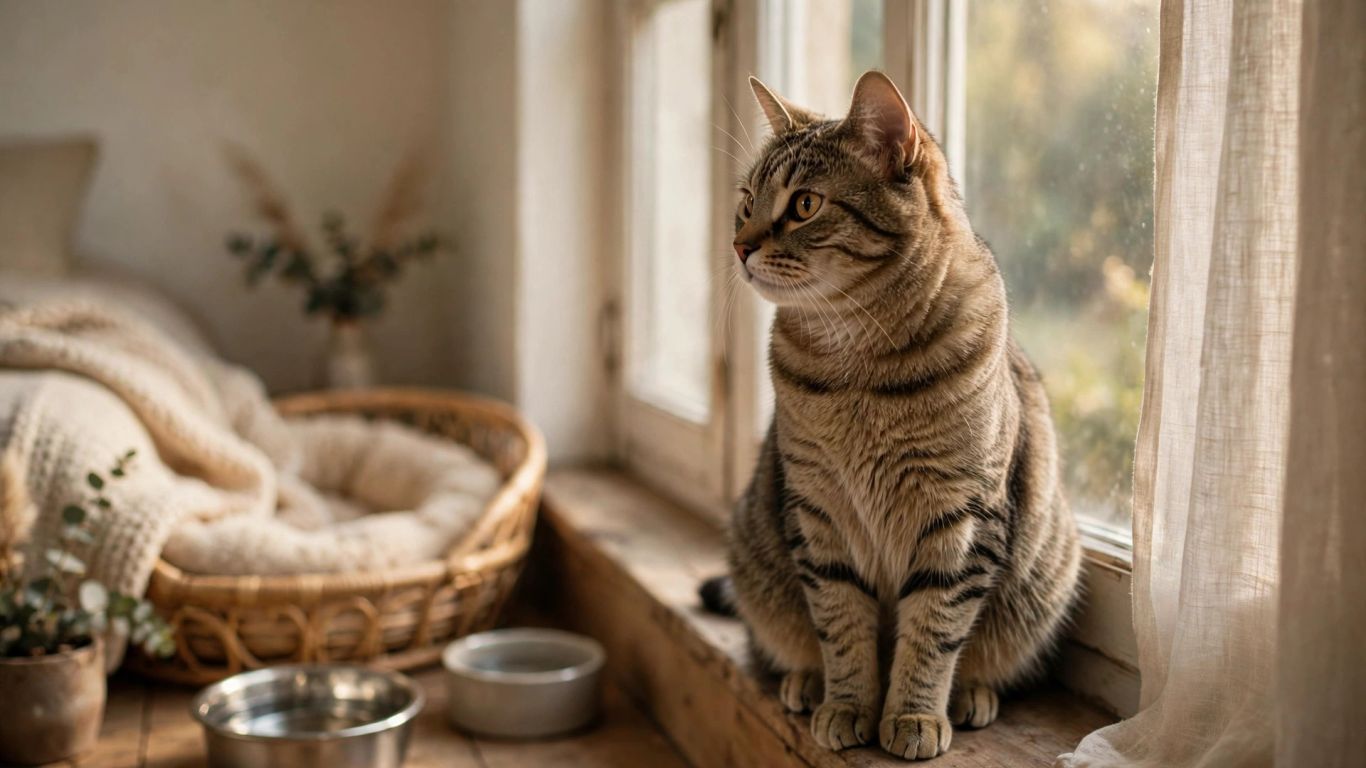
A cat may vocalize when meals are delayed, water is unavailable, or a familiar routine has shifted. Check that food and fresh water are accessible and that the litter area is clean; also consider whether a household change has altered the cat’s usual cues. If food seems to be the trigger, avoid assuming that more food is always the answer—portion needs vary. A predictable schedule can make it easier to tell a routine request from a new concern.
Stress, boredom, or attention-seeking
A cat may meow more when its environment feels unpredictable, when it has little to do, or when it wants social contact. Changes such as visitors, moving, time alone, or tension with another pet can affect behavior; look for hiding, restlessness, or changes in play and appetite as well. Offer safe places to retreat and opportunities for play, and allow the cat to choose when to interact. For cats unsettled by loud noises, time alone, travel, or changes at home, the PAWSONA Zenkit pheromone diffuser refill is described as providing up to 30 days of coverage for areas up to 700 sq ft when used with a compatible diffuser.
Heat, aging, or underlying health problems
Cats in heat may become more vocal, and older cats can develop new vocal habits alongside changes in their senses or health. Pain and medical problems can also affect vocalizing, so a persistent or sudden change should not automatically be treated as a behavior issue. The PAWSONA Anti On-Heat Spray for Cats is described as helping calm heat-related behaviors, including persistent meowing, restlessness, rolling, and urine spraying. If the pattern is new, severe, or accompanied by other symptoms, ask a veterinarian rather than relying on a product or assumption to explain it.
How to respond to frequent meowing
A helpful response begins with finding out what might be driving the sound. Check basic needs and the environment, then consider whether the behavior is a familiar request or a sudden change. Respond calmly and consistently; punishment can increase fear without resolving the cause.
Meet basic needs and enrich your cat’s environment
Make sure food, water, litter, resting places, and social contact are available in a predictable way. Play, exploration, and places to climb or hide can give an indoor cat more to do, while a quiet retreat can help when the home feels busy. If you are preparing a covered patio for a cat that has access to it, aluminum canopy maintenance is a separate household task; it does not explain vocal behavior, but the outdoor space should still be kept in good order. Small environmental adjustments are most useful when they respond to what your cat actually seems to need.
Reward calm behavior without reinforcing constant demands
If meowing has become a repeated way to request attention, try to offer interaction during calm moments rather than responding to every call with food or play. First make sure the cat is not distressed or asking for something essential; ignoring a new or unusual sound is not a substitute for checking on its welfare. Then notice and reward settled behavior with gentle attention, play, or another appropriate reward. Consistency helps the cat learn what to expect without leaving a genuine need unmet.
Keep routines consistent and avoid punishment
Regular meal and play times can make daily life more predictable, while gradual changes give a cat time to adjust. If stress seems to be part of the pattern, the PAWSONA 100ml pheromone spray is described as helping ease stress and anxiety and reduce scratching, urine marking, hiding, and tension in multi-cat homes when used as directed. It is one possible support, not a replacement for identifying triggers or seeking veterinary guidance when needed. To keep your own observations practical, try these steps:
- Keep a brief log of when the meowing happens and what precedes it.
- Check food, water, litter access, and the cat’s immediate surroundings.
- Offer predictable play and a quiet place where the cat can retreat.
- Avoid scolding, startling, or forcing contact with a vocalizing cat.
After a few days, review the notes for patterns and adjust one thing at a time. If the meowing continues or changes, share the record with your veterinarian rather than escalating punishment or making several changes at once.
When meowing needs veterinary attention
A cat’s usual vocal style can vary, but a sudden shift deserves attention, especially when other behavior changes appear. Meowing alone cannot tell you whether a cat is ill or in pain. Look for the full picture and contact a veterinarian if you are unsure.
Recognize sudden or unusual vocalizing
A cat that begins yowling at unusual times, becomes much quieter, or suddenly meows far more than usual may need a health check. Consider whether the sound began after a change in the home, but do not assume stress is the only explanation. Note when the change started and whether it is getting more frequent. Human health resources such as AMH report interpretation, adult ADHD assessment, and dry eye treatment options address people, not the causes of a cat’s vocal changes; a veterinarian can assess the cat itself.
Watch for pain, confusion, or other symptoms
Pay attention to changes in eating, drinking, movement, grooming, litter-box habits, sleep, or social behavior. A cat that seems disoriented, avoids being touched, hides more than usual, or vocalizes during movement may be uncomfortable, though only a veterinary assessment can determine the cause. Describe the change and any other signs you have noticed. Clear observations are more useful than trying to diagnose from a sound alone.
Know when to seek urgent care
Contact a veterinarian promptly if loud or unusual vocalizing comes with signs of severe pain, difficulty breathing, collapse, repeated vomiting, or trouble urinating. These signs should not wait for a behavior routine to work. If the change is less urgent but persists, arrange a veterinary appointment and bring your notes. When in doubt, call a clinic and explain what is happening so the team can advise you on timing.
Conclusion
Cat meowing is best understood as part of a larger pattern: the sound, the situation, your cat’s body language, and any changes in health or routine. Respond to ordinary needs with calm consistency, but take sudden or unusual vocalizing seriously. When something feels different, careful observation and veterinary guidance are safer than guessing at a translation.
Frequently Asked Questions
Why does my cat meow at me?
Cats may meow to greet people, request food or access, seek interaction, or communicate that something has changed. The setting and your cat’s usual habits help narrow down what may be going on.
Why does my cat meow more at night?
Nighttime vocalizing may relate to routine, activity, attention, hunger, stress, or a health change. If it is new or comes with other symptoms, ask a veterinarian for advice.
Do different meows have specific meanings?
A sound can offer clues, but there is no universal translation that applies to every cat. Consider when it happens, what the cat is doing, and whether the pattern is familiar.
Is frequent meowing normal for some cats?
Some cats are naturally more vocal than others. A change from an individual cat’s normal pattern matters more than comparing its vocalizing with another cat’s.
Why is my cat yowling suddenly?
A yowl can have social, reproductive, environmental, or health-related causes. Sudden or persistent yowling, especially alongside other changes, is a good reason to contact a veterinarian.
Should I ignore my cat when it keeps meowing?
Do not ignore a new or unusual sound before checking that your cat is safe and its basic needs are met. Once you have ruled out an immediate need, you can encourage calmer requests with consistent responses.
When should I take a meowing cat to the vet?
Seek veterinary advice for a sudden or persistent change, or when meowing occurs with pain, confusion, appetite changes, or other symptoms. Difficulty breathing, collapse, or trouble urinating calls for prompt care.